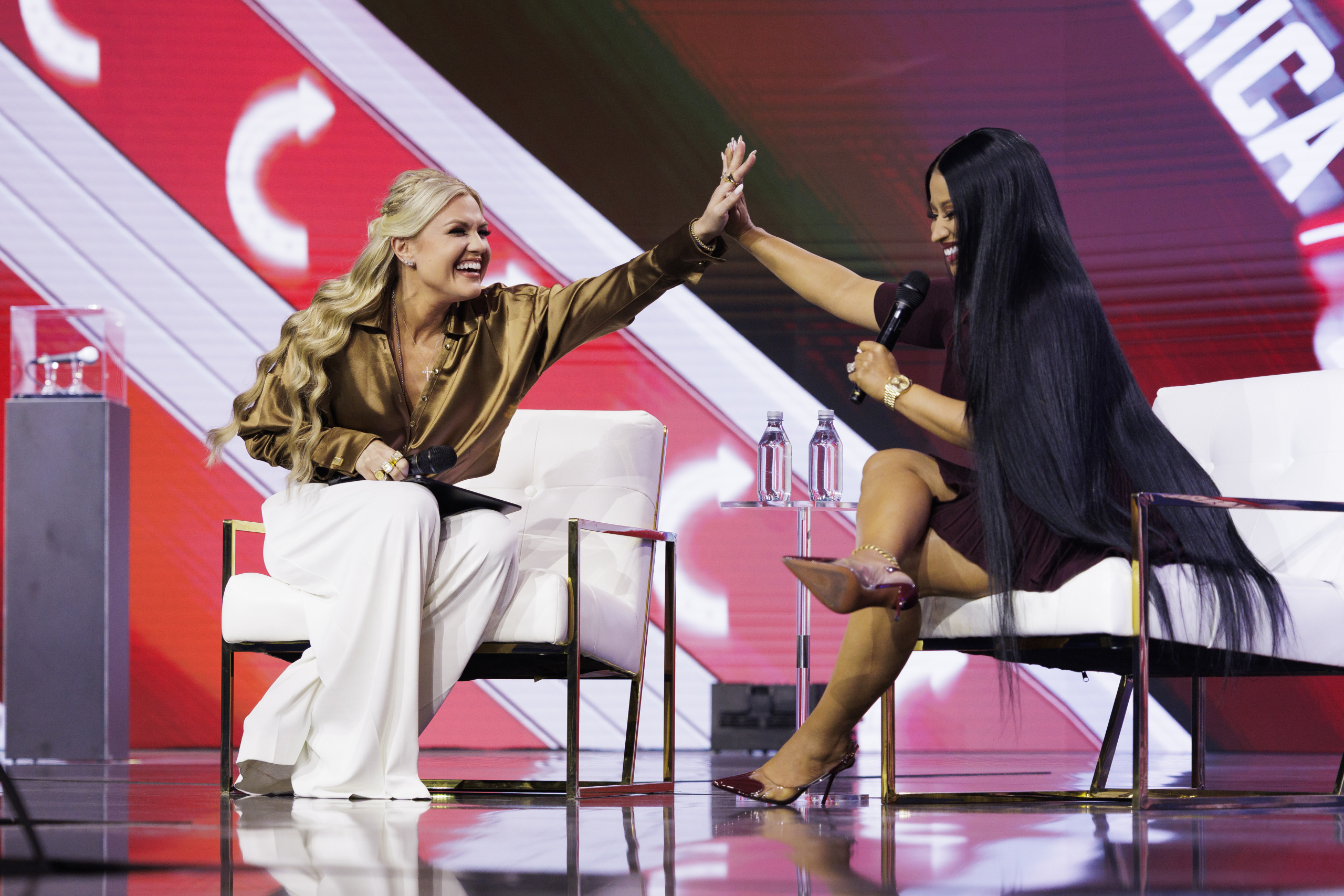
Nicki Minaj has quietly become an outspoken figure in American politics, using high-profile platforms in recent months to weigh in on U.S. leadership, religious freedom and global security issues. On Dec. 21, Minaj made a surprise appearance at conservative gathering Turning Point USA’s AmericaFest, a major conservative gathering in Phoenix, to affirm her support for Republican leaders and widen her emerging involvement in U.S. politics.
“This administration is full of people with heart and soul, and they make me proud of them,” Minaj said of Trump and Vance. “I love both of them. They’re both powerful men. Smart, strong, all of that. But both of them have a very uncanny ability to be someone that you relate to. I can relate to them.”
During a Q&A with Erika Kirk, the widow of Charlie Kirk, she praised President Donald Trump and Vice President J.D. Vance and criticized Democratic leaders. Minaj framed her involvement in politics as part of a broader push for free expression and religious freedom, saying she was tired of being “pushed around” and unwilling to be silenced. “When you’ve had enough, you realize, ‘Wait a minute, why do I even care about these people and what they think? Who are they? They don’t even know who they are,” she said. “So. I’m not going to back down anymore. I’m not going to back down ever again.”
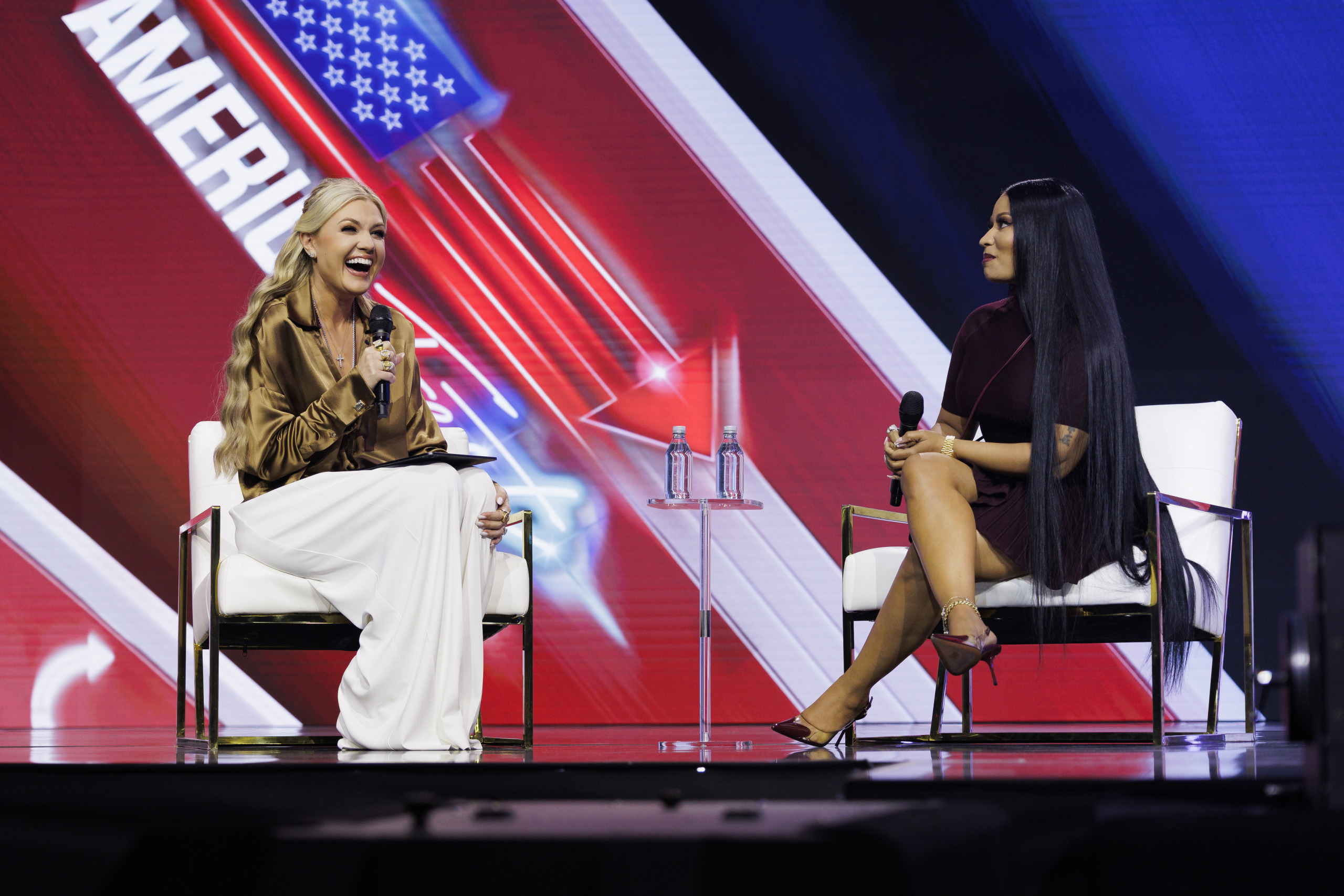
Reaction to Minaj’s appearance at AmericaFest was sharply critical, with commentators and social media users questioning why a globally successful entertainer would align herself with a highly partisan conservative political event. Some detractors cast her participation in skeptical terms, suggesting she risked alienating longtime fans by embracing an event closely associated with “MAGA” politics. “I didn’t notice,” Minaj said when asked about the backlash she was receiving regarding the appearance. “We don’t even think about them.”
The appearance marked one of her most direct engagements with partisan politics and signaled a growing alignment with conservative causes. Weeks earlier, Minaj spoke at the U.S. Mission to the United Nations, thanking Trump for prioritizing violence against religious communities in Nigeria. The artist’s high-profile appearance brought international attention to security challenges facing Africa’s most populous nation, where years of insurgency and communal conflict have killed tens of thousands.
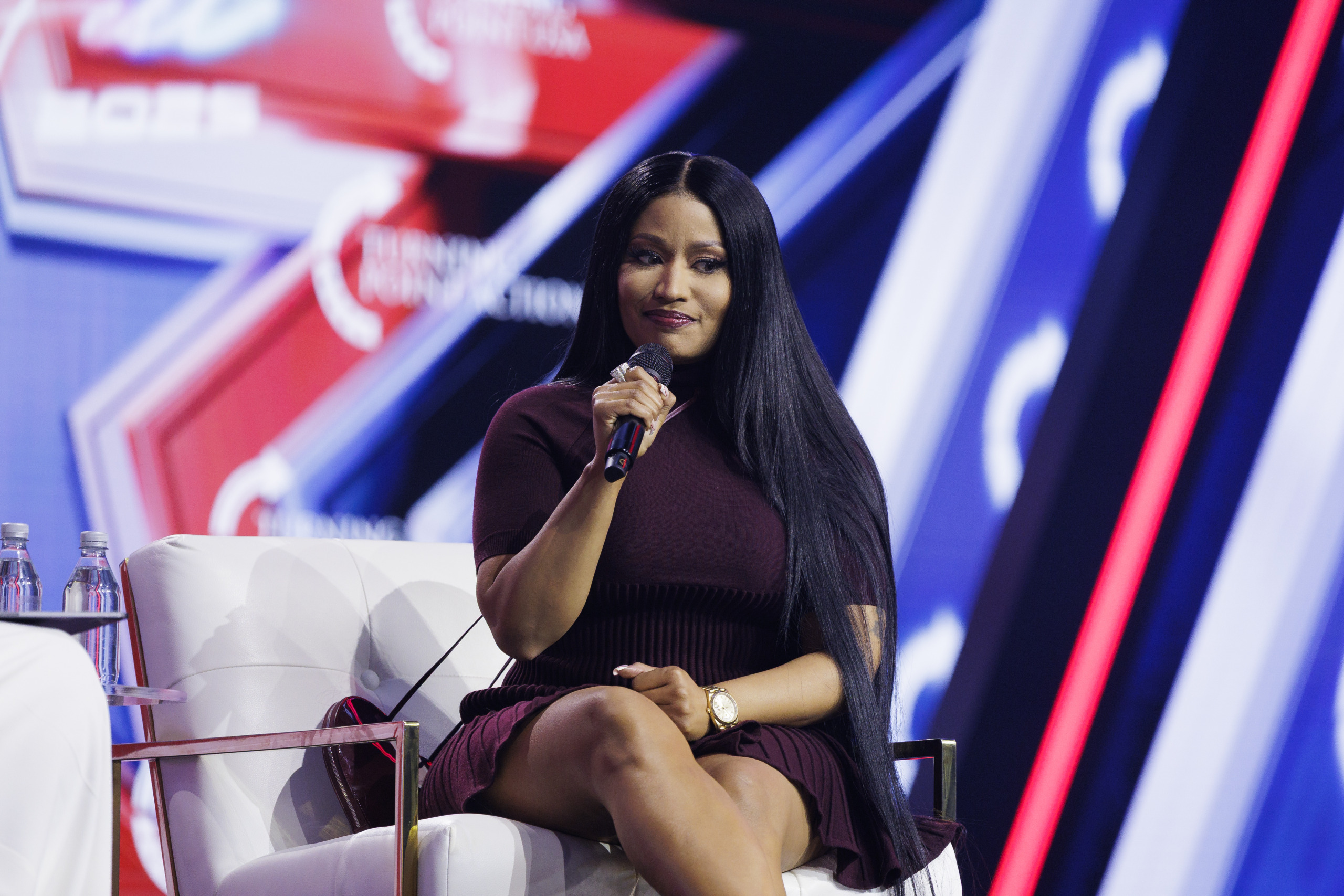
Minaj’s remarks centered on claims that Christians face systematic persecution in Nigeria, a narrative that has gained traction in the media and among some advocacy groups. However, the characterization of events as genocide against Christians is strongly disputed by conflict researchers, humanitarian organizations, Nigerian officials, and religious leaders from both Christian and Muslim communities.
Commentators have noted that her engagement reflects a broader cultural trend of entertainers using their platforms to influence political conversations, potentially mobilizing parts of her fanbase around conservative causes even as it alienates other followers who disagree with her positions. Her remarks have already sparked debate across social media and news outlets about celebrity influence in politics and the responsibilities that come with a large public platform.
As Minaj continues to insert herself into public policy debates, her evolving political voice underscores the increasingly blurred boundaries between pop culture and partisan engagement. Whether her involvement will have a lasting impact on political discourse or electoral dynamics remains to be seen, but her recent high-profile appearances signal that she intends to remain a visible and vocal presence in political spaces.