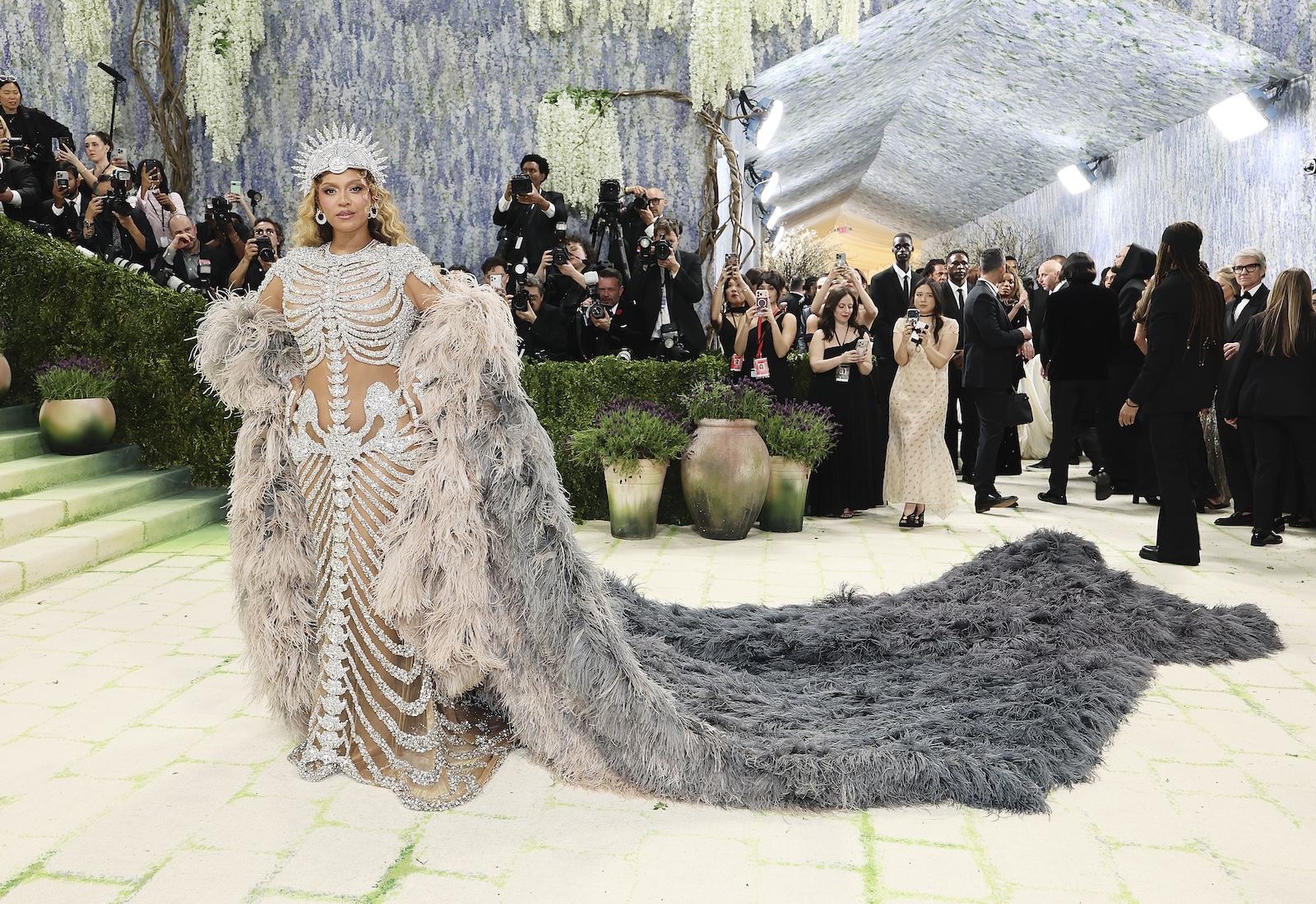
The Metropolitan Museum of Art has officially announced the theme for its 2027 Costume Institute exhibition, extraORDINARY: Fashion and the Poetics of the Everyday, and this time, fashion’s biggest stage is turning its attention to the clothes we wear every day. Think denim jeans, white T-shirts, hoodies and puffer coats, the wardrobe staples that have become part of our daily uniforms. While the exhibition will explore how designers transform familiar garments and commonplace materials into extraordinary works of art, its premise also speaks to something Black communities have understood for generations: making the ordinary extraordinary has always been part of our cultural DNA.
From the streets of Harlem and Brooklyn to Los Angeles and the South, Black style has long influenced how the world gets dressed. Whether it was the tracksuits and sneakers popularized by Run-DMC, the oversized denim of the 1990s or the Southern rap movement of the early 2000s that had everyone wearing oversized white Pro Club T-shirts with baggy jeans, everyday clothing became a cultural statement. From Atlanta and Houston to New Orleans and Memphis, Southern hip-hop helped establish a style language that continues to influence contemporary fashion, proving that some of the industry’s most recognizable looks didn’t originate on luxury runways.
Announced Thursday, November 5, the exhibition will open May 9, 2027, just days after the Met Gala takes place on Monday, May 3. Curated by Andrew Bolton, Curator in Charge of The Costume Institute, extraORDINARY will bring together pieces from the museum’s permanent collection alongside important loans and new acquisitions, examining how designers use craftsmanship, construction and material experimentation to challenge traditional ideas of luxury and artistic value.
“The ordinary is never quite as simple as it appears,” Bolton said in a statement. “A pair of jeans, a white shirt, or a sweatshirt can hold traces of a life—the habits, memories, and attachments that make something our own.”
The exhibition will be divided into two principal sections, “Familiar Forms” and “Common Matter.” The former will examine how designers reinterpret recognizable wardrobe essentials including jeans, hoodies, biker jackets, trench coats and puffer coats. Featured works will include designs by Matthieu Blazy for Bottega Veneta, Marc Jacobs for Perry Ellis, Jonathan Anderson for Loewe and Pierpaolo Piccioli for Moncler.
“Common Matter,” meanwhile, will explore fashion’s relationship with unconventional materials, highlighting designers who have transformed everyday objects such as buttons, cutlery and broken china into wearable creations. Works by Rei Kawakubo for Comme des Garçons, Martin Margiela, Helmut Lang, Issey Miyake and Glenn Martens for Maison Margiela will demonstrate how experimentation can challenge traditional definitions of craftsmanship and luxury.
The concept also brings to mind Black designers who have challenged fashion’s established rules. Patrick Kelly famously incorporated buttons and playful embellishments into his designs, while Dapper Dan reimagined luxury fashion through a distinctly Harlem lens, transforming recognizable designer logos into custom creations that spoke directly to the culture. Their work illustrates how reinterpreting familiar materials and imagery can produce an entirely new fashion language.
The exhibition will open with pieces from Jun Takahashi’s Fall/Winter 2024–25 Undercover collection, Watching a Working Woman, which explores the overlapping identities and responsibilities of women through layered garments and unconventional construction. It will conclude with designs by Kunihiko Morinaga for Anrealage, whose geometric silhouettes challenge conventional ideas about how clothing should fit the human body.
Beyond the garments themselves, extraORDINARY will examine sustainability, recycling and upcycling, encouraging visitors to reconsider how clothing acquires value through wear, memory and personal attachment. Exhibition design by 1009 will also bring visitors’ own outfits into visual dialogue with the works on display, reinforcing the idea that fashion’s cultural significance extends beyond the runway.
As for the Met Gala, the official dress code, co-chairs and additional details have yet to be announced. While the exhibition’s announced lineup does not explicitly center Black fashion history, its premise presents an opportunity to recognize the communities whose creativity helped turn everyday dressing into a global fashion language.
The 2027 Met Gala takes place May 3, with extraORDINARY: Fashion and the Poetics of the Everyday opening May 9 at The Met Fifth Avenue and running through January 9, 2028. Instagram is the presenting sponsor, with major funding from Moncler and additional support from Condé Nast.
For an industry that has spent decades finding inspiration in the streets, the exhibition raises a timely question about the relationship between influence and recognition. When everyday style becomes high fashion, how often are the communities that made it fashionable in the first place given their flowers?