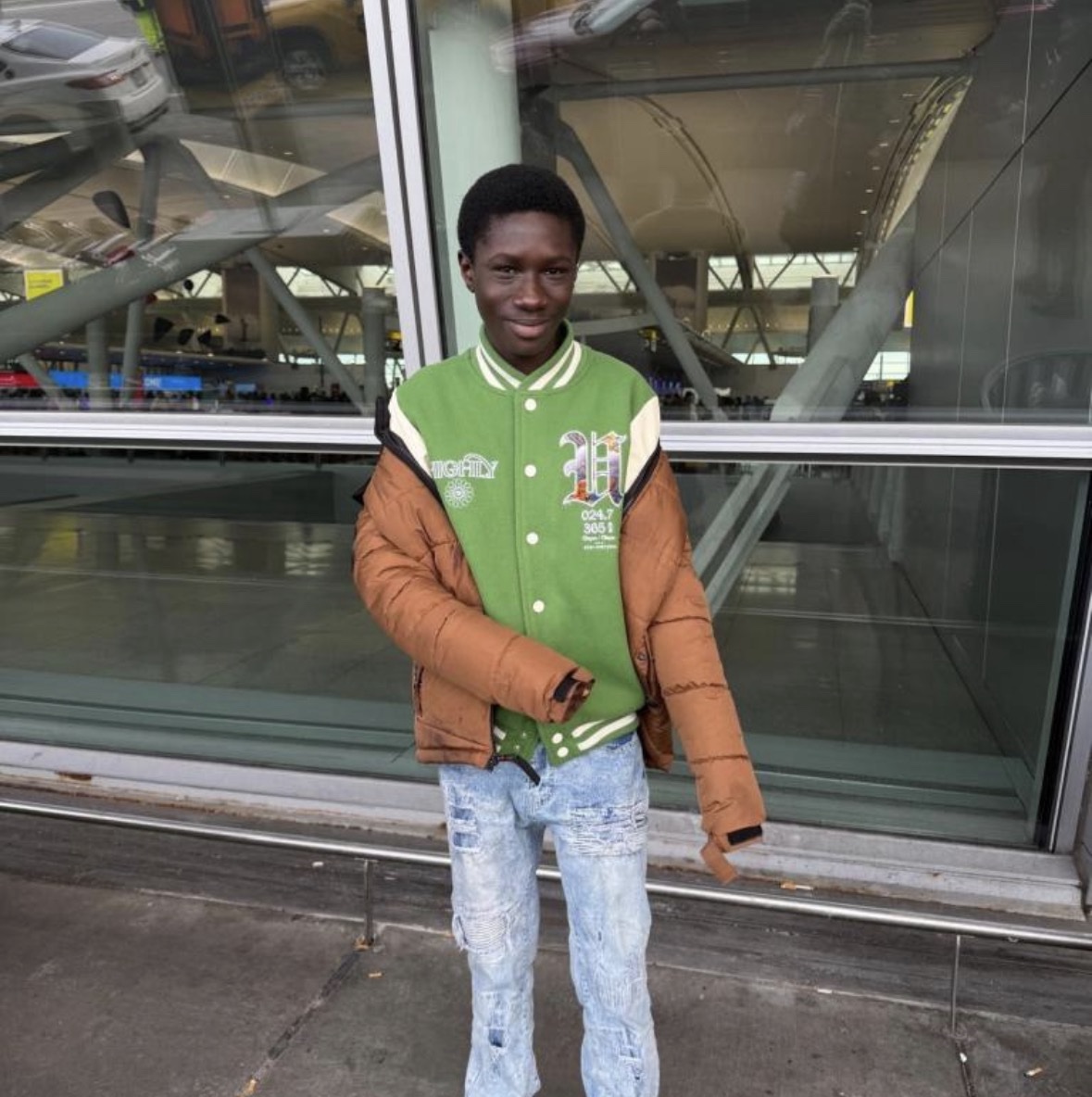
The last thing Thomas Frimpong told his son was to get to school on time. No one could have imagined those words would become their final exchange.
On October 29, 15-year-old Javits Frimpong was walking to school in the Bronx when he was shot in the abdomen. He reportedly ran approximately one block before collapsing. By the time his father reached the hospital, his son was dead. Javits had been in America for barely a year. His father, a Ghanaian immigrant and cab driver, brought him here seeking opportunities he believed would give his son a better future.
Yet somehow, in the aftermath of this child’s murder, parts of the internet have decided that the appropriate response is another ridiculous diaspora war. The audacity is staggering, but the moral bankruptcy is even worse.
A Murder, Not a Mandate for Division
As EBONY previously reported, Javits was reportedly subjected to bullying before his death. His father maintains that he raised concerns with school officials and that disciplinary action was taken against students involved in an earlier incident.
Authorities are reportedly searching for three suspects believed to be between 16 and 18 years old. Investigators have not publicly established a motive or confirmed whether the reported bullying was connected to the shooting.
However, some people on social media have allowed speculation to morph into accusation. Some commentators have attributed the murder to Black Americans without evidence establishing the suspects’ identities. Others have responded by resurrecting longstanding grievances about African immigrants, cultural superiority, and anti-Black American prejudice.
Javits was somebody’s son. His father is preparing to bury a child. His mother, still in Ghana, must confront a loss no parent should have to endure. Meanwhile, strangers are dissecting nationalities, trading stereotypes, and assigning collective guilt as though this tragedy were an invitation to settle historical scores.
The Diaspora Has Real Wounds But This Is Not The Battlefield
The tensions between continental Africans and Black Americans are neither imaginary nor historically insignificant. They deserve serious examination, particularly through the lenses of colonialism, slavery, migration, cultural identity, and internalized anti-Blackness.
African immigrants have experienced ridicule over their accents, cultural practices, and national origins. Black Americans have endured condescension from some immigrant communities that reproduce stereotypes about African American culture while overlooking the historical struggles that expanded opportunities for Black people in the United States.
The intellectual foundation of these divisions is inseparable from the history of white supremacy. Colonialism depended on portraying Africans as culturally inferior and incapable of governing themselves. American slavery and segregation relied on constructing Black Americans as inherently deficient, dangerous, and undeserving of equal citizenship. Both systems manufactured racial hierarchies to legitimize exploitation.
So when Africans and Black Americans reproduce these stereotypes against one another, they perpetuate the ideological architecture of their own oppression.
But in Frimpong’s case, this is not the space for the thesis and think pieces about those tensions. Conversation regarding the diaspora deserves its space, but not at the risk of socially vomiting talking points that don’t point people back to the matter at hand.
A child is dead. The people responsible must answer for his death. Their ancestry, whatever it may be, does not make millions of others accomplices.
History Demands More of Us
The Bronx has witnessed the consequences of anti-Black violence before. In 1999, Amadou Diallo, a Guinean immigrant, was killed by New York City police officers who fired 41 shots. His death mobilized African immigrants and Black Americans in a shared demand for accountability.
Their solidarity reflected a much longer tradition.
Ghana’s independence movement drew intellectual inspiration from the global Black freedom struggle. Kwame Nkrumah studied at Lincoln University, a historically Black institution in Pennsylvania. W.E.B. Du Bois spent his final years in Ghana, where he continued advancing Pan-African thought. Maya Angelou lived in Accra during the 1960s, participating in a community of Black expatriates whose political consciousness connected African liberation with the American civil rights movement.
These relationships were never without tension. Solidarity has always required confronting differences in experience, identity, and political priorities.
Nevertheless, generations of Black thinkers understood something contemporary social media discourse frequently abandons: the freedom of African people and the freedom of Black Americans are historically interconnected. And Javits deserves considerably more respect than having his death weaponized to advance those grievances.
Justice Requires Action, Not Speculation
While social media debates cultural identities, New York City officials have begun responding to the family’s immediate needs.
In a statement posted to X, Mayor Zohran Mamdani said he spoke directly with President Donald Trump to secure a visa for Javits’s mother, allowing her to travel from Ghana to mourn her son.
According to information provided to EBONY by the mayor’s office, Mamdani contacted Javits’s family following the shooting and subsequently informed his father that Trump had agreed to grant the visa.
The administration also deployed a Crisis Management System Mobile Trauma Unit to provide grief counseling, outreach, and community support. Violence intervention organizations, including Release the Grip, Guns Down Life Up, and SOS Bronx, have engaged with affected residents and students.
These interventions demonstrate that responding to tragedy requires resources, institutional responsibility, and sustained community engagement. However, they cannot substitute for accountability.
Who killed Javits? What circumstances preceded the shooting? Were there warning signs? What did school officials know about the reported bullying, and how did they respond?
If opportunities to intervene were missed, those failures must be examined because his family deserves answers, and other children deserve protections that extend beyond condolences after violence occurs.
Let This Child Rest. Let His Family Grieve.
Anyone genuinely concerned about Javits should demand a thorough investigation, accountability for those responsible, transparency around the reported bullying, and meaningful protections for vulnerable students.
Instead, too many people are treating his death as another opportunity to demonstrate their allegiance to a particular cultural identity. What an extraordinary failure of perspective.
Thomas Frimpong sent his son to school. He expected him to learn, grow, and return home, safely. That expectation should never have been unreasonable.
Javits should have had years to discover who he wanted to become. His life should have been defined by his aspirations, relationships, achievements, and experiences, not the circumstances of his death.
He was 15 years old, and his humanity should be sufficient to command our collective outrage. A grieving family needs answers, and a murdered child deserves justice. Anything that distracts from those demands is an insult to his memory.