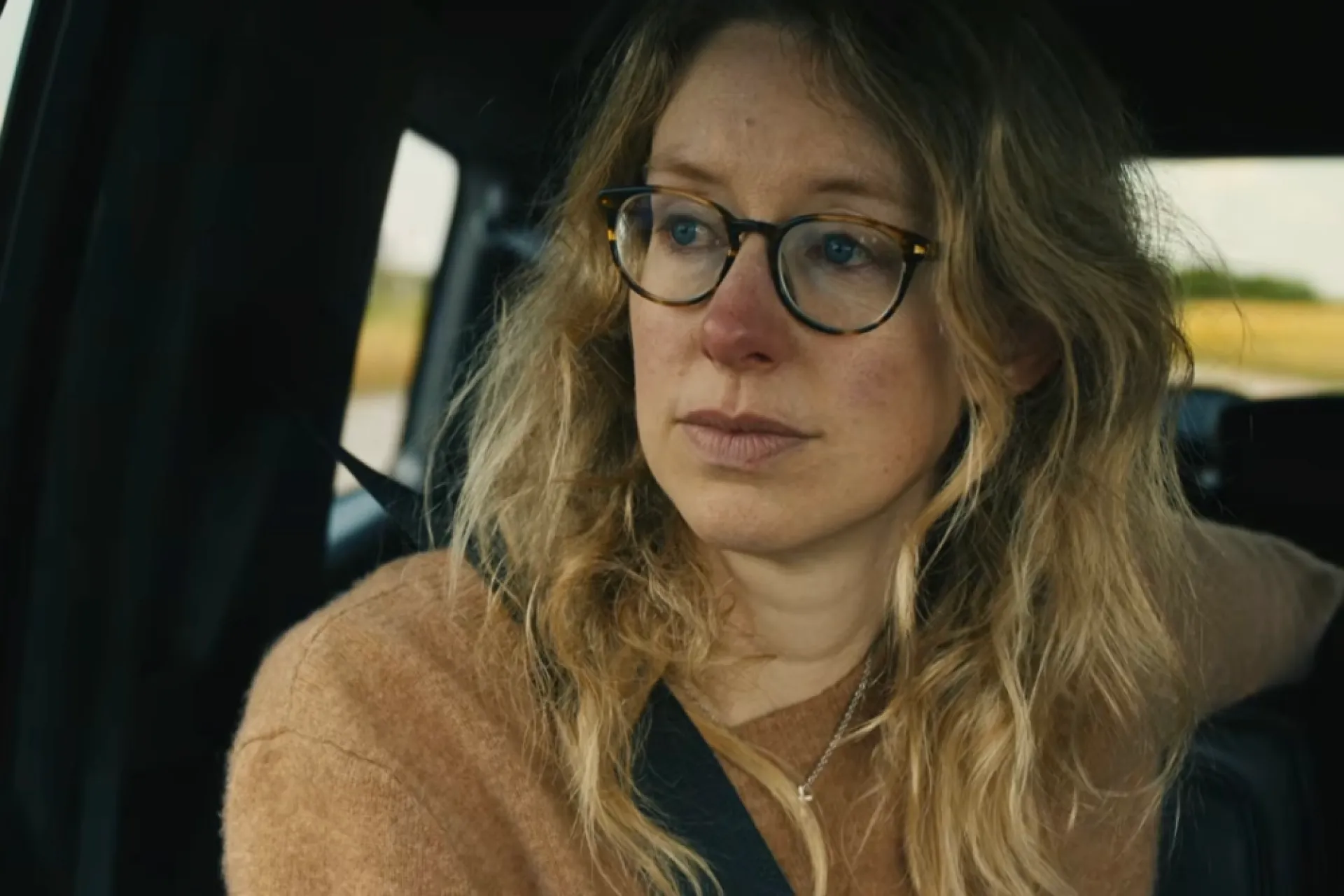
When You Can See Everything premiered in theaters last month, it became an instant hit. The film, which centers on convicted Silicon Valley fraudster Elizabeth Holmes, has grossed $45.1 million domestically and held its No. 2 spot behind DC Comics blockbuster Clayface in its second weekend. Directed by Lance Oppenheim and Nathan Fielder, the film has earned glowing reviews and scored 98% on Rotten Tomatoes. It has even garnered Oscar buzz, with some speculating it may become the first documentary nominated for Best Picture at the Academy Awards.
The creative, unconventional approach in You Can See Everything makes for a compelling watch as it follows the Theranos founder and CEO in the 34 days before her sentence begins at the minimum-security Federal Prison Camp in Bryan, Texas. It’s truly a ride. Even still, I didn’t need a three-hour film to see that Holmes is an unremarkable white woman whose privilege empowers her to trick people in remarkable ways.
The discourse surrounding how Holmes is portrayed in You Can See Everything is telling. While it has given Holmes an opportunity to garner the country’s sympathy from behind bars, many Black viewers are watching the A24 documentary through a very different lens.
View on Threads
In January 2022, Holmes was convicted on three counts of wire fraud and one count of conspiracy to commit wire fraud related to investors. She delayed her 11-year prison sentence while awaiting a decision on her appeal, which was unsuccessful. Ramesh “Sunny” Balwani, Holmes’ ex-boyfriend and former Theranos president and COO, was also convicted and sentenced to 13 years in federal prison.
Holmes turned herself in on May 30, 2023, as the film shows. Her story has enthralled the nation for over a decade, bearing irresistible fruit for the media—from newspaper and magazine features to an HBO documentary and a Hulu series. You Can See Everything may be the most humanizing and empathetic of them all.
Even Fielder, whose commitment to the bit makes him one of today’s most interesting comedians, gets swept up in Holmes’ allure. The comedian-director is present in the film, mostly oscillating between interviewer and observer during the first two hours. From the beginning, it’s clear how frustrating a conversation with Holmes can be. Her tendency to interpret language literally is one of the most revealing character traits audiences discover through the documentary. She portrays herself as unable to read between the lines or understand sarcasm—though a few moments in the film suggest otherwise.
Whenever Fielder’s line of questioning comes close to cracking Holmes’ shell, her fiancé, Billy Evans, intercepts. He isn’t afraid to be the film’s antagonist, gradually shifting from coddling Holmes to controlling her. Evans, a white man, isn’t afraid to be seen as the bad guy. He becomes Holmes’ shield as she weaponizes viewers with her perceived incompetence. She leaves just enough space to suggest that her partner’s ethics and actions may not only be separate from hers, but that Evans takes advantage of his liberties to act on her behalf. He may even be manipulating Holmes (as she manipulates him?). And though that may be true to some extent, it’s difficult to see her as totally innocent when she’s been down this road before.
In the last hour of the film, when Holmes is in prison, Fielder introduces Amanda Seyfried, the actor who portrayed Holmes in Hulu’s The Dropout. She takes on the role of the disgraced founder yet again, this time reenacting moments Fielder either wants to revisit or can’t film with Holmes herself. Seyfried questions her own involvement in negatively impacting Holmes’ life. But she also becomes Holmes’ biggest critic in the film. At one point, she asks Fielder, who is seen waiting around for her call like a lovesick ex, if he misses her. He doesn’t say no.
There is a lot to say about this mammoth of a film. It takes a bold approach to blending documentary-style filmmaking with dramatized art. However, we didn’t need another project on Elizabeth Holmes. We’ve obsessed over her enough. Instead, we should interrogate the sociological phenomenon of why the societal status quo protects Holmes more than others.
Holmes’ legacy lives among a multigenerational list of white women who have used their identity to lie to and harm others while keeping their hands clean throughout history. Her piercing blue eyes that seem to only need to blink a few times a day, monotone voice, and aloof mannerisms give the audience an excuse to infantilize her while she operates in her own self-interest. And though Evans is reprehensible in his own right, that does not absolve Holmes from the responsibility to know better and do better.
Our society does not ask this of white women. One of the most notorious examples of this is Carolyn Bryant Donham, the white woman whose lie led to 14-year-old Emmett Till’s lynching in 1955. But you don’t have to look through history books to see how white fragility is a danger to the public.
In 2020, Amy Cooper called the police on a Black birdwatcher, Christian Cooper, who asked her to leash her dog. Last month, witnesses coddled a white woman who crashed her car into a Chicago city bus instead of checking on the Black children aboard who were impacted. In fact, TikToker Foxy Brown has created dozens of videos based on these real-life moments:
@foxybaby1 She is just 5, she is just 15, she is just 25, she is just 35. She is just a girl 🥹 LMAOO
White women have long used their tears and vulnerability as a strategy. Watching You Can See Everything makes it clear that Holmes doesn’t believe she should be held accountable for the crimes she committed. In fact, she and Evans are preparing to revive her blood-testing company with Theranos 2.0.
Obviously, Holmes is serving her time and has faced public scrutiny. But we cannot separate Holmes’ identity from the resources she’s been able to leverage, even after her conviction. One thing You Can See Everything is extremely aware of is that the manipulative power Holmes used to earn respect and admiration in Silicon Valley is the same influence she’s now using to evoke the audience’s compassion on her road to redemption.
And it’s only working because she’s a white woman.