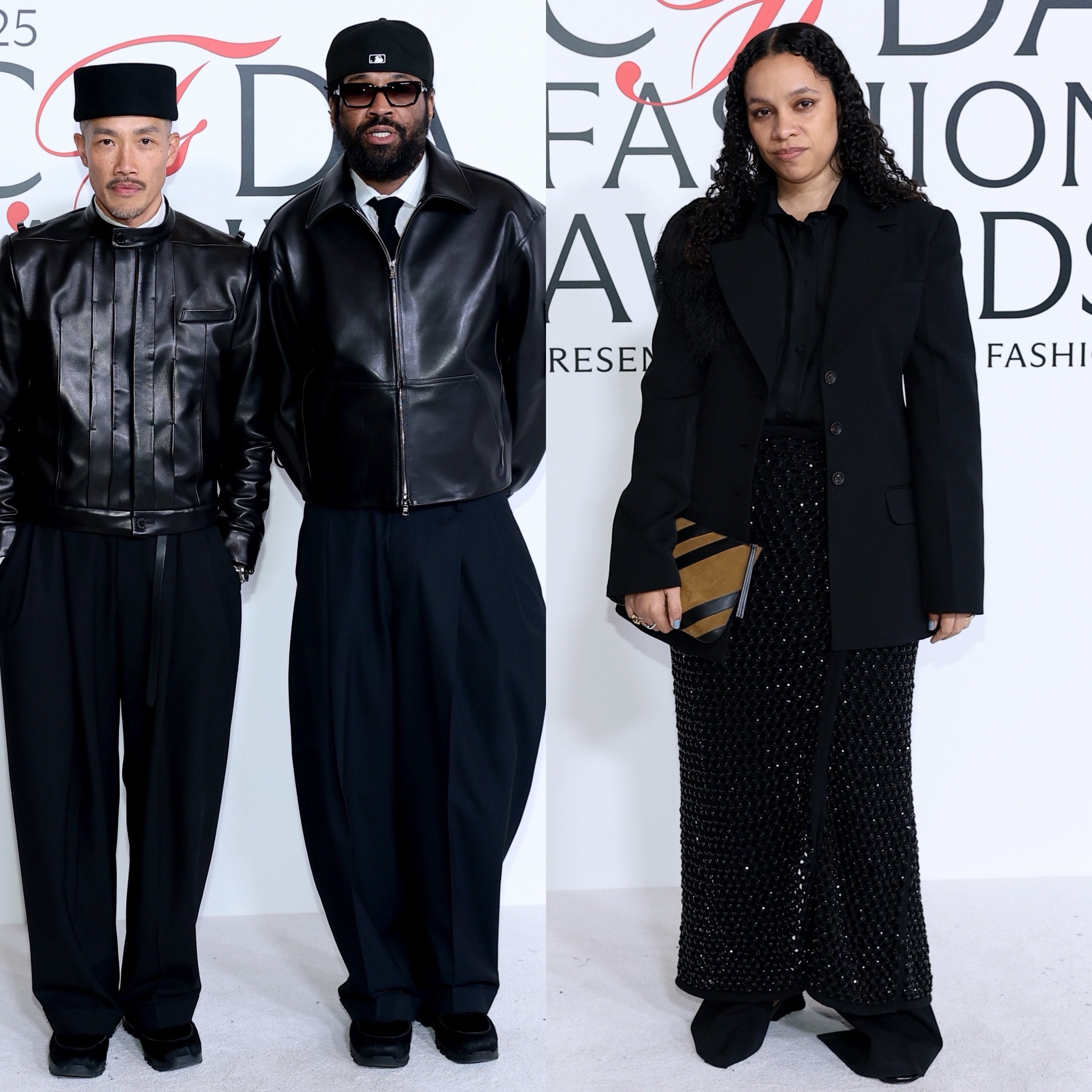
American fashion is having a moment of reflection, and tonight’s 2026 CFDA Fashion Awards are offering a glimpse into what its future could look like. As the industry’s biggest names gather in New York tonight, November 2, to celebrate the designers shaping the cultural and creative landscape, two brands are entering the conversation with something to say about the business of fashion, the importance of community and what it means to build something that lasts. Public School New York’s Dao-Yi Chow and Maxwell Osborne are nominated for American Menswear Designer of the Year, while Diotima’s Rachel Scott is up for American Womenswear Designer of the Year. Although their design philosophies and journeys differ, their perspectives on American fashion share a common thread: resilience, independence and the freedom to create on their own terms.
For Chow and Osborne, tonight represents a homecoming of sorts. The creative duo behind Public School helped redefine the language of contemporary American menswear by merging downtown New York sensibilities with streetwear influences and a sophisticated approach to tailoring. Their designs challenged the traditional boundaries between luxury and everyday dressing, establishing a distinct visual identity that resonated with an entire generation of fashion enthusiasts. After experiencing the industry’s highs, lows and everything in between, the designers returned to the New York Fashion Week calendar with a renewed perspective on what their brand could become.
“We’re grateful to be nominated, especially after returning to Public School,” the designers tell EBONY exclusively ahead of tonight’s ceremony. “We’ve been through a lot of different chapters with this brand, so to come back and be recognized again by our peers means a lot to us.”
For Scott, whose label Diotima has become one of the most compelling voices in contemporary American luxury, the nomination arrives at a different stage of her career. Founded in 2021, the independent brand has garnered attention for its exploration of Caribbean craftsmanship, particularly Jamaican crochet traditions, alongside sensual silhouettes, intricate construction and a sophisticated approach to modern dressing. Scott’s work doesn’t simply introduce another aesthetic into the American fashion conversation. It challenges the industry to reconsider whose cultural references are recognized as luxury in the first place.
“It is always an extreme honour to be recognized by your peers with a nomination,” Scott shares. “Diotima is still emerging as a brand at only 5.5 years in business and remains entirely independent. To be shortlisted amongst leaders in the New York industry, with much bigger brands, is truly humbling.”
While Public School and Diotima represent different generations of New York fashion, their nominations speak to an industry that continues to wrestle with questions surrounding representation, access and longevity. Fashion has never been short on creative talent, particularly within Black communities, but transforming that talent into a sustainable business requires more than a successful runway collection or a moment of industry recognition. It requires financial resources, meaningful relationships and an ecosystem willing to support designers beyond their initial breakthrough.
For Public School, community has always been central to the brand’s identity. Throughout its evolution, Chow and Osborne have maintained a connection to the people, neighborhoods and cultural movements that helped shape their creative vision. Their return has been met with enthusiasm from longtime supporters who understand that the brand’s influence extends beyond the clothes themselves.
“The response from our community and the people who have supported us over the years has been incredible,” they explain. “The love we’ve received from our family, friends, and everyone who’s been part of the Public School journey means the world to us. We built this brand around ideas and a culture that we believed in, and it’s amazing to see that those things still resonate today. Hopefully, we’ll be around long enough to see those ideas continue to grow and evolve.”
That sense of cultural identity is equally important to Scott, whose Jamaican heritage remains an essential part of Diotima’s creative language. Rather than approaching American luxury through the traditional European framework that has historically dominated the industry, she sees an opportunity to expand the definition altogether. Her work positions Caribbean craftsmanship within the luxury conversation without compromising its cultural origins, demonstrating that American design can embrace a broader range of histories and perspectives.
“American luxury is such an exciting space to work within as it feels almost limitless, unbound to centuries of fashion in the way European fashion is,” Scott says. “This gives the possibility to consider voices not usually included in the canon. America is very much the product of the richness of its immigrants, and American fashion should and does reflect that.”
It’s a perspective that feels particularly relevant as the industry continues to debate what American fashion actually represents. For decades, the conversation has often centered on sportswear, commercial appeal and the established fashion houses that helped build the country’s design reputation. Yet the next chapter of American luxury is being shaped by creatives whose identities, cultural experiences and approaches to craftsmanship don’t necessarily fit within those traditional definitions.
Still, cultural recognition and commercial sustainability are two very different conversations. Black designers have long contributed to the industry’s creative evolution, but access to the resources necessary to build generational fashion businesses remains a persistent challenge. Scott believes the conversation surrounding representation must extend beyond celebrating designers on awards nights and begin addressing the financial realities of operating an independent label.
“Fashion is very much pay to play, and historically, access to capital remains elusive for Black business owners, as it still does today,” she explains. “The American fashion industry needs to leverage its immense scale to advocate for and create paths towards accessing capital to build, scale and sustain Black businesses.”
Her observation raises an important question about the future of American fashion: What happens after the applause? A nomination can introduce a designer to new audiences, strengthen industry relationships and create opportunities for growth, but it cannot replace the infrastructure required to sustain a business. For independent brands, the cost of production, staffing, retail expansion and maintaining creative operations can be substantial. The industry’s willingness to celebrate emerging talent must be matched by an equally serious commitment to helping that talent survive.
Chow and Osborne understand those realities from experience. Having navigated multiple chapters of Public School’s existence, the designers have developed a more nuanced understanding of what longevity requires. The excitement surrounding a new collection or an industry accolade can be fleeting, but the determination to continue creating through uncertainty has become one of their most valuable lessons.
“We’ve learned how important it is to stay the course, even when things aren’t necessarily going the way you planned,” they share. “There are always going to be ups and downs, but longevity is really about believing in what you’re building and continuing to push forward, even when things get difficult.”
For the next generation of Black designers watching their careers unfold, that perspective carries particular weight. Public School’s return demonstrates that a fashion career doesn’t have to follow a perfectly linear trajectory to remain meaningful. Success can involve stepping away, reassessing priorities and returning with a clearer understanding of what matters. When asked what they hope their journey communicates to young creatives, Osborne offers a simple reminder: “That if you stick to your dreams and believe in what you’re doing, you can actually make it.”
Scott’s definition of success, meanwhile, remains grounded in the independence that has defined Diotima from its inception. While industry recognition offers an opportunity to expand the brand’s visibility, her ambitions are centered on building something sustainable without sacrificing the creative integrity that distinguishes her work.
“Success for Diotima is continuing to build the brand world, connect more with our customers and make beautiful clothes, independently, as we have always done,” she says.
The distinction between recognition and longevity is perhaps the most compelling connection between these designers. Public School has already experienced the industry’s shifting attention and understands the importance of building beyond a single moment. Diotima is navigating the opportunities and pressures that come with being an emerging independent luxury label. Both stories illustrate the possibilities of American fashion while exposing the challenges that continue to shape who gets to participate in its future.
When asked to define American fashion in 2026, Scott offers a response that reflects her approach to the industry. “American fashion means Independent to me, and I am very proud to be a part of that community of independent voices.”
For Chow and Osborne, independence is closely connected to the freedom to fail, evolve and try again. They point to established American designers whose careers were built through years of persistence rather than overnight success.
“American fashion is about having the opportunity to fail, succeed, and try again,” they explain. “We think about designers like Michael Kors and Ralph Lauren, who weren’t overnight successes. They built something over time, through setbacks and challenges, and kept going. We’ve had our own share of failures and successes, but the important thing is to keep pushing and give yourself another chance to get it right.”
Their understanding of American fashion is rooted in the belief that opportunity isn’t always given, particularly to designers who have historically existed outside the industry’s traditional centers of influence. For Chow, the ability to create a brand from the ground up remains one of the defining characteristics of the American fashion experience.
“For us, American fashion has always been about resilience,” he says. “Nothing was handed to us. We had to go out and make it happen.”
As the fashion industry prepares to recognize its leading talents tonight, the nominations of Public School New York and Diotima represent two distinct yet interconnected visions of what American fashion can become. One brand is returning with the wisdom of experience, while the other is building its legacy through an independent approach to luxury rooted in cultural craftsmanship. Both are challenging the idea that success should be measured solely by commercial scale, industry approval or the number of trophies collected along the way.
And perhaps that’s the larger conversation worth having beyond the CFDA red carpet. The future of American fashion cannot be defined by who receives the loudest applause for one evening. It must also be measured by which designers are given the resources, opportunities and freedom to build businesses that will still matter decades from now. For Public School and Diotima, tonight is another significant chapter, but the real achievement lies in their determination to keep writing the story on their own terms.