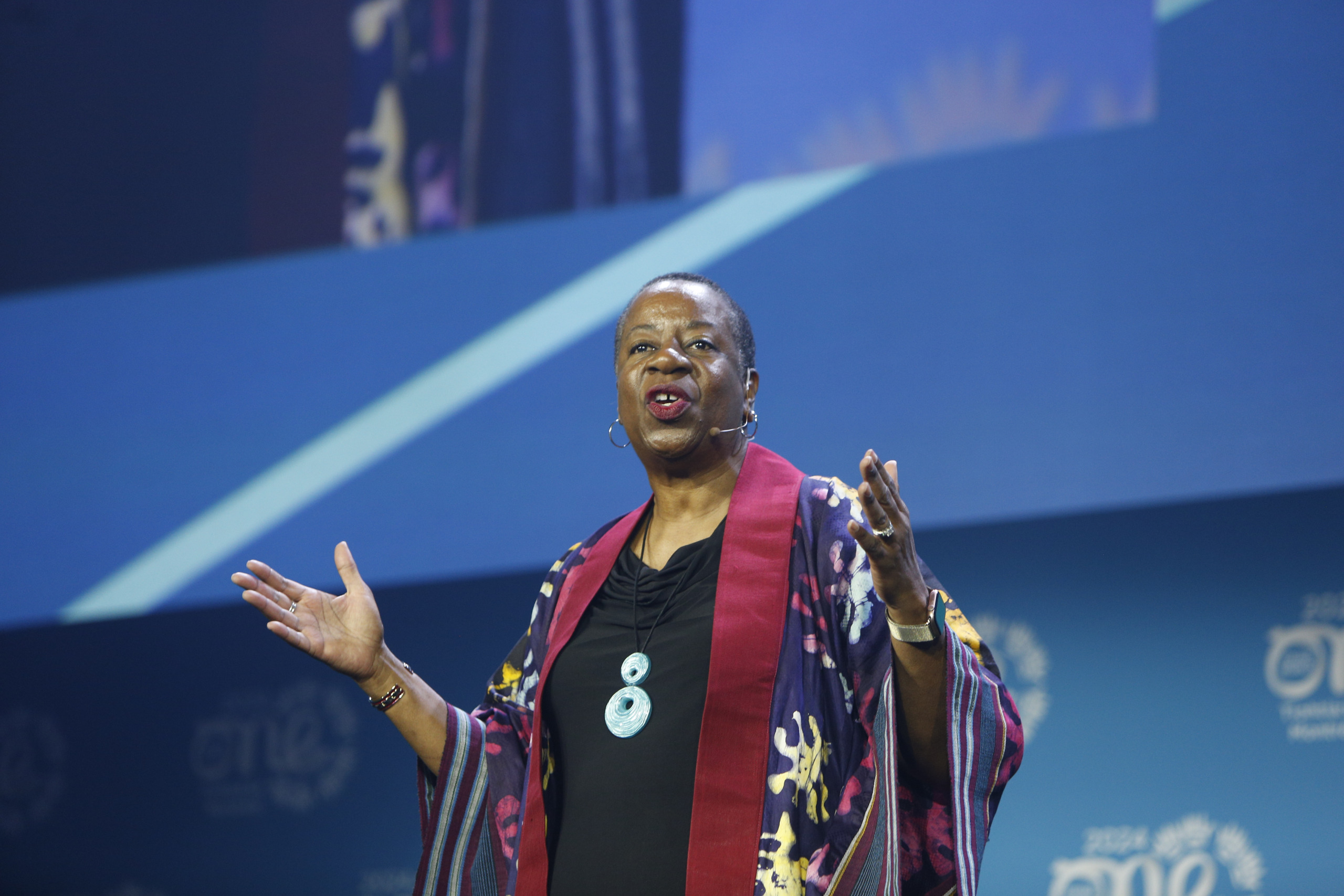
Angela Williams has spent much of her life in service. Long before she became CEO of United Way Worldwide, she was the daughter of civil rights leaders, raised in a household where faith, duty and public responsibility were part of the inheritance.
Her father worked alongside Dr. Martin Luther King Jr. before becoming the third Black chaplain in the history of the U.S. Navy. And her mother stood beside him through decades of ministry and leadership.
Williams would go on to build a remarkable career of her own as an Air Force JAG, federal prosecutor, Senate staffer, minister and nonprofit executive. One that eventually placed her at the helm of one of the world’s most recognizable philanthropic organizations.
But these days, life looks very different.
After stepping away from United Way, Williams is now in a season defined less by title than by caring for her mother and trying to understand who she is when one of the most visible jobs in philanthropy is no longer the first thing people associate with her.
To describe the framework guiding her through it, Williams uses a phrase that has become central to this chapter of her life:
The Four Ms
Marriage, ministry, mom, and me.
This framework emerged in the middle of a life that had become increasingly unsustainable. During her four and a half years as CEO of United Way, Williams traveled constantly, often through multiple cities in a single week. At the same time, her parents’ health needs were growing.
She remembers getting calls from her sister while overseas — once in Dubai, once in Zurich — telling her their father had coded in the emergency room. Meanwhile, her brother and sister, both small business owners, were carrying much of the daily caregiving burden back home.
Eventually, the decision that once may have seemed impossible became undeniable.
“Four plus years into that, my brother and sister said, ‘It’s just not fair, Angie, it’s your turn,’” Williams said. “Is it hard to do? Is it a hard decision? Absolutely. But is it the right decision? Yes,” she continued.
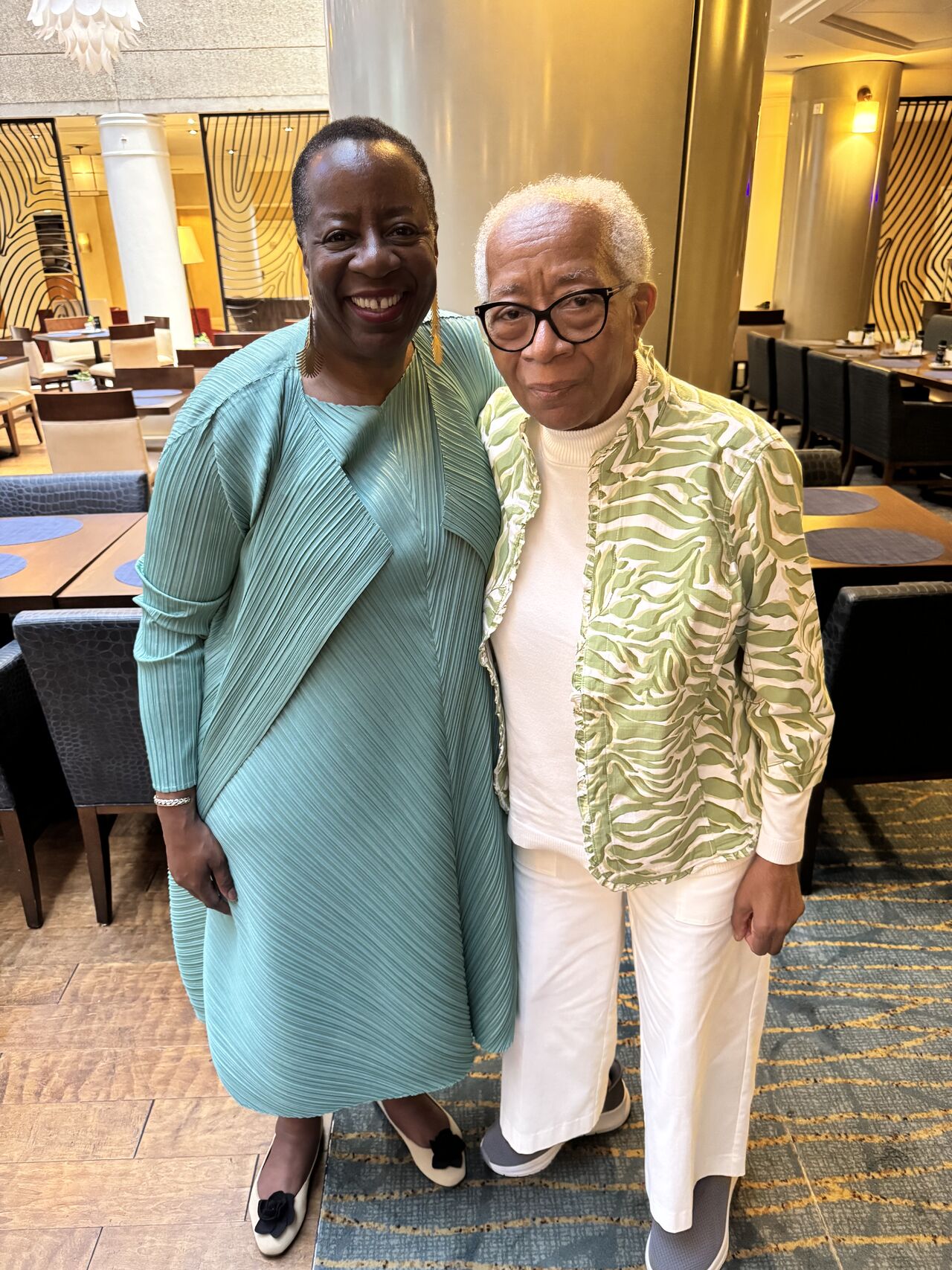
Williams’ story speaks to a broader truth: in many families, caregiving does not arrive neatly or on anyone’s timetable. It often collides with work, ambition and the expectations people have built around being dependable.
For Black families especially, caregiving is often folded into a larger tradition of showing up for one another without always having the resources, policies or public language to support what that care actually costs.
Beyond the Title
Williams has spoken openly about how disorienting this transition has been. At times she’s described it as an “identity crisis.” That language marks a sharp contrast from the way the world once saw her as a public figure.
“As a CEO and a leader, you’re supposed to show up strong in the public eye,” she said. “And especially as women, we want to check the box that we can do it all.”
Now she is learning how to define herself outside of those neatly checked boxes.
There is something especially resonant in her honesty. At her level of achievement, vulnerability can feel almost radical. Williams understands that people are watching, but she also knows many of them are living some version of the same reality of trying to care for loved ones while also making peace with the identities they once wore so confidently.
A Part of the Purpose
Williams has long understood her life not as a collection of separate careers, but as a calling expressed through different forms. The daughter of a pastor, she first lived that calling through music, serving in churches and leading worship.
Later, on a trip to Israel, she felt an overwhelming sense that God wanted more from her ministry. “I was meant to reach people whose shadows would never darken the doors of a church,” she said.
That moment led her to seminary and ordination, deepening a conviction that ministry did not stand apart from her life’s work in law or leadership.
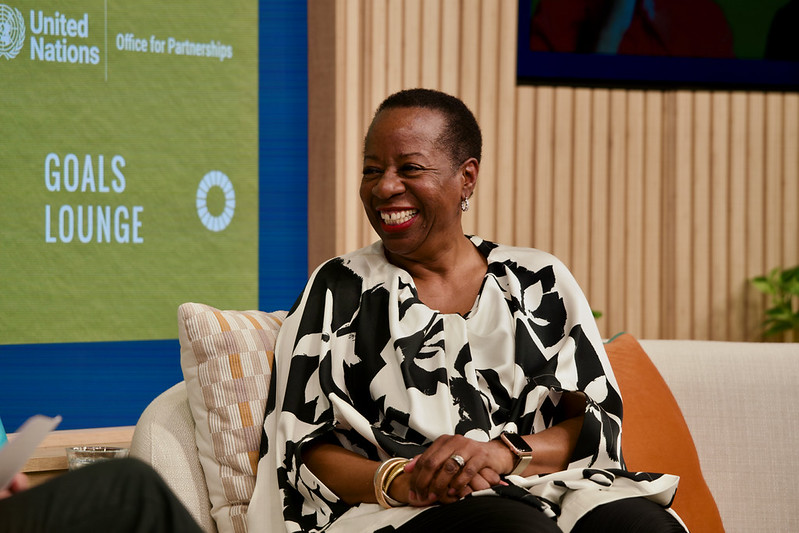
In this season, caregiving is not something Williams describes as a pause from purpose. It is part of the purpose.
She has begun speaking more publicly about caregiving and the support caregivers need, using her own experience to advocate for policy and wider awareness of what families are navigating, often without adequate help. She points people toward resources like AARP, but yet her larger message remains that caregiving should not be treated as a private burden families are expected to absorb in silence.
It has real consequences for careers, finances, mental health, and identity.
A Life Defined by Service
Still, Williams resists the idea that this chapter is only about loss or sacrifice.
What she talks about most often now is reordering. She still speaks, mentors, and moves in policy and leadership spaces. She has been invited into conversations at the Senate, the World Bank and the United Nations. But she also says there is comfort in no longer carrying out the daily responsibility of being CEO.
“What I feel relief in is not having to manage a global system,” she said, “but yet to be able to still put time and energy and to be focused on the priorities that are my priorities and not necessarily a system’s priorities.”
Even so, Williams is still looking ahead. She says mentoring young women brings her joy. So does speaking hope and sharing the lessons from her recent book, Advocating in the Age of Chaos. What comes next will still include leadership, ministry and public encouragement.
The platform may be changing, but the calling is not.