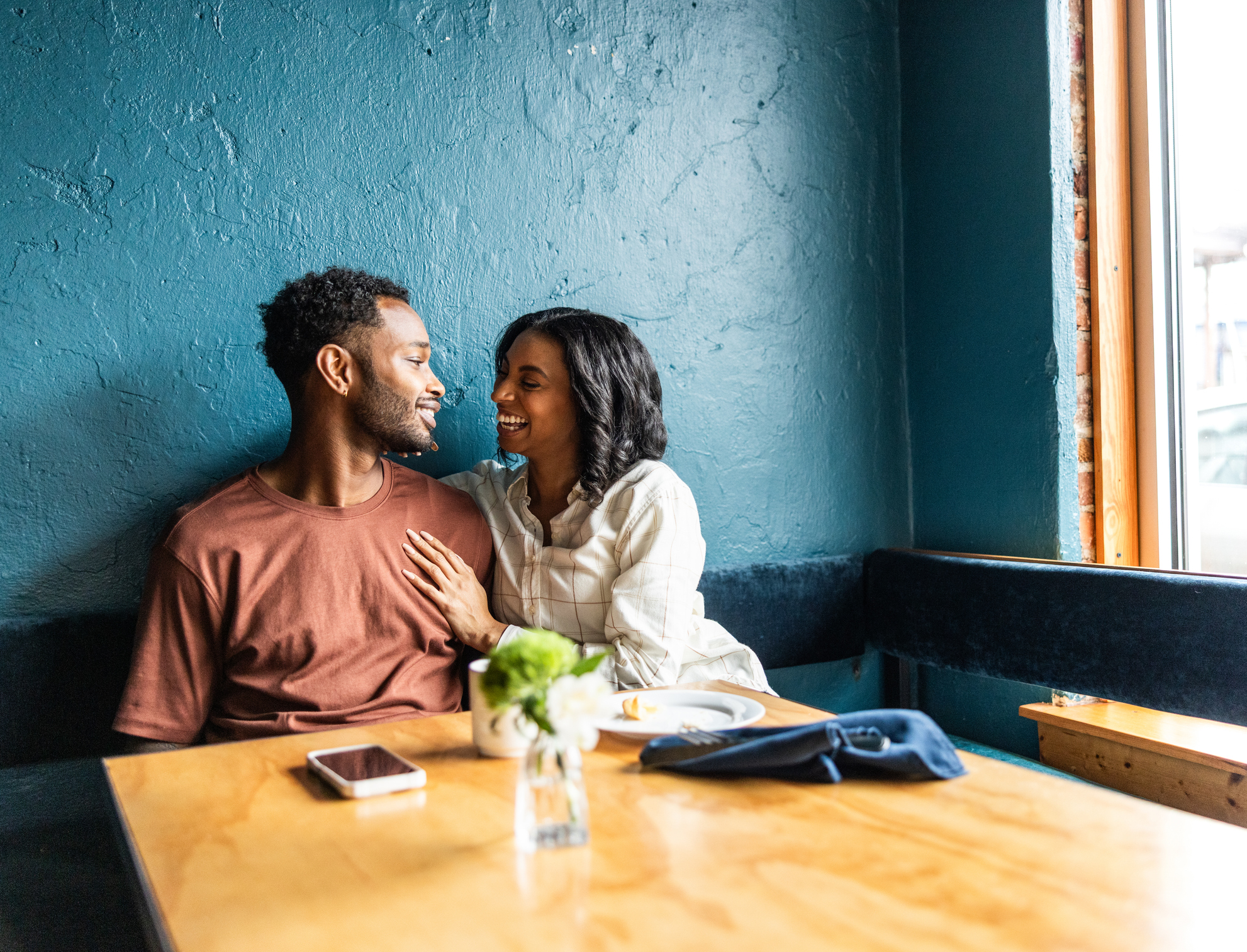
Let’s be honest: people still believe in love. The kind that’s intentional, secure, and worth giving your full self to. Especially Black women. Despite what timelines, podcasts, and group chats might suggest, the desire hasn’t gone anywhere; they’ve just evolved. In an era of situationships and extended talking stages, “soft commitment” has quietly become a staple gray area where everyone’s emotionally invested but nobody’s fully accountable. Still, even with all this variation, one thing is clear: this new normal comes with real consequences.
For many Black women, these prolonged states of ambiguity aren’t just frustrating; casual dating on the surface is, in reality, a pattern of emotional deferral where clarity is postponed and intention is rarely realized. While much has evolved, what remains constant is Black women’s genuine desire for something real and someone true. Despite the conversation of how “embarrassing” having a boyfriend may be framed the desire for partnership rarely disappears. So the question then becomes: how do we reconcile this tension? And in the midst of it all, what does “soft commitment” actually offer a society that already feels increasingly hollow? Perhaps the real task isn’t avoidance, but alignment.
Some might ask what exactly is “soft commitment,” though? It’s not quite the emotional unavailability of the past, nor is it the intentionality of traditional partnership. It lives somewhere in between. It’s the “we go together… but we’re not together” dynamic. The consistent inconsistency. The good morning texts without the long-term vision. The dates, the intimacy, the emotional labor—without the clarity. It’s intensity without direction. In many ways, soft commitment thrives on ambiguity. It offers just enough to keep both parties engaged, but rarely enough to build something sustainable.
In an era characterized by autonomy and self-focus, soft commitment allows people to explore connection without the perceived weight of obligation. There’s a freedom in being able to opt in and out, to prioritize personal growth, career, and healing without fully tethering oneself to another person. For men, especially, there’s been a noticeable shift toward transparency as mentioned earlier. There is no longer cloaking intentions in false promises, but instead laying out the terms upfront. This is what I can offer. Take it or leave it, but that honesty doesn’t always soften the impact. “A lot of relationships today aren’t clearly defined,” said Sommer Hill, Host & CEO of Sommer Time. “Situationships are more common now. People want the perks of a relationship (i.e., the companionship, cuddling, dating, sex) but not the responsibility, like emotional care and sacrifice.”
Instead, what often unfolds is a quiet negotiation between what is and what is desired. Not because the desire for more has diminished, but because the landscape seems to reward those who ask for less. “What we do now is we say we’re dating exclusively,” Hill said. “You’re not my boyfriend or girlfriend, but we’re only dating each other. Most relationships, though, stay stuck between talking and dating exclusively. At its core, that’s a situationship.”
This is where the tension becomes most pronounced. On one hand, there’s the cultural push toward independence, self-sufficiency, and even the popular rhetoric of “de-centering” men altogether. On the other hand, there remains a deeply human desire for partnership—for softness, for reciprocity, for a love that feels both grounding and expansive. These two truths are not mutually exclusive, but in practice, they often feel at odds. “I can no longer date men who subscribe to that spectrum,” Hill said. “I will only date men who go from getting to know me to being boyfriend and girlfriend. Ambiguous, undefined relationships don’t work for me.”
And perhaps that’s the real crux of soft commitment: it doesn’t just redefine how people date, it reshapes what people believe they can ask for. “While soft commitments may be frustrating to some, interestingly if expectations and boundaries are clearly managed they can be the strongest path to a healthy commitment (with them or someone else) down the line,” said Shan Boodram, Bumble’s Relationship Expert. “And this is actually a HUGE cultural shift because, as Dr. Fisher puts it, in our grandparents’ time, marriage was the beginning of a partnership, but today it is mid-point. Today’s singles want to know more about their partner before making any major investment in them. And there’s data to support this.”
Still, even within this evolving framework, there are those pushing back. Those choosing clarity over convenience. Those willing to risk vulnerability in exchange for something more defined, more intentional, more real. Because beneath the layers of strategy, self-protection, and shifting norms, the core desire remains unchanged: to be chosen, fully and without hesitation.
According to a recent Bumble survey, 40% of Black women prefer to take things slow with the person they’re dating. If slow love is done correctly, with care and understanding for our tendency to fall in love as pair bonders, these strategies can help daters keep logic in the mix for longer when choosing long term partners, by slowing down the neuropeptides associated with attachment that are released in unavoidable amounts when we’re in fast and furious connections. Maybe the question isn’t whether soft commitment is good or bad, but what it’s costing us in the long run.