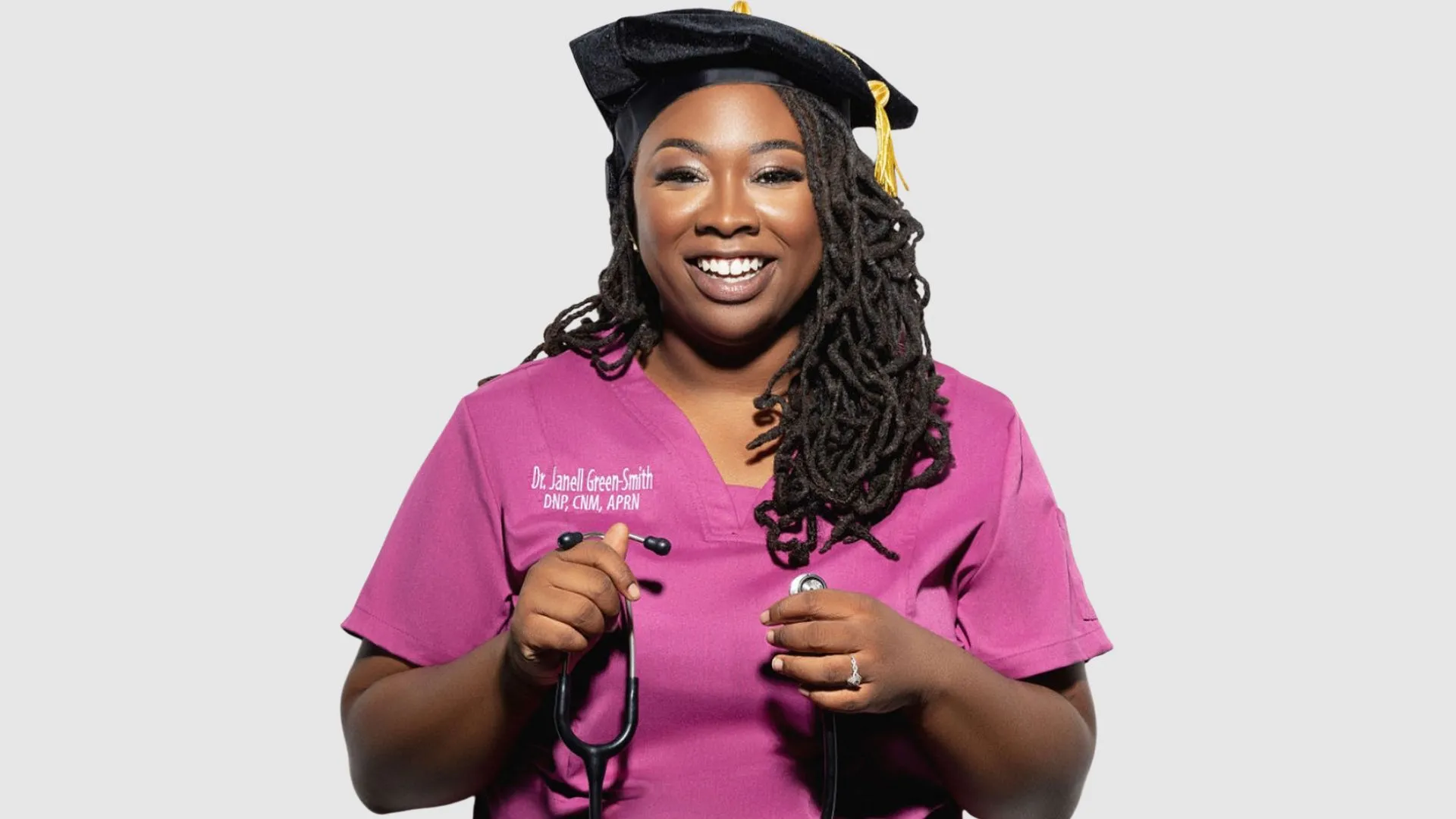
When the untimely death of Dr. Janell Green Smith, a 31-year-old midwife in South Carolina, occurred not even a week after giving birth, for many Black women, chances are you remember where you were when you heard the news. According to CNN, Green Smith was admitted to the hospital on Christmas Eve of last year after finding out she had a critical case of preeclampsia, a pregnancy condition where blood pressure is constantly high to the point where it can be potentially life-threatening. She safely gave birth to a baby girl on December 26, per the outlet, but shortly after, Green Smith needed emergency surgery for other complications. She didn’t make it to a full week postpartum before dying.
While her exact cause of death hasn’t been publicly detailed, it left many Black women rattled, stirring up deep-seated fears around the persisting and seemingly worsening Black maternal mortality crisis, and they’re well-justified. According to the most recent data from the CDC, maternal mortality rates—which are already wildly disproportionate—drastically decreased for white and Hispanic women in 2023, but had a slight uptick among Black women that same year. On top of that, more than 50 percent of pregnancy-related deaths among Black women happen postpartum, according to the Black Mamas Matter Alliance.
All of this hits different when a Black midwife—a symbol of expertise, safety, and protection—becomes a part of those numbers. “When a Black woman hears about the death of yet another Black woman shortly after giving birth, she is likely to experience strong feelings of fear, outrage, shock, sadness, hopelessness,” said Olusinmi Bamgbose, MD, a reproductive psychiatrist. “These emotions are likely intensified by the fact that this woman was a birth worker and Black maternal health advocate herself.”
That’s exactly what birthworkers are hearing in real time, too. “When someone who represents safety dies from the very harm they tried to protect others from, it breaks something deep,” said Star August Ali, a certified professional midwife (CPM) and licensed midwife in Illinois. “What we are hearing from the community is not panic without reason—it is clarity.”
August Ali, who is the founder and executive director of the Black Midwifery Collective, which serves Chicago’s South Side, says that community members have been “voicing fear, disbelief, and despair.” She adds: “They are asking, ‘If someone as brilliant, as prepared, and as committed to maternal health justice as Dr. Smith could be lost, what hope is there for the rest of us?’ Her passing is a devastating reminder that we are still not protected from the very systems we are struggling to transform.”
For a demographic that already has a fractured relationship with the medical community, Green Smith’s death only furthers that distrust. “For communities already carrying trauma, this kind of death reopens old wounds,” said August Ali, who is only one of four Black CPMs licensed in the state of Illinois. “For many, [Green Smith’s] death confirms long-standing fears that advocacy and expertise are not enough—particularly for Black patients. Instead of building trust, it deepens skepticism, grief, and hesitation to rely on medical care. It reinforces the belief that the system is unsafe.”
Dr. Bamgbose, who is also the founder of Ìtùnú Psychiatry, a private psychiatry practice, says she hears fears and anxieties around this fraught dynamic “all the time” from Black patients who are mothers, pregnant, or hoping to one day have a child. “They worry about being dismissed by their care team, losing their life, or losing their baby,” she told EBONY. “In these situations, you try to offer reassurance, but the risks are very real. We acknowledge those risks and find ways to increase their sense of agency. We have to resist the pull to feel like helpless victims. We are not helpless or hopeless.”
She’s right. The numbers are literally stacked against Black women in this regard, but it is possible to hold that reality while moving forward with hope if motherhood is desired; it’s an act of resistance. The question is, how exactly do you do that?
First, focus on what you can control, suggests Dr. Bamgbose since “there is so much about the birthing experience we cannot.” One area you can be in charge of is assembling your birthing team, she says. In many cases, choosing an OB, midwife, or doula is fully up to the patient. You can couple these resources with trusted friends and family “who are supportive and willing to advocate on our behalf during labor,” she adds.
Having a safe space, like a therapist or support group, is essential too, says Dr. Bamgbose. “There are organizations that facilitate the process of connecting with mental health support, such as Postpartum Support International.”
While any Black maternal death is devastating and unsettling, especially when it’s an expert in the field, these tragedies don’t have to be paralyzing. “We have the power to reimagine and reshape our reality and the future of our children,” August Ali said. “By using tragedies as a catalyst, we can shift our strategies, strengthen protections, and center care around trust, advocacy, and relationship. Fear and safety can coexist when you have knowledge, advocacy, and a team that truly sees and believes you.”