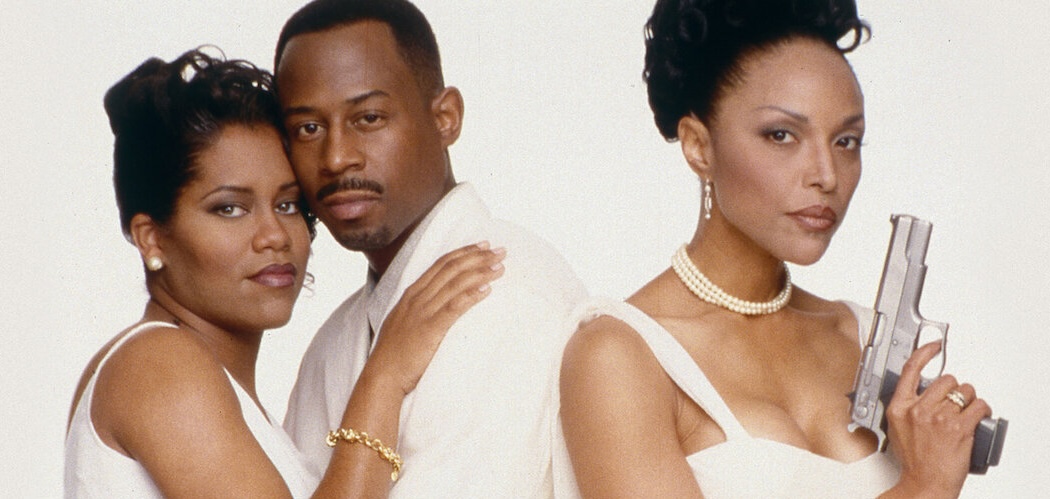
I have to be honest with you. For this Weekend Pick flick, I rewatched A Thin Line Between Love & Hate — which is celebrating its 30th anniversary this year — to write this piece, fully aware of every red flag, every manipulation tactic, every moment when Darnell should have sent me running—and I still got swooned. Every single time he turned on the charm, I felt it. I would have fallen for it too. And that, more than anything else, is why this movie is still worth talking about 30 years later.
The film opens with Darnell, played by Martin Lawrence at peak confidence, showing us that he’s the man with plenty of options and nobody special. He’s charming and smooth, and he operates by a code that prioritizes the chase above everything else. When he spots Brandi Webb, played with precision by Lynn Whitfield, something shifts. She is the one who doesn’t fold immediately, and that alone makes her irresistible to him.
Watching Darnell enter the building Brandi works in, pimp walk and all, was the epitome of a man so certain of his own charm that the word “no” hadn’t even occurred to him as a possibility. In 2026, we call that confidence aspirational. We also call what follows love bombing.
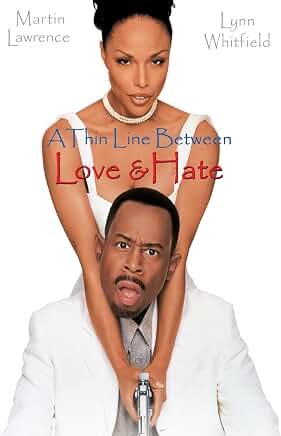
Because here is the thing about Darnell: the lengths he goes to get Brandi’s attention would not fly today, and yet they worked then for the same reason they work now: grand gestures, relentless pursuit, the kind of attention that finally makes a cautious woman lower her guard. Once she’s in, he introduces her to his world while indulging in hers. That combination is exactly what makes love bombing so hard to clock in real time.
Ma Wright, Darnell’s mother, played by Della Reese, delivers the film’s thesis early: “A night full of passion can give you a lifetime of pain.” She’s the one who warns him that there’s a thin line between love and hate, but Darnell doesn’t listen. He doesn’t want to.
What the film gets exactly right, and what 2026 dating discourse is still fumbling to articulate, is the double standard at the center of Darnell’s behavior. He tells Brandi not to waste his time. He says he isn’t playing games. He creates the impression that she is working against a clock, that his attention is a limited resource she should feel lucky to have. Meanwhile, he is simultaneously reconnecting with Mia, his longtime chase, played by Regina King, and running what we would now recognize as two parallel situationships without being honest about either. The audacity is not new. We just finally have words for it.
Mia is the most interesting character in the film for exactly this reason. She doesn’t have Brandi’s walls or Brandi’s intensity, but she has clarity, which is something far more valuable. “I trust you,” she tells Darnell, “because I don’t expect you to do anything different but be Darnell.”
That line lands differently at 30 than it did at the time of the film’s release. In 2026, we’d call that radical acceptance. Some would call it settling. But Mia understood something about Darnell that Brandi never got the chance to: that the version of him performing for a woman he’s chasing is not the version that shows up once you realize the chase is a facade.
Brandi’s arc deserves a more complicated read than the film gives it. She is a cautious woman who finally let someone in after relentless pursuit, only to be discarded the moment she became vulnerable. The detail that she killed her abusive husband reframes everything. She is not simply the crazy woman the third act wants her to be. She is a survivor whose trauma gets weaponized into a punchline.
After Darnell lets her in, she flips the dynamic entirely, offering to buy him a club, taking him shopping, telling him he doesn’t have to work anymore; a complete reversal of the traditional provider role. But once Darnell starts pulling away and tries to end things, Brandi doesn’t accept it. She shows up in his kitchen cooking breakfast as if nothing happened, completely unwilling to let go of something she had already been warned not to hold too tightly.
In 1996, audiences played that scene for laughs. In 2026, the comments section would be all over the place: half calling her unhinged, half asking exactly what Darnell expected after leading her on for so long.
I think the film’s most impactful scene is when Darnell is alone on the basketball court, shooting hoops after breaking things off with Mia to protect her from the mess he created with Brandi. It is the only moment in the film where accountability shows up without an audience. It is also the moment that makes him someone to root for despite everything that came before it.
A Thin Line Between Love and Hate — 30 years later — still hits because it refuses to let anyone fully off the hook. Darnell is charming, reckless, and finally remorseful. Brandi is wounded and dangerous and not entirely wrong about what was done to her; she is only wrong about how far she took her revenge. Mia is wise and loyal and almost collateral damage. We have better language for all of it now—love bombing, situationship, soft launch, slow fade—but the dynamics themselves haven’t changed.
And neither, apparently, has our appetite for it.
Watch A Thin Line Between Love & Hate on Prime Video.