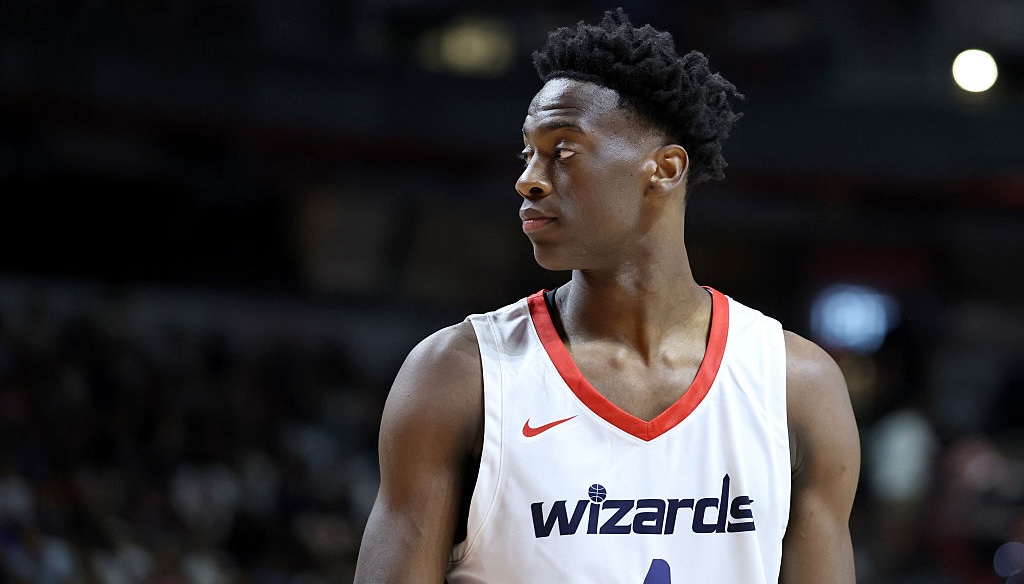
The California Classic, the first NBA Summer League event of 2026, brought together rookies, sophomores and undrafted players in Sacramento and San Francisco before the full NBA Summer League finishes in Las Vegas on July 19.
As someone who covered the Summer League in Las Vegas in 2025, I expected to watch young players competing for roster spots. What I didn’t expect was that some of the most memorable stories would happen away from the court. The California Classic became a window into the people who make basketball possible: spouses who move across the country, parents navigating youth sports, and the role faith continues to play in professional basketball.
Faith Still Has a Place in the NBA
Just days after hearing their names called during the 2026 NBA Draft, held at Barclays Center in Brooklyn, New York, this past June, several players openly credited God while speaking with reporters. “First of all, I want to give glory to God. Without Him, I wouldn’t be here,” said Mikel Brown Jr., the No. 6 overall pick out of Louisville.
Asked how faith had shaped his journey, Brown expanded on his answer. “Faith has definitely played a big role,” he said. “That’s where I come from. Representing my Puerto Rican heritage, they’re big on their faith. I’m just so blessed to be in this position that I am in right now and also for my family as well.”
No. 1 pick AJ Dybantsa, who now wears jersey #4 for the Washington Wizards, prayed and made the sign of the cross after his name was called on draft night.
At the California Classic, Ben Humrichous, who suited up for the Brooklyn Nets, offered a similar perspective. “If it wasn’t for Jesus, I would have nothing,” he said. “The fact that I get this platform—the game of basketball—to where people will listen to me and I get the opportunity to talk about the good news of Jesus Christ, it’s such a blessing.”
Expressions of faith in sports are hardly new, but hearing multiple young players independently reference their beliefs underscored how openly many athletes continue to discuss spirituality.
NBA teams make non-denominational chapel services available before games for players who wish to pray, reflect or meditate, regardless of denomination.
In an interview on The Men of Iron podcast, Nobles Darby IV, who has served as a co-chaplain for the Cleveland Cavaliers, described what those gatherings look like.
“An hour before every NBA game…both the home and away team will gather…and engage in a 15-minute chapel service,” Darby said. “Before they go compete together, they’re engaging in the Word together. They’re praying together. They’re locking arms.”
For a league made up of players from different countries, cultures and religious traditions, those moments offer an opportunity for reflection before competition begins.
Life Behind the Whistle
For every coach on the sideline, there is often a family making sacrifices that never appear in the box score. Ty Jackson is the wife of Cal-Berkeley men’s basketball assistant coach Jarred Jackson. Married for 10 years, he is in his 12th season coaching college basketball.
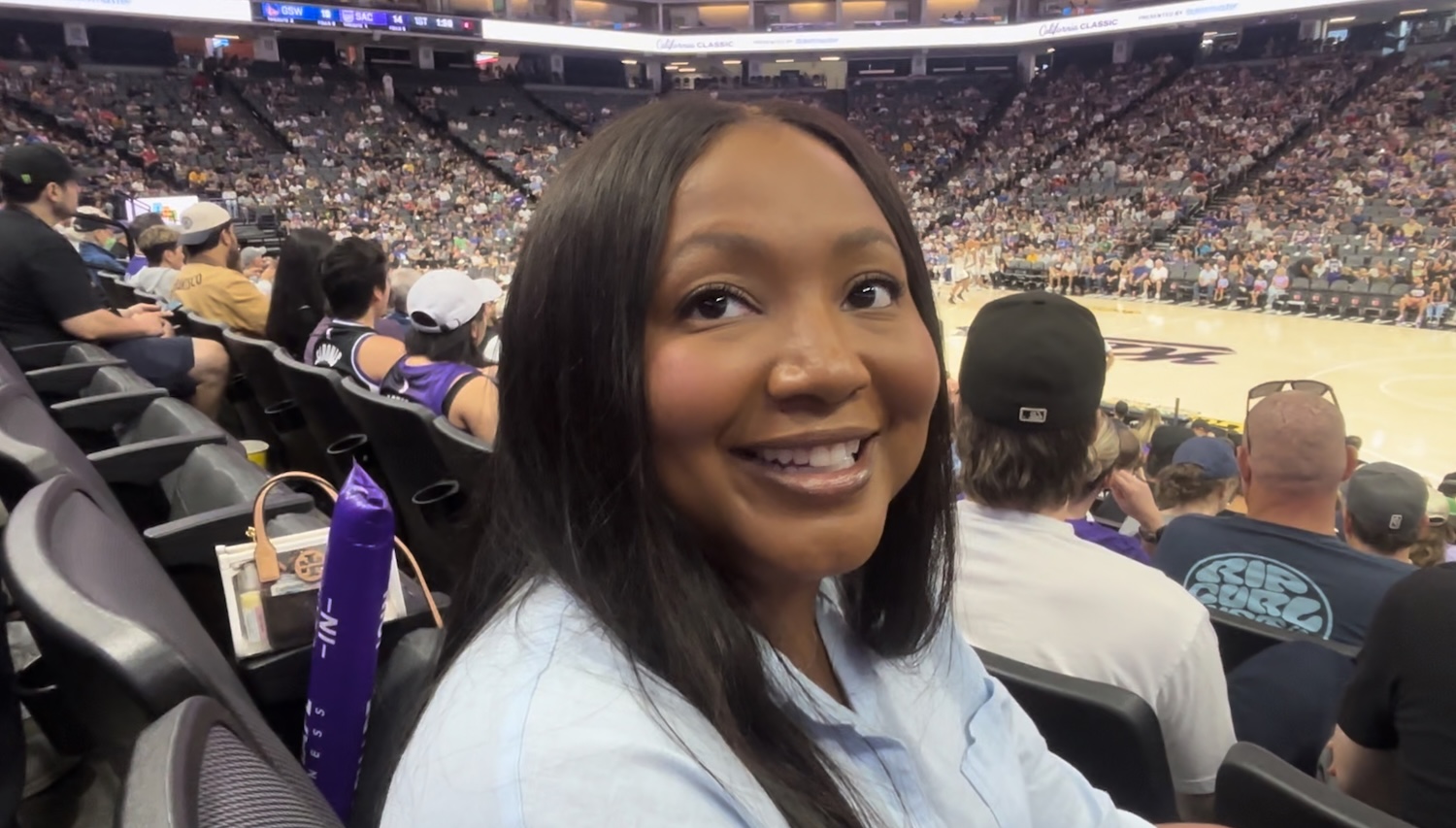
“It’s really fun and a blessing to be able to experience living in all the different states, especially in the Bay Area right now,” she said. “I do sometimes get homesick. Home is South Carolina, but I just go visit as much as I can.” Her husband played at Lander University in the state they are both from, though they met in the Air Force.
In 10 years, the family has made roughly five or six cross-country moves. “Some of the challenges are the lack of stability, but all in all, it’s a blessing,” Jackson said. “Frequent moves, and as a mom and a wife, that means I carry the load a lot. Oftentimes when my husband gets a new job, it’s immediate, so he has to go right away, and I have to take care of all the things to get us to move.”
That takes in everything that falls on a coach’s spouse during those transitions. “It’s selling the house,” she said. “It’s literally moving all of our furniture and our cars, finding new hair and new makeup salons, scheduling new doctors’ appointments.”
Fans often celebrate coaching hires, but rarely think about the family members rebuilding their lives behind the scenes. Their stories are part of the business of basketball, too.
Raising Next Gen
Currently a stay-at-home mother after spending 15 years working in health care, Jackson attended the games with her 8-year-old son, who has recently begun playing basketball. Despite growing up around the sport, she and her husband have tried not to pressure him into following his father’s path.
As youth basketball becomes increasingly competitive—with year-round camps, specialized training and AAU circuits beginning at younger ages, along with the costs associated with it all as it has evolved into a multibillion-dollar industry—I wondered how parents decide what’s best for their children.
“We’re starting small, YMCA teams, and if it grows to AAU, then it will,” Jackson said. “I think [the camps] are important. Lots of visibility. Lots of talent, so I think there are some positives there.”
Her perspective reflected something many parents face today: balancing the need to provide opportunities with allowing children to simply enjoy the game. For families chasing big dreams, knowing when to push—and when to simply let kids be kids—has become part of the playbook too.