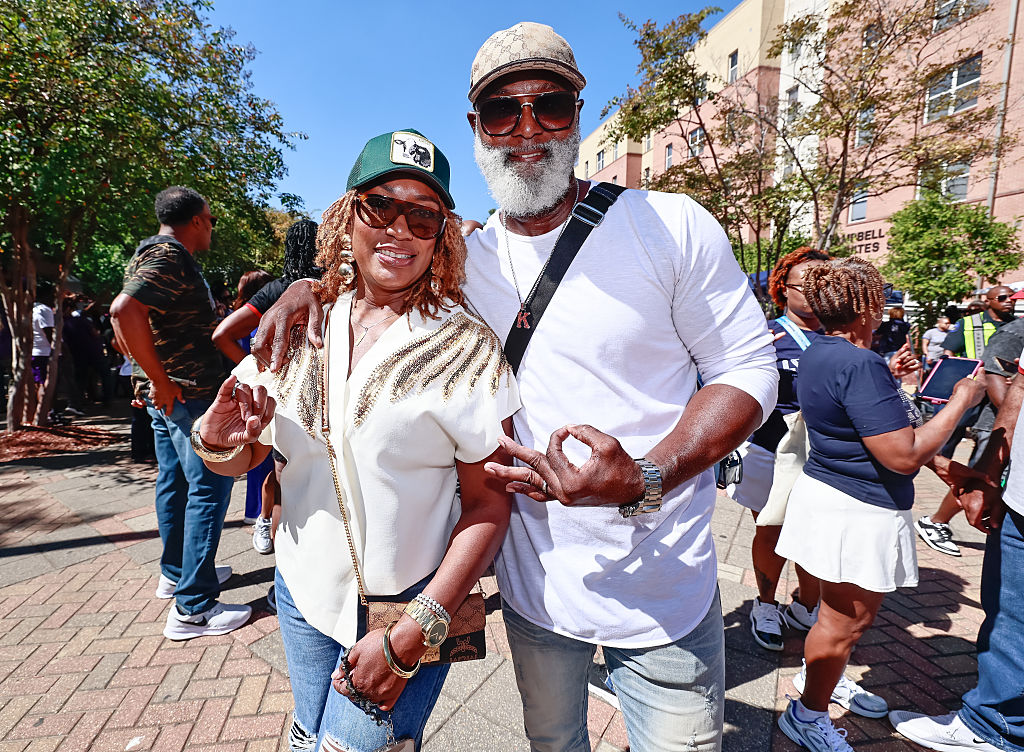
There is something uniquely nostalgic about HBCU homecoming season. Alumni return to the yards that shaped them, reconnect with classmates, reminisce about the rigorous professors who relentlessly challenged and, further, some find themselves standing in the same spaces that once made you feel like anything was possible.
But this year, beyond reminiscing about heydays, HBCU alumni should be asking a different question: What are we doing for the students who are currently carrying the financial weight of these institutions?
Because the college experience has evolved. And for many Black students, it is becoming increasingly difficult to experience college as the period of exploration, independence and self-discovery that it is supposed to be.
According to The Pew Research Center, 75% of HBCU students reported having to choose between paying for college and meeting basic needs, compared with 58% of college students overall. HBCU students were also substantially more likely to work full-time while earning their degrees, at 71% compared with 56% of students overall.
Those numbers should make us all pause.
The Cost of Getting the Degree
The cost of higher education is becoming harder to ignore for everyone. For the 2026-27 academic year, 16 colleges and universities have surpassed $100,000 in annual costs when tuition, fees, room and board, books, transportation and other expenses are included. Duke University is approaching $104,000, while New York University has crossed $100,000. Several others, including Northwestern, Rice and Columbia, are approaching the same threshold.
HBCUs are not immune to these increases. Based on estimated 3% to 5% annual increases in tuition and housing, the cost of attending some of the nation’s most prominent HBCUs can become staggering over four years. Spelman College, for example, can approach a quarter-million dollars in total costs, while Howard University and Tuskegee University can also reach six figures over the course of a degree.
And the financial burden does not exist in a vacuum.
Historically, HBCUs have operated with fewer financial resources, a reality connected to discriminatory state and federal funding practices. That history matters when we talk about what students are being asked to shoulder today. In September 2025, the Department of Education announced in a press release its cease of funding for several discretionary Minority-Serving Institution grant programs, including the Strengthening Predominantly Black Institutions program, and reprogram approximately $350 million in discretionary funding.
Whatever one’s political interpretation of that decision may be, the practical question remains: When institutions and students have less room to absorb financial pressure, who steps in?
A Degree Doesn’t Necessarily Mean Financial Escape
There is another piece of this conversation that deserves more attention. Pew Research Center recently found that 60% of U.S. adults identify as working class, including 50% of people with bachelor’s degrees. But the educational divide is particularly interesting among Black Americans. Fifty-eight percent of Black college graduates say “working class” describes them well, compared with 53% of Black adults without a bachelor’s degree. Pew noted that, unlike White and Asian Americans, there is not a substantial educational gap in working-class identification among Black Americans.
In other words, earning the degree does not necessarily create the economic distance from working-class life that we formerly relied on and could trust. That should change the way we think about what happens after graduation.
For many Black students, college is already being financed through a combination of family sacrifice, employment, scholarships, loans and sheer determination. When students are choosing between tuition and necessities like food, housing, transportation and hygiene, the degree is no longer simply an educational investment. It becomes an exercise in survival. And survival leaves very little room for joy.
Alumni Can’t Just Come Back for Homecoming
This is where HBCU alumni, Black alumni in general, have an opportunity to rethink what giving back actually means. Yes, donating money matters. But alumni support cannot stop at the annual contribution, the homecoming tailgate or the nostalgic social media post about how much you miss the yard. During homecoming season, time should be spent assessing what students of our alma mater actually need and organizing around those needs.
That can begin with something as simple as talking directly to current students through student-led organizations. Alumni can connect with campus personnel to identify opportunities for outreach. We can create intentional mentorship opportunities, offer paid internships and employment when possible, and use our professional networks to open doors that students may not yet know how to access.
Sometimes giving back means giving money. Sometimes it means giving someone your time, your expertise, your network or your recommendation. And for those of us who have benefited from the HBCU or collegiate experience, there is something especially powerful about reaching back to pull someone else forward. These students need direct support. They should not have to choose between remaining enrolled and having their basic needs met.
This Requires More Than a Moment
The responsibility, however, cannot be seasonal. If we only become concerned about students when the homecoming bands are playing, we are missing the larger opportunity. The question is not simply how we can help a student make it through this semester. It is how we build systems of support that can remain available as students move from freshman year to graduation and, eventually, into alumnihood themselves.
That is the real cycle we should be building. Many of our alma maters gave us something that cannot be measured by a diploma alone: community, confidence, relationships, language, history and a sense of possibility. If today’s students are being asked to sacrifice basic necessities just to receive that same education, then our role as alumni cannot be passive.
This is another moment for leadership. Students’ backs are being put against the wall. That’s abundantly clear. It’s communicated daily as we absorb the increasingly strenuous economy, but if we think our experience is tough; think about the amount of weight current students are facing. The question now is whether those of us who have already walked across the stage are willing to stand behind them.