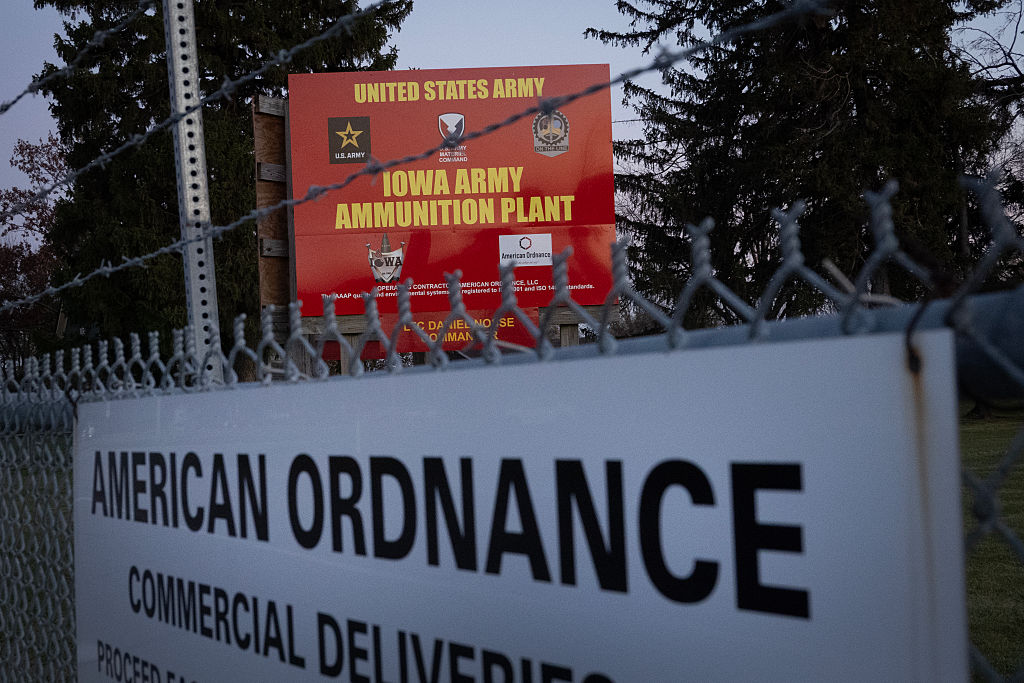
The army is preparing to initiate a controlled detonation at the Iowa Army Ammunition Plant on Wednesday, Nov. 25. The detonation was originally scheduled for the previous week however, a federal judge ordered a temporary stay on Thursday, Nov. 19.
Residents of the nearest city, Middletown are outwardly expressing their concern regarding the detonation of the hazardous material, lead azide, a material used to detonate munitions. Iowa has served as a long-standing store location for the lead azide. Now, the material has recrystallized putting the hazardous material and the environment it currently occupies into a precarious state. Simply stated: The recrystallization of the lead azide is at an increased risk of a spontaneous explosion. In order to avoid the uncontrolled explosion, the federal government has planned to orchestrate a planned explosion in what officials are referring to as a controlled detonation.
However, Middletown residents are concerned about the long-term effects of how the material could impact the environment and overall health to those exposed to it. Although the lead azide is stored underground, the explosion has the potential to expose the people in close proximity to its path. Furthermore, the impacts could extend to places like the greater atmosphere, groundwater, and neighboring towns and cities.
Despite these concerns and a federal judge’s temporary stay, the Army will move forward with the detonation citing their ability to proceed as scheduled as being in accordance with the federal law. The Army’s claim is that the danger the recrystallized lead azile poses to the public is an immediate threat that must be controlled.
Meanwhile public health experts have outlined their concerns. According to Iowa Public Radio and experts at the University of Iowa, the level of concern is directly based upon the amount of lead concentration on the ground and in the air. Residents of Middletown have been asked to evacuate the area and avoid being in the general area for an hour after the detonation in an effort to limit exposure. The Army has also suggested avoiding outdoor air by keeping windows and doors closed.
While the exact known impact of how much lead the general public will be exposed to is unknown. This is a developing story and will be updated as more information is made available.