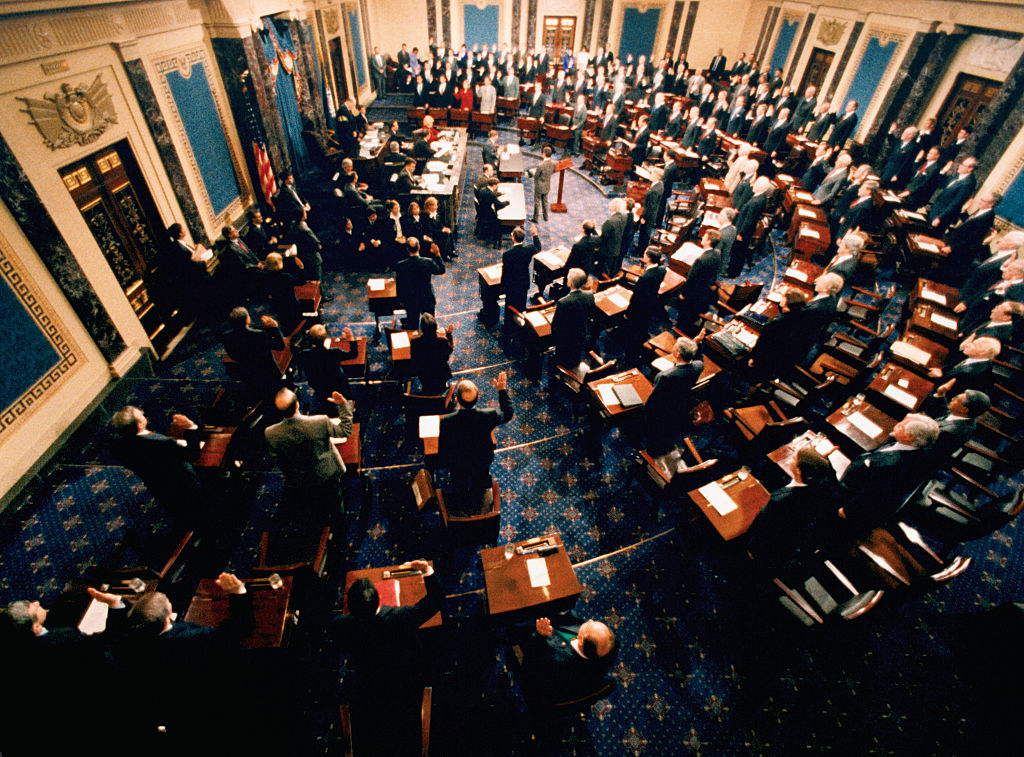
The Senate’s latest 62-33 voting decision in favor of the Bipartisan American Affordability And Jobs Act (BAAJA) could have a grander impact on the future of how sustainability is handled at both the local and national level. It promises to address infrastructure issues with the need for more energy and new provisions for legal proceedings, which have made it more attractive to lawmakers. However, some still point out its flaws.
According to The Hill, some who initially voted on the bill have even shifted their support after diving deeper and wanting to see provisions within the policies made. For example, Senator Mike Rounds of South Dakota initially was in favor of the bill but later voted against it for his concerns with what the bill outlined as provisions for power lines.
After the visible impact and growing concerns throughout the year with the continued building of data centers in lower income cities, extensive power outages in predominantly minority communities, and new conversations about our power grid being overworked, environmental provisions are becoming more crucial than ever. The increased use of AI in personal and professional spaces has also contributed to the need for new provisions to be put in place as the need for more energy grows. Yet, our environment has been taking the brunt of impact.
The bill has the magnitude to directly impact the Black community through the specific callouts of new job opportunities and the introduced consultation process for the National Historic Preservation Act (NHPA) in the event new projects impose impact on historical sites. The bill also highlights the new responsibility that data centers will have to pay their own transmission costs in comparison to costs falling on consumers. Meanwhile, there would be new qualifiers on when and how an environmental project can be legally challenged including where is the limit on when a court can stop a project from moving forward, as outlined by the United State’s Senate Committee on Energy and Natural Resources (ENR).
While supporters of the bill believe that this is an opportunity to help produce energy cheaper to meet new demands and support lowering the cost of energy for households, others believe that the massive overhaul will be difficult for future administrations to change in the future and lacks deeper connective tissue in response to pre-existing reform such as the National Environmental Policy Act (NEPA) and the National Historic Preservation Act (NHPA). States would also be given jurisdiction to handle endangered species consultations as it ties back to environmental impact for those that have the means to do so. However, it is unclear what states without staffing or expertise at a higher level will do if unable to accommodate.
Some environmental organizations have already stepped in with their responses to the bill, identifying the advantages and detriments if the bill becomes law. “The Bipartisan American Affordability and Jobs Act passed by the Senate has both transformational benefits and harmful repercussions. It contains meaningful steps forward, particularly in how we plan, permit and upgrade the electrical grid. Those reforms could help unlock the reliable, affordable and clean energy America needs. At the same time, we have serious concerns about the bill’s potential consequences for conservation, communities and Tribal sovereignty. Provisions affecting clean water, healthy landscapes and wildlife, as well as longstanding environmental laws and Tribal treaty rights, deserve careful attention. These protections matter. Weakening them is not necessary to achieve meaningful permitting reform […],” managing director of the Nature Conservancy Kameran Onley expressed in a statement.
Similarly, the Sierra Club released a statement from their Executive Director Loren Blackford, where she emphasized that more consideration be put towards the American people who are being impacted most negatively in comparison to larger corporations. “While a rogue president is waging a war on clean energy, the Senate rushed a deeply flawed bill that furthers the buildout of fossil fuels, strips away power from communities and Tribes, threatens our clean water and public lands, and endangers wildlife. The House of Representatives has an equal voice in the legislative process. They must reject the Senate’s fast-tracked bill and demand debate and consideration to deliver for the people, not corporate polluters and Donald Trump. The American people made a clear call merely weeks ago: our elected leaders must address soaring costs and a corrupt system that prioritizes corporate polluter profits over our health, our wallets, and our future. […]”
The NAACP has also publicly announced its opposition to the bill, explaining that the communities that are being impacted should be the primary focus over the leading beneficiaries of the bill being industry leaders and corporations. “Let’s be clear–naming a piece of proposed legislation ‘Bipartisan’ doesn’t actually make it good for the American people. Senate leaders should be prioritizing what’s best for their constituents, not what appeases their colleagues across the aisle. The NAACP strongly opposes BAAJA because we should not rush through a decision that directly threatens the health, safety, and future of Black and frontline communities. This bill puts our community and our planet’s health in the hands of billionaires and their interests. We refuse to let our future be determined by corporate polluters and people who seem more aligned with them than people who live in sacrifice zones […],” an excerpt from the statement noted directly from the organization’s Director of Environmental and Climate Justice, Abre’ Conner.
Organizations and corporations in support of the bill include eBay, Volvo North American Group, and American Conservation Coalition, to name a few. In their previous letter nudging Congress to pass the bill alongside 80 other corporations, they have made it clear that they believe this is the strongest course of action for enhancing our power grid’s reliability. “Across the country, communities, manufacturers, utilities, project developers, and consumers depend on a reliable and affordable supply of electricity. Meeting this growing demand will require significant new investments at a time when delays and uncertainties in our current system deter them. Preventing critical energy projects from moving forward increases costs for consumers and limits the nation’s ability to meet the needs of the American people and our economy […],” an excerpt of the letter reads.
Now that BAAJA has made its way through the Senate, it will be voted on next by the House of Representatives to finalize whether or not it will be enacted as law. To learn more about the bill’s introduced provisions, click here.