If you attended high school in the United States, you were likely tasked with reading the American Classics as part of your English Literature curriculum. Catcher in the Rye, To Kill a Mockingbird, and Fahrenheit 451 are a few included in this distinguished category. F. Scott Fitzgerald’s The Great Gatsby is another novel that has proved to be a timeless classic. Written and set in the 1920s Prohibition era, the book explores glamour and eclecticism on the surface. But when pushed further, the text becomes an analysis of different vantage points on the American dream, classism, and gender roles. It ultimately poses an age-old question: is love enough?
For me, the answer has never been the point. I loved the story so much that I made it the theme of my sweet 16, and it is a read — and a story — to revisit at multiple stages of life. It is easy to do so through the book, Baz Luhrmann’s 2013 cinematic retelling, and this production. Each one hands you a different Gatsby, and each time you are a slightly different reader.
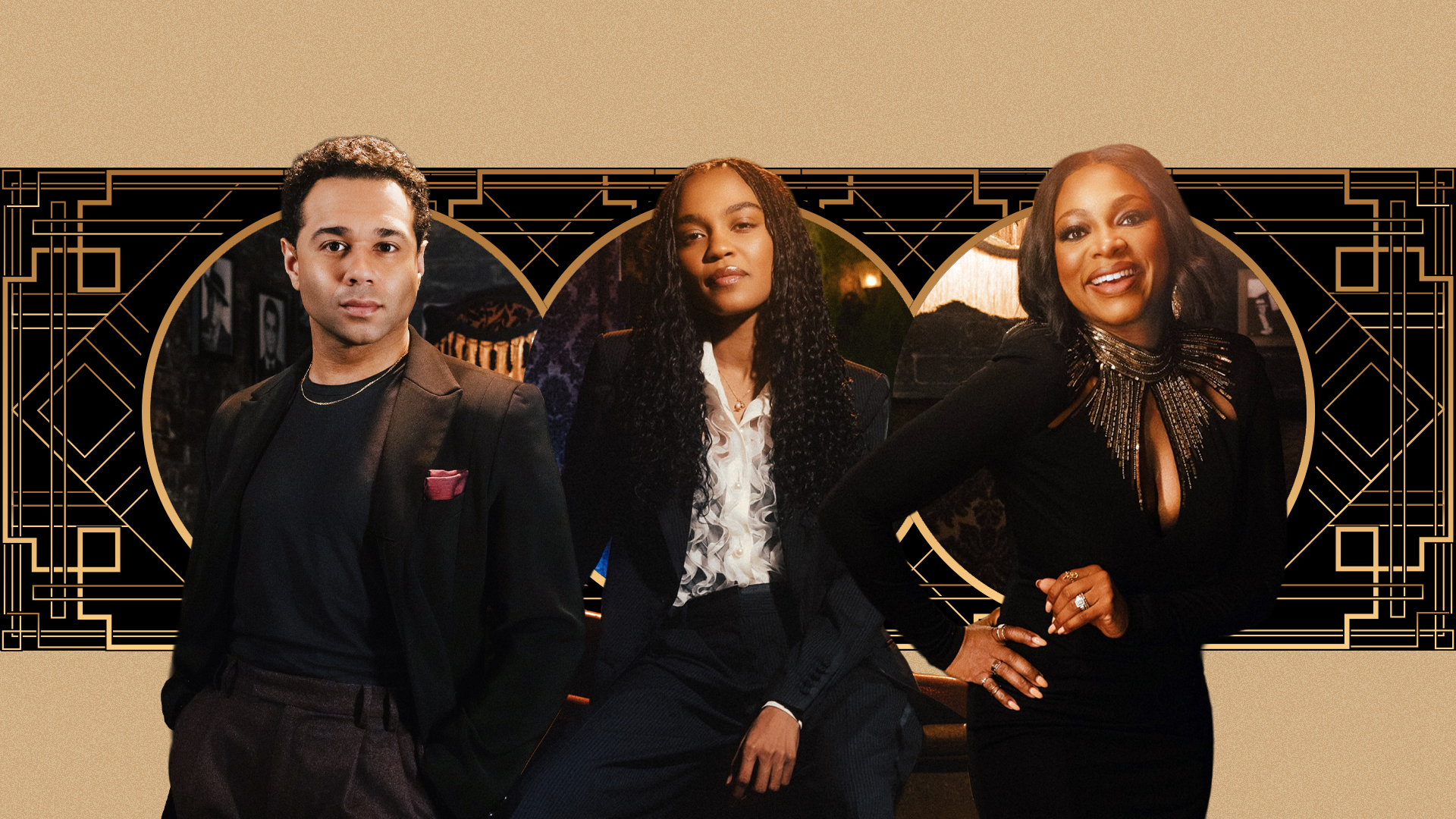
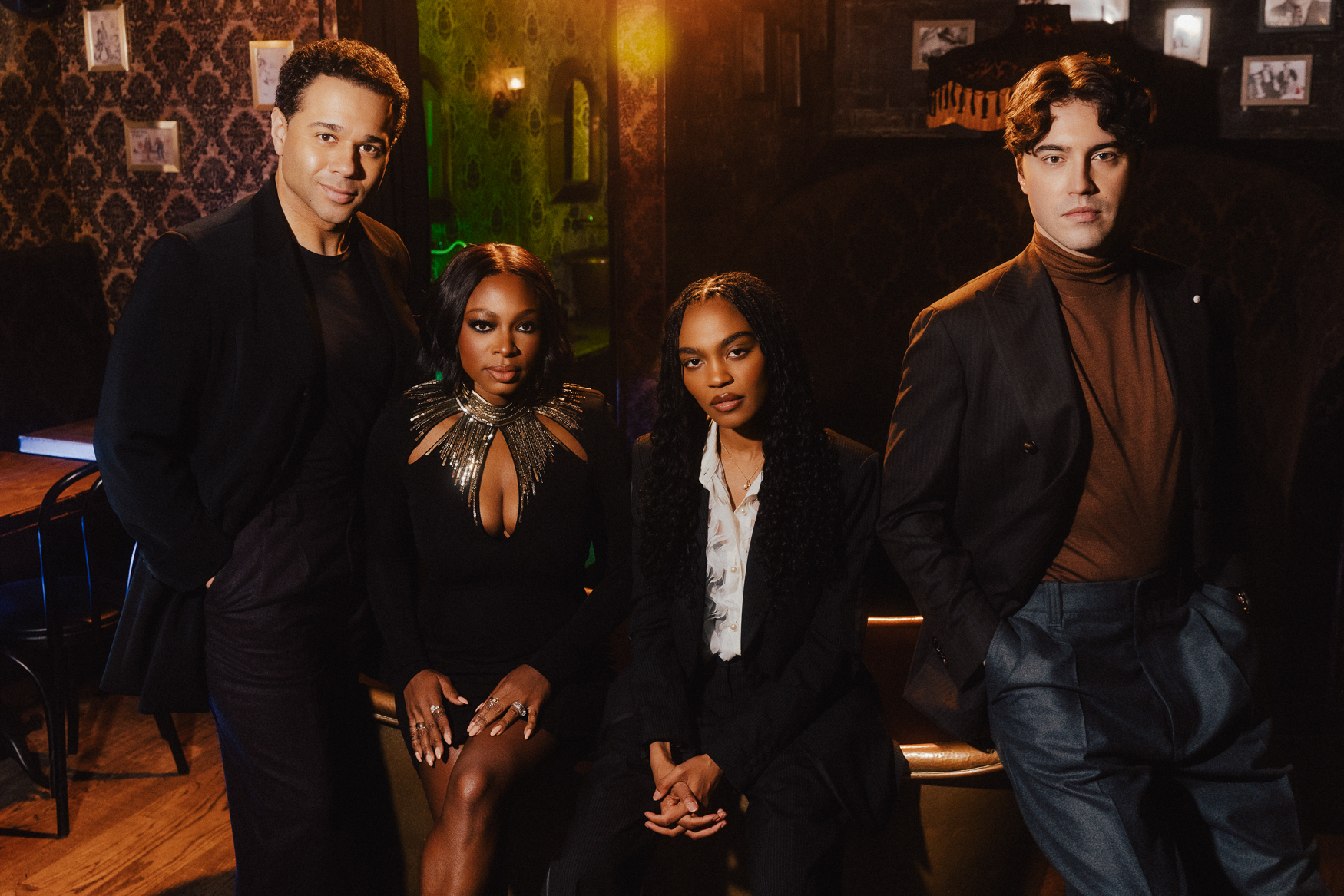
Over a hundred years after its publication, The Great Gatsby remains one of the most exciting examples of an American classic interpreted for new audiences. The musical adaptation, written by Kait Kerrigan, currently thrills audiences on Broadway, boasting an all-star cast. Bringing this story to life on stage are Corbin Bleu as Nick Carraway, Naturi Naughton as Jordan Baker, and China Anne McClain, who makes her Broadway debut as Daisy Buchanan.
A Spectacle That Asks You to Leave the World Outside
The first thing to say about watching this production is how completely it takes the room. Everything about the evening — the sequins, the light, the company of dancers moving through one number and then another — builds toward a single effect, and the effect is release. For two hours, none of what followed you into the theater follows you in.
What I enjoyed most was the excitement of seeing Corbin Bleu on that stage — the fulfillment of a childhood dream, and the nostalgia of a shared famous childhood that made him familiar to so many of us long before he ever stepped into Nick Carraway’s shoes. I have loved Naturi Naughton since her days in 3LW, which was pivotal for me as a young Black girl growing up. And then, there is a particular charge in watching someone your own age face her fears and summon that level of bravery on a Broadway stage, the way China Anne McClain does. You can feel the audience pulling for all three of them just as I did.
That is the mood to expect: a show that knows it is a tragedy and refuses, right up until the moment it can no longer refuse, to stop being a party.
Corbin Bleu: A Book He Owned Before He Understood It
Bleu is no stranger to the material, or to the machinery of a long-running Broadway show. This is his third iteration of Gatsby — he originated the role in London, a run that earned him an Olivier nomination and marked his West End debut, then played it in the cast he brought to New York. He calls this one, with some affection, “the Great Blacksby”.
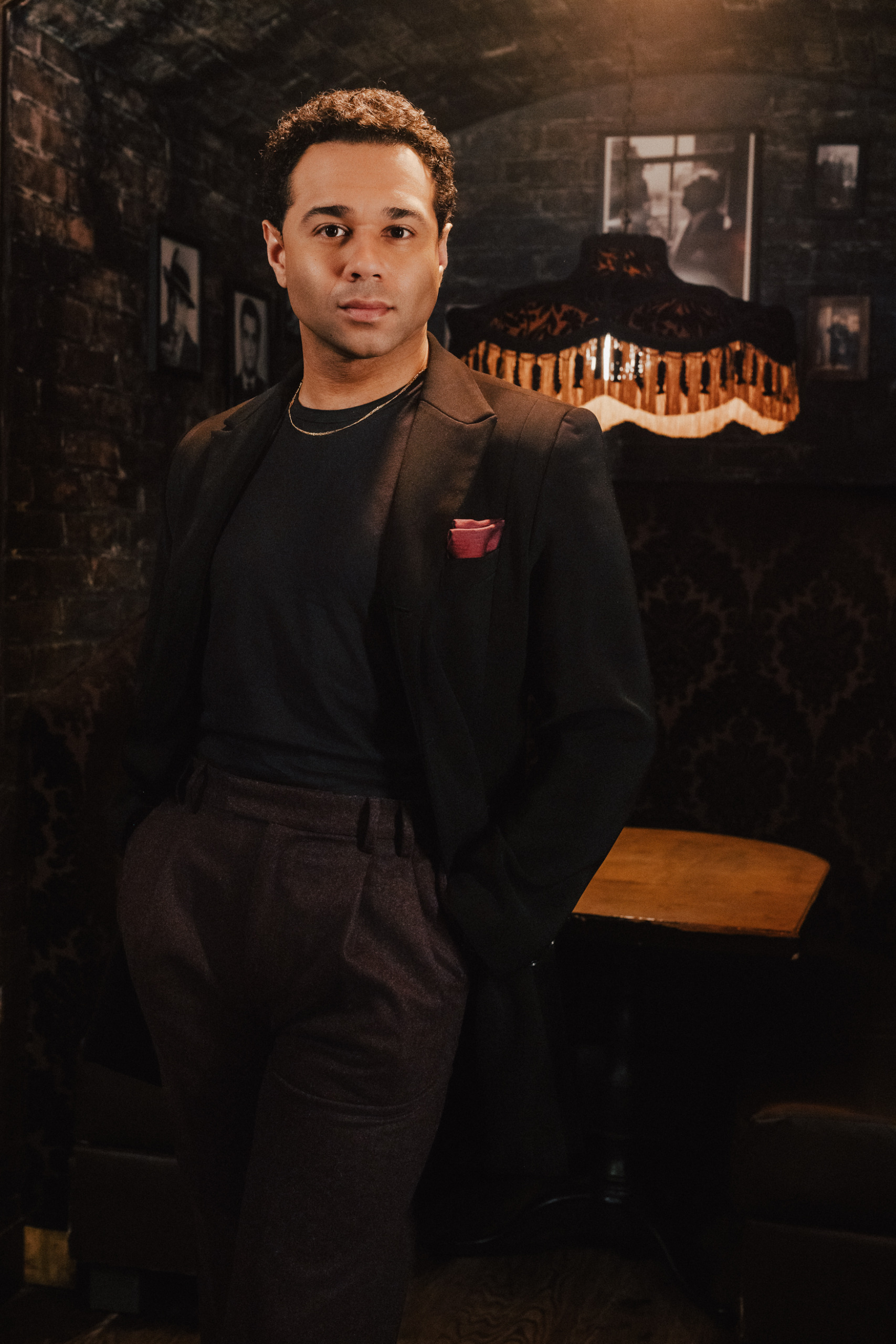
He was a fan long before that. “I loved it, and I think as most people do when they first read it, especially as a young boy, I was enamored by Gatsby — what he accumulates, the wealth, the parties. He’s just such a cool figure, and it became one of my favorites. I actually own an original publication. It was given to me for my eighteenth birthday. It’s now over a hundred years old,” Bleu said. “Later in life, now especially joining the show, my appreciation for Nick has grown into a completely new [place].”
What he resists, in his third time out, is the idea that an established Broadway show wants a carbon copy of whoever held the part before. “I didn’t need to teach them anything,” he says of his newer castmates. “What’s cool about a new iteration is I’m a learner. Our creatives really allow every new actor that comes in to make it their own.”
“That’s not always the case with an established Broadway show. Oftentimes, you show up, and they want you to sing it just like it’s been sung. Because this is my third iteration, every time I’m working with new actors, I have to break down whatever habits I may have formed and find something completely new.”
The period-work pedigree is part of the point for him. Holiday Inn, Kiss Me Kate, Singin’ in the Rain — a catalog of roles written for the likes of Fred Astaire and Gene Kelly, and a boyhood spent on MGM’s back catalog. “Growing up, I loved all the MGM movies. I love the romance, I love the magic, and I love the ease; they make everything seem so easy. Being a person of color and looking like me, actually, and getting the opportunity to fill those roles—I’m very, very fortunate, and that’s where that joy does lie. It’s not just telling our cultural, historical trauma.”
Naturi Naughton: “This Could Be Me”
Naughton had read the book in school and felt nothing of herself in it. “When I read it, it was great, but I didn’t feel any real connection to it — particularly as a woman and a Black woman. There weren’t any characters that I was like, ‘this could be me.’ And it’s so surreal that it actually could be me and I actually am here playing a character that was in the book.”
She credits Kerrigan’s interpretation with the shift. “She was just more intentional about bringing in the characters so that they had more layers and they weren’t just tools. In the book, she mentioned to us that they were more accessories to the male characters. And here, they have real, fleshed-out stories—particularly my character Jordan, who’s really strong. That was very attractive to me.”
Jordan, in her reading, is a portrait of a woman nobody was writing for in 1925 — self-sufficient and unbothered by the prospect of marriage. “For me, Jordan’s like the joy of just living life to the fullest and not needing to be married, not needing to be attached to someone to be happy. That’s also a statement that was very rare for a woman at that time. That level of empowerment that I get to give to the audience every night is really, really cool.”
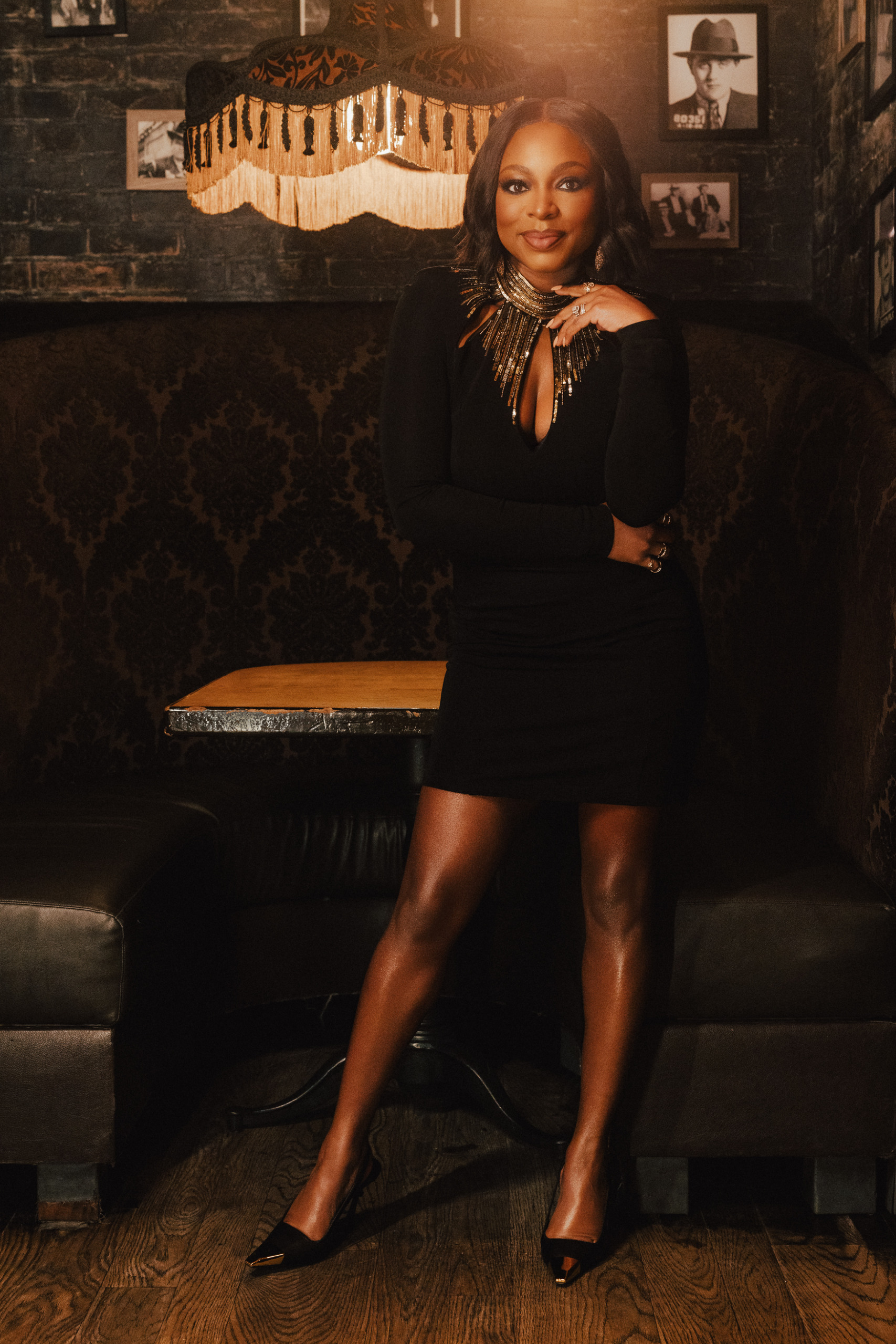
“I’m a Black woman who’s always been about women that look like me. So when people see me up there, I feel like I’m doing my duty. I really do. It’s a really great feeling.”
There is a moment from the stage door that she returns to. “A little girl told me that on the signing line last week. She was a Black girl, and she was like, ‘I now want to be Jordan.’ And I was like, my gosh. It was really a moment. There have been other iterations of the show, but maybe for her it was the first time. I was like, ‘Well, you can be.’”
Her road here was long, and she is candid about what the intervening years cost her. “I did the role of Tasha for a decade on Power, and I’m grateful. But this world came at the perfect time for me, because I needed to stretch and prove—not to others, but to myself—that I could still do this. It’s been twenty years since I’ve danced and sung this hard. My hips are hurting, my poor feet. But God has put me in the right place at the right time. I’m grateful for the uncomfortability of this, because that’s actually where you grow the most.”
She is here, in part, because of a relationship she kept. Dominique Kelley, the show’s choreographer, was a dancer in the 2009 film Fame and formed a bond on set. “He put my name in the hat to be Jordan Baker. You never know [how it goes] with the way you treat people, your reputation. I’m really big on relationships.”
China Anne McClain: A Decision She Couldn’t Undo
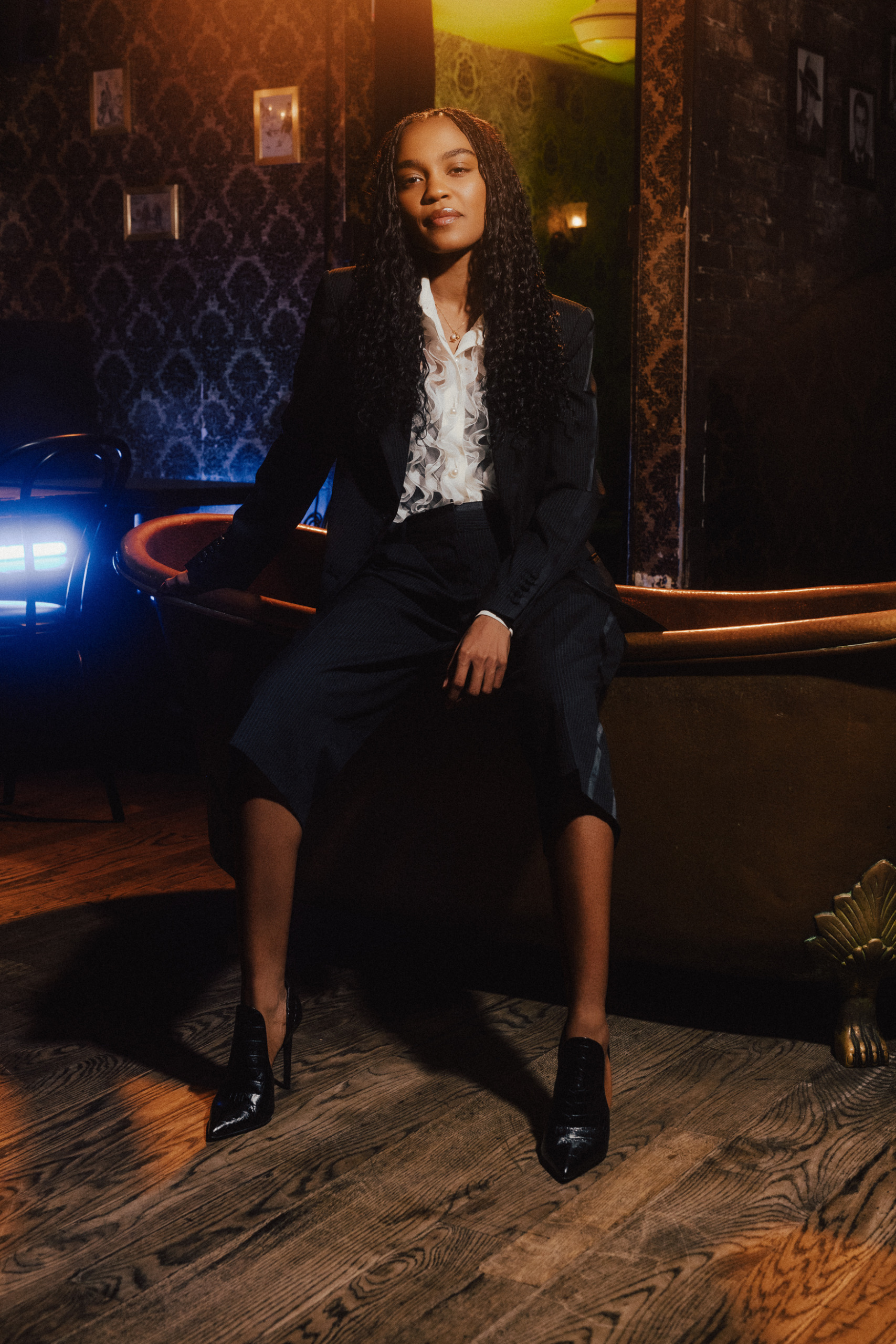
McClain’s arrival is the most improbable of the three. She has stage fright — not manageable nerves, but the real thing — and said so plainly. “I’ve always had stage fright — extremely. I was called about this role sometime last year, but I was going through a lot personally at the time, and it wouldn’t have been the same as it is now. I’m taking more risks now and following how I feel in the moment because of everything that I went through. I don’t want to be afraid anymore. I don’t want to live in fear anymore.”
She describes saying yes as a trap of her own making. “Doing it in the first place without even knowing how it was gonna go was a deliberate decision to put myself in a position where I couldn’t run.”
The parallel with Daisy is not lost on her, and it sharpens the ending. “It is a tragedy, but it’s also very honest. Daisy just being at the end like, ‘I’m running, I’ll see you when I see you.’ And she knows it. I hope things like that resonate so that people don’t live their lives like that. Some bravery and some hope.”
She also names the part of the job that has nothing to do with the character. “Keeping joy is very important — not just when it comes to the character, but when you’re not on stage as well, or when you’re walking into a predominantly white space. I’ve had that experience in places I’ve worked at, like Disney. You have to learn how to keep yourself whole without getting to a place where you feel like you’re fighting all the time, because you’re not enjoying anything. You don’t have to force the space. It’s already there, and being comfortable in that is something.”
A Masterclass on Meeting the Moment
Three leads who grew up in the same industry, in the same era, share a shorthand. Naughton calls Bleu a teacher she sits with backstage, “chit-chatting” between scenes. What the company has done with the material is bigger than casting, though. On a story that has always centered a non-Black vantage point — and in a moment when so much public conversation about identity has fragmented into factions — this production puts three Black performers at the front of an American classic and lets them do the work.
Bleu found the license for it in a single observation. “Looking at it from a racial perspective — when you read the book, Tom is so much more of a racist than it’s prevalent within the words. We don’t see that as much here. But there’s an amazing moment in the book when Nick is in the car with Gatsby, and he sees a limousine being chauffeured—three Black people being chauffeured by a white man. He talks about heading over this bridge. This is a hundred years ago. So it’s really cool that now you’ve got these Black people actually seeing that moment — that small moment in this book becomes the whole show, which is really cool.”
Seeing faces so beloved in our community soar on a Broadway stage has its own charge. Naughton locates hers in the lineage she is standing on. “As Black people — all the influence, the Nicholas Brothers, the Hines brothers, seeing the tap, thinking about the Renaissance in the twenties, and just remembering, not that I was there, but I feel connected to it,” she says. “That number just lets me know that we can all party together. And looking around this company reminds you of that.”
A Case for Escapism
If the show has an argument to make about how to spend an evening, Bleu will make it without hedging. “None of that happens without putting away the damn phone. When you walk into that theater, turn it off and be there,” he says. “It’s not cheap — so if you’re gonna spend the money, give yourself the gift of turning off that phone and be in the moment.” It is not only about the audience’s attention. He thinks often about who might be sitting in the room: a lot of tourists and first-time Broadway-goers, and the possibility, as he puts it, that this could be someone’s last show. He wants to give them something worth the ticket.
Naughton frames the same idea as a service. “I hope that people walk away from this show feeling a sense of escape from the heaviness of the world. Sometimes you do need to laugh and have fun,” she says. “When we watch the news, when we watch Instagram, when we’re watching things that are always about the negativity — it is literally draining and weighs you down. When you come into this show and walk out, hopefully you had a little bit of escapism and allowed yourself just to be light.”
That instinct is not new. It is exactly what the 1920s sold and exactly what Fitzgerald spent a novel indicting: the party as shelter from the thing you cannot fix. The difference here is that the production does not pretend otherwise. It gives you the room to step out of your own era for two hours, and it is honest about the bill arriving at the end.
McClain’s answer is the least escapist of the three and the most ambitious. “The hardest thing that we can do as people is to unbox the most painful things that we put in a box, tape it up, and never want to deal with it again. With art, and with this show, I want to pierce that box — not to force people to do anything, but to make them feel a little more connected with themselves and a little stronger, so they can unbox it and deal with the things.”
What the three of them describe, in different registers, is one idea. Bleu’s is joy that isn’t only trauma. Naughton’s is duty, paid nightly to whoever is watching. McClain’s is the instruction not to force the space, because it is already there. Together, they make a case for what an American classic looks like when the people performing it no longer have to argue for their place in it—they can show up as the main characters and do the thing.