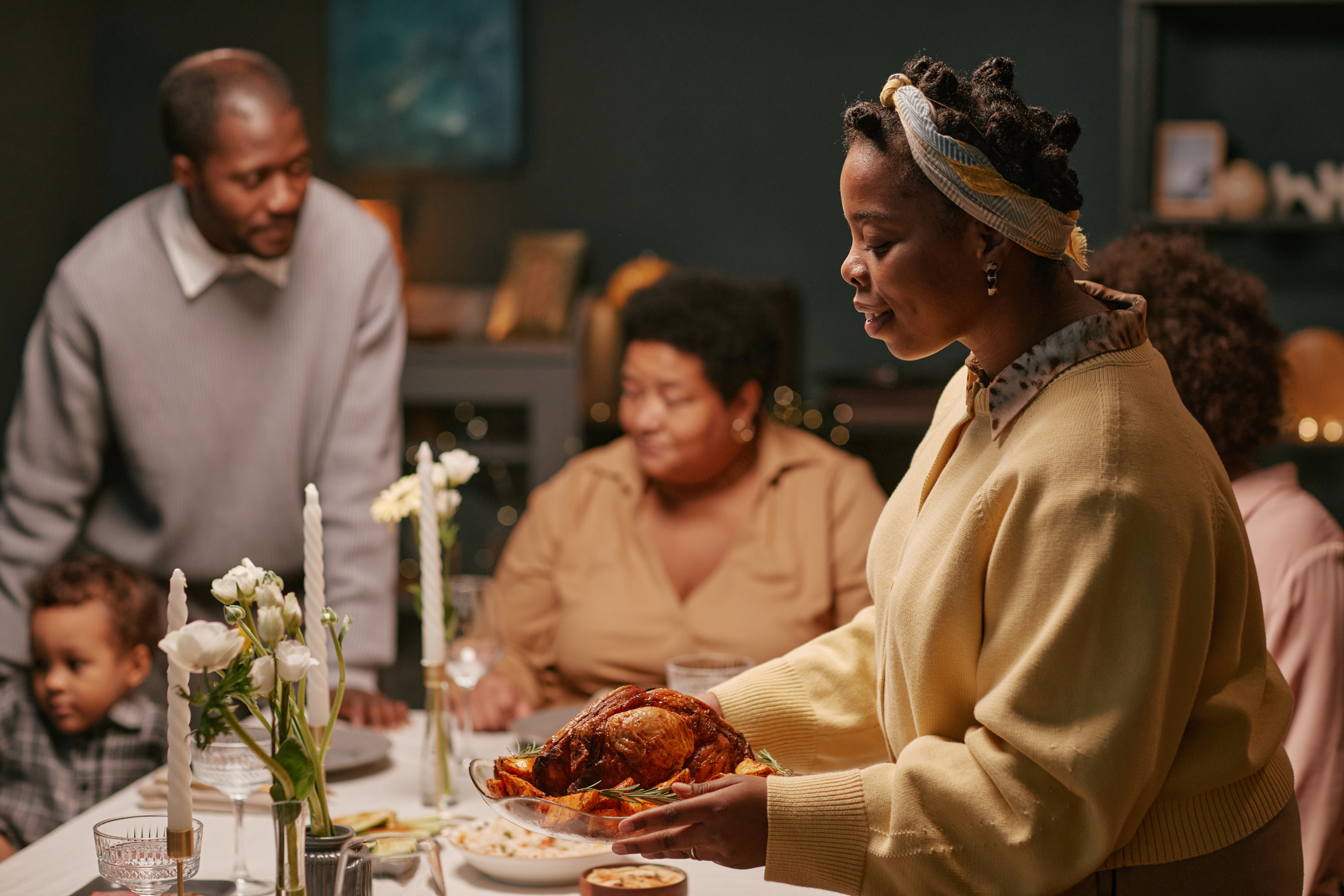
The passing of elders and generational matriarchs within families has created new gaps in planning and motivation to gather for the holidays. Despite the fake data point that emerged in 2025 about family reunion numbers dropping by 44%, the report’s virality opened the door to conversations about what family get-togethers look like in an era where everyone is either too tired, broke, or inefficient to plan events where everyone can enjoy each other’s company. Not to mention the added layer of underlying familial tensions and lost rapport that also impacts the experience.
In a research study published by Gallup in 2024, shared activities with families who have young children are still important to Black parents, with both creative play and singing/music being over 80%. But what happens when the children grow up? The reality is people still value family and want to be in community – no one wants to be alone unless they’re actively choosing to be. Rather than trying to repair issues or move in civility, family members make the decision to not attend events or find separate holiday plans. While some have taken the high road and created distance with their families, there are others who still believe that getting together for a meal or exchanging gifts is worthwhile.
It’s difficult to find what balance looks like between being around loved ones who are at odds and determining what boundaries you want to have. Even more so when you’re trying to determine what setting them looks like. When navigating tense environments, it’s important to lead with mindfulness, intention, and balance.
If you’re someone who doesn’t mind showing up despite family issues, or are keeping hope alive that your family will one day be on one accord, this might be for you.
Set Your Intentions (And Boundaries) Before Arrival
Setting boundaries ahead of the occasion about how long you’ll stay, who you’ll engage with, how long you’ll speak to them, and what things you want to indulge in, makes all the difference in navigating spaces with estranged family members. I’ve found that talking to different family members throughout the evening while keeping conversations neutral makes it feel lighter. Brief life updates, sports, or new products you’re trying are all topics that can be good to introduce to break the ice between others while holding onto the boundary of how much you want to share about your personal life. The same can hold true for those who may be attending with you. Whether it’s a friend, partner, or child, make sure that you’re all aligned to avoid any issues coming up later.
Handling Conflict In Real Time
It’s no secret that certain people don’t like each other. The disregard for addressing the other when they arrive, moving to the other side of the room, or referring to them only by pronouns are all things you or others have seen in real time. The key to navigating this is not taking sides, even if you do have an opinion on the situation. By keeping them both at the same level when it comes to communication, this avoids anything being misinterpreted or taken out of context. However, if it is perceived that you are on one person’s side more than another, you can explain where you’re coming from without going too in-depth. This avoidance of depth can vary based on situation, but help in the long run when it comes to the interpretation of what role you might play in a situation. As someone who’s been on the outside looking in at family drama, I’ve come to the realization that regardless of what I personally say or do, everyone is grown and should be treated as such.
The Family Members That Can’t Seem To Get It Together
I know, I know — your cousin’s business idea (or ideas) still haven’t gotten off the ground, and you’re tired of being the listening ear for every proposal. The other seems to have a new career direction every year, and they can’t stick to one thing. It’s frustrating when you want better for those you care about, but they can’t seem to actualize it for themselves. What I’ve personally found effective is presenting my perspective in a way that is respectful yet helps them see the situation in a new light. “This sounds like a great idea, but have you considered XYZ?” or “Maybe you should try researching more about XYZ, I’ve heard that can be really great for projects like this.”
Suggestions that make people feel reassured are always the best route to avoid any arguments or drama around the dinner table. This also helps to alleviate some of the pressure that comes with directly answering. Rather than giving false hope, you’re giving solutions wrapped in an emotional boundary that doesn’t allow you to overindulge in whatever they might be trying to pull you into. If they do try to pull you in deeper, find a way to get out of the conversation or circle back at a time when you feel the conversation can be had more smoothly.
If you find yourself in a situation where you just want to be left alone, communicate a boundary that involves a pivot. Bring up fun memories, what you enjoyed about the evening, or introduce a game. These pivots keep the focus on family time and not frustration.
The bottom line is that you want to be able to look back on photos and videos of moments with family that feel reminiscent of times when things were better, and that can be achieved. Think about what type of things matter most to you in a positive family experience. Is it preparing the food together? Is it dancing to your favorite songs? Is it honoring a loved one who passed away? Whatever it might look like, find a way to introduce that and make it memorable, not just for yourself but for your family as well. As much as you don’t want to feel uncomfortable, neither do they, and that should be kept in mind so everyone can have a good time.