If you come to Thanksgiving at my family’s house, you’ll get turkey, stuffing and macaroni and cheese just like everybody else, but you’ll also find oxtails, rice and peas and curry goat. My family is Bahamian and Jamaican, and growing up in a (New York) Caribbean American household meant the holiday always tasted a little like the islands. We’re far from the only ones who do it this way.
For a lot of West African and Caribbean families in the U.S., Thanksgiving is when the food from long lost grannies and aunties back home shares a spot on the table with all of the American classics. I wanted to know what Thanksgiving looks like in other homes like mine, so I asked a few friends with roots in Nigeria, Haiti and Trinidad. They told me which dishes their families would never skip and what they’d warn a first-time guest about.
A Seat For Nigeria
Tracy Ojeniyi grew up with an American mother and a Nigerian father, so her family’s Thanksgiving always had food from both sides. “My mom did most of the cooking, so traditional American soul food was definitely the foundation of our holiday meals,” said Ojeniyi, a 46-year-old nurse anesthesiologist in Washington, D.C. “But my dad always made sure Nigeria had a seat at the table, too!”
That meant jollof rice every year and a pot of her father’s egusi soup, and Nigerian family friends usually came through with dishes of their own. Her favorite jollof came from one of them, a longtime friend of her father’s she still calls Mr. Yemi. “As for the recipe, I wouldn’t dare try to give away Mr. Yemi’s secrets, even if I knew them!”
Most of her father’s relatives were still in Nigeria, so the people around that table were mostly family friends.”We called everyone Auntie and Uncle, whether we were related by blood or not. That was just family to us.”
Growing up, she didn’t always know where she fit. Ojeniyi went to a predominantly white high school where there weren’t many other Nigerians, and she says there were times she didn’t feel Nigerian enough or American enough. “I think those experiences taught me that culture and belonging aren’t always defined by blood or geography. They’re about the traditions, relationships, and experiences we share.”
Soufflé De Maïs Or Bust
“If I show up for Thanksgiving dinner and there’s no soufflé de maïs on the table, I’m immediately asking, ‘What’s going on here?’” said Rebecca P. Beliard. “It’s that serious!”
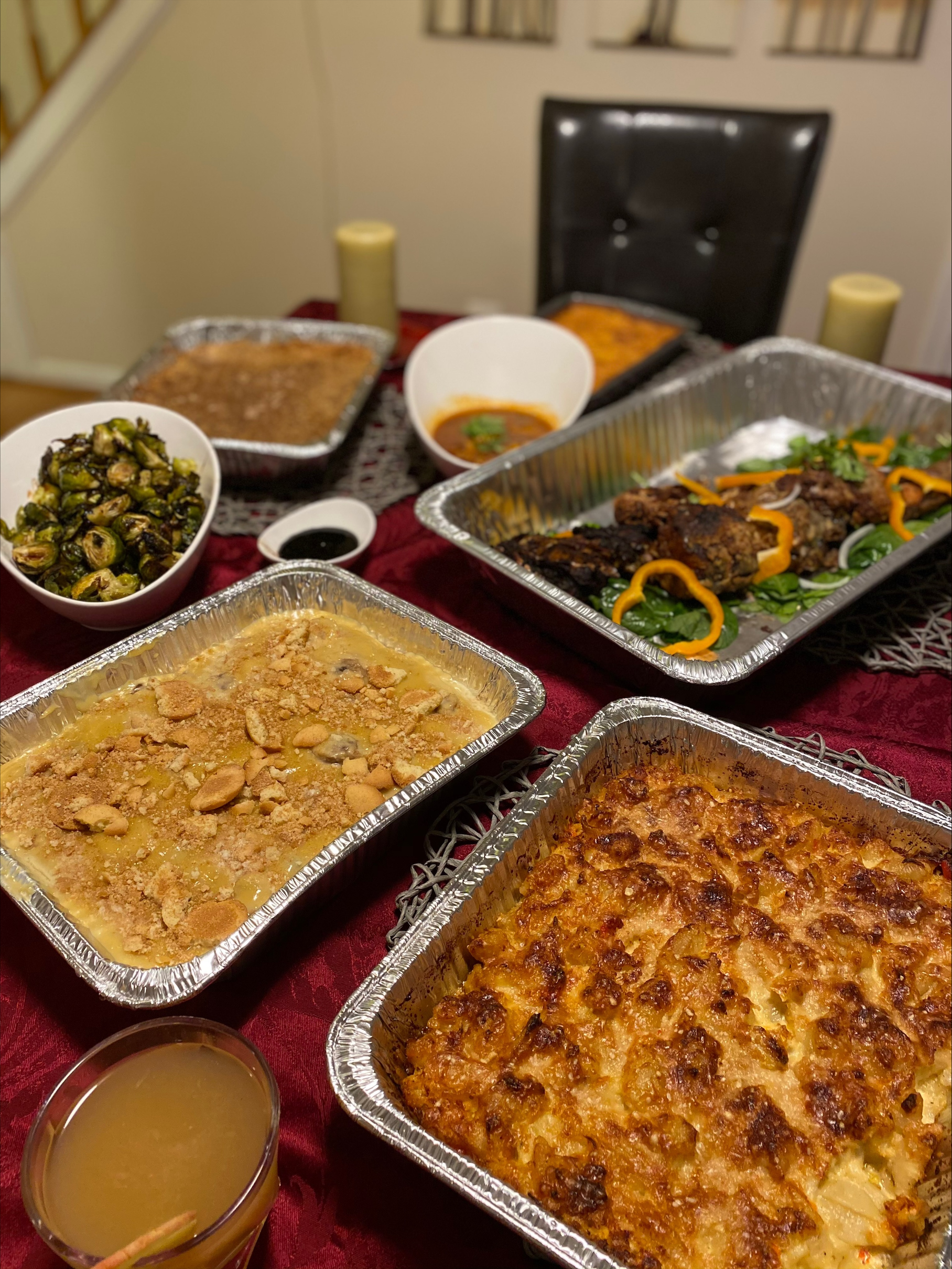
The corn dish she’s talking about is a little sweet and a little savory, and it’s a fixture in her Haitian family’s spread. Beliard is a 37-year-old business, intellectual property and entertainment lawyer who founded and runs RPB Law Firm in Miami. She says Thanksgiving in her household looks a lot like it does in many Black American homes until you get to the sides. Their mac and cheese is makawoni au graten, which bakes up firmer and more savory than the gooey American kind. Because stuffing never makes the menu, the family makes up for it with plenty of gravy. Beliard’s favorite part of the meal is griot, which is fried marinated pork served with pikliz, a spicy pickled slaw.
Everyone at that table expects a lot from the food, and Beliard says they expect just as much from anyone she brings home. That’s one reason she has never brought a date to Thanksgiving, and she’s in no rush. “I’m definitely the type of woman who believes that until there’s a ring on my finger, I’m not sure you need to be sitting at my family’s Thanksgiving table asking my auntie to pass the griot! Let me tell you something about my family: they are TOUGH. And I say that with love!”
She has spent Thanksgivings with friends and past partners, though, and she’s picked up a few favorites along the way. Collard greens took the longest to win her over, since she’d heard people rave about them for years without understanding why. “Honestly, I had never tasted greens that I actually enjoyed until last year, when I finally had some that were absolutely incredible.”
Candied yams with melted marshmallows were an easier sell for her. “In fact, I love them so much that I’ve started making them for my own family’s holiday celebrations,” she said.
Macaroni Pie By The Slice
Kelsei Wharton’s family is Trinidadian on both sides, and Thanksgiving wasn’t part of their lives until they came to the States. “Thanksgiving isn’t a Trinidadian holiday, so when my family adopted it here, they made it about togetherness: celebrating who’s at the table and honoring the people who aren’t here to break bread with us anymore,” said Wharton, a 36-year-old senior vice president and head of social impact at Values Partnerships in New York.
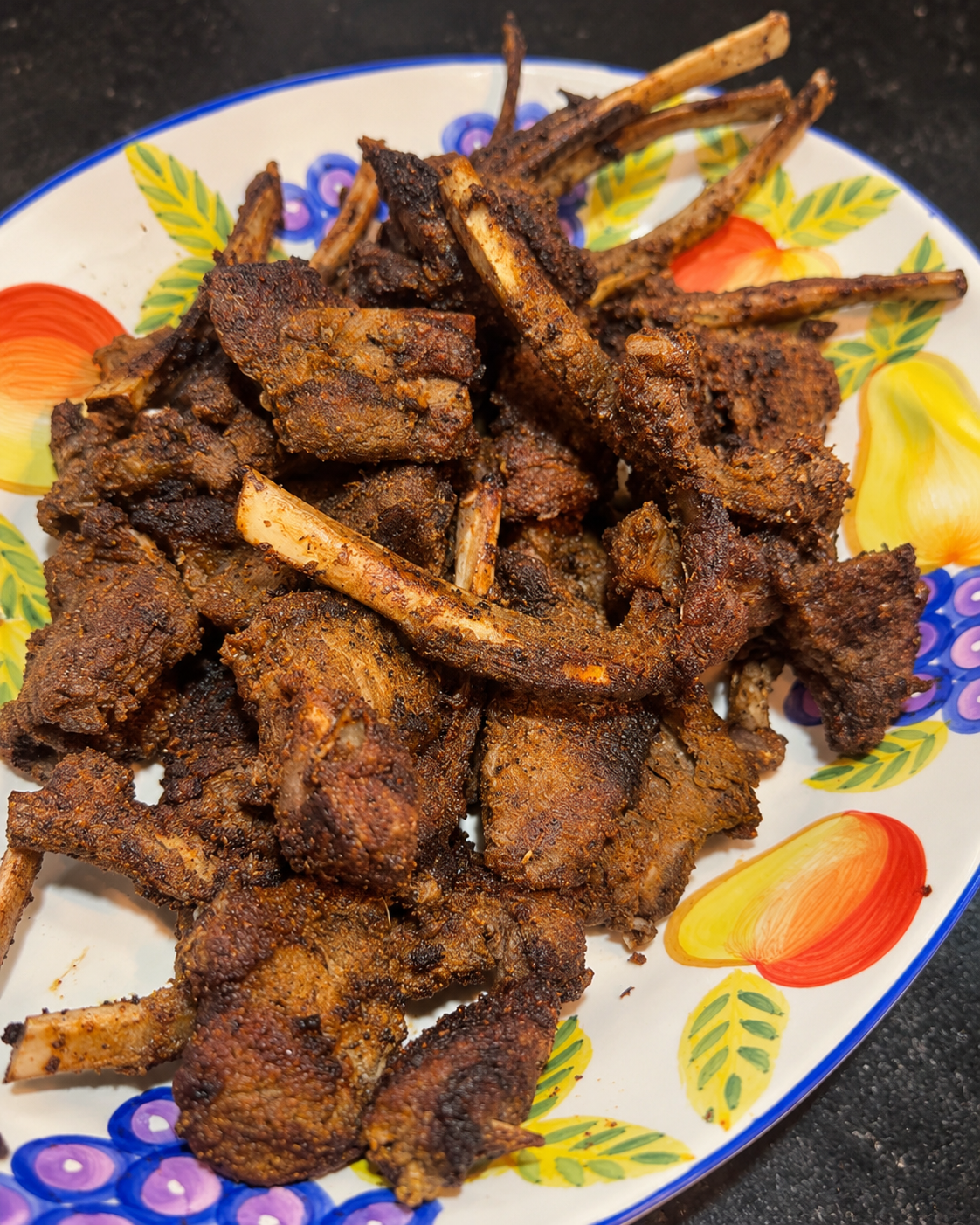
He lived in Trinidad for a while as a kid, so he knows how the island gets ready for the holidays. The weeks before Christmas bring parang music and outdoor fetes while families repaint their walls and hang new curtains. His family can’t recreate all of that here, so Thanksgiving is where they start celebrating. Turkey’s on the table, and so is stewed oxtail, but most of the spread is Trini. Most years that means pigeon peas, pigtail, callaloo and curry chicken and rice. His grandmother used to make something she called Christmas rice, and it’s still on the menu, with carrots, peppers and other vegetables mixed in. Sometimes there’s pelau too. Every meat gets seasoned first with homemade green seasoning, and dessert is cassava pone, a dense, chewy bake made with grated cassava and coconut.
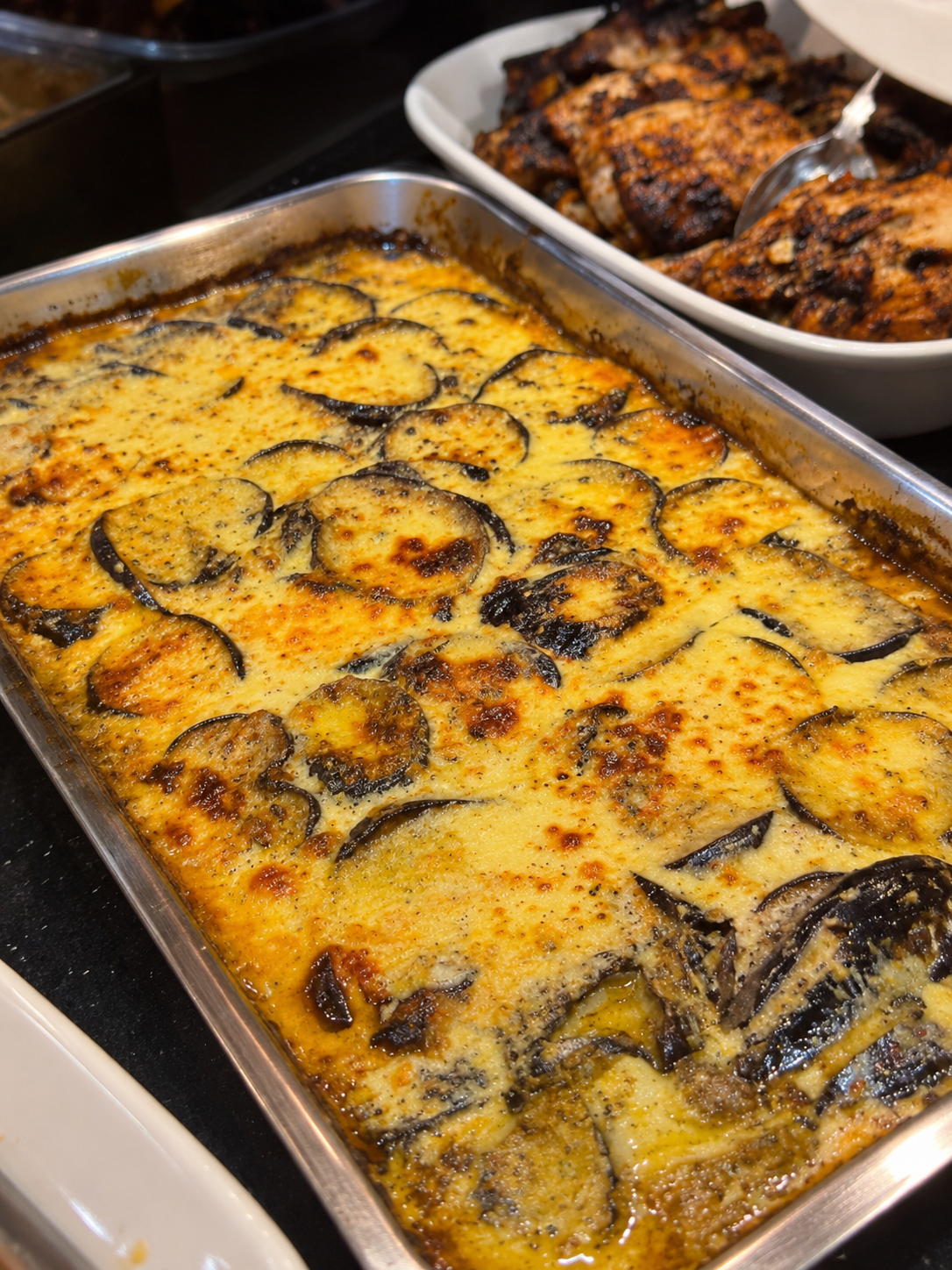
Then there’s the macaroni pie, which Wharton calls a must. Like Beliard’s makawoni au graten, it’s firmer than what most Americans picture. “It’s baked until it sets, so you cut it into slices. Without it, it isn’t Thanksgiving.”
His family always had friends from different backgrounds at the table, and he picked up a few dishes from them, too. “Sweet potato pie wasn’t in my Trini house growing up, but once my friends and their families put me on game when I sat at their tables, I never went back. I put them on cassava pone and black cake in return.”
If You’re Bringing Someone Home
I also asked all three what they’d tell someone bringing a guest home, or showing up as one. For Wharton, he thinks about it from the moment he sends the invite. “Be proud of your heritage when you extend the invite. It’s an honor to bring people to your table so they can share in your culture and learn who you and your people are,” he said. “Tell them upfront that your family does it differently, and ask them to bring a dish they love so their food is part of the spread too.”
Share the backstory: Ojeniyi’s guests were always surprised by something, whether it was her father’s accent or the heat in the food. “Make your guests feel welcome, share the stories behind the food, and give them the freedom to experience something new without judgment,” she said.
Put a little of everything on your plate: “You don’t have to love every dish, but I always encourage people to put a little bit of everything on their plate,” Beliard said. “You never know what might become your new favorite!”
Don’t rush out after dessert, either. Beliard wants guests to take in the music, the drinks and the conversation, and Wharton feels the same way. “Put on the music, tell the stories, and once the meal is done, teach them a card game or whatever your family loves to do together. Have fun with it.”
Ojeniyi would tell any first-time guest to show up ready to eat. “Come hungry, come open-minded, and don’t be afraid to try something you can’t pronounce!” she says. She has one for hosts, too. “If you’re bringing someone to a Nigerian Thanksgiving, definitely warn them about the pepper!”