Warning: Movie Spoilers Ahead
The Hunger Games is one of my favorite franchises. It has always been a story about what a life is worth and whose lives are valued.
After watching The Hunger Games: Sunrise on the Reaping—a film that spends so much of its two hours and thirty minutes torturing a teenage boy in 3D (at least in my theater)—it was stark how many characters’ lives weren’t being valued. Especially the Black ones.
While Haymitch Abernathy’s suffering is given the entire runtime to unfold so the audience can sit with the emotional weight of his decisions and the oppression he faces, the suffering of the Black characters surrounding him is repeatedly denied the same empathy. In a franchise that gave us deeply fleshed-out supporting characters such as Peeta, Primrose, and Finnick, the Black characters’ lives only seem to matter because of what their deaths mean to the white protagonist.
If The Hunger Games asks the audience to reckon with the consequences of oppression, why are so many of its Black characters still fighting to be seen?
The Black Lives Behind Haymitch’s Tragedy
There is nothing wrong with tragedy or characters dying—even dying to advance another character’s story. Stories have been doing that for centuries. But when most, if not all, of the Black characters in a film have little interiority to begin with, and what little they do have is used solely to prop up the white lead, it points to a deeper pattern.
What’s incredibly frustrating is that almost all of the Black characters in Sunrise on the Reaping have the potential to be protagonists themselves. Simply by living in Panem, we know these characters have a history of oppression under the Capitol; they have fears and beliefs shaped by the brutal world they inhabit. Yet they are pushed to the margins to serve Haymitch’s arc. Their suffering is something Haymitch grapples with, rather than something that belongs to them.
Lenore Dove, Haymitch’s girlfriend, is played by Whitney Peak. She is a rebel in her own right who stands up for what’s right. Of all the Black characters in this film, she has real agency. Yet from the moment I saw her, I knew she was going to die. All that agency loses its potential as we watch her reduced primarily to what Haymitch loses. This Black girl’s death—her absence—becomes mere emotional kindling for someone else’s journey.
Ampert, Beetee’s son (played by Percy Daggs IV), is an intelligent young Black boy, which is refreshing to see on screen. We learn that he is reaped for this Quarter Quell as punishment for his father’s acts of resistance. Rather than blame his father, he takes up his father’s fight. There is such a compelling story there. Instead, his role in Haymitch’s tragedy becomes Rue 2.0: a young ally in the arena whose prolonged, horrific death exists to deepen Haymitch’s trauma and sense of failure.
The rest of the Black characters in this film aren’t just expendable—because there is so little written for them, they begin to lean into stereotypes that have plagued Black characters since the beginning of cinema.
Panache (Jhaleil Swaby) is a Career tribute from District 1, shaped by a system that thrives on violence, born and bred to win the Hunger Games or die trying. His aggression makes sense within the logic of Panem. But the film goes a step further than it has with other Career tributes over the past decade: His aggression is all he is. He is one of the only tributes who needs to be handcuffed because he is deemed so dangerous, and he attacks Haymitch for no reason other than sheer brutality. During his Capitol interview, he rips off his shirt to reveal hulking muscles and screams, “I’m the biggest, the beefiest, and the best!” No, I am not kidding. Remember, Panache is a child, brainwashed into his role. Rather than exploring the psychological toll of that conditioning—the way the first film did for Cato—this movie treats him as a caricature of violence. It is familiar racial imagery that reinforces the trope of Black men as savage and inherently dangerous. With minimal screen time or substance, his sole function in Haymitch’s tale is to serve as a violent obstacle for the hero to overcome.
Magno, Haymitch’s Capitol stylist, is played by the magnificent Billy Porter. Aaaand, that’s it. Sorry, there’s not much else there. Magno is always late, loud, and terrible at his job. His entire narrative function is to be replaced by Effie Trinket so she can be folded into Haymitch’s storyline. There’s nothing wrong with a flamboyant stylist, or even a flawed Black character. But when incompetence is the only trait given, that is the definition of a stereotype. For generations, Black people have been penalized by tropes painting them as lazy, unreliable, and unfit for the job. This may have been how the character was written in the book, but seeing it play out on screen feeds into an exhausting, ongoing narrative.
And then there was Beetee…
The Tragedy We Didn’t Get to See
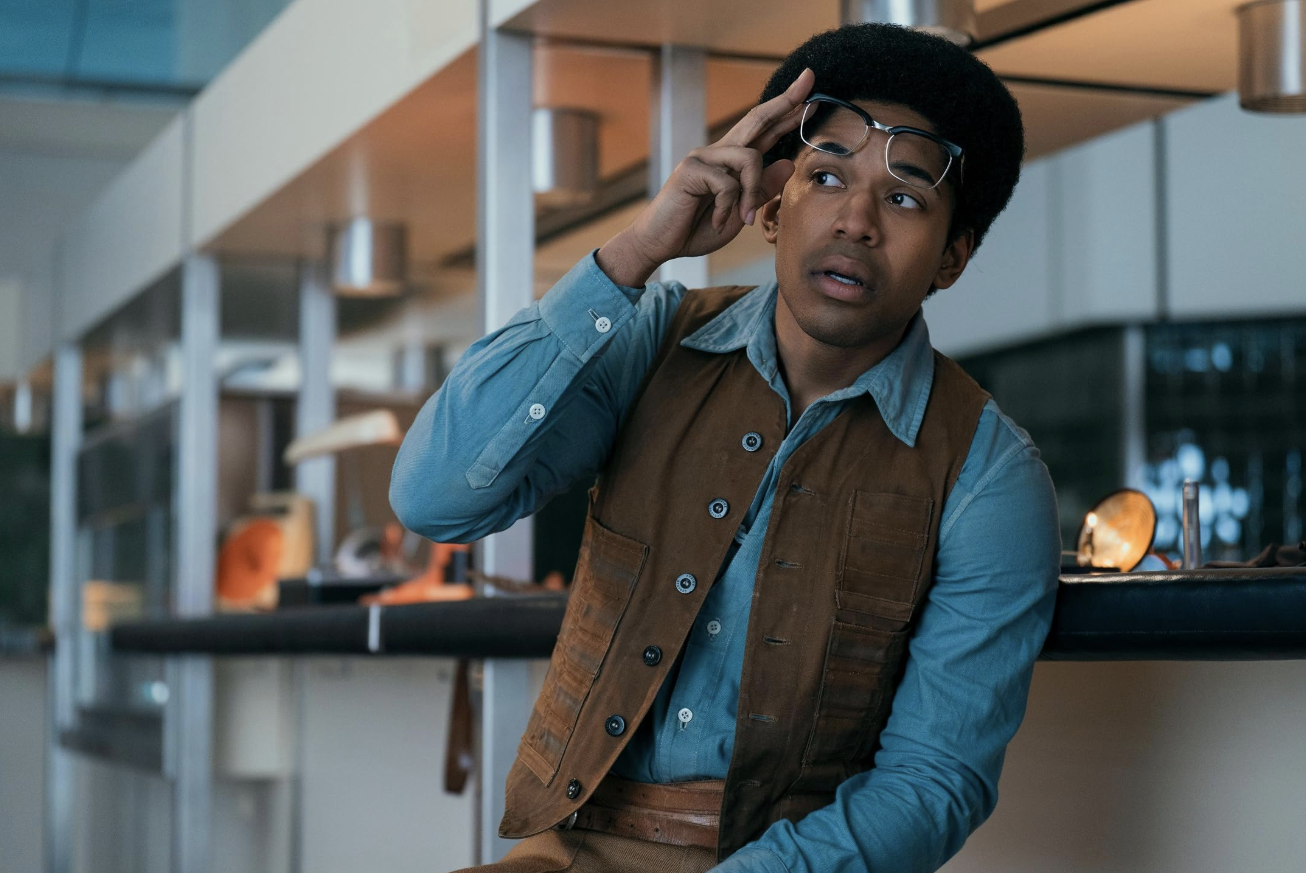
Beetee, played by Kelvin Harrison Jr. in this prequel, has one of the most tragic stories of any Hunger Games character besides Katniss. As a child, Beetee won the Hunger Games through sheer intellect, and he later tried to take down the Capitol’s communication network. He has been rebelling against this oppressive system his entire life. When he gets caught, the Capitol punishes him in the cruelest way possible: by targeting his own child.
Because of Beetee’s actions, his young son Ampert is reaped into the Quarter Quell. Beetee knows the nightmare of the arena; he knows the odds are never in your favor, and he knows what awaits his boy. Beetee literally has to mourn Ampert in his final days, offering whatever last fatherly advice might give him an edge in the ring, even as he knows he’s powerless to save him. Then we, the audience, watch his son get brutally eaten to death. And how does the movie serve this devastating story?
Beetee vanishes from the film. We don’t even see his reaction when his son perishes. We don’t see what decision he makes next, even though we know from later installments that he somehow gathers the strength to keep fighting. All we get is a passing mention that he was arrested. The movie found plenty of time to make this man suffer and to linger on his son’s brutal death, yet when it comes to the emotional fallout for the father who lost him, that reaction is handed over to Haymitch. Beetee simply doesn’t matter.
Not every supporting character needs a standalone story, but at the very least, they deserve a complete arc. Peeta, Finnick, and even Haymitch himself were originally supporting characters who advanced Katniss’s story while maintaining their own emotional and physical narratives outside of it. The Hunger Games franchise—and Sunrise on the Reaping specifically—has so many rich Black stories sitting right in front of it that it refuses to tell.
Being Seen Does Not Equal Being Visible
The Hunger Games is about oppression and the dehumanization that comes with it. Haymitch doesn’t have privilege in Panem; he is a kid forced to fight to the death because his government views him as disposable. Yet Haymitch does have privilege as a character within Hollywood.
He is granted what is withheld from others: depth and humanity. Narrative empathy examines how audiences identify with fictional characters and inhabit their perspectives. We naturally connect with a protagonist like Haymitch because we are repeatedly shown his wants, fears, struggles, relationships, and choices.
That isn’t to say audiences can’t connect with supporting characters—you can, and you should. But only when they are written with that same humanity. When a story grants white characters rich emotional interiority while relegating Black characters and people of color to plot devices, it robs the audience of the opportunity to truly see and feel for them.
That lack of emotional connection doesn’t stay confined to fiction. It follows us when we leave the theater or close the book. Since the very first Hunger Games film—and across a decade of social media discourse—we’ve seen what happens when audiences struggle to empathize with Black characters.
Incensed Over Blackness
In 2012, Amandla Stenberg’s casting as Rue sparked what became known as “Rue-gate.” Unlike many characters in The Hunger Games whose races were left ambiguous, Rue’s was not vague at all: Suzanne Collins explicitly described her in the novel as having “dark brown skin and eyes.” Still, many readers hadn’t pictured her as Black, and social media’s reaction was vicious:
- “why does rue have to be black not gonna lie kinda ruined the movie.” — @maggie_mcd11
- “EWW rue is black?? I’m not watching” — @Joe_Longley
- “Kk call me racist but when I found out rue was black her death wasn’t as sad #ihatemyself” — @jashperparas
Rue’s story hadn’t changed from page to screen. The only thing that changed was the viewer’s perception of her race—and suddenly, Rue didn’t matter.
That same backlash hit Lenny Kravitz when he was cast as Cinna (whose race isn’t specified in the book). And when Catching Fire was released in 2013, anger erupted over Beetee being cast as Black, as reported by HuffPost:
- “I thought it was awesome. Well, except for Beetee. Why the f*$# did they make him black.”
Because whiteness is treated as the default—requiring seven pages of description for any other race to register in some readers’ minds—part of the fandom couldn’t let go of the bias of their own imagination.
Still, there are signs of progress in the franchise’s journey.
Fans Are Moving Forward—Will the Franchise?
When Whitney Peak was cast as Lenore Dove in Sunrise on the Reaping, the familiar complaints surfaced online, with detractors commenting things like, “DEI in Hollywood is alive and well,” or, “Suzanne, please stop going woke.”
Compared to past reactions in this fandom, however, Peak’s casting has met a noticeably stronger wave of support. Many fans not only celebrated the choice but actively defended it against the naysayers. The audience is ready for these Black characters and their stories. The real question is whether the franchise can handle telling them.
The world of The Hunger Games has always been diverse, both on the page and on screen, and the films clearly want to bring more of that diversity to the forefront. That is a win not only for audiences, but for actors of color.
Yet representation cannot stop at casting. When filmmakers hand roles to people of color without interrogating the tropes baked into those parts, they risk reinforcing the very stereotypes their casting aims to dismantle. We don’t just need quantity—we need quality.
And if I may be so bold as to pitch the powers that be behind The Hunger Games: Yo, give us the Beetee movie!
The story is right there. We are firmly in the era of prequels exploring everyone who sacrificed for the rebellion long before Katniss volunteered. What about a story centered on a brilliant father trying to protect his son from the regime oppressing them? Or a deeper dive into District 11, home to so many characters with “dark hair and dark eyes”?
The franchise doesn’t need more Black characters dying to fuel someone else’s arc. It’s time for one of our own.
Jess Dotson, a.k.a. Jess, The PrideBrarian, is an Emmy-nominated TV producer and creator of PrideBrary, a YouTube channel with supporting social media channels where she creates infotainment content exploring race, LGBTQ+ representation, and gender representation in media.