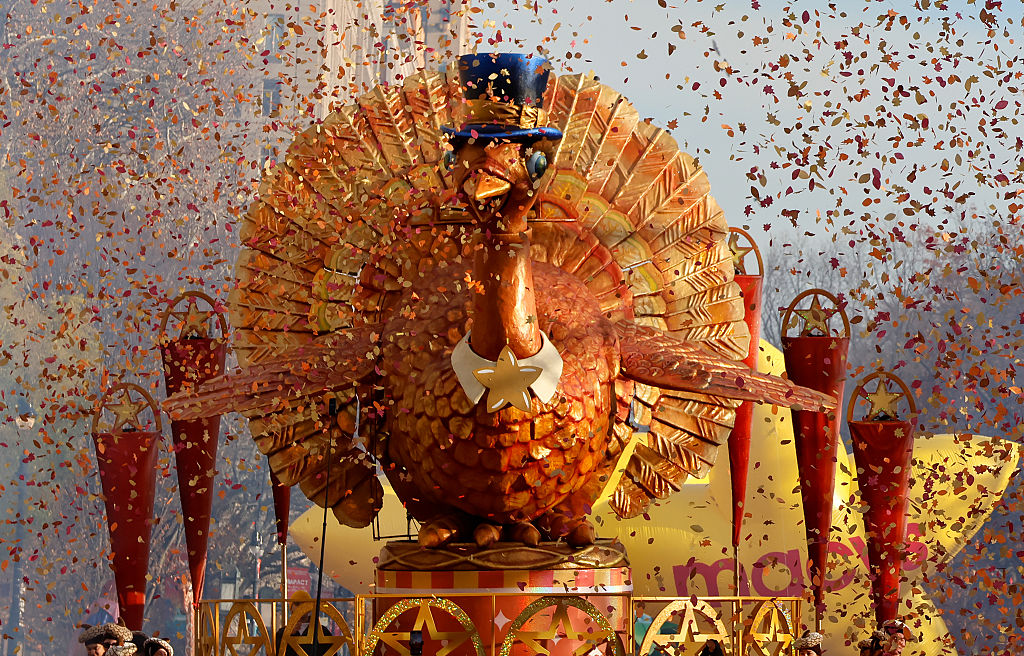
When the very first Macy’s Thanksgiving Day Parade rolled down the streets of New York City in 1924, one of the four bands performing was a jazz ensemble made up of Black Macy’s employees.
The Macy’s Thanksgiving Day Parade has a deep-rooted history. The parade started in 1924 as the Macy’s Christmas Parade, organized largely by Macy’s immigrant employees who wanted to celebrate the American holiday in the spirit of the European festivals they grew up with. What began as a six-mile march with live animals borrowed from the Central Park Zoo has become the year’s most-watched entertainment event.
Rooted in Black Culture
In 1924, at the height of the Harlem Renaissance, a cultural explosion of Black art, music, and intellectual life centered just miles from the parade route. Black Americans were creating some of the most significant music in the country’s history, and they were there at the very beginning of what would become one of America’s most beloved traditions.
The original route began in Harlem, at 145th Street and Convent Avenue, winding six miles south to the Macy’s flagship at Herald Square—nearly three times longer than the route marched today. When the parade returned in 1946 after a World War II hiatus, the route was cut from six miles to 2.5 miles, starting at West 77th Street and Central Park West, leaving Harlem behind.
Black excellence has still found its way in the latest parade routes, even if the parade didn’t always return the favor. When the route left Harlem in 1946, Black performers largely disappeared from the main stage. It took decades before that started to change. But it wouldn’t be long before a major name brought the parade back to its roots.
By the late 1970s, Black artists became a fixture on the parade route. Diana Ross performed in 1979, and she wasn’t alone. Gloria Gaynor, Jessye Norman, and Ben Vereen all appeared during that era, bringing a sound to Midtown streets that felt unmistakably Black.
The 1980s brought even more. Sister Sled performed “We Are Family” in 1980. Kool & the Gang made their parade debut in 1981 performing “Celebration.” Debbie Allen appeared in 1982 with the cast of Fame. That same year, Sammy Davis Jr. and Deniece Williams were also on the route. Irene Cara performed “What a Feeling” in 1984, alongside Dionne Warwick. New Edition performed in 1985. Nell Carter in 1986. The route had left Harlem, but Black artists still made the parade their own.
By the 1990s, Black artists weren’t just showing up; they were owning the route. Patti LaBelle kicked off the decade in 1990, alongside Kid ‘n Play. Boyz II Men and Jennifer Holliday followed in 1991. The year 1992 delivered one of the most stacked years on record: Gregory Hines and Savion Glover brought tap to the streets, Kris Kross repped hip-hop, Shanice performed, and Jessye Norman—one of the greatest operatic sopranos of her generation—was there too. Vanessa Williams performed in 1996 a nd Monica in 1998, the same year The Pointer Sisters hit the route. By 1995, Stevie Wonder, LL Cool J, and Brandy were all on the same parade. Kool & the Gang closed out the decade in 1999.
The momentum continued into the new millennium. Usher performed in 2001. Ashanti and Mario followed in 2002. Raven-Symoné was on the route in 2003. Rihanna performed “Pon de Replay” in 2005—one of her first major U.S. television moments. By the 2010s, the names only got bigger: Kanye West performed “Lost in the World” in 2010. Smokey Robinson appeared in 2017, followed by Diana Ross and John Legend in 2018. Ciara and Billy Porter closed out the decade together in 2019.
Most recently, in 2023, Sheryl Lee Ralph made history as the first Black Mrs. Claus in the parade’s history. Ralph had just won the Emmy for Abbott Elementary weeks earlier, becoming only the second Black woman to win Outstanding Supporting Actress in a Comedy Series.
What to Expect at the 100th Celebration
This year’s parade is set to be massive, with over 100 inflatable elements, including dozens of character balloons, floats, and balloonicles filling Midtown’s streets, with nearly two dozen performances spread throughout the route. New character balloons are scheduled to debut, including Bluey, Hello Kitty, Sorcerer’s Apprentice Mickey Mouse, and Billie Brightpaw—a brand-new original Macy’s character created specifically for the centennial.
The route runs through Midtown Manhattan, with the main event kicking off at 8:30 a.m. It runs until 12 p.m. ET on NBC and Peacock. Savannah Guthrie and Al Roker from TODAY, along with alum Hoda Kotb, will anchor the event.
The performance lineup is stacked, and for us specifically, there is a lot to be excited about. Queen Latifah, Keke Palmer, Jimmy Fallon and The Roots, Wyclef Jean, and Leslie Odom Jr. are all performing. The Divine Nine Unity Step Team is also marching.
The broader lineup also includes big names like Teddy Swims, Natasha Bedingfield, JoJo, Smash Mouth, Baha Men, Indigo Girls, and EJAE—the Korean American singer-songwriter behind KPop Demon Hunters‘ hit “Golden.”
If Mother Nature Intervenes
With over 100 inflatables planned for this year’s parade, Macy’s only has to worry about the day’s wind forecast.
Parade officials operate under strict rules: if sustained winds exceed 23 mph or gusts top 34 mph, the giant character balloons get grounded. This scare has happened in years past, and officials always make the final call that morning. Balloon handlers train for months specifically to manage the inflatables in unpredictable conditions. As of now, weather is being monitored, and no decision has been made. Plan to tune in regardless; even in past years when wind threatened, the balloons have flown.
If the last 100 years are any indication, the next 100 will only get bigger and better.