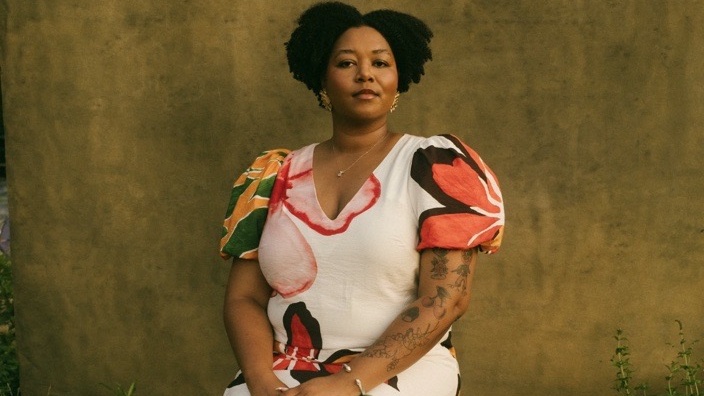
For Alexis Alston, better known as Lexie Lou across social media, the expression and preservation of legacy extends far beyond the simplicity of being familiar with the kitchen. As a content creator, her niche leans mostly toward food and beverages. But the personal investment, knowledge, and overall feel-good spirit she pairs with it is what differentiates her content from most creators. Her presence as a food, cocktail, and lifestyle creator was never just about obtaining influential status and notoriety. Instead, it is about applying action behind preserving time’s old traditions by passing along the knowledge provided through her elders’ examples. From her cocktail and cooking tutorials, to the latest expansion of her repertoire, The Cornbread Archive, Alexis has taken a modern approach to actualizing the work of preserving recipes.
Funny enough, she didn’t initially view herself as a preservationist until someone else said it out loud. After she curated cocktails for a Juneteenth dinner, a friend, Gabrielle Etienne, pointed out the thread running through all of her efforts. “The work you’re doing, you are a cultural preservationist,” Etienne said. “I never thought about it like that. I was just like, these are the things that excite me, that I grew up with, that I don’t hear folks always talking about,” Alexis said.
Now, she defines the work with intention. “Food and drink are so much more than what we consume,” Alexis shared candidly. “They’re historical records that tell us about migration, agriculture, economics, race, class, celebration, survival, and resistance.” And in her eyes, the internet has made everyone a potential keeper of those records. “We no longer have to wait for institutions to decide our stories are worthy of preservation. We can document them ourselves.”
The response to the series proves why The Cornbread Archive matters. Her audience splits almost down the middle. Half of them nod along when she offers tid bits of knowledge, like collard greens are better after the first frost. The other half have never heard it. For Alexis, that gap is the point. “We’re the new aunties,” she said. “We are the ones who need to start cooking out and having people over.”
Her education began long before she ever hit record. Alexis lives on her family’s homestead in North Carolina, land her great-grandfather purchased after sharecropping. Her father, a sharecropper himself, spent his later years circling back to the kitchen and the garden. She remembers a brick hog grill big enough to cook a whole hog, and watching her dad and grandmother use it. Later, she reckoned, “I come from a culinary family, even though I didn’t realize I did.”
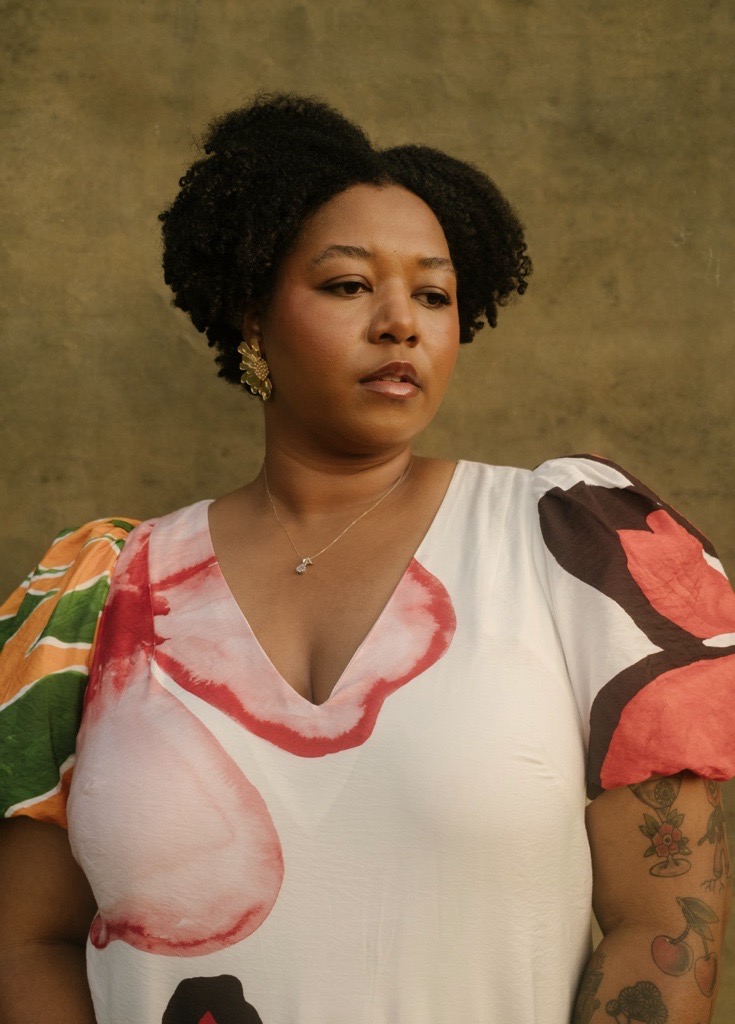
That lineage runs deeper than the kitchen. Her paternal grandmother came from a sharecropping background, and she and her husband made and transported liquor throughout the South from the 1940s through the 1960s. They also operated what was known as a liquor house, an informal establishment where people could buy a drink, socialize, and gather. “There’s something incredibly full circle about the fact that generations later, their granddaughter has built a career around cocktails, hospitality, and documenting the traditions they participated in,” Alexis said. Their story is part of the foundation of the cocktail book she’s currently writing.
Of course, the passing down doesn’t stop at the kitchen door. Behind her in every installment of The Cornbread Archive hangs a sign that reads, “All Y’all Are Welcome But You Gotta Act Right,” and it sets the tone for the entire series. Alexis is not here to gatekeep or to talk down to anyone. “I don’t like pretentiousness at all,” she affirmed. “I really try to approach it as, like, if nobody told you, I’m going to tell you.”
That “somebody oughta told you” energy is also why her most recent conversation on being a good guest struck a chord. Many of us have scaled back on hosting because people just don’t know how to act, and Alexis believes it’s a generational gap in knowledge, not a lack of care. She points to the things we once knew without being told. “Not asking your friends what they need when someone passes, or when someone has a baby, or how to not show up empty-handed,” she said.
She believes her Millennial generation is uniquely positioned to bridge it. “We’re in a great position to know how things used to be and how they are now, like, pre and post living our lives on the internet,” she said.
Although, Alexis’ warm approach doesn’t mean she’s unresearched. With a political science degree from UNC-Chapel Hill and 52 credit hours of doctoral study in American politics at the University of Virginia, Alexis comes with receipts. “If you want sources, I’ll send them to you,” she offered. “I’ll even give you a reading list.” She doesn’t see scholarship and content creation as opposing forces. “I don’t see a contradiction between being a scholar and being a creator,” she wrote. “I see content creation as another way to make knowledge accessible, engaging, and worth preserving.”
To her, food and the table are never separate from the bigger picture. “Food is also fundamentally political,” she shared. “What we eat, what we grow, who has access to land, whose labor makes the meal possible, and whose traditions are celebrated or erased are all questions shaped by history and power.” The same goes for the region she calls home. “The South is so often flattened into a single narrative, particularly in national political discourse,” she said. “But Black Southerners have always been central to shaping this country’s political and cultural landscape.” In the wake of the recent midterm elections, she keeps returning to André 3000’s declaration that “The South got something to say.” “But the truth is, the South has always had something to say,” Alexis said. “The question is whether the rest of the country has been willing to listen.”
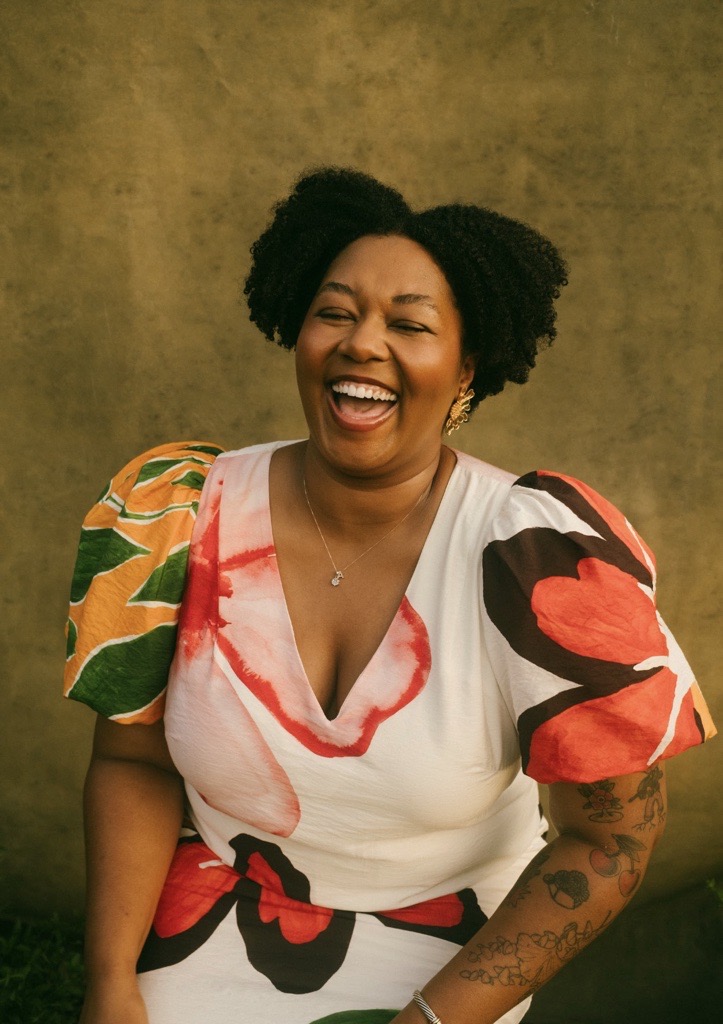
She credits her community for sustaining the work, especially in the moments when the creator economy runs dry. “I don’t have a platform without my folks,” she said. After nearly three years of creating full-time, she’s grateful.
So as Thanksgiving approaches, she’ll be cooking at a Friendsgiving with people who already know the rules. “They know how to act, they know how to come,” she offered. And in the end, the table is where it all comes back together. “The table is a huge unifier, and it’s the heart of the community.”
Alexis isn’t waiting for permission to carry that forward. She whole-heartedly believes that, “If I don’t tell the people, if I don’t pass this down, the people won’t know,” she said. “If not me, then who?” She wants the next generation to have more than instructions. “I want to make sure the generations coming after me have something to inherit beyond a recipe,” she shared. “Because The Cornbread Archive isn’t just about what we inherit. It’s about what we refuse to let disappear.” Approaches like the one Alexis has adapted is a testament to the kind of thinking we should all consider adapting as we navigate this holiday season, but also as we transition into the junior elders of our families.