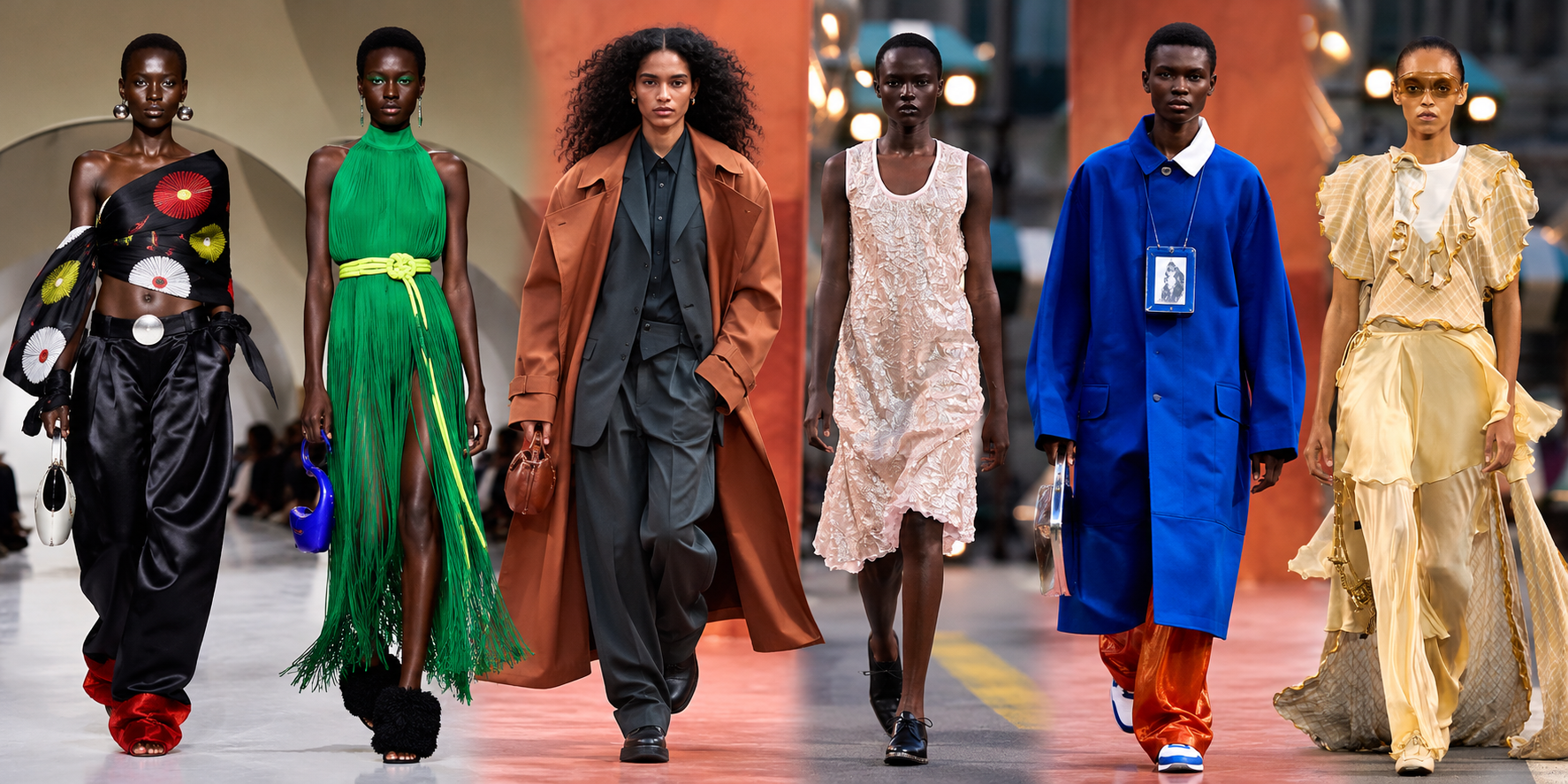
Paris Fashion Week’s Spring/Summer 2027 collections had one thing in common: designers were rethinking what it means to get dressed for real life. From Loewe’s playful approach to everyday wardrobe staples and Miu Miu’s rebellious take on preppy dressing to Louis Vuitton’s exploration of movement and Alaïa’s celebration of the female form, the season was less about creating an entirely new fashion identity and more about embracing individuality. Across the runways, traditional tailoring was softened, proportions were exaggerated, and familiar silhouettes were reimagined through unexpected fabrics, bold colors, and thoughtful construction. Even the more experimental collections from Issey Miyake and Ottolinger emphasized the relationship between clothing and the body. The message was clear: fashion can still be dramatic, sexy and a little unconventional without sacrificing comfort or wearability. And in a world where everyone seems to be moving a mile a minute, perhaps the biggest luxury of all is having clothes that allow us to simply be ourselves.
Miu Miu
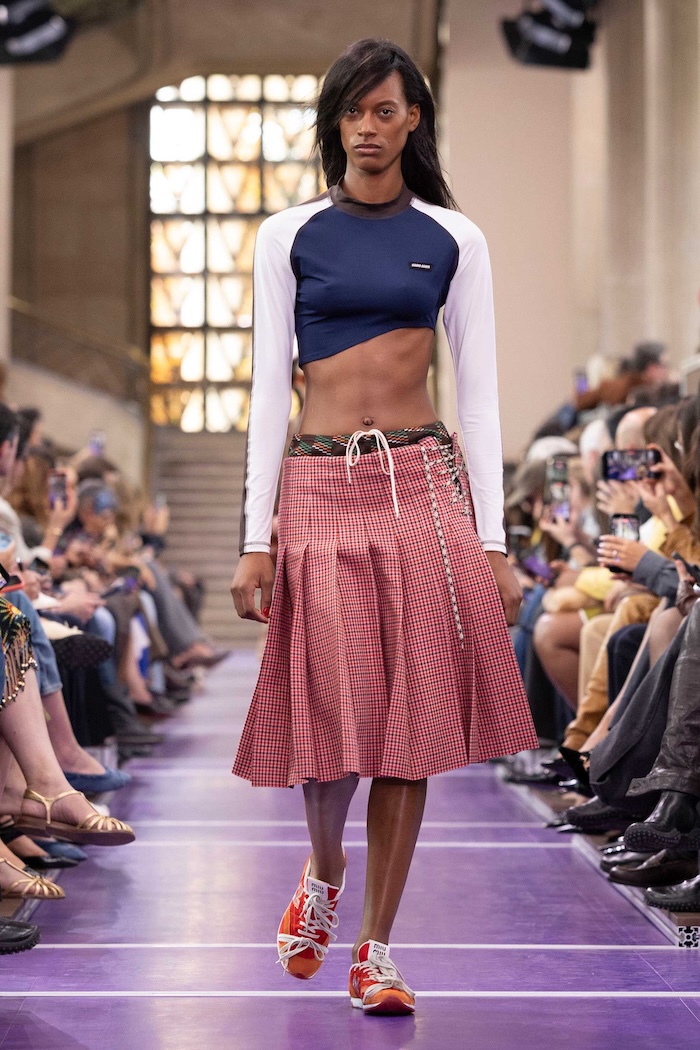
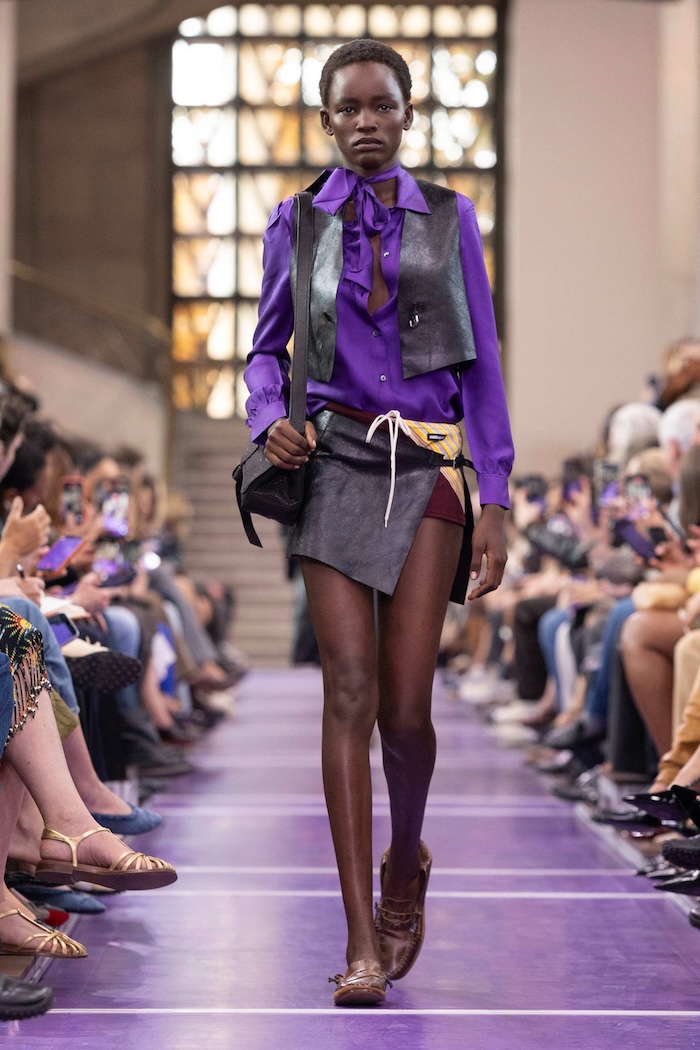
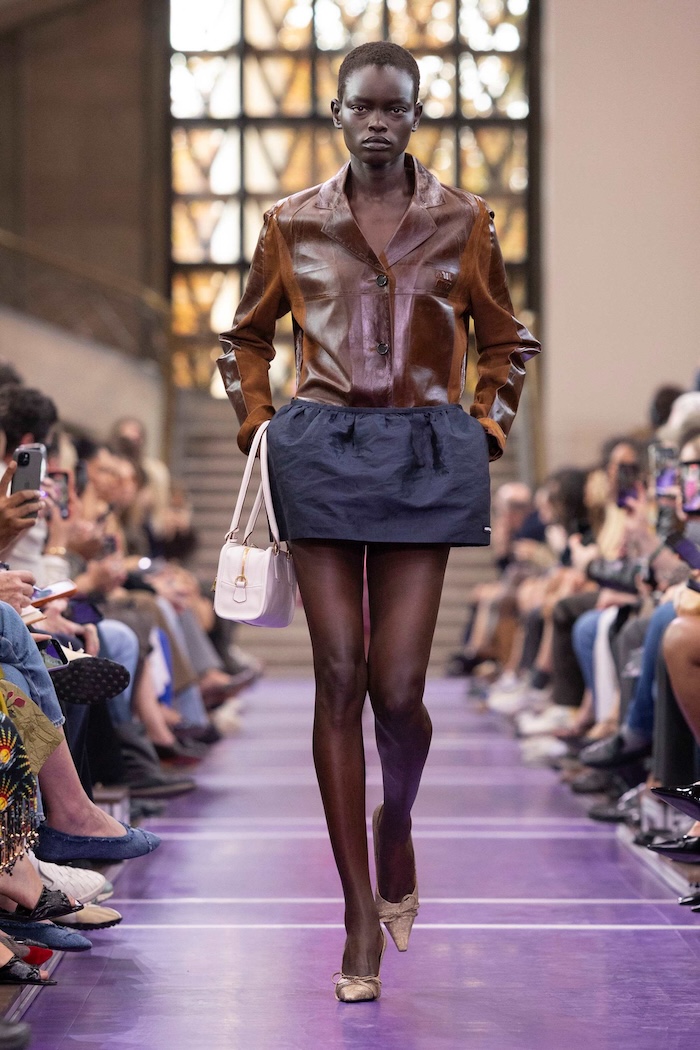
Miuccia Prada knows a thing or two about making clothes that women actually want to wear, and for Miu Miu’s Spring/Summer 2027 collection, she reminded us why the brand continues to have fashion’s cool girls in a chokehold. Presented at the Palais d’Iéna in Paris under the title Here and Now, the collection was a playful collision of prep-school dressing, athletic influences, and that slightly undone aesthetic that Miu Miu has practically perfected. Think shrunken tops, pleated skirts, leather separates, and unexpected proportions that made even the most familiar wardrobe staples feel desirable again. One look paired a navy-and-white cropped athletic top with a red gingham pleated skirt and sneakers, giving us a little schoolgirl rebellion with a sporty twist. Another featured a vibrant purple pussy-bow blouse layered beneath a cropped leather vest and styled with an asymmetrical leather miniskirt. It was polished, a little rebellious, and exactly the kind of outfit that makes you want to get dressed just to be seen. A caramel-colored leather jacket paired with a navy micro-mini and a structured lavender handbag offered a more grown-up interpretation of the brand’s signature youthful spirit. The beauty of Miu Miu has always been its ability to make seemingly mismatched pieces feel intentional, and this season was no exception. Nothing felt overly precious or too perfectly styled, which is precisely where the charm lies.
The collection also continued Miu Miu’s love affair with collaboration, introducing a new partnership with Wrangler and another chapter of its ongoing relationship with New Balance. Through Miu Miu Upcycled, vintage Wrangler denim was reworked with crossed lacing and reconstructed details, giving familiar jeans a second life while reinforcing the brand’s commitment to circular fashion. Meanwhile, the New Balance x Miu Miu RC150 sneaker made its runway debut, reimagining the lightweight racing shoe with technical mesh, contrasting laces, and an intentionally undone finish. And considering how influential the previous Miu Miu x New Balance collaborations have been, don’t be surprised when these become the next sneaker everyone is trying to get their hands on. What stood out most, however, was how effortlessly the collection moved between masculine and feminine dressing. Leather jackets were softened with delicate accessories, athletic pieces were paired with traditionally feminine skirts, and polished blouses were styled with an almost careless ease. The casting, which included familiar faces such as Gigi Hadid, Olivia Colman, and Emma Corrin, further emphasized the idea that the Miu Miu woman isn’t defined by one age, personality, or aesthetic. She’s whoever she wants to be that day. And while the fashion industry continues to debate whether the micro-mini is finally on its way out, Miuccia seems perfectly content keeping hers in rotation. At this point, why fix something that clearly isn’t broken?
Tom Ford
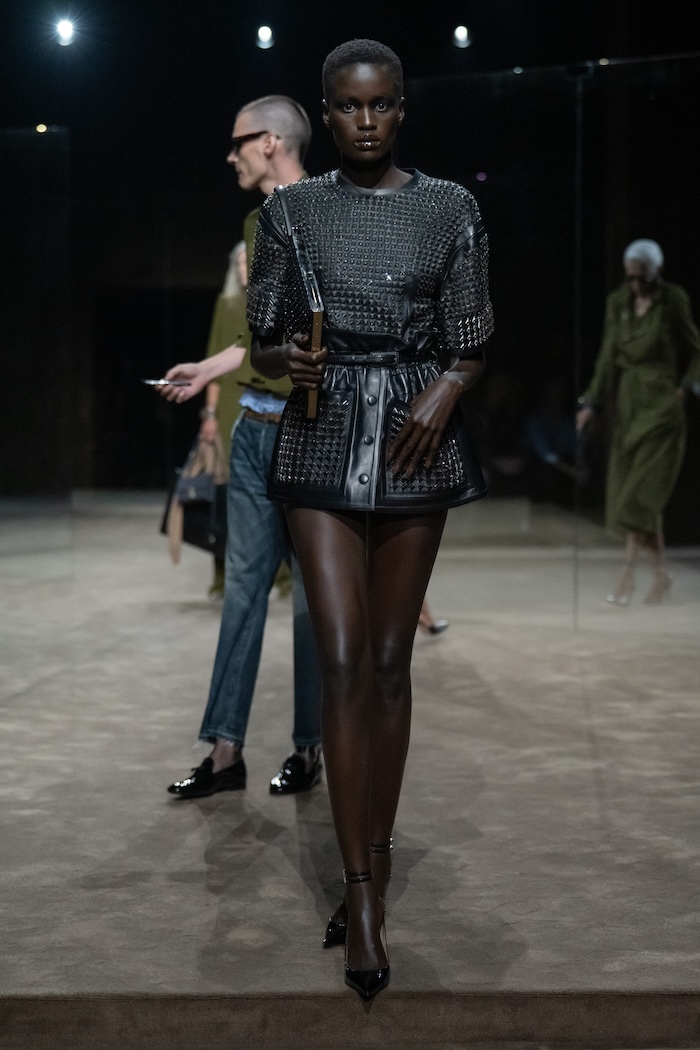
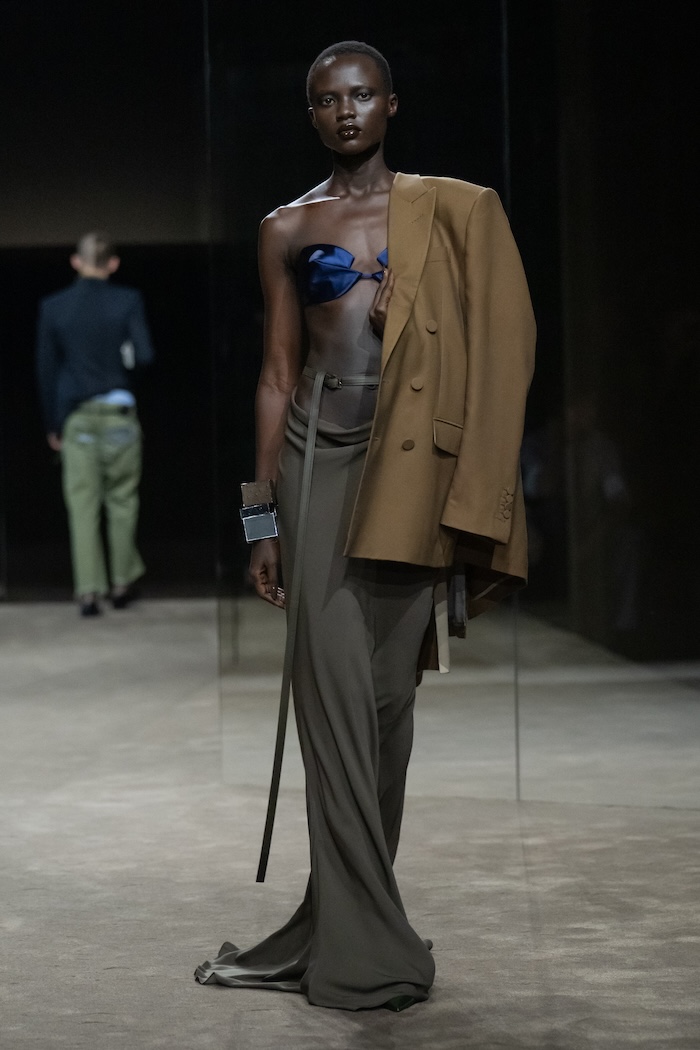
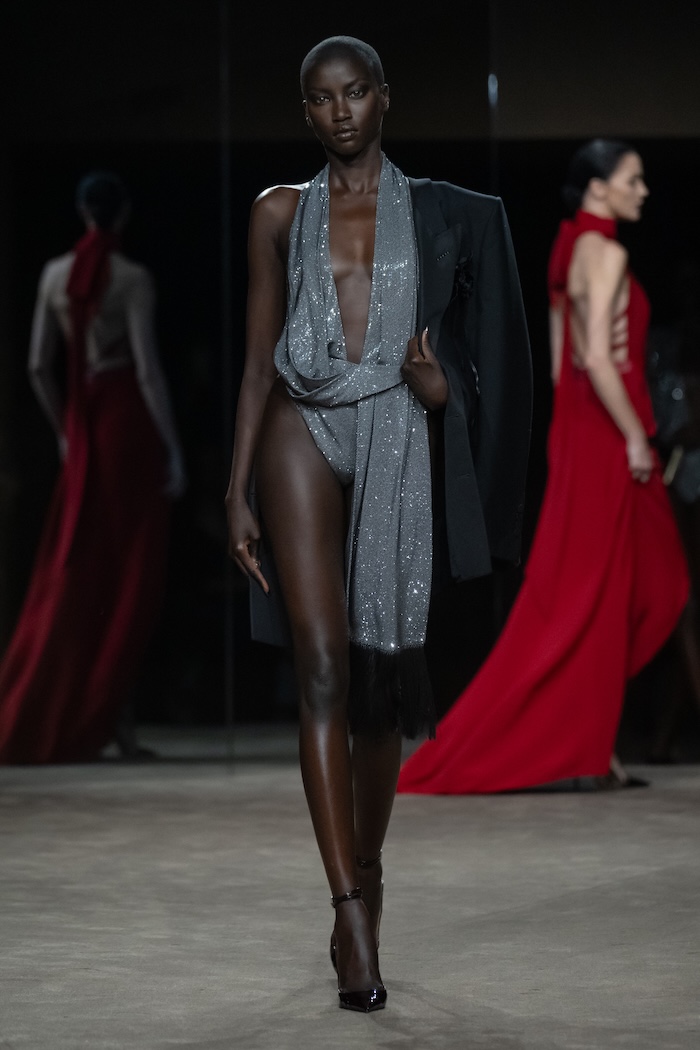
Haider Ackermann understands that the sexiest person in the room is rarely the one trying the hardest to get noticed. For Spring/Summer 2027, the designer pushed Tom Ford’s signature sensuality into more daring territory, delivering a collection that was provocative without feeling desperate for attention. The clothes were sharp, seductive, and just dangerous enough to make you look twice. Leather micro-minis, sculpted shoulders, and barely-there bodysuits played against oversized tailoring, creating a tension between exposure and restraint. A black studded leather ensemble with a cinched waist and dangerously short hemline was pure attitude, while a camel blazer casually draped over a sheer look with a metallic blue bra offered a more understated approach to sex appeal. Then came a shimmering silver halter bodysuit, cut high on the hips and styled with a black blazer thrown over one shoulder. It was unapologetically sexy, but the styling kept it from feeling obvious. Ackermann knows exactly when to reveal something and when to leave the rest to the imagination. The result was a wardrobe for someone who doesn’t need permission to take up space, command attention, or stay out until the sun comes up.
What made this collection particularly compelling was Ackermann’s ability to honor Tom Ford’s legacy of high-octane glamour without simply recreating the designer’s greatest hits. The sharp tailoring, glossy leather, metallic finishes, and flashes of skin were familiar house codes, but Ackermann approached them with a darker, more intimate sensibility. Mirrors throughout the runway setting reinforced the collection’s exploration of desire, reflection, and the power of being seen, while the contrast between masculine suiting and barely concealed bodies gave the clothes an undeniable charge. Even the simplest pieces carried a sense of anticipation, as though the person wearing them had somewhere far more interesting to be after midnight. In his show notes, Ackermann wrote, “I am not interested in provocation. I am interested in the risk of being free.” And that distinction matters. This wasn’t a collection about dressing for someone else’s approval or confusing nudity with confidence. It was about the freedom to be sensual, vulnerable, powerful, and a little reckless on your own terms. Tom Ford has always understood the appeal of a beautifully dressed body, but Ackermann is exploring the psychology behind it. For Spring/Summer 2027, he reminded us that true seduction isn’t about how much you show. It’s about knowing exactly what you’re doing when you show it.
Situationist
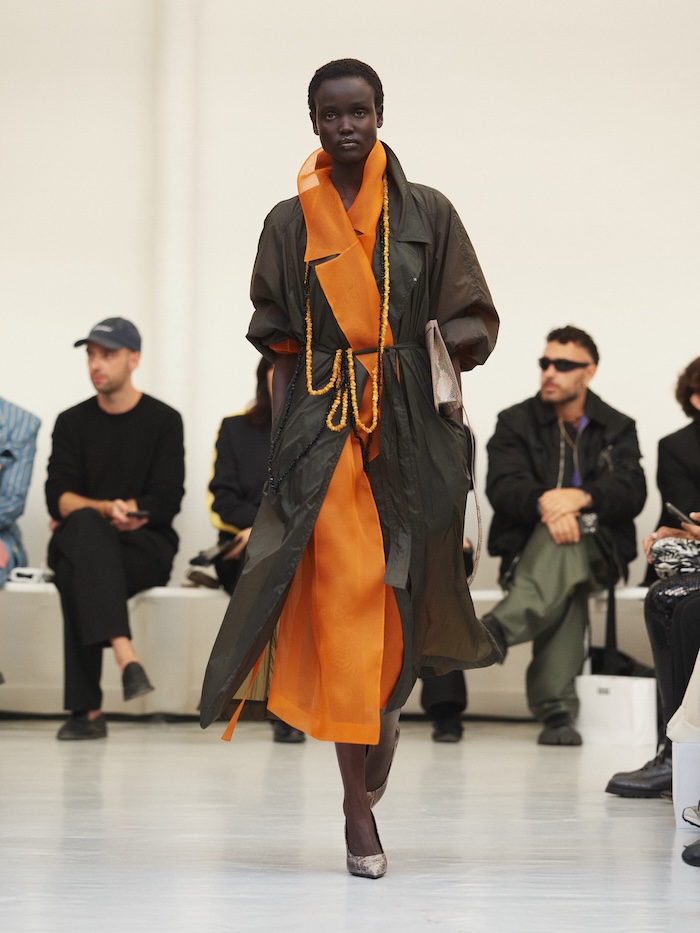
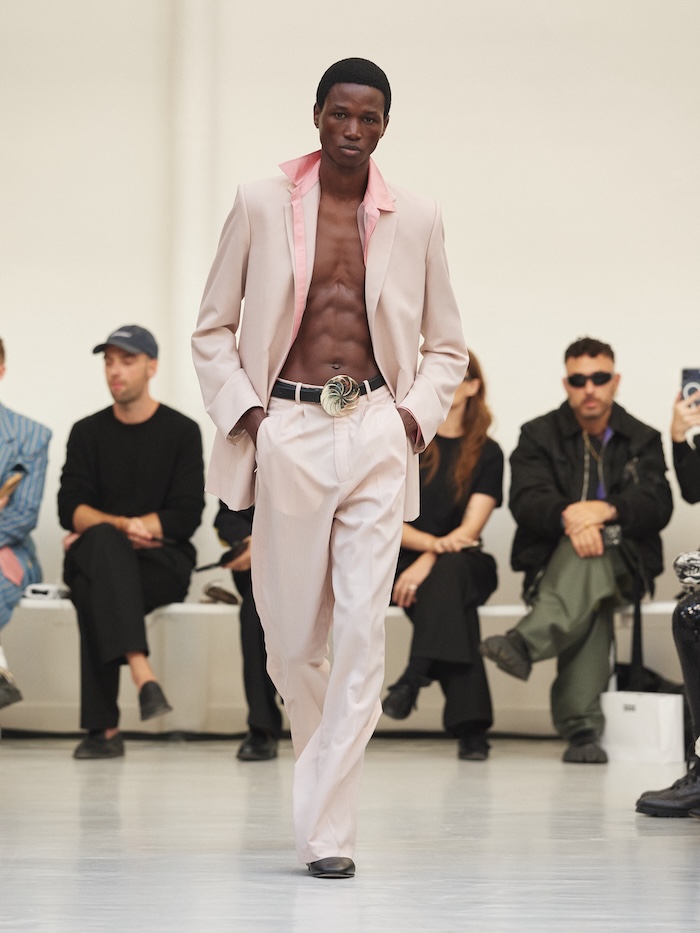
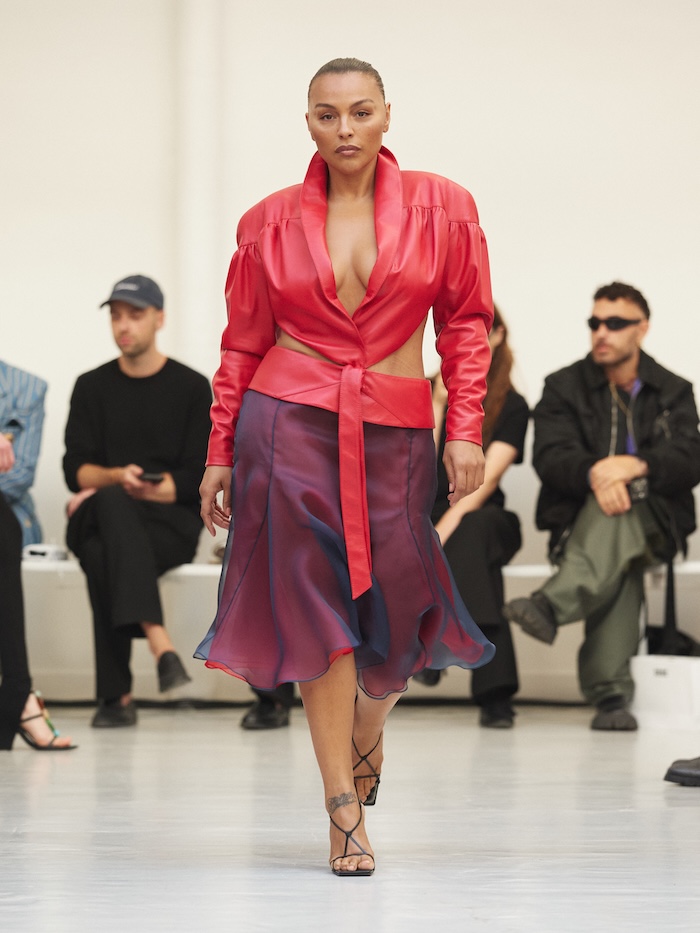
Situationist is entering a new era, and for Spring/Summer 2027, the Georgian fashion label made it clear that sometimes less really is more. Stripping away unnecessary embellishments while maintaining its commitment to architectural construction, the brand delivered a collection that balanced sensuality with sophistication without making either feel like an afterthought. Tailoring remained at the forefront, but this season, it came with a little more attitude and a lot more skin. A pale pink suit worn with an unbuttoned shirt and nothing underneath offered a refreshing take on traditional menswear, while a vibrant red leather jacket with exaggerated shoulders, a plunging neckline, and strategic waist cutouts brought the drama. Paired with a sheer, burgundy-toned skirt, the look was sexy without trying too hard. Elsewhere, a striking orange dress layered beneath a lightweight black coat demonstrated the brand’s ability to play with proportion, transparency, and movement. Organza, supple leather, and fluid fabrics worked together to create silhouettes that felt both powerful and approachable. What made the collection particularly interesting was how the clothes celebrated the body without allowing exposure to become the entire conversation. The construction was just as compelling as the skin being shown, and that’s where Situationist found its sweet spot.
Beyond the beautiful clothes, the collection remained deeply connected to Situationist’s Georgian roots, incorporating cultural references through accessories and jewelry rather than relying on obvious interpretations of heritage. Borjgali motifs, an ancient symbol associated with the sun and eternity, appeared in earrings and belt buckles, grounding the contemporary silhouettes in something much more personal. The collection was also hand-produced by a team of women artisans, adding another layer of meaning to its exploration of strength, craftsmanship, and femininity. And while the runway featured its fair share of dramatic moments, there was something refreshing about the restraint shown throughout. The tailoring was sharp, the colors were intentional, and the styling allowed each garment to have its moment without competing for attention. More importantly, the collection made room for different expressions of confidence, from the woman who wants to command attention in a red leather ensemble to the man who isn’t afraid to leave a few buttons undone. Situationist understands that sensuality isn’t necessarily about how much skin you reveal, but how confidently you carry yourself in whatever you’re wearing. For Spring/Summer 2027, the brand didn’t need to reinvent its identity. It simply refined it, proving that evolution can be just as exciting as a complete transformation.
Maison Margiela
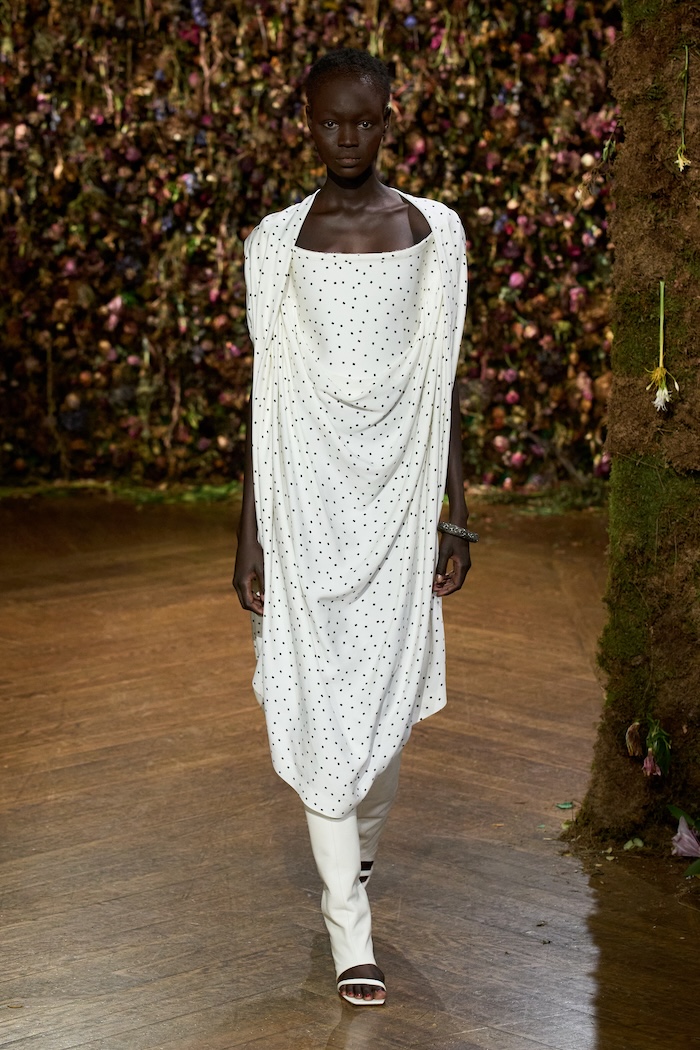
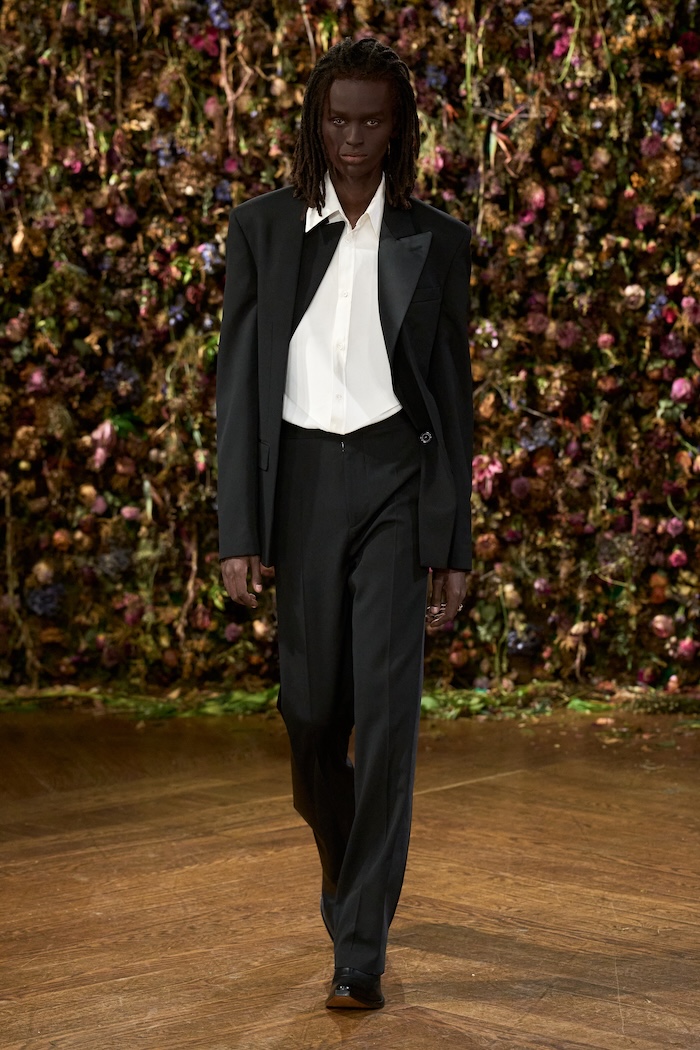
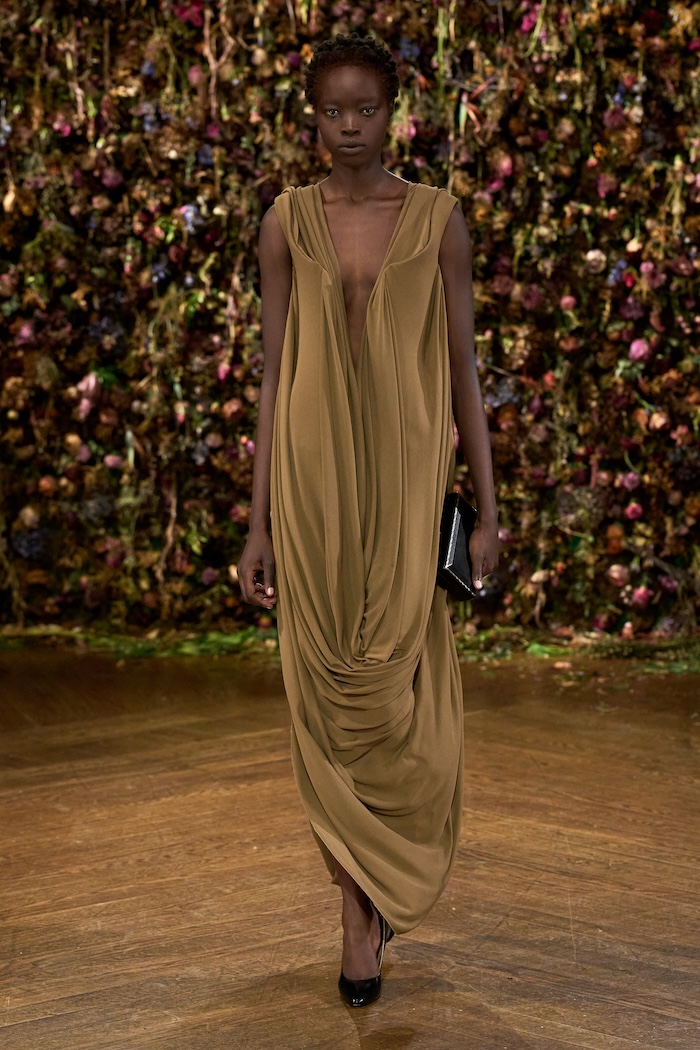
At Maison Margiela, nothing is ever quite what it seems, and for Spring/Summer 2027, the house made a compelling case for why fashion’s most interesting moments happen when opposites attract. Exploring the relationship between hard and soft, the collection took the traditions of Parisian couture and turned them inside out, quite literally. Tailoring was reimagined through sharply constructed jackets with concealed closures, while familiar wardrobe staples like trench coats were given exaggerated structural panels that completely altered their silhouettes. But it was the draping that really deserved a moment. Fluid dresses appeared to float away from the body, their seemingly effortless folds held in place by hidden architectural elements. One olive-toned gown featured a plunging neckline and cascading fabric that gathered beautifully toward the hem, while a white polka-dot dress layered over trousers offered a more relaxed interpretation of the same idea. Even the classic black suit received the Margiela treatment, with oversized proportions and a crisp white shirt proving that sometimes the most rebellious thing a designer can do is make simplicity feel unexpected. Against a moody floral installation by artist Mark Colle, inspired by Raf Simons’ 2012 couture debut, the collection felt like a conversation between fashion’s past and its future.
Of course, this wouldn’t be Maison Margiela without a little fashion trickery. Coat linings became garments of their own, dresses were turned backward and draped into entirely new shapes, and corsetry was manipulated to create dramatic volume without the usual restrictions. The accessories were equally playful, with the house’s signature 5AC bag softened into supple leather, traditional briefcases stripped of their rigid structures for the new Ghost collection, and the beloved Tabi silhouette returning in ruched clogs and ballerinas. Even silverware was flattened and molded into wearable body pieces, because why shouldn’t the contents of your kitchen drawer have a fashion moment? What made this collection particularly successful was its ability to balance Margiela’s experimental DNA with clothes that felt desirable beyond the runway. The tailoring was strong, the dresses had movement, and the accessories offered just enough eccentricity to keep things interesting. More importantly, the collection reminded us that softness doesn’t have to mean weakness, and structure doesn’t always require rigidity. In a fashion landscape where everyone seems obsessed with defining what luxury should look like, Maison Margiela is still asking a much more interesting question: What happens when we stop following the rules altogether?
Courrèges
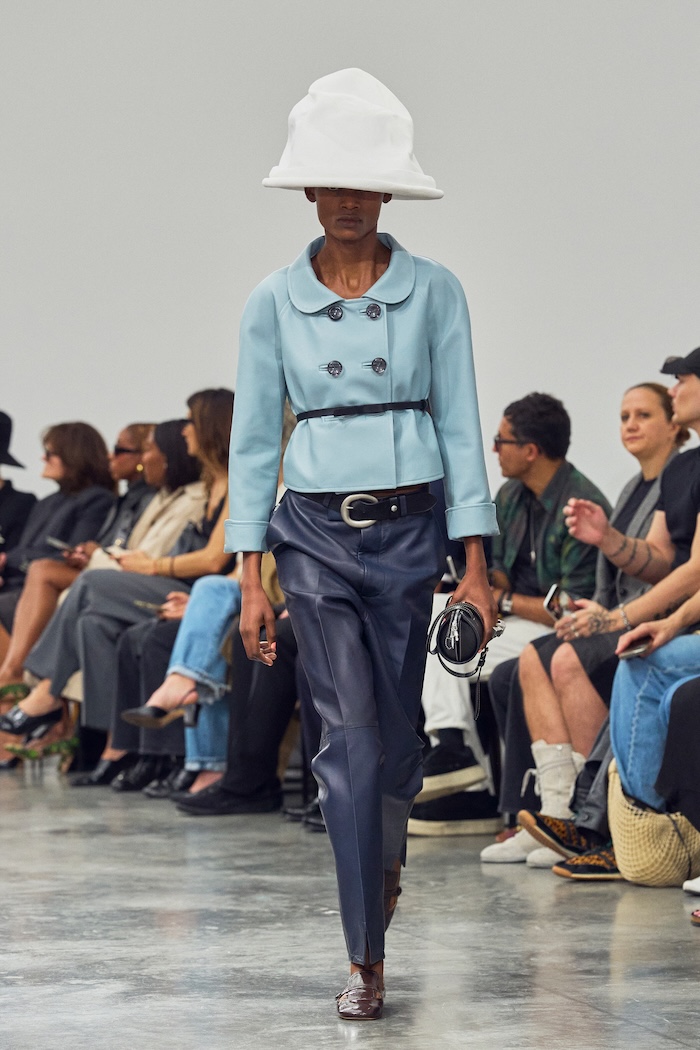
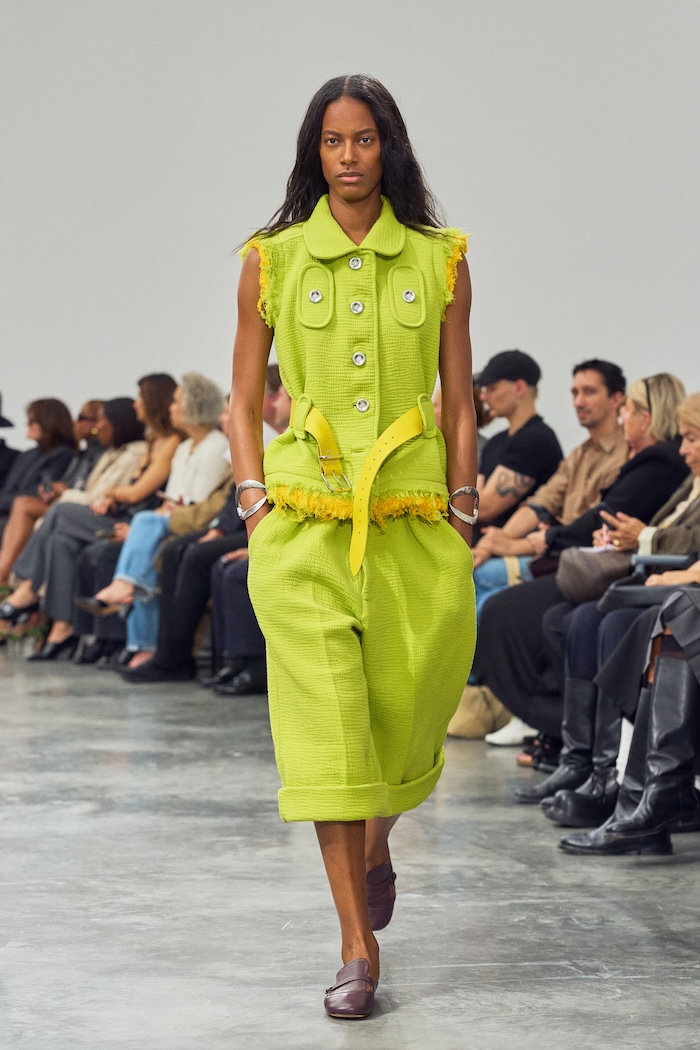
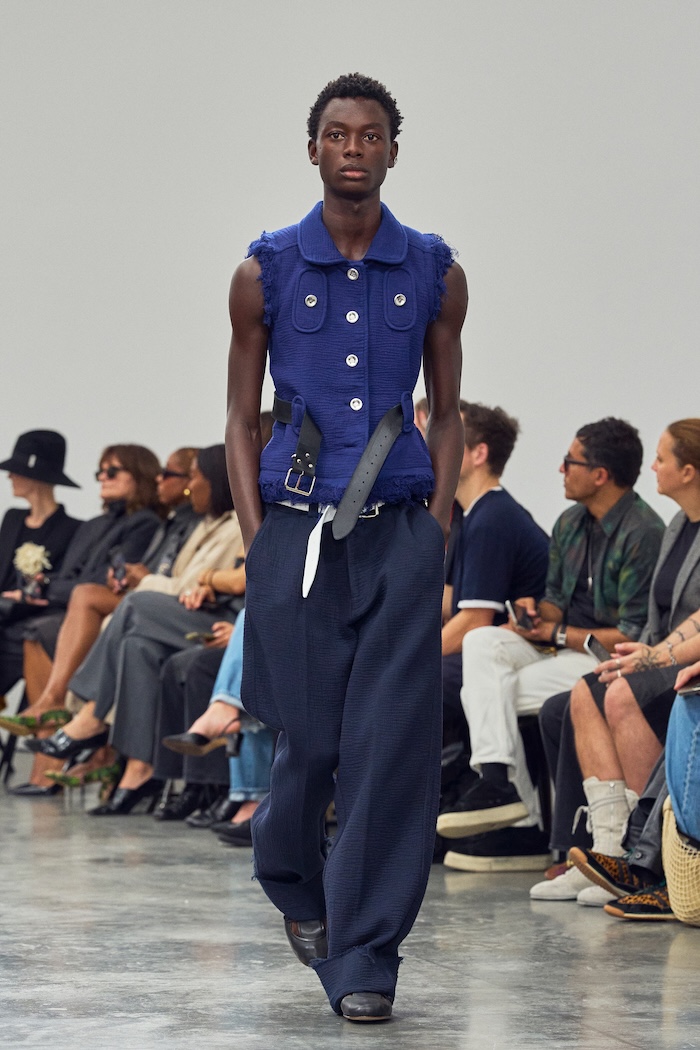
Fashion has become so consumed with the idea of looking expensive, dressing appropriately, and following whatever aesthetic TikTok has decided to resurrect that we’ve seemingly forgotten one very important thing: getting dressed is supposed to be fun. For Spring/Summer 2027, Courrèges offered a refreshing reminder that personal style doesn’t require an explanation or anyone else’s approval. Rooted in the house’s longstanding fascination with movement and the future, the collection embraced individuality through playful proportions, unexpected textures, and a color palette that refused to play it safe. A powder-blue, double-breasted cropped jacket paired with navy leather trousers felt like a modern interpretation of ladylike dressing, especially when topped with an oversized white hat that looked as though it had been sculpted from a cloud. Elsewhere, electric cobalt blue and punchy chartreuse brought an undeniable energy to the runway, appearing on sleeveless, frayed-edge vests and relaxed bottoms that challenged traditional ideas of tailoring. The exaggerated belts, oversized buttons, and slightly undone finishes gave the clothes personality without sacrificing sophistication. It was sporty, a little quirky, and wonderfully unapologetic. More importantly, these were clothes for people who understand that having great style isn’t always about looking polished. Sometimes it’s about wearing something simply because it makes you happy.
That same celebration of individuality extended beyond the clothes and into the show’s setting, where chairs sourced from different decades and design contexts lined the runway. Rather than creating a perfectly uniform front row, Courrèges allowed each seat to bring its own history and character into the room, a clever reflection of the collection’s larger message about personal identity. And that philosophy translated beautifully into the styling. The contrast between structured jackets and slouchy trousers, the playful use of belts that appeared almost intentionally misplaced, and the oversized headwear all suggested a wardrobe built around experimentation rather than perfection. What made the collection particularly appealing was its refusal to take itself too seriously while still respecting the house’s futuristic design language. The clothes had an ease to them, but they weren’t boring. The silhouettes were familiar, yet the proportions made them feel entirely new. In an industry that often mistakes minimalism for good taste and conformity for elegance, Courrèges made a convincing argument for dressing with a little more personality. Because the most stylish person in the room isn’t necessarily the one wearing the most expensive outfit or following the latest trend. It’s the one who knows exactly what they like and doesn’t feel the need to explain why.
Balmain
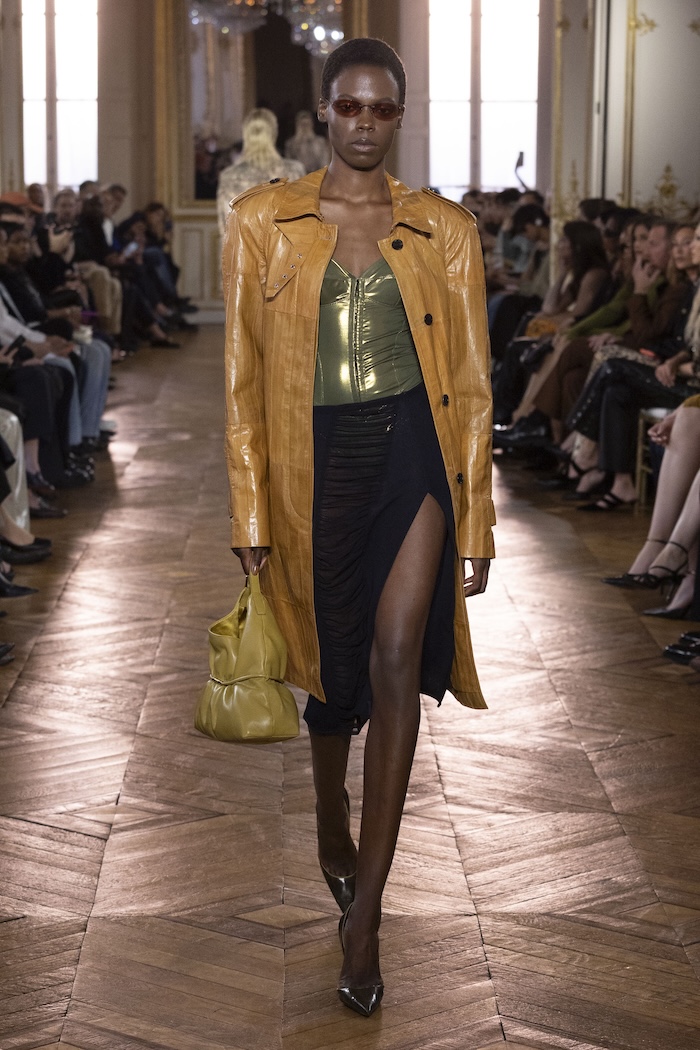
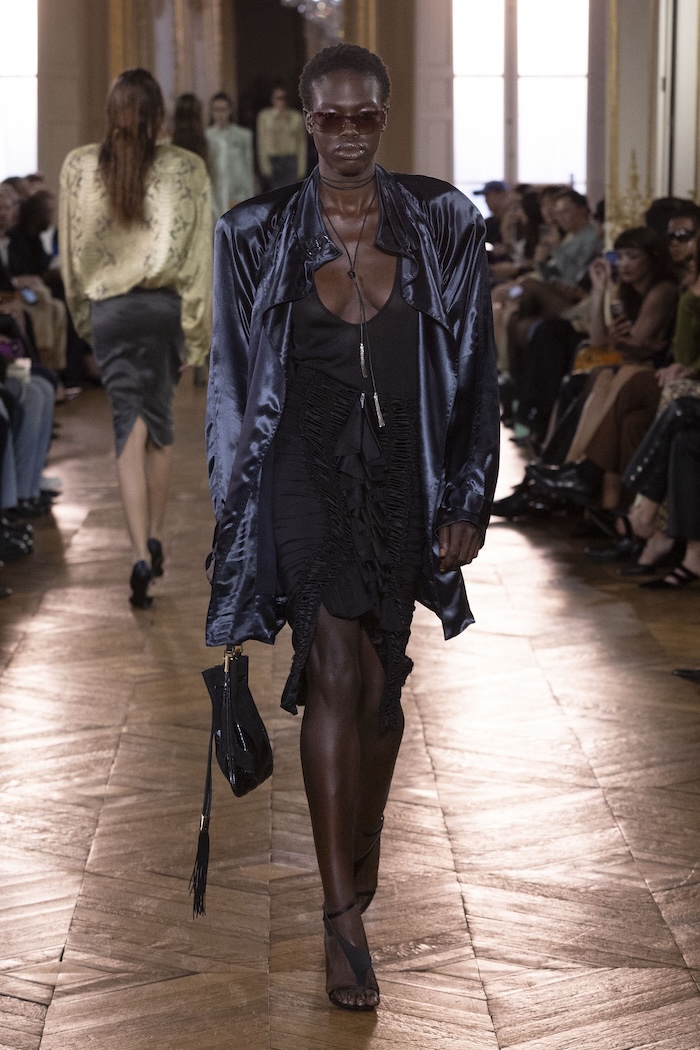
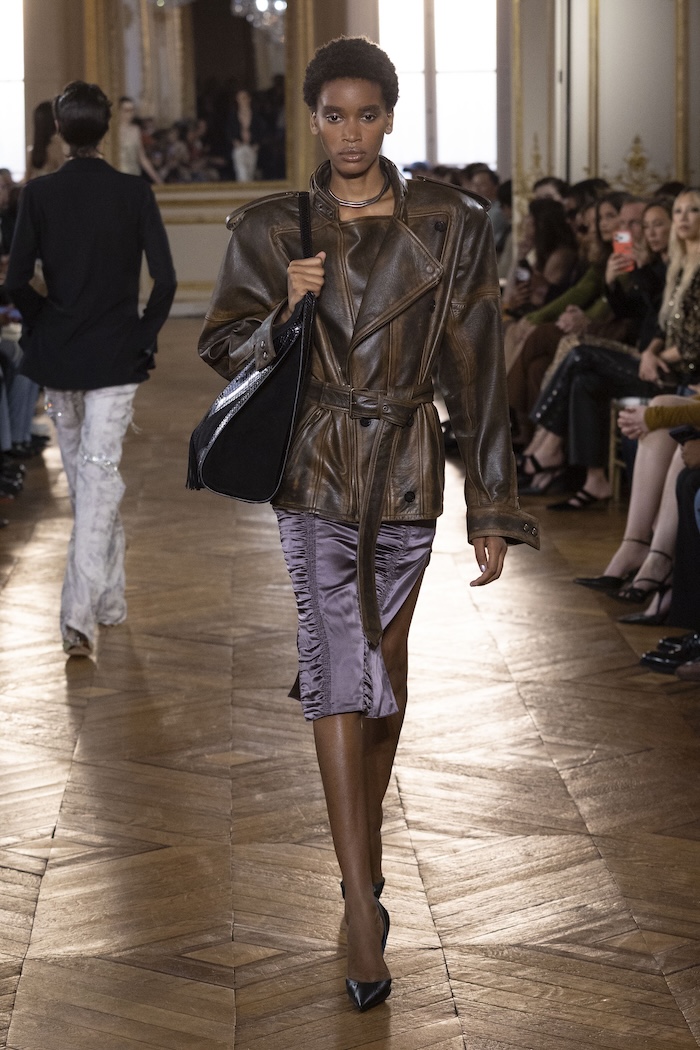
Antonin Tron is making one thing very clear at Balmain: the house’s next chapter is for the grown and sexy. For Spring/Summer 2027, the designer continued to establish his vision for the French maison, trading overt extravagance for something a little more seductive, effortlessly cool, and undeniably expensive-looking. Drawing inspiration from Pierre Balmain’s couture legacy and the rebellious spirit of 1960s and 1970s California, Tron delivered a collection that felt like old Hollywood glamour had packed its bags for a weekend in Laurel Canyon and decided to stay. The result was a wardrobe filled with buttery leather, liquid satin, body-conscious draping, and the kind of tailoring that makes you want to reconsider everything hanging in your closet. A caramel-colored leather trench layered over a metallic olive corset and a ruched black skirt with a daring thigh-high slit was particularly strong, striking that perfect balance between polished and provocative. Elsewhere, a glossy midnight-blue jacket worn over a barely-there black dress offered a sultrier take on eveningwear, while an oversized chocolate leather jacket paired with a lavender ruched skirt proved that the right outerwear can make an entire outfit. Tron understands that sex appeal doesn’t always require showing more skin. Sometimes it’s about the way a jacket falls off the shoulder, how fabric hugs the body, or the confidence that comes with wearing something that fits exactly how it should.
What made this collection especially interesting was Tron’s ability to pull from Balmain’s history without allowing nostalgia to dictate the clothes. References to the house’s mid-century couture techniques appeared through intricate draping, corset-inspired construction, and fluid silhouettes, while the influence of California’s counterculture brought a welcome sense of rebellion. Think Jim Morrison’s rock-star wardrobe meeting the elegance of a woman who knows her way around a Parisian atelier. The palette of copper, gold, black, ivory, and mineral gray echoed the desert landscape, while slouchy leather bags, sculptural heels, and tinted sunglasses gave the looks an added dose of attitude. Even the setting, the historic Hôtel de Maisons, once home to Karl Lagerfeld, who worked at Balmain in the 1950s, reinforced the conversation between the house’s past and its future. But perhaps the most refreshing thing about Tron’s approach is that he isn’t trying to reinvent the Balmain woman into someone unrecognizable. He’s simply allowing her to evolve. She’s still glamorous, still commanding attention, and still very much aware of her power, but she’s no longer relying on embellishment or excess to announce her arrival. The clothes are doing the talking, and they’re saying plenty. If this collection is any indication of where Tron plans to take Balmain, the future looks a little less flashy, a lot more sensual, and all the better for it.
Louis Vuitton
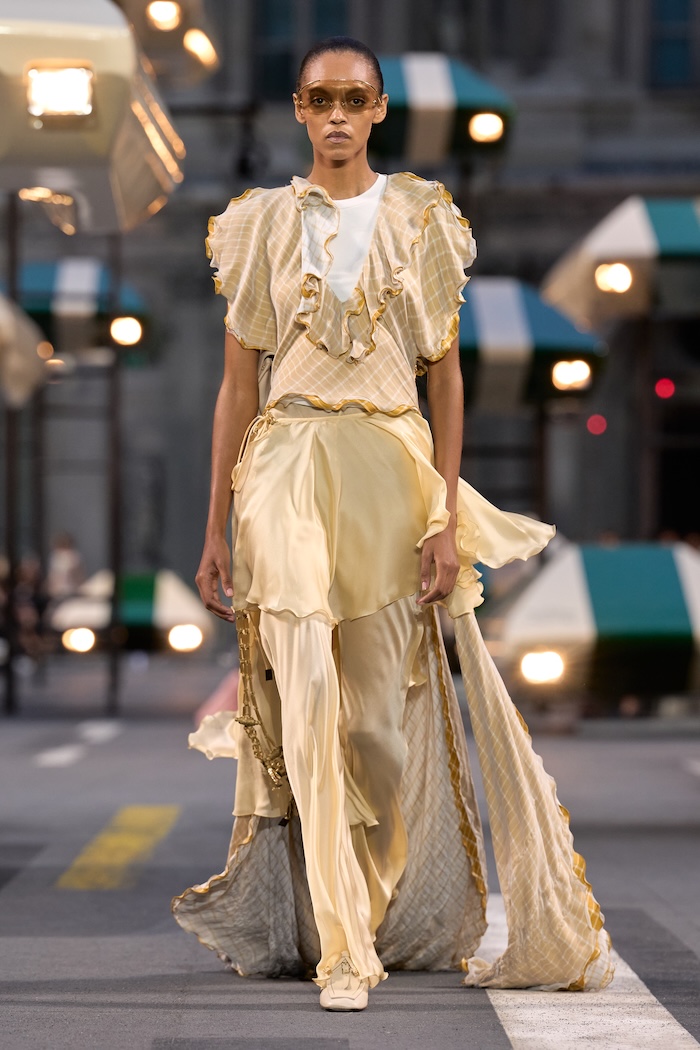
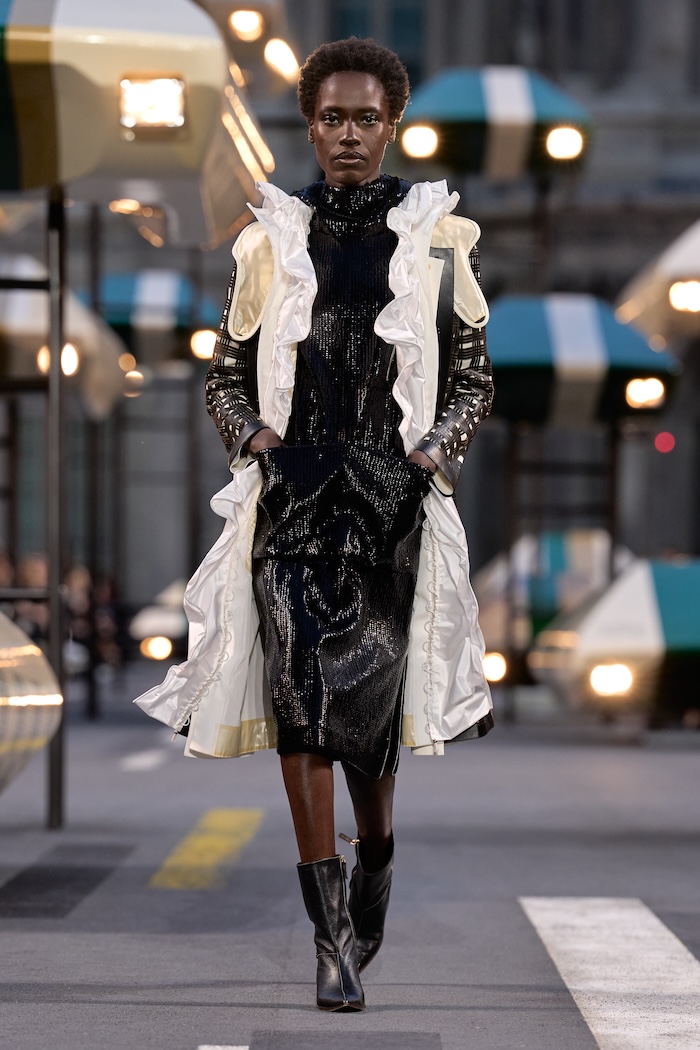
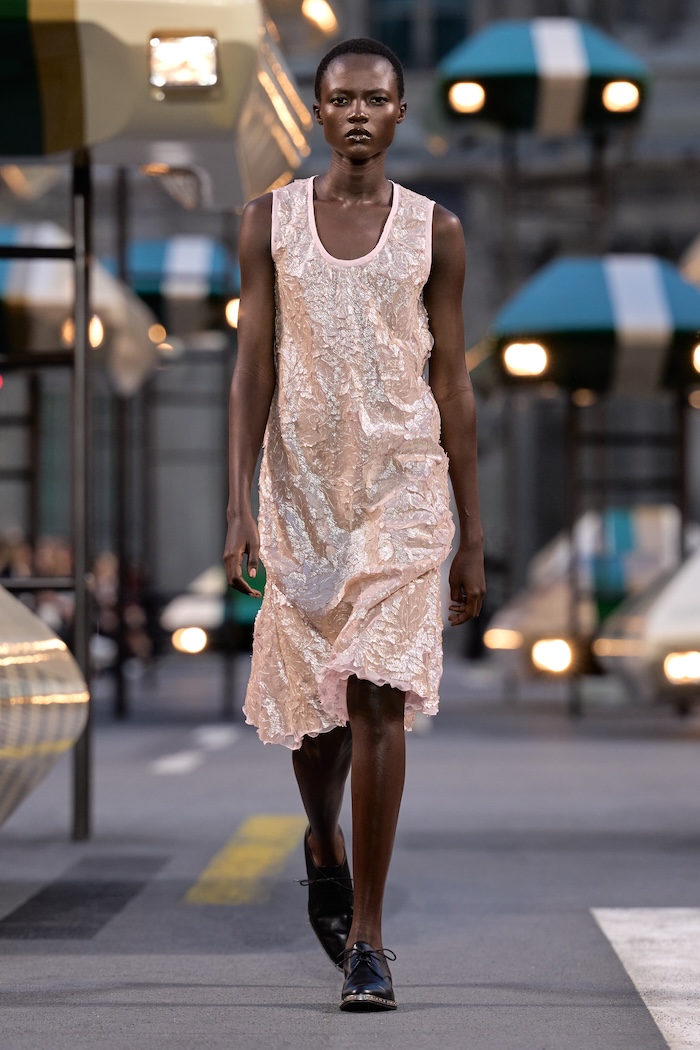
Nicolas Ghesquière has never been one to play by fashion’s traditional rules, and for Louis Vuitton’s Spring/Summer 2027 collection, the designer challenged the very idea of how clothes should fit, feel, and move on the body. Built around the concept of ergonomics, the collection explored the relationship between clothing and the human form, delivering a wardrobe that was as technically ambitious as it was visually interesting. But don’t mistake functionality for boring, because Ghesquière still gave the girls plenty to talk about. A blush-toned, textured sleeveless dress paired with black lace-up shoes offered an unexpected balance between delicacy and practicality, while a shimmering black ensemble layered beneath an elaborate ivory ruffled outer piece brought a futuristic edge to traditional femininity. Elsewhere, a flowing butter-yellow look with cascading ruffles and exaggerated proportions moved beautifully against the city backdrop, proving that volume doesn’t necessarily have to mean weight. The collection played with chiffon, silk, cashmere, and lightweight leather, manipulating familiar materials into silhouettes that appeared almost weightless. What made these pieces particularly compelling was the way Ghesquière approached construction. Rather than forcing the body into a predetermined shape, the garments were designed to respond to movement, allowing the wearer to dictate how the clothes lived. It was an interesting departure from fashion’s ongoing obsession with restrictive silhouettes, and quite frankly, a welcome one.
Of course, Louis Vuitton’s relationship with travel has always been central to the house’s identity, and this season Ghesquière found a clever way to connect that heritage to the realities of modern dressing. Traditional tailoring was stripped of unnecessary internal structure, while layered chiffons and fluid fabrics created dimension without sacrificing ease. Even the more theatrical pieces maintained a sense of lightness, which is no small accomplishment considering the complexity of their construction. The presentation itself reinforced the message, with models moving through an urban setting that contrasted the stillness of the surrounding architecture with the fluidity of the clothes. It was a reminder that fashion isn’t meant to exist solely on a runway, in an editorial photograph, or behind museum glass. It’s supposed to move through the world with the people wearing it. And while some of the more experimental silhouettes may require a little confidence, and perhaps a very specific social calendar, the collection’s larger message felt surprisingly relatable. Women want beautiful clothes, but they also want to sit down, walk comfortably, catch a flight, and live their lives without feeling restricted by what they’re wearing. Ghesquière understands that luxury doesn’t always have to announce itself through excess. Sometimes the most impressive thing a designer can do is make something extraordinarily complicated look completely effortless.
Acne Studios
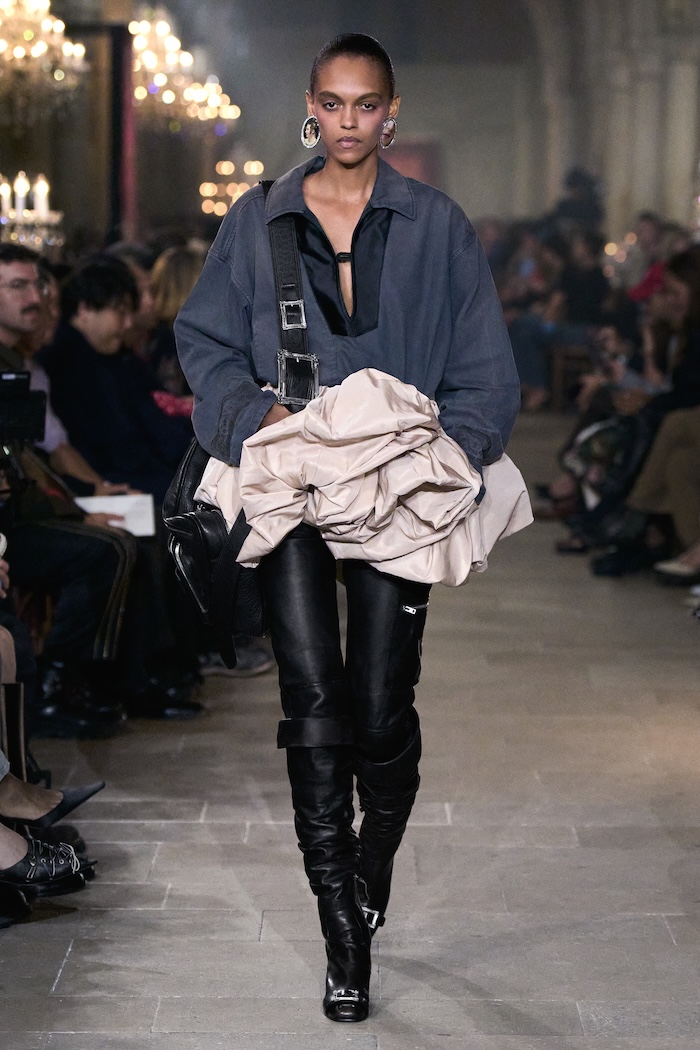
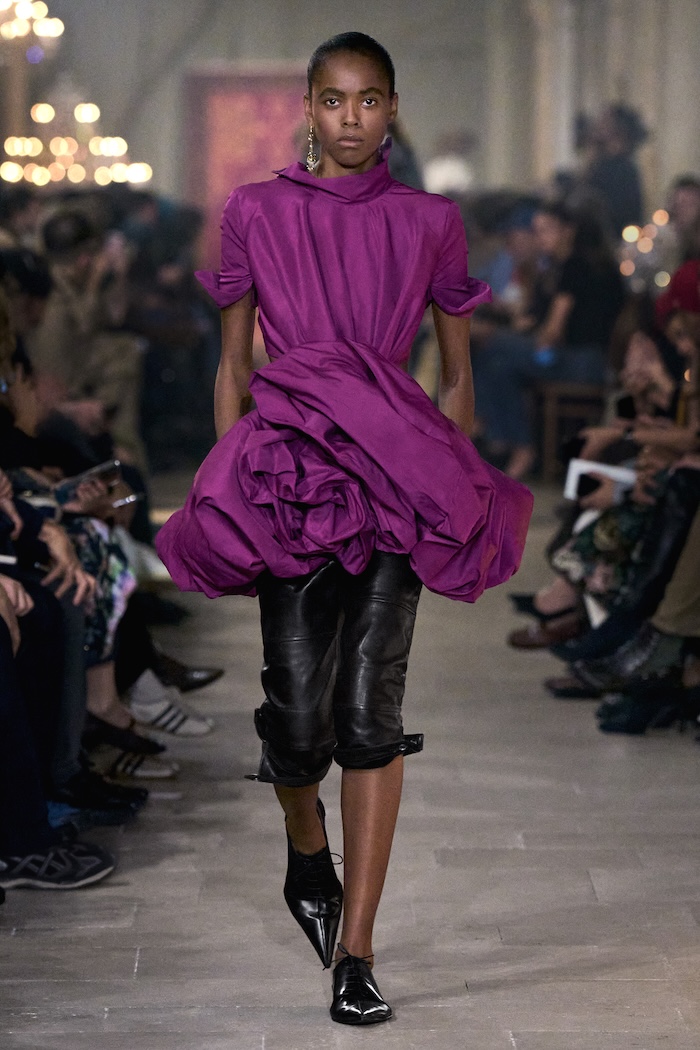
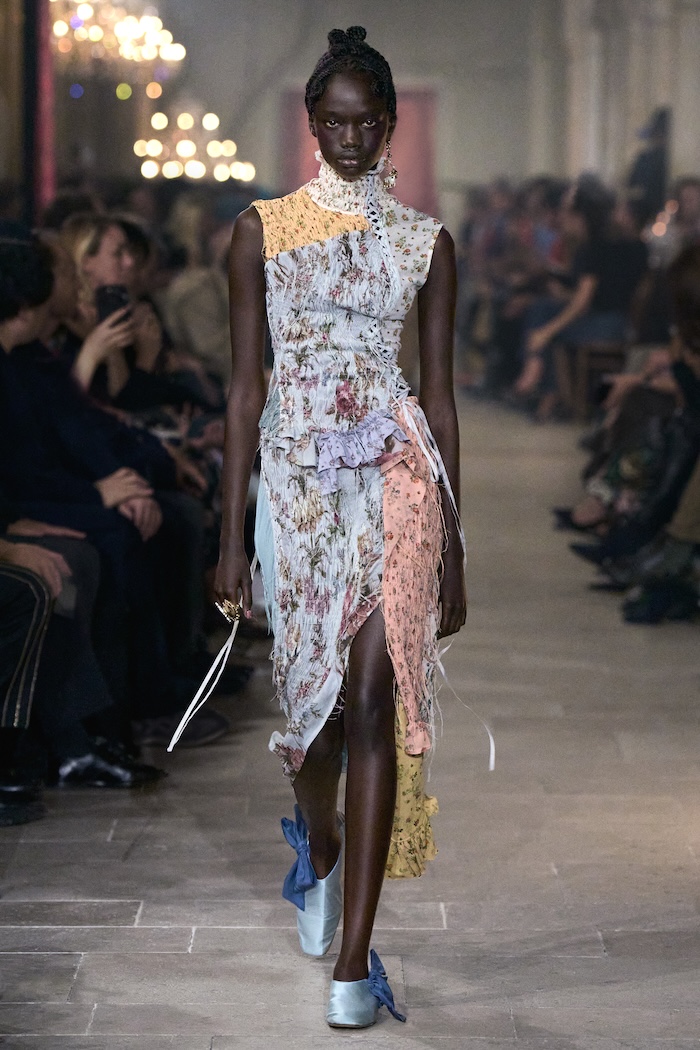
Who said romance had to be soft, delicate, and wrapped up in a pretty little bow? Certainly not Jonny Johansson. For Spring/Summer 2027, the Acne Studios creative director gave fashion’s obsession with nostalgia a rebellious twist, bringing Renaissance aristocracy and the New Romantic movement into conversation with denim, leather, and downtown cool. The result was beautifully chaotic. Oversized utilitarian jackets met ballooning skirts, while leather biker pants toughened up otherwise romantic silhouettes. A sculptural orchid-purple top paired with black leather capris delivered drama without trying too hard, while a charcoal jacket with exaggerated buckled straps and a voluminous cream skirt made a convincing case for unconventional proportions. Then came the florals. A delicate, asymmetrical dress featuring mismatched prints, frayed textures, and intricate draping was feminine without feeling precious. Throughout the collection, Johansson played with the tension between refinement and rebellion, proving that sometimes the best way to honor fashion’s history is to disrupt it.
Denim, naturally, remained central to the Acne Studios vocabulary, but this season it became a canvas for something more experimental. Renaissance-inspired imagery, distressed florals, and porcelain-like finishes transformed familiar fabrics into wearable art, while weathered leather and deliberately unfinished tailoring brought a sense of lived-in luxury. Accessories followed suit, with washed-leather Camero bags, sculptural satin heels, and exaggerated Western boots adding personality without overwhelming the clothes. Artist Faig Ahmed’s surreal, melting carpet installations provided an equally compelling backdrop, reinforcing the collection’s fascination with history and distortion. Yet beneath all the theatricality was a wardrobe that felt surprisingly wearable. Johansson understands that great personal style isn’t about looking perfectly put together. It’s about knowing when to break the rules, mix the unexpected, and let the clothes tell a story. For Spring/Summer 2027, Acne Studios delivered romance with a rebellious streak, reminding us that fashion is far more interesting when things get a little messy.
Balenciaga
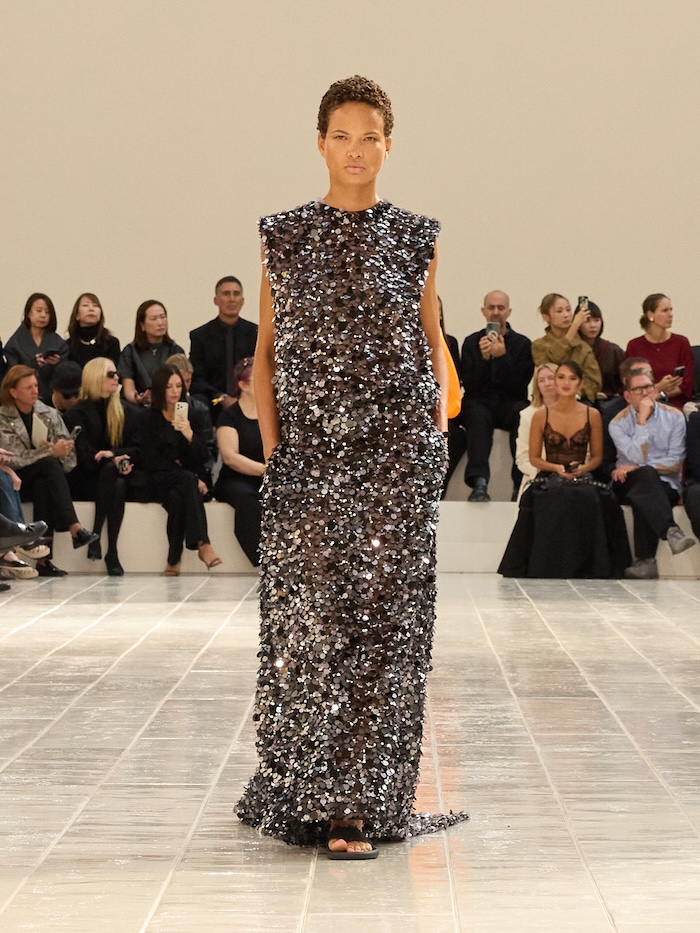
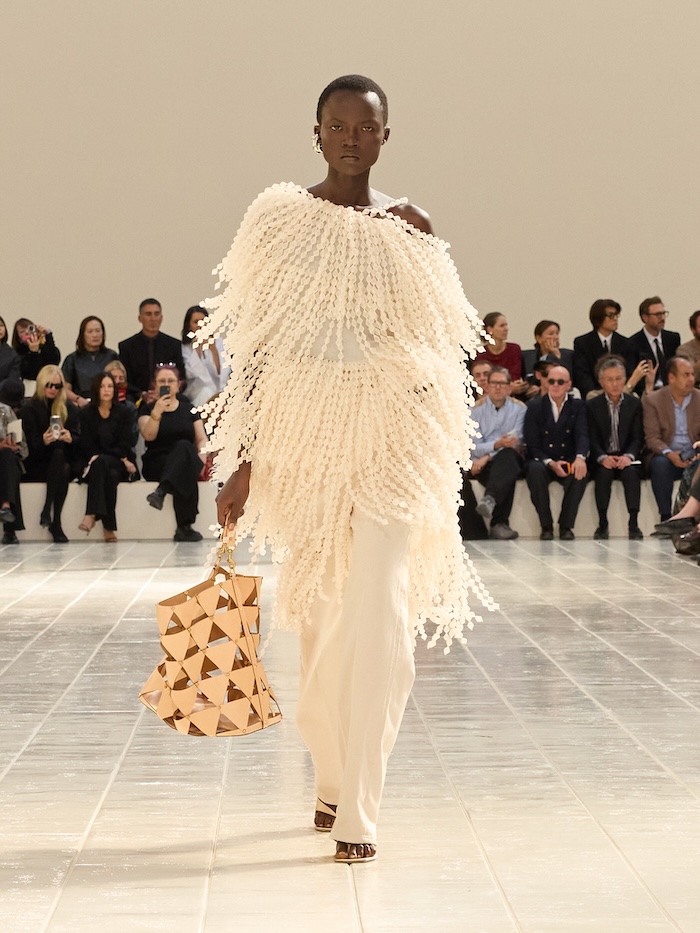
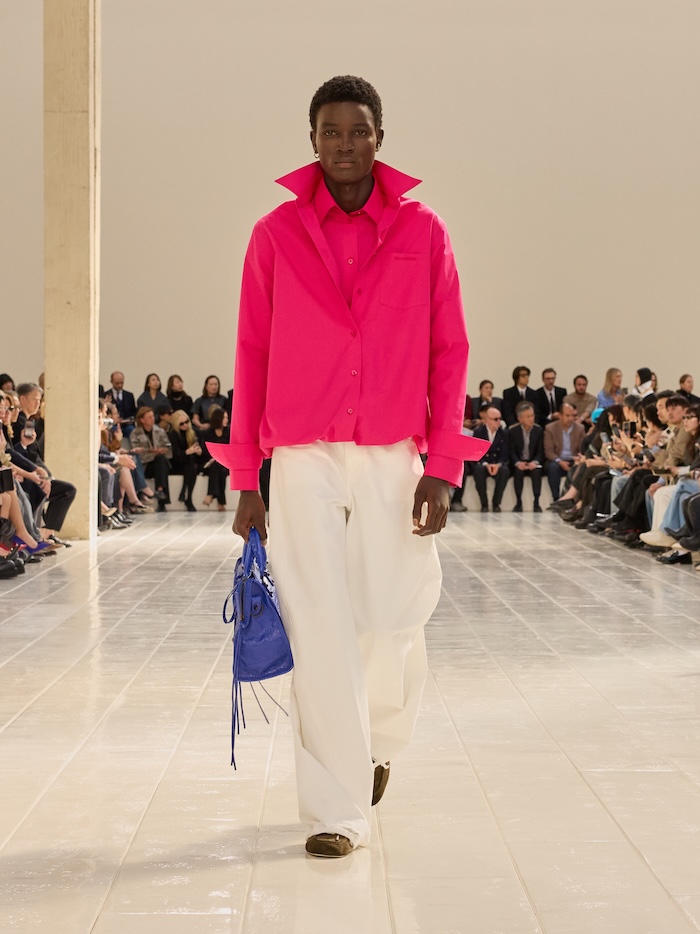
Pierpaolo Piccioli is reminding the fashion world that Balenciaga was a couture house long before it became synonymous with oversized sneakers, internet-breaking accessories, and fashion’s obsession with irony. For Summer 2027, the creative director continued his mission of reconnecting the house with its founder’s legacy, delivering a collection that felt refreshingly optimistic, beautifully constructed, and, dare we say, joyful. Titled Les Coraux de la Liberté, the collection explored the relationship between couture craftsmanship and everyday dressing, proving that exceptional design doesn’t have to come at the expense of wearability. A sculptural ivory ensemble covered in cascading, textured embellishments was a standout, its movement bringing an almost featherlike quality to the runway. Elsewhere, an electric fuchsia shirt with an exaggerated collar and relaxed white trousers offered a more approachable interpretation of the same philosophy. Then came a shimmering black sleeveless gown covered in reflective embellishments, a reminder that Piccioli knows how to deliver a red-carpet moment without relying on unnecessary theatrics. The silhouettes were fluid, the proportions intentional, and the clothes carried an ease that felt particularly welcome. Piccioli isn’t abandoning Balenciaga’s architectural DNA. He’s simply giving it room to breathe.
What made this collection compelling was the way Piccioli translated couture techniques into pieces that could exist beyond the runway. Bias-cut denim, sculptural leather jackets, reworked shirting, and softened tailoring demonstrated how construction can transform even the most familiar wardrobe staples. Lace insertions and cutwork revealed glimpses of skin, while voluminous shapes were balanced by lightweight fabrics and an emphasis on comfort. Accessories followed the same philosophy, with supple leather bags, understated sandals, and relaxed footwear reinforcing the collection’s sense of freedom. At the center of the presentation stood French artist Aude Franjou’s Les Coraux de la Liberté, a sculptural installation made from wrapped linen that reflected Piccioli’s vision of the fashion house as a living, breathing ecosystem. And perhaps that’s what makes his approach so interesting. Rather than treating Balenciaga’s archives as something to reproduce, he’s using them as a foundation for something more human. The drama is still present, but it comes from the craftsmanship, the movement, and the way the clothes interact with the body. In an industry that has spent years confusing shock value with innovation, Piccioli is making a convincing case for fashion that simply makes people feel beautiful. And at Balenciaga, that feels like a meaningful shift.
Schiaparelli
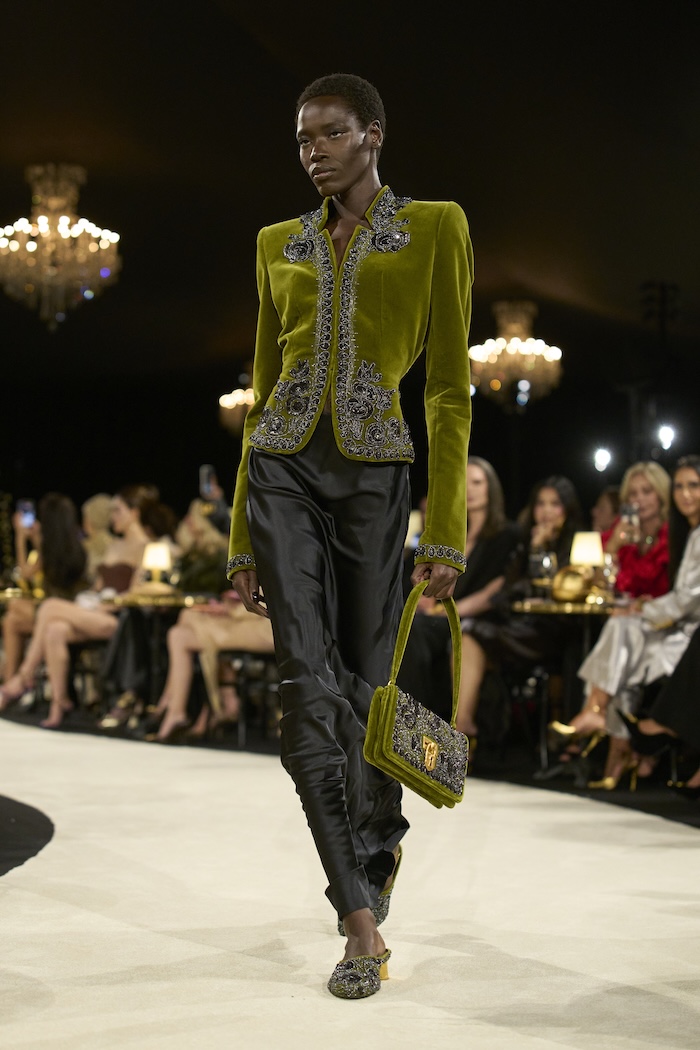
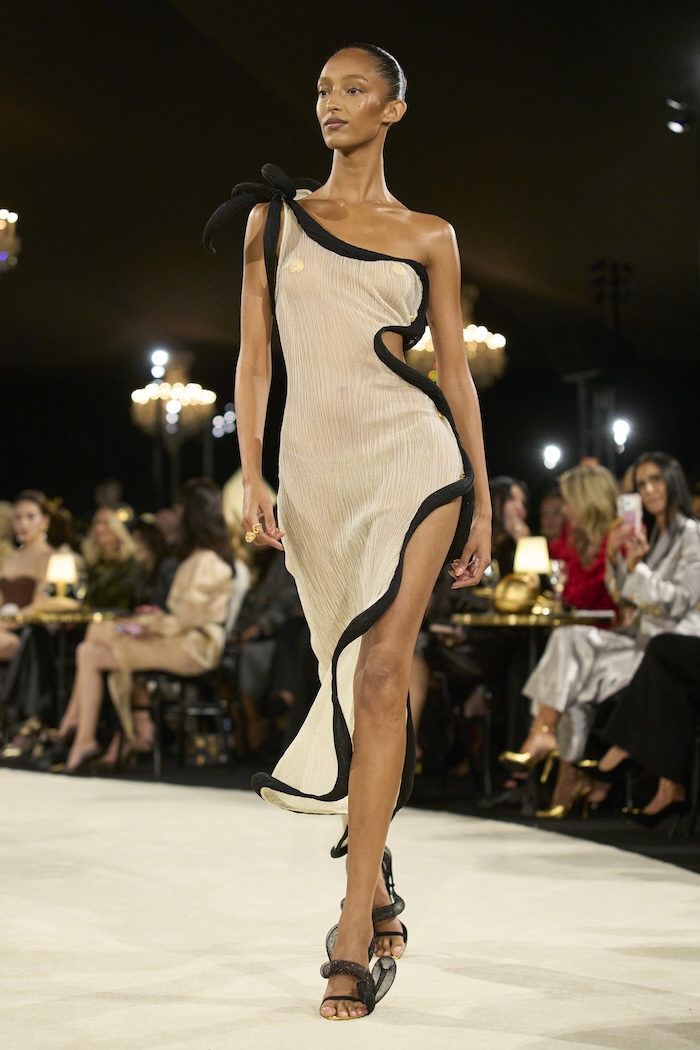
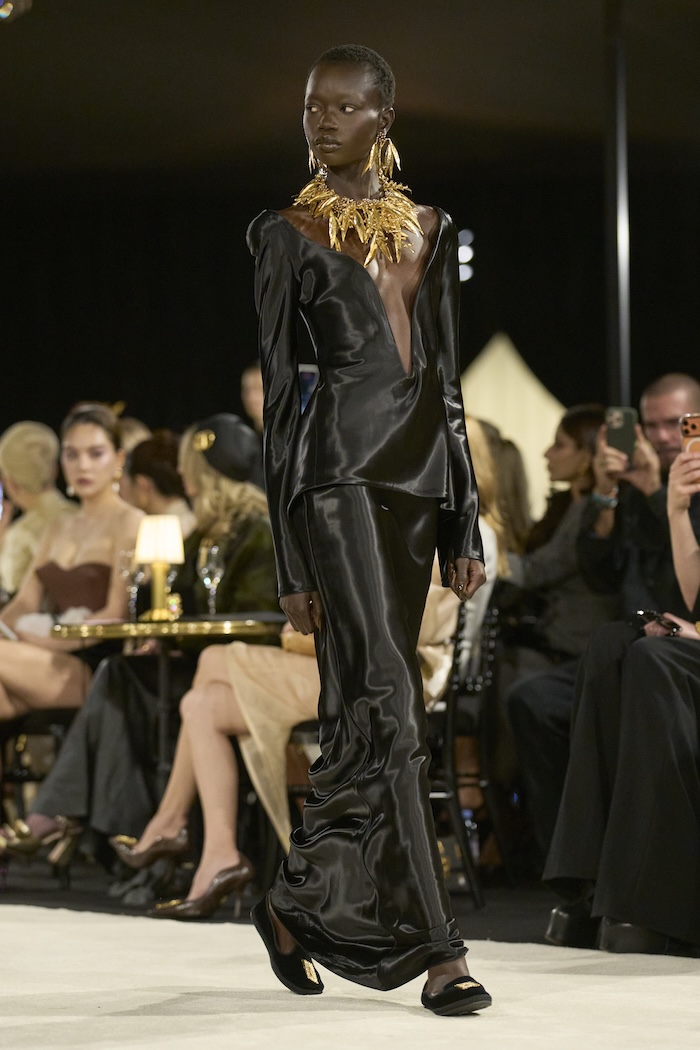
Daniel Roseberry knows how to make fashion people gasp, but for Schiaparelli’s Spring/Summer 2027 collection, the designer seemed more interested in what happens after the applause. Titled Going Clear, the collection marked a confident evolution in the house’s ready-to-wear identity, bringing its surrealist couture codes into a wardrobe that felt less like a museum exhibition and more like something a woman with impeccable taste would actually wear. Roseberry looked to American sportswear, mixing his Texas roots with the maison’s distinctly Parisian sensibility to create separates that could be styled, restyled, and worn on their own terms. The result was glamorous without being overly precious. A liquid-black ensemble with a plunging neckline and dramatic gold jewelry delivered the kind of unapologetic glamour Schiaparelli does best, while an ivory one-shoulder dress with sculptural black trim and a thigh-high slit offered a softer, more sensual interpretation of the house’s signature theatricality. Then came a moss-green velvet jacket covered in intricate metallic embroidery, paired with relaxed black trousers and a matching embellished handbag. It was rich, sophisticated, and just eccentric enough to remind you whose runway you were watching. Roseberry wasn’t abandoning the fantasy. He was simply making it easier to get dressed in it.
That balance between fantasy and function carried throughout the collection, with couture techniques finding new life in knitwear, shirting, leather, and everyday separates. Ruffles inspired by curtains from Elsa Schiaparelli’s original atelier appeared alongside sheer embroidered pieces, while playful motifs featuring vegetables, feathers, and animals reinforced the founder’s wonderfully unconventional approach to fashion. The accessories remained unmistakably Schiaparelli, with sculptural gold jewelry, surrealist handbags, and shoes incorporating the house’s signature anatomical references. But what made Going Clear particularly successful was Roseberry’s decision to give the wearer more freedom. Rather than presenting an entire look that demands to be worn exactly as styled, he offered pieces that could exist independently without losing their personality. In an industry increasingly obsessed with viral moments and social media approval, that feels like a welcome shift. Schiaparelli has never struggled to command attention, but Roseberry is proving that the house doesn’t need to rely on spectacle to remain relevant. Sometimes the greatest luxury is having clothes that make you feel extraordinary without requiring an entire production. For Spring/Summer 2027, the message was clear: the fantasy is still very much alive, but now she has somewhere to go.
Isabel Marant
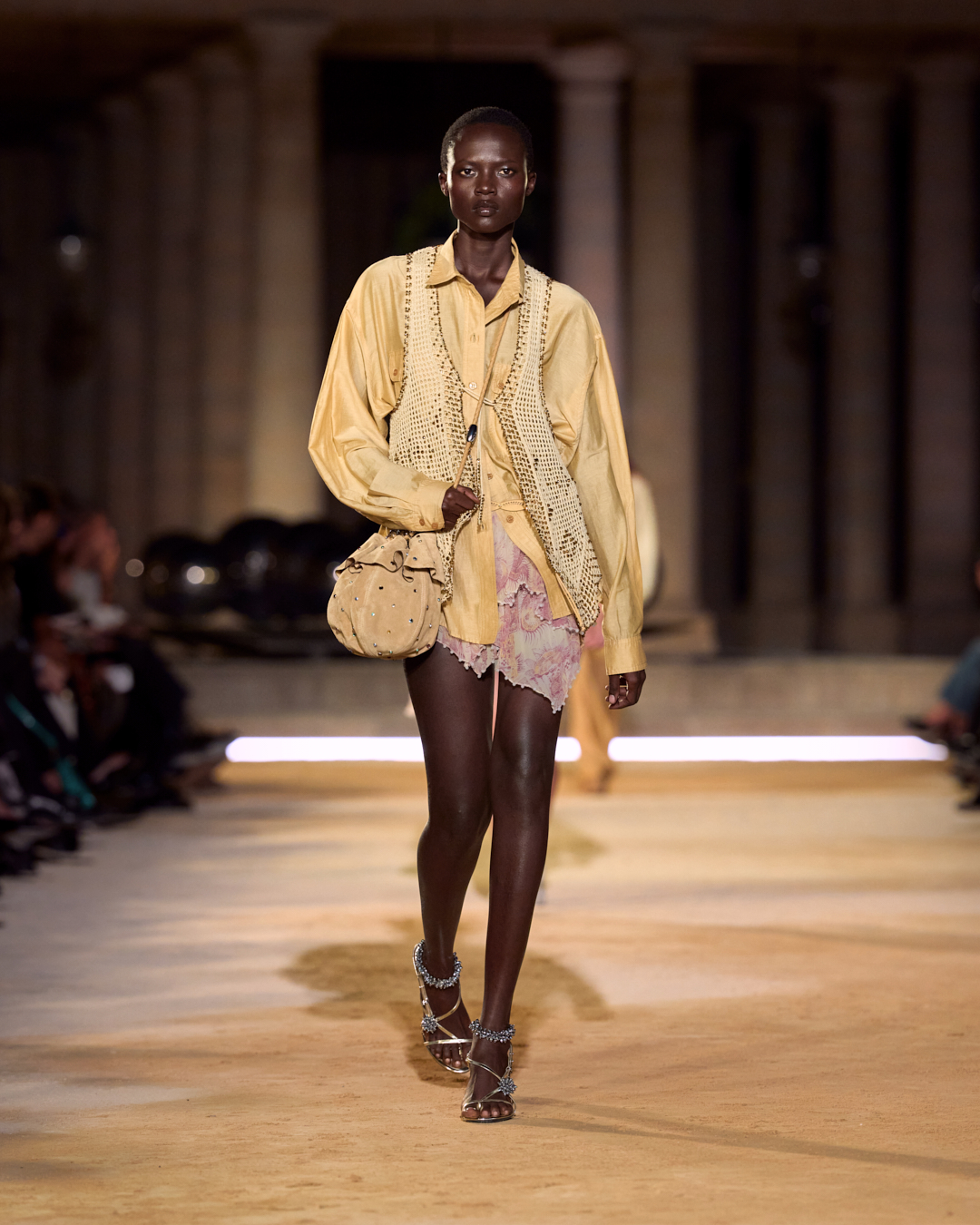
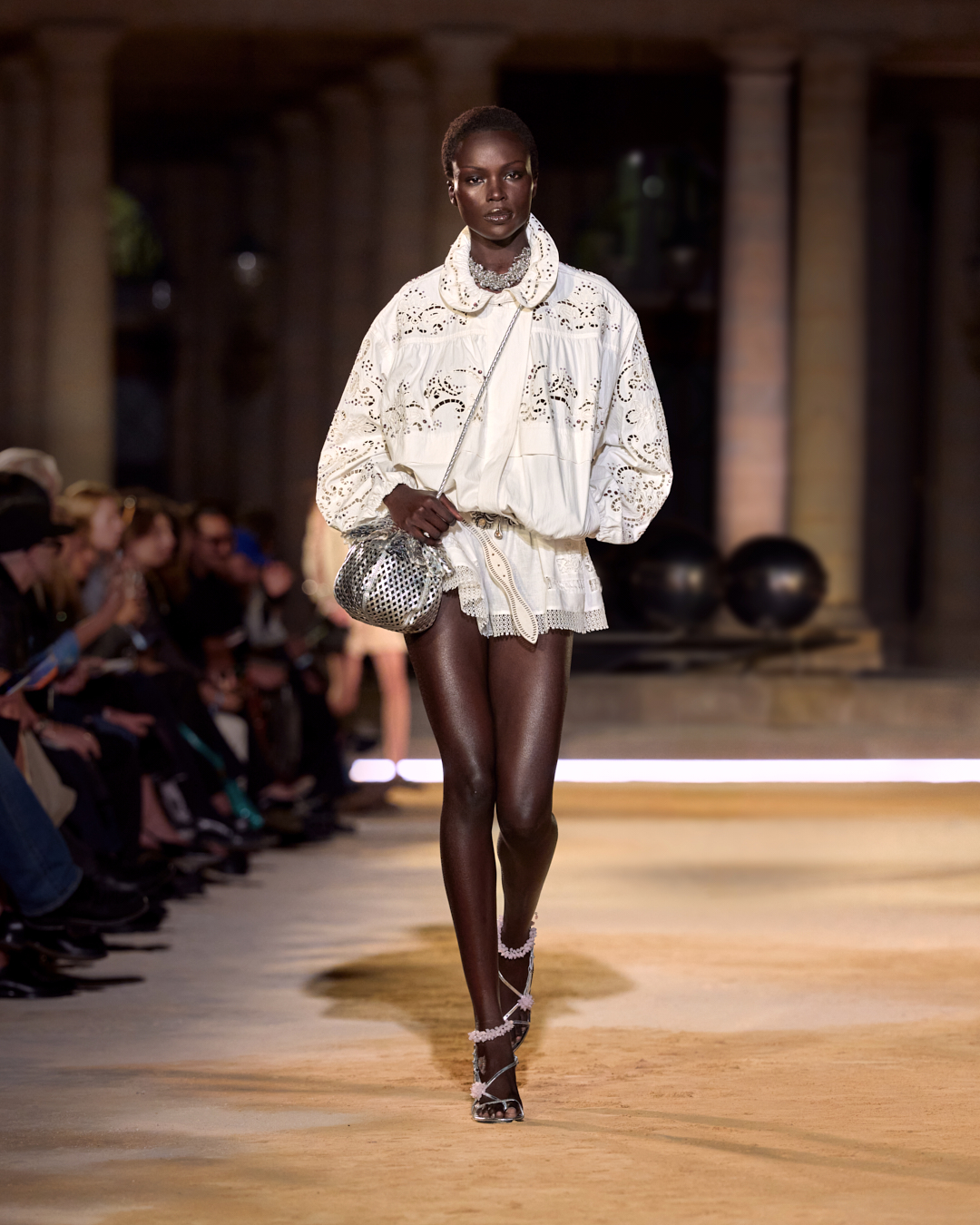
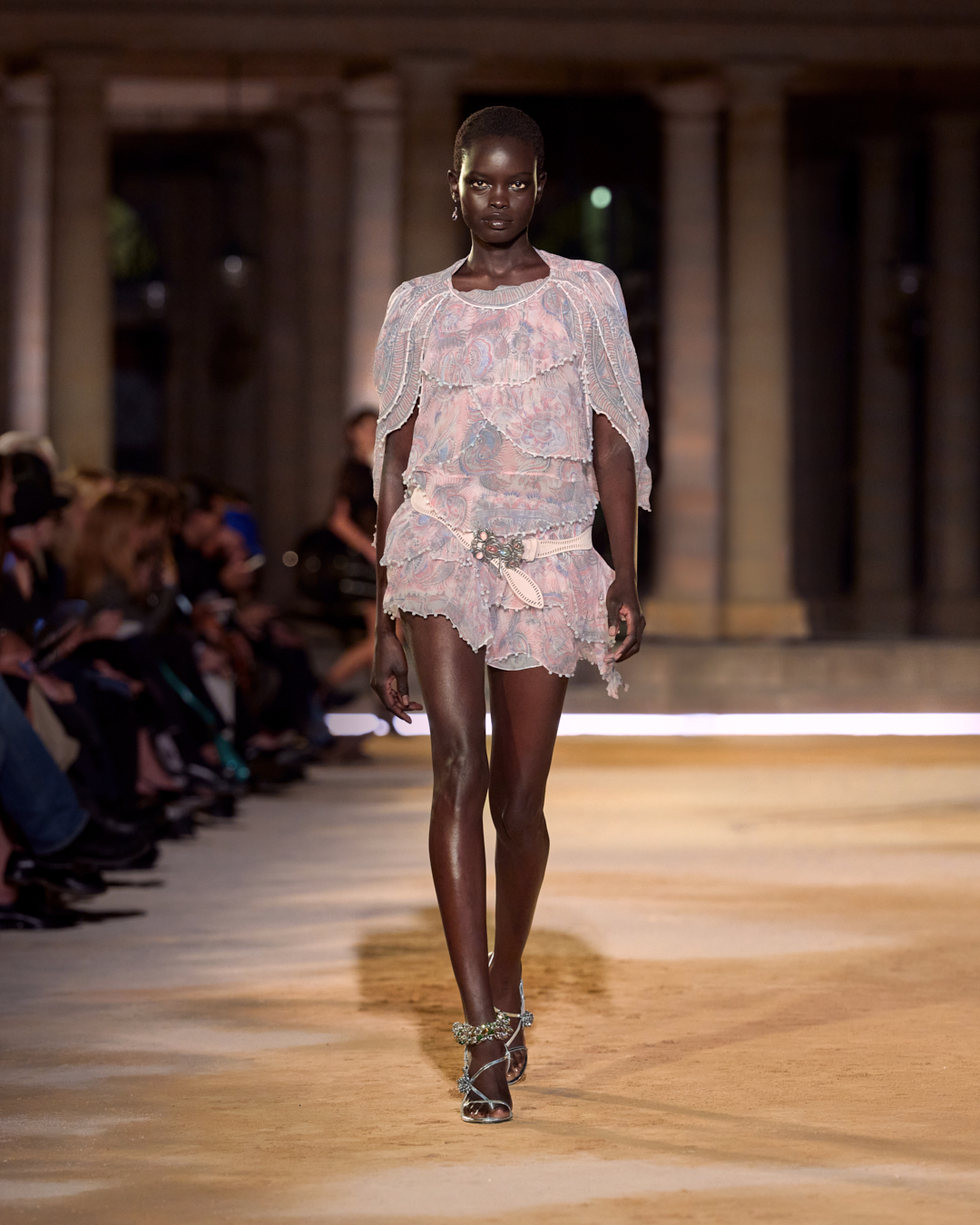
Isabel Marant has always understood the appeal of a woman who looks like she didn’t try too hard, even when every detail of her outfit says otherwise. For Spring/Summer 2027, creative director Kim Bekker leaned further into that effortless sensuality, drawing inspiration from photographer Sam Haskins’ dreamy images of women in the 1960s. The result was a collection that felt like a love letter to the free-spirited woman who dresses for herself and nobody else. Oversized butter-yellow shirts were layered beneath crochet vests and paired with barely-there floral shorts, while delicate white lace sets and sheer embroidered separates brought a romantic softness to the runway. There was a certain nostalgia woven throughout, but nothing felt dated. Bekker played with the tension between masculine and feminine dressing, balancing sculptural blazers and oversized leather jackets with lingerie-inspired silhouettes, macramé knits, and sun-faded florals. It was bohemian dressing with a grown-woman attitude, equal parts carefree and considered.
What made the collection particularly appealing was how Bekker managed to make intricate craftsmanship feel so wearable. Vintage-inspired embroidery, rhinestone embellishments, delicate beadwork, and lace detailing elevated otherwise familiar wardrobe staples without making them feel overly precious. A pastel paisley mini with fluttering sleeves felt destined for a summer getaway, while an embroidered white set offered a fresh alternative to the predictable vacation wardrobe. Accessories added another layer of personality, from slouchy woven bags and embellished bucket styles to sparkling sandals adorned with delicate ankle details. The color palette moved between soft pinks, washed yellows, creamy whites, and darker evening shades, creating a wardrobe that could easily transition from a beachside afternoon to dinner somewhere fabulous. And that’s where Isabel Marant continues to get it right. The clothes are beautiful without demanding attention, sexy without feeling forced, and luxurious without losing their sense of ease. For Summer 2027, Bekker reminded us that sometimes the best-dressed woman in the room is the one who looks like she has somewhere better to be.
Marine Serre
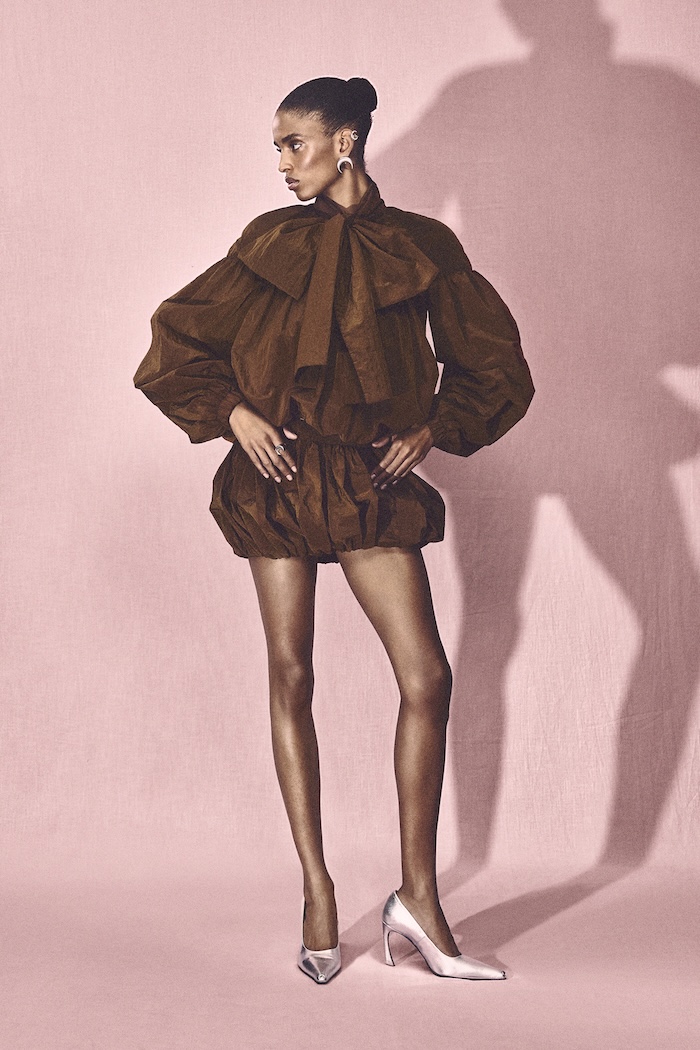
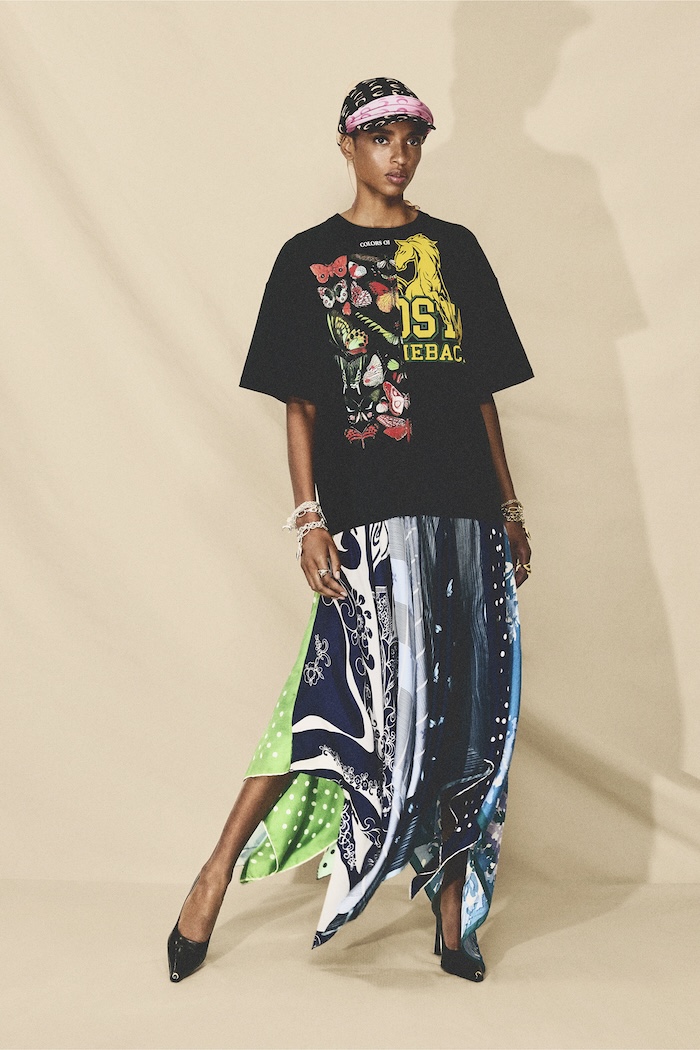
Marine Serre has never been one to follow fashion’s rules, and for Spring/Summer 2027, the designer continued to prove that sustainability and sex appeal can absolutely coexist. Titled The Deep Shine, the collection explored the relationship between craftsmanship, sensuality, and the art of giving old clothes new life. Drawing from the exaggerated proportions of the 1980s, Serre introduced dramatic shoulders, voluminous silhouettes, and cinched waists before shifting into something more relaxed and playful. A chocolate-brown ensemble featuring an oversized pussy-bow blouse and balloon shorts brought a little retro drama, while reconstructed graphic T-shirts paired with flowing patchwork silk-scarf skirts delivered the kind of effortless cool that has become synonymous with the brand. Vintage textiles, repurposed lace, crochet, and sequins were transformed into pieces that felt both nostalgic and distinctly modern. What made the collection interesting was the balance between the familiar and the unexpected. Serre wasn’t simply recycling materials for the sake of making a statement. She was giving them a second life with an entirely new personality.
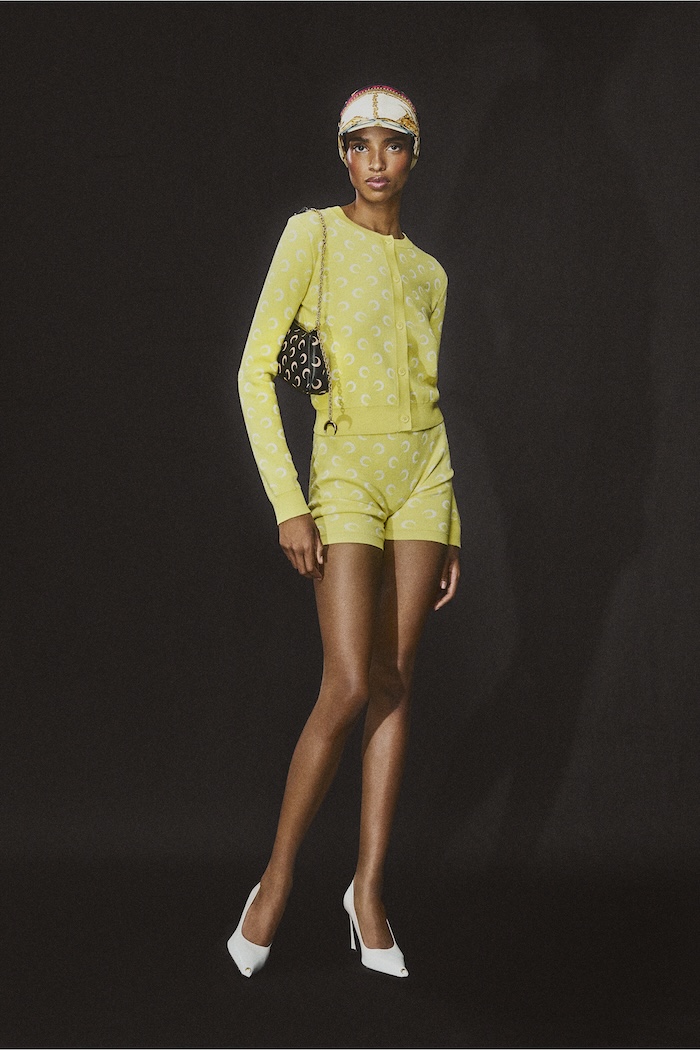
Of course, it wouldn’t be a Marine Serre collection without her signature crescent moon, but this season, the designer took a more subtle approach to branding. The recognizable motif appeared across acid-yellow knit sets, sheer dresses, and accessories, sometimes barely visible until the light hit just right. A coordinating lemon-yellow cardigan and micro shorts offered a sporty take on the house’s signature print, while silk-scarf headwear and pointed-toe pumps added a polished finish. Elsewhere, sculptural dresses, transparent layers, and low-slung silhouettes brought a more provocative energy to the collection, proving that sensuality doesn’t always require showing everything. The accessories were equally compelling, particularly the reworked silk scarves and moon-adorned bags that added personality without overwhelming the clothes. As the collection progressed, the palette moved from earthy browns and soft neutrals into saturated blues, pinks, greens, and yellows, giving the wardrobe a welcome jolt of optimism. Serre’s greatest strength remains her ability to make upcycling feel desirable rather than obligatory. For Spring/Summer 2027, she delivered a collection that was playful, sexy, and refreshingly wearable, reminding us that sometimes the most exciting thing in fashion isn’t creating something entirely new, but finding a better way to reimagine what already exists.
Loewe
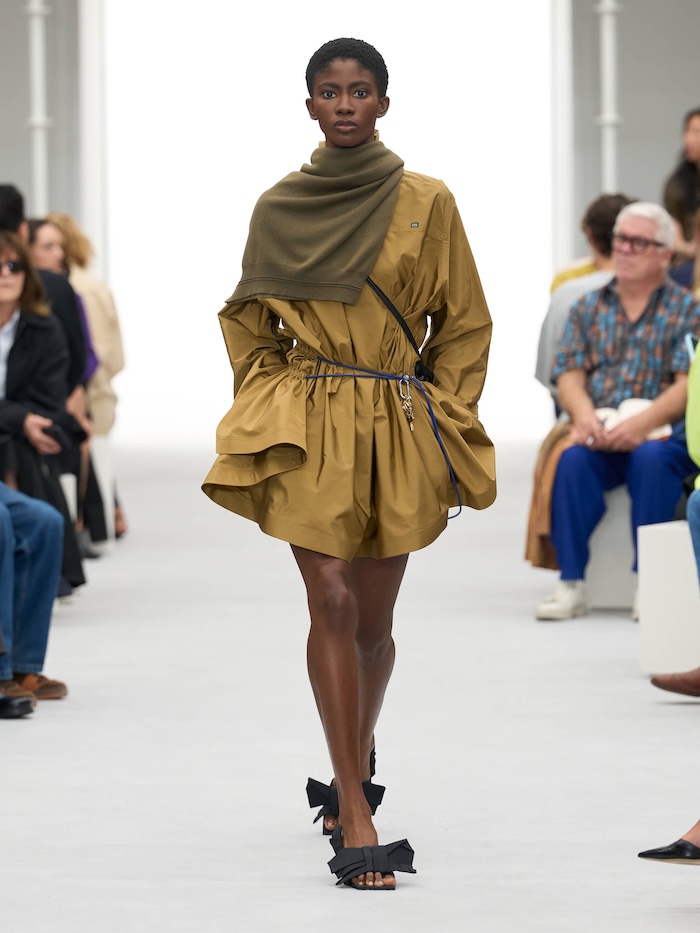
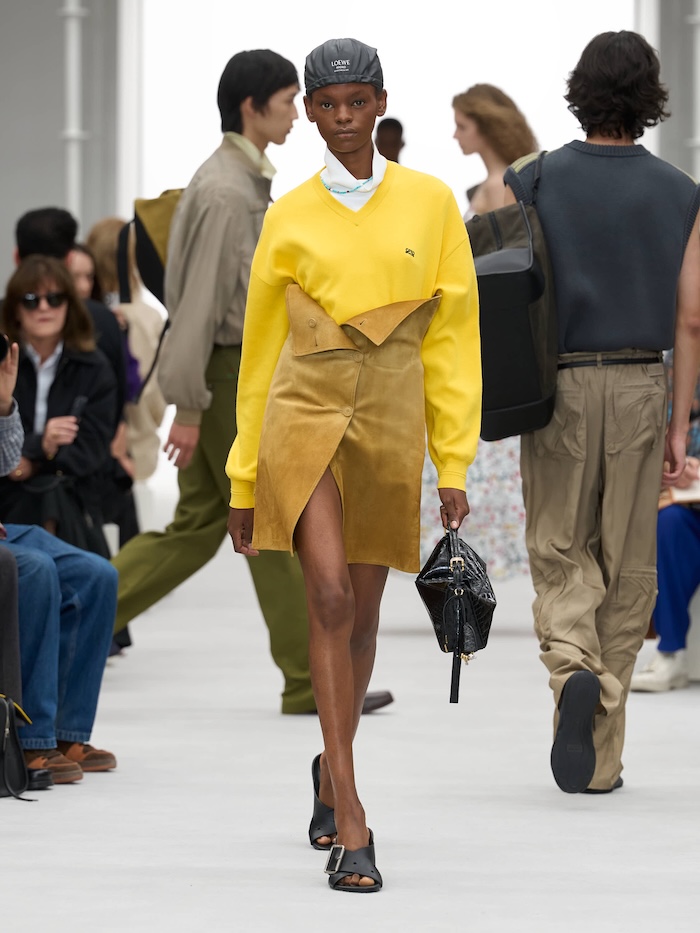
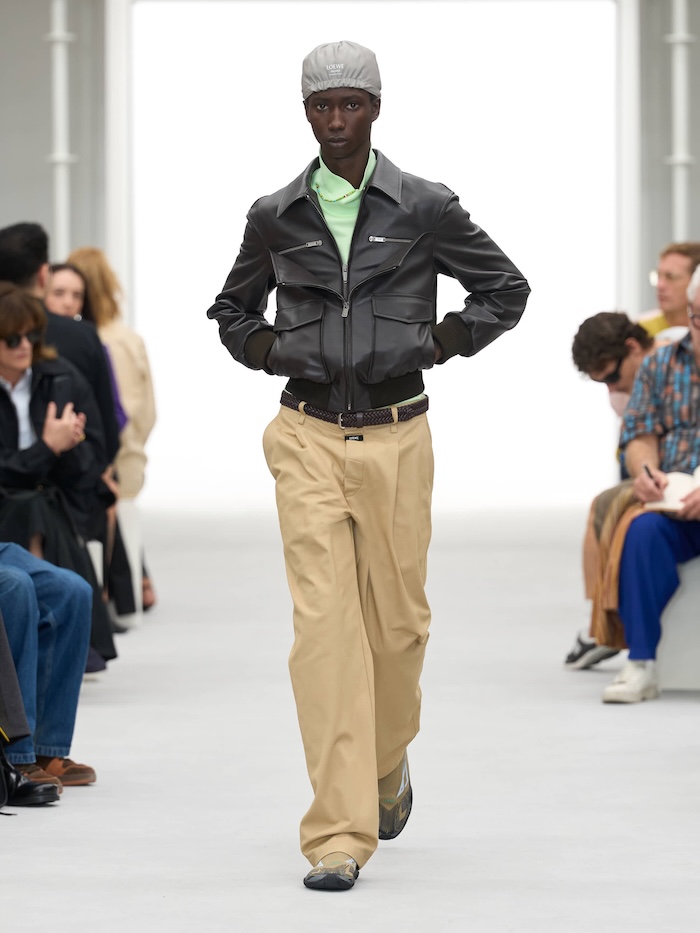
Jack McCollough and Lazaro Hernandez are settling into their Loewe era, and for Spring/Summer 2027, the design duo made a compelling case for why everyday clothes deserve a little more imagination. Pulling from their American upbringing while embracing the Spanish house’s appetite for craftsmanship and experimentation, the collection was a conversation between practicality and playfulness. Think New England prep with a little Spanish flair. Familiar wardrobe staples were twisted, draped, and reconstructed into something entirely different. An oversized mustard-colored anorak was gathered at the waist and styled with an olive scarf, while a bright yellow V-neck sweater was paired with an asymmetrical suede mini skirt that looked as though it had been wrapped around the body in a hurry. Elsewhere, leather bomber jackets, relaxed trousers, and sporty caps gave the collection a youthful, almost collegiate attitude. The designers weren’t interested in reinventing the wheel. Instead, they challenged how we wear the pieces already hanging in our closets, and the results were surprisingly refreshing.
What made this collection work was its ability to balance Loewe’s artistic identity with clothes people could actually see themselves wearing. Silk anoraks, backward polos, softened boat shoes, and chiffon dresses inspired by basketball jerseys blurred the lines between sportswear and luxury without feeling gimmicky. The color palette moved between earthy khakis, olive greens, and buttery neutrals, with jolts of electric yellow and unexpected pastel shades keeping things interesting. Accessories added another layer of personality, from structured leather handbags to oversized buckles and playful footwear. There was also something particularly appealing about the collection’s approach to gender, with relaxed silhouettes and familiar sportswear references moving naturally between the men’s and women’s wardrobes. McCollough and Hernandez understand that luxury doesn’t always have to announce itself through extravagance. Sometimes, it’s about an incredible jacket, a perfectly proportioned trouser, or an unexpected styling trick that makes you reconsider something you thought you knew. For Spring/Summer 2027, Loewe felt less like a fashion fantasy and more like a wardrobe with personality, which might be exactly what the house needs as its new creative chapter continues to unfold.
Issey Miyake
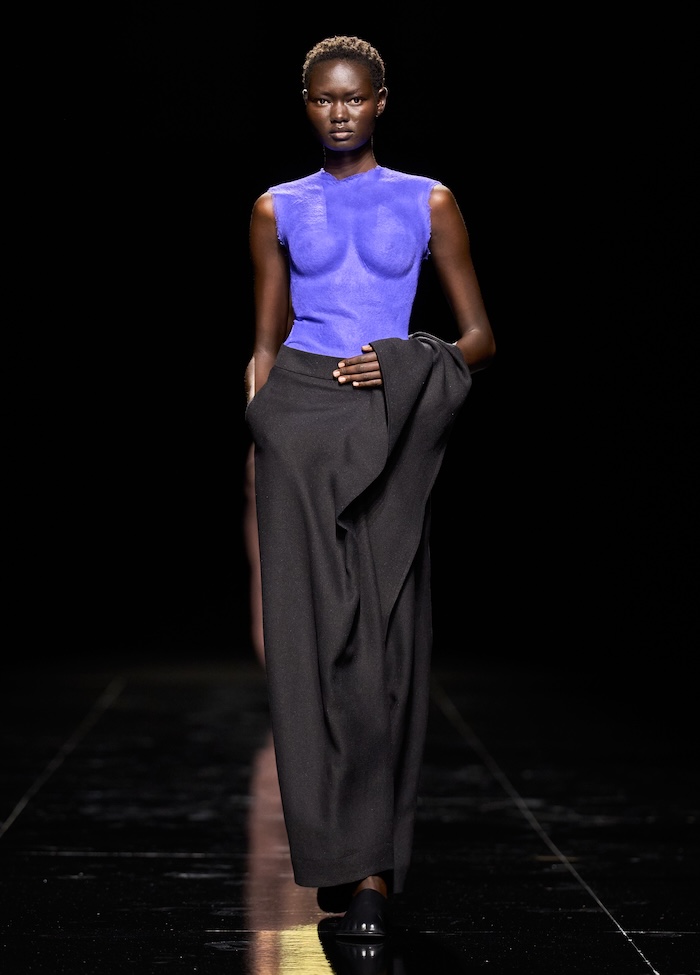
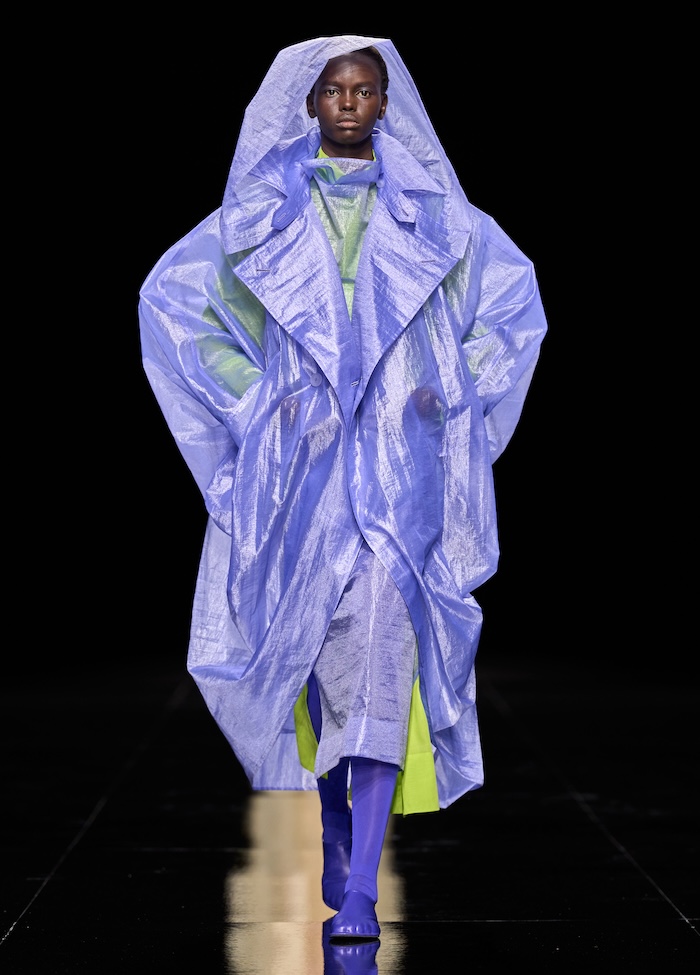
At Issey Miyake, clothing has always been about more than simply getting dressed, and for Spring/Summer 2027, creative director Satoshi Kondo reminded us why the Japanese fashion house remains in a league of its own. Presented at the Dojo de Paris, the collection, titled Figure of Ma, explored the relationship between fabric, the body, and the space that exists between the two. Sounds a little philosophical for fashion? Perhaps, but the clothes made a convincing argument. Kondo approached design with the curiosity of someone discovering fabric for the first time, manipulating proportions, experimenting with volume, and allowing garments to take on a life of their own. Sculptural outerwear appeared almost weightless despite its exaggerated proportions, including an iridescent lavender coat with an oversized collar and hood that practically swallowed the model whole. Elsewhere, a vibrant violet sleeveless top with molded contours hugged the torso before giving way to a dramatically draped charcoal skirt. The contrast between structure and softness was particularly striking. Rather than relying on excessive embellishment or complicated styling, Kondo allowed the construction and movement of each garment to do the talking.
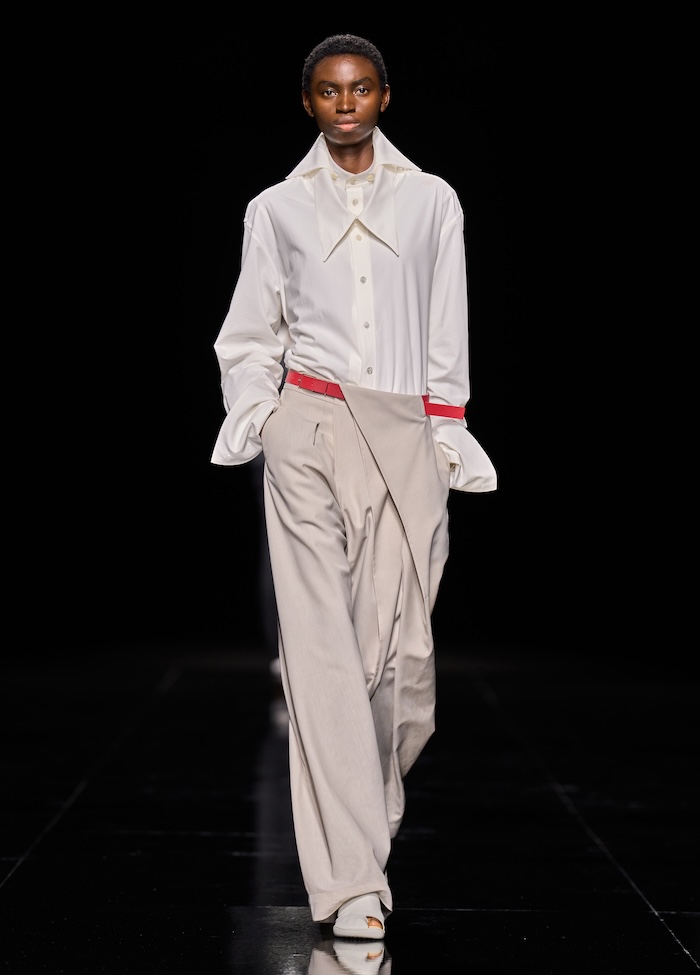
What made the collection especially compelling was how Kondo balanced conceptual design with the realities of getting dressed. An oversized ivory button-down with an exaggerated collar and elongated cuffs was paired with fluid trousers and a flash of red at the waist, proving that even the most familiar wardrobe staples can feel entirely new with the right proportions. The palette moved between muted neutrals and unexpected bursts of electric purple, lavender, and lime green, adding a playful energy to an otherwise thoughtful presentation. A collaboration with pianist Koki Nakano brought another dimension to the collection, creating a dialogue between music and fashion that emphasized rhythm, movement, and the emotional connection we have with what we wear. And while some looks leaned heavily into wearable art, there was something refreshing about seeing a designer embrace experimentation without sacrificing the beauty of the clothes themselves. In an industry that often confuses innovation with shock value, Kondo offered a different perspective. Sometimes the most exciting thing a designer can do is take a piece of fabric, rethink everything we know about how it should sit on the body, and create something that makes us look twice.
Ottolinger
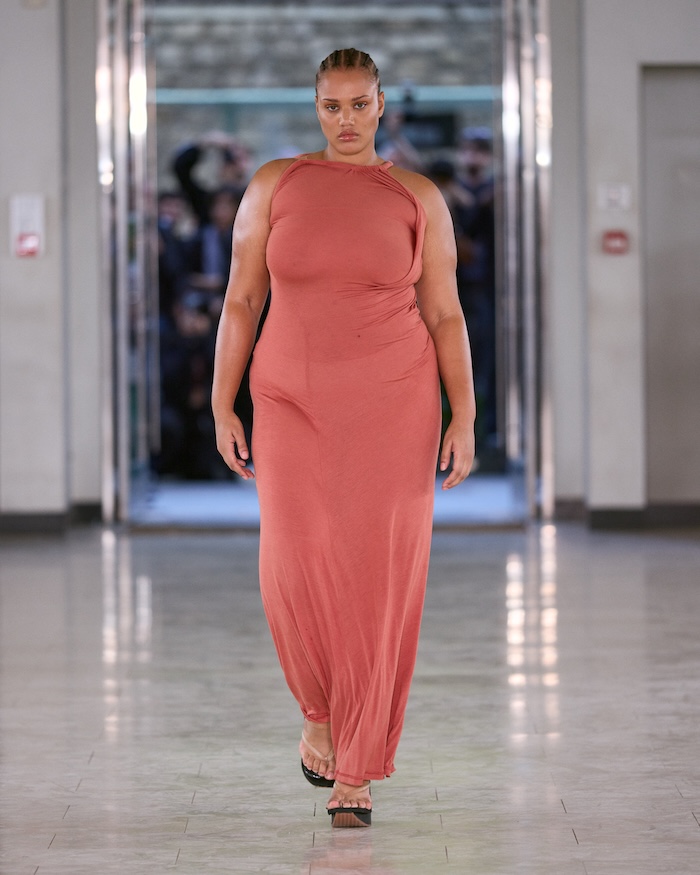
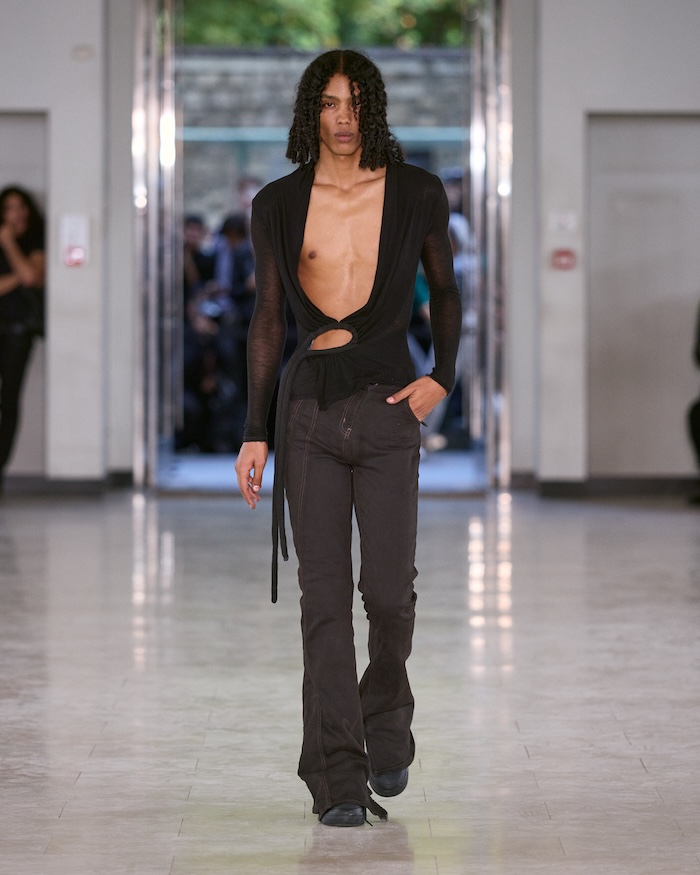
For Spring/Summer 2027, Ottolinger wants you to moisturize, mind your business, and look damn good while doing it. Titled Moisturizer, the collection from designers Christa Bösch and Cosima Gadient took the brand’s signature deconstructed aesthetic and gave it a softer, sexier makeover without losing the rebellious energy that made the Berlin-based label a favorite among fashion’s more adventurous crowd. The concept was simple: What if getting dressed felt as good as taking care of your skin? And judging by the clothes, the answer involved plenty of exposed skin, body-hugging silhouettes, and just enough fabric manipulation to keep things interesting. A plunging black long-sleeved top, twisted and knotted at the waist, was paired with low-slung charcoal trousers, offering a little early 2000s nostalgia without feeling like a costume. Elsewhere, a dusty rose jersey maxi dress skimmed the curves of a fuller-figured model, proving that the brand’s approach to sensuality wasn’t reserved for one body type. The dress was deceptively simple, but its asymmetrical neckline and subtle draping did all the work. It was sexy without trying too hard, which, let’s be clear, is an art form in itself.
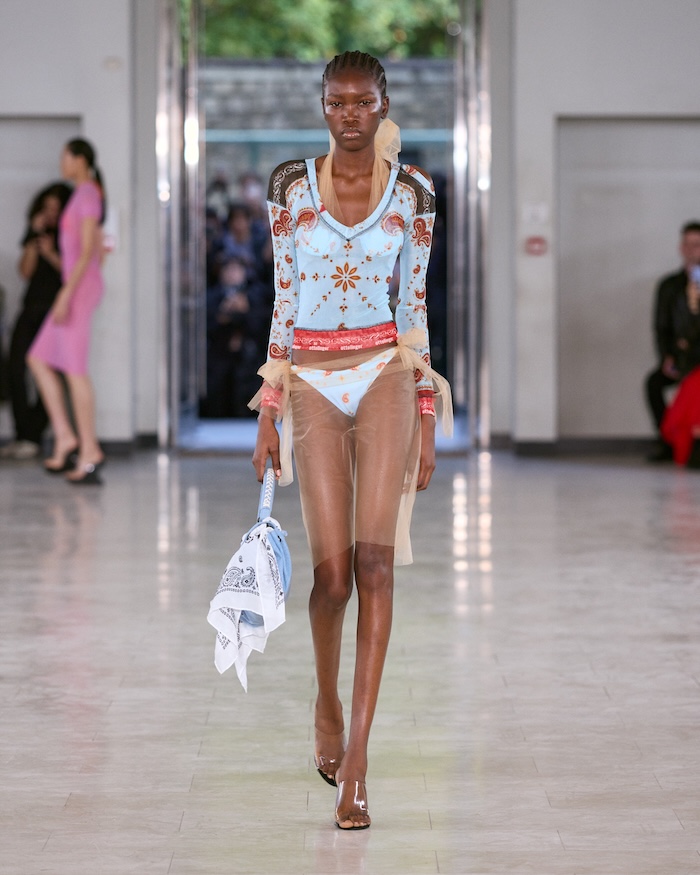
What made this collection particularly interesting was Ottolinger’s decision to let the body lead rather than allowing its experimental construction to overpower the person wearing it. The designers introduced a fine silk-viscose jersey that draped against the skin like a second layer, while their signature twisting, knotting, and deconstruction appeared in more considered ways. A printed long-sleeved top with a plunging neckline was styled with sheer tulle layered over bikini bottoms, delivering the kind of unapologetic, barely-there dressing that feels right at home on a summer vacation or a particularly wild night out in Berlin. Deconstructed denim, relaxed jogging pants, and tailored separates offered a more grounded counterpoint to the collection’s revealing moments, reinforcing the idea that confidence doesn’t always require showing everything. There was also something refreshing about the designers’ willingness to rethink their own signatures. Rather than simply cutting clothes apart for the sake of looking edgy, they focused on how those cuts could flatter, frame, and celebrate the body. And in a fashion landscape where conversations about inclusivity often feel more performative than practical, seeing different body types confidently occupying the same runway was a welcome reminder that sex appeal doesn’t come in one size. Ottolinger’s message this season was clear: Take care of your body, dress it however you please, and don’t apologize for feeling yourself.
Givenchy
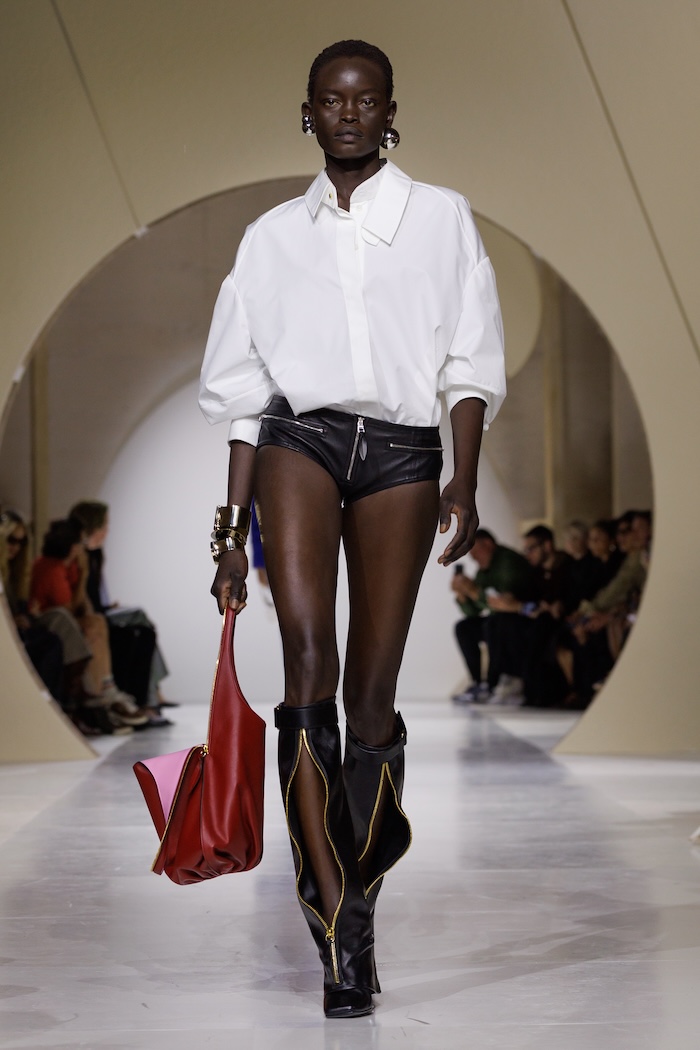
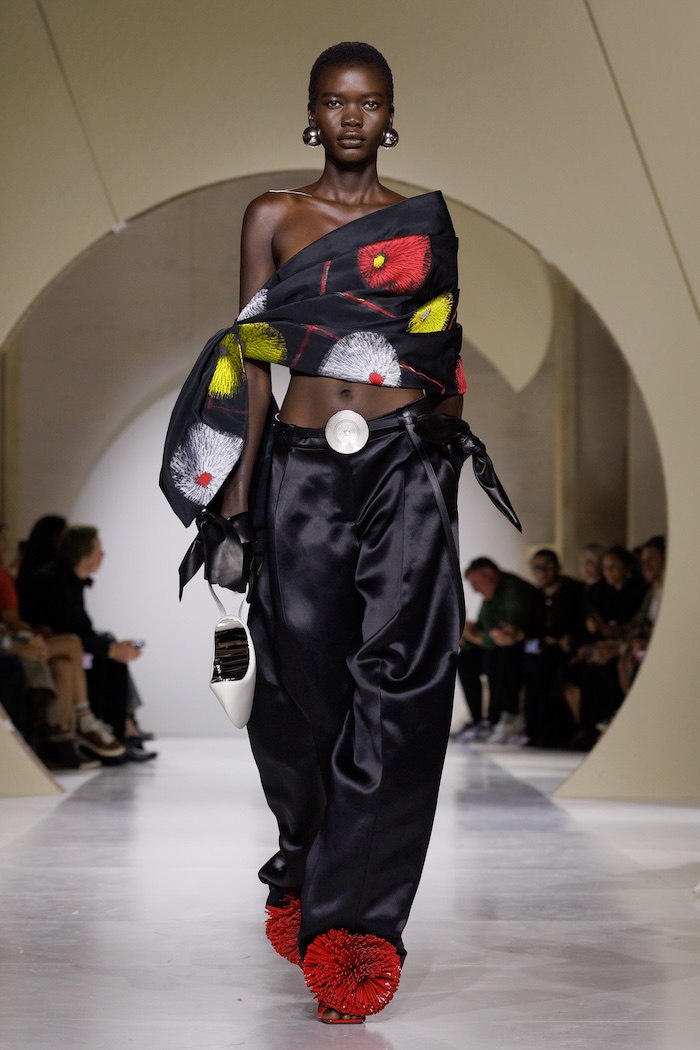
Sarah Burton is finding her rhythm at Givenchy, and for Spring/Summer 2027, the designer delivered a collection that understood one very important thing: a woman can command an entire room without having to do the absolute most. Building on her vision for the French fashion house, Burton explored the relationship between precision, simplicity, and the realities of modern dressing, creating a wardrobe that felt equal parts powerful, sensual, and refreshingly uncomplicated. But don’t mistake simplicity for boring, because the clothes had plenty to say. An oversized white button-down tucked into barely-there black leather shorts was styled with knee-high leather boots featuring dramatic gold zippers, oversized silver earrings, and a sculptural red handbag. It was the kind of look that could easily transition from a fashion editor’s closet to the wardrobe of a woman who has somewhere important to be and absolutely no intention of blending in. Elsewhere, a black asymmetric top decorated with colorful floral motifs was wrapped around the body and paired with fluid satin trousers, offering a softer interpretation of power dressing. Burton’s ability to balance masculine tailoring with feminine sensuality was particularly evident throughout the collection, with exaggerated proportions, exposed skin, and thoughtful construction creating clothes that felt sophisticated without becoming overly precious.
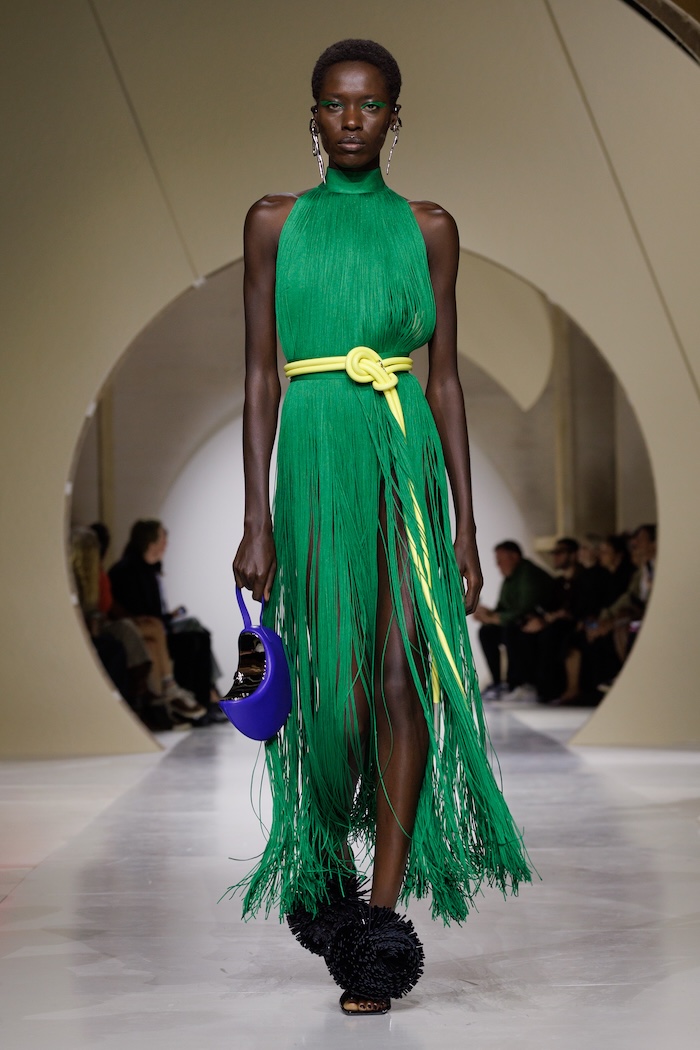
Of course, Burton wasn’t about to send a collection down the runway without giving the girls a few moments worth talking about. A striking emerald-green fringe dress, cinched at the waist with a sculptural yellow rope-like belt, delivered the kind of movement and drama that makes fashion shows worth attending in person. Paired with a vibrant purple handbag and black textured sandals, the look was a reminder that color can be just as commanding as a perfectly tailored black suit. The accessories were equally compelling, from architectural handbags to statement jewelry and footwear that balanced function with a little fashion fantasy. What stood out most, however, was Burton’s understanding of how women actually want to feel in their clothes. Her designs weren’t about restricting the body or dressing women according to some outdated idea of femininity. Instead, she offered a wardrobe that allowed room for individuality, whether that meant showing a little leg, embracing exaggerated volume, or letting a beautifully constructed garment speak for itself. In an industry constantly chasing the next viral moment, Burton seems more interested in creating clothes women will want to wear long after the social media conversation moves on. And judging by this collection, that approach is working in her favor.
Alaïa
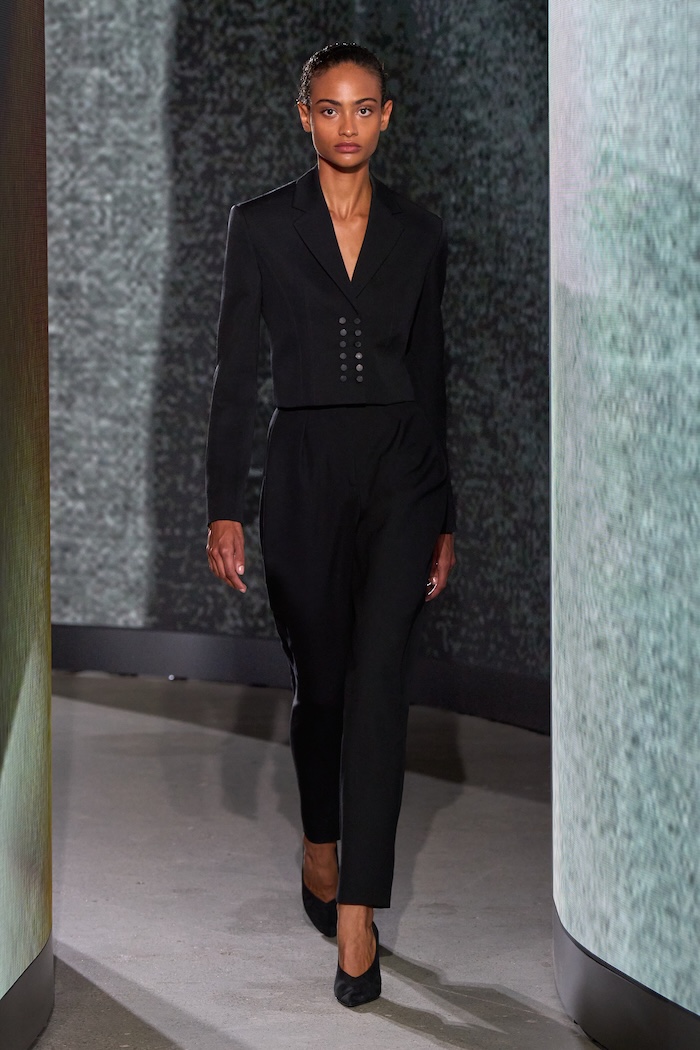
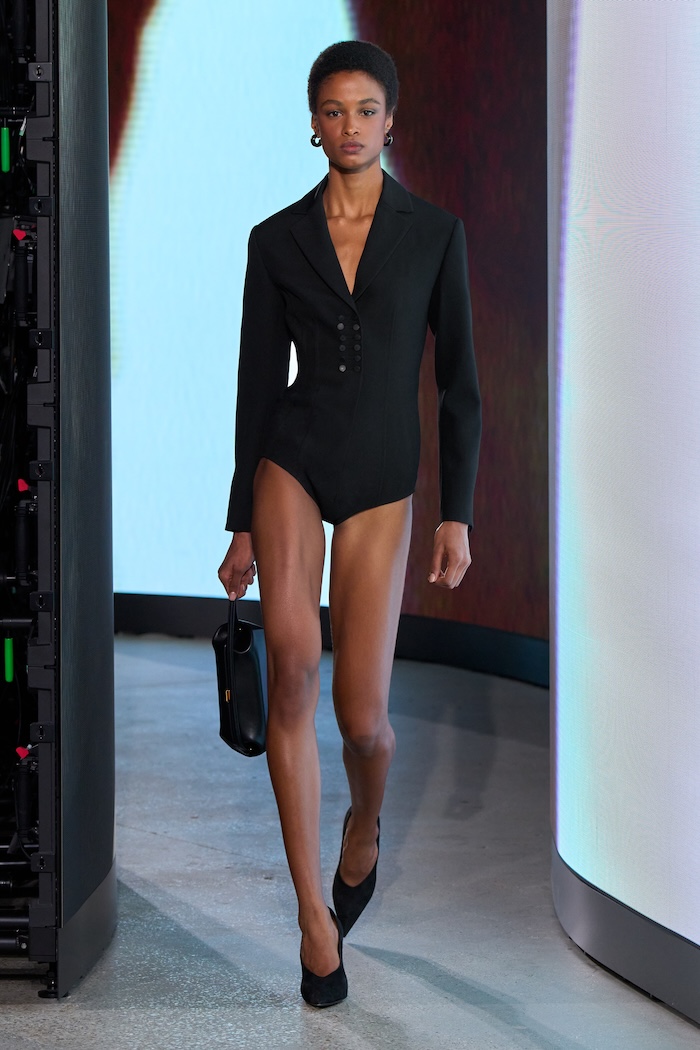
At Alaïa, the female body has always been the main character, and for Winter/Spring 2027, that love affair continued with a collection that reminded us why the house remains one of fashion’s most respected names when it comes to dressing women. Rather than chasing trends or trying to reinvent the wheel, the collection explored the ongoing conversation between clothing, craftsmanship, and the women who bring these garments to life. The opening looks were an exercise in restraint, with sharply tailored black jackets, sculpted waists, and trousers that elongated the body without overwhelming it. One particularly striking look featured a black blazer cut into a bodysuit, offering a modern interpretation of power dressing that was both sophisticated and undeniably sexy. It was giving businesswoman with a little after-hours attitude, and quite frankly, we’re here for it. The collection also revisited the house’s signature relationship with the body through silhouettes that wrapped, hugged, and celebrated natural curves. There was something refreshing about seeing clothes that didn’t attempt to disguise the female form but instead worked with it. The influence of founder Azzedine Alaïa remained present throughout, particularly in the precision of the tailoring and the understanding that a beautifully constructed garment should complement the person wearing it rather than compete for attention.
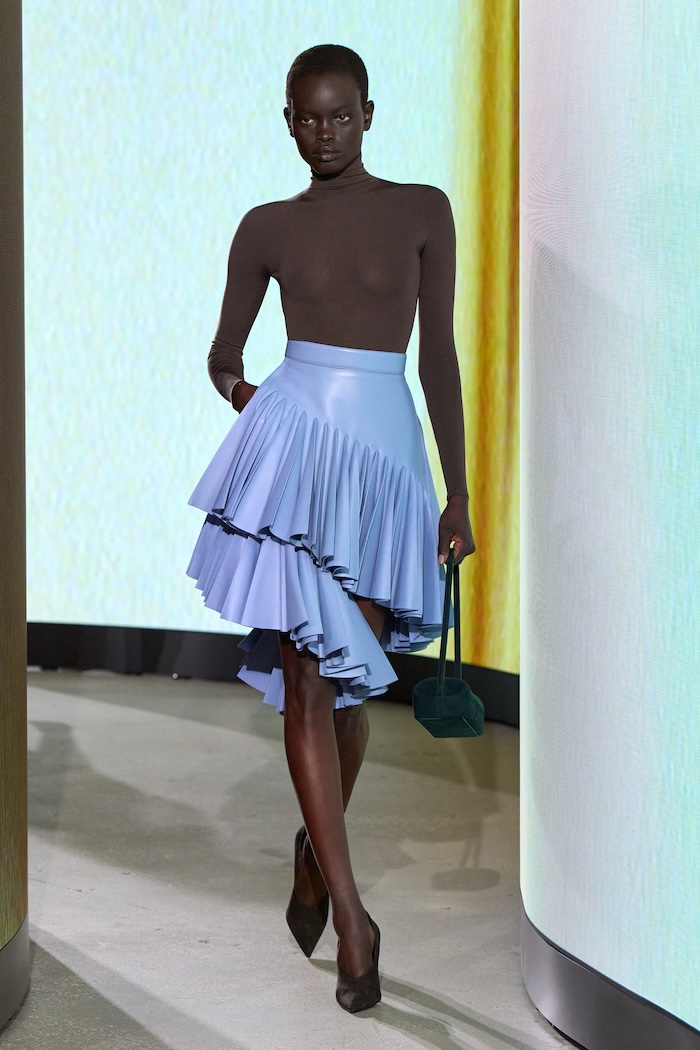
As the collection progressed, the silhouettes became more playful, introducing movement, texture, and a softness that balanced the architectural tailoring. A chocolate-brown fitted turtleneck paired with a powder-blue leather skirt featuring cascading, sculptural pleats was easily one of the standout moments. The skirt moved like a piece of wearable sculpture, demonstrating the house’s extraordinary ability to transform materials into something that feels both artistic and desirable. Elsewhere, twisted jersey, knitted pleats, and carefully manipulated leather reinforced the importance of craftsmanship, while sharply pointed shoes and understated handbags completed the looks without distracting from the clothes themselves. American artist Julian Klincewicz’s video installations added another dimension to the presentation, surrounding the audience with imagery that explored the relationship between women, movement, and identity. What made the collection particularly compelling was its refusal to treat femininity as a single idea. Some looks were commanding and structured, while others embraced softness and fluidity, allowing different expressions of womanhood to coexist. In a fashion landscape where designers are constantly pressured to deliver something new, Alaïa made a convincing argument for the beauty of continuity. After all, when you understand the female body this well, you don’t need to reinvent it every season.
Lacoste
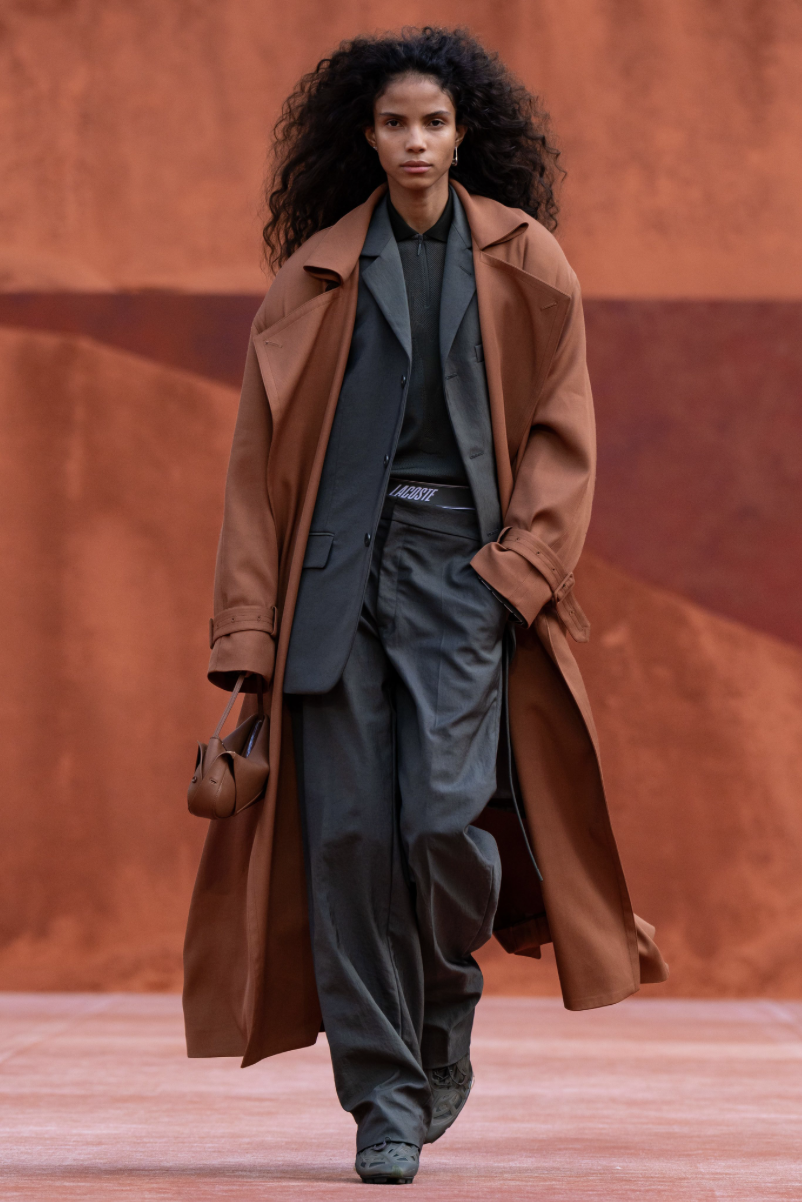
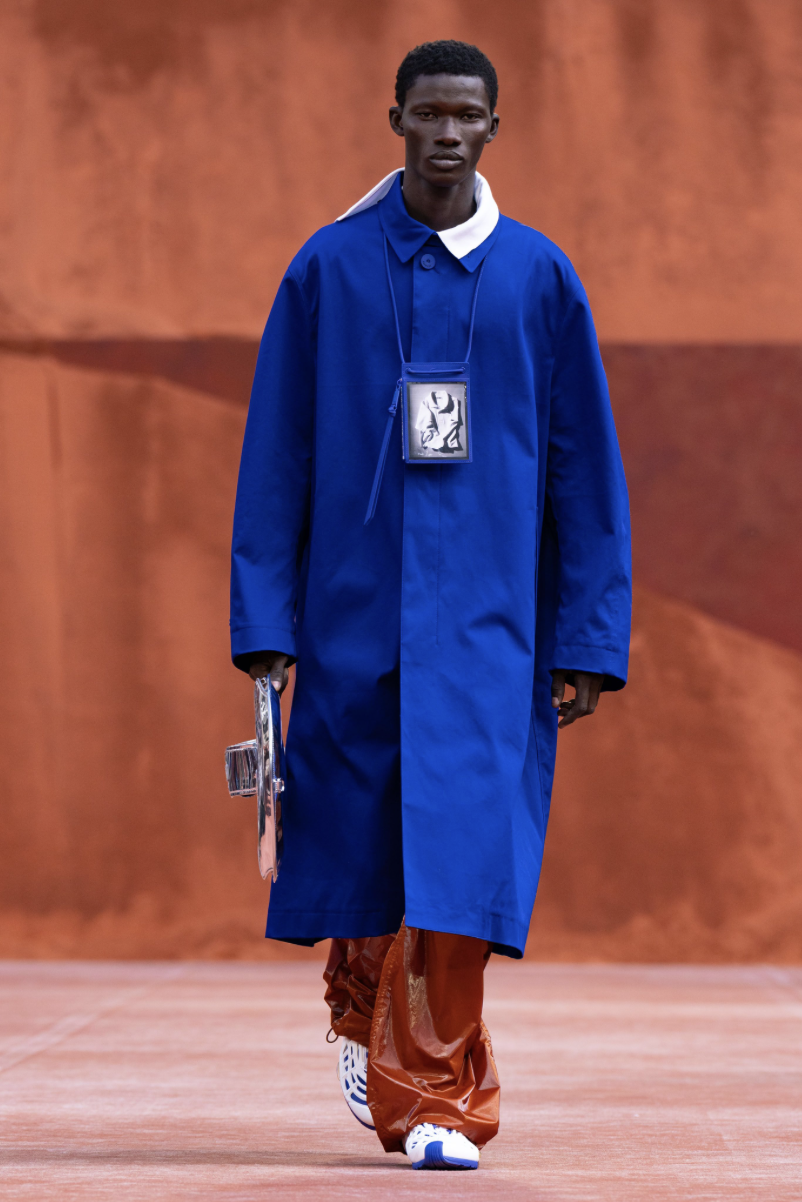
Who said tennis whites were mandatory? Certainly not Lacoste creative director Pelagia Kolotouros, who took the brand’s Spring/Summer 2027 collection straight to the clay courts of Roland-Garros in Paris and gave traditional tennis dressing a much-needed attitude adjustment. Under the theme Dress Code: No White Required, Kolotouros challenged the sport’s longstanding obsession with pristine uniforms, delivering a collection that felt equal parts country club, downtown cool, and luxury sportswear. Drawing inspiration from tennis pioneers Suzanne Lenglen and René Lacoste, both of whom challenged the restrictive dress codes of their time, the designer reimagined what it means to dress for the court and, more importantly, everywhere else. Oversized trench coats, relaxed suiting, slouchy trousers, and reworked polo shirts dominated the runway, with silhouettes that favored movement over structure. One standout look paired an oversized rust-colored trench with charcoal tailoring and sneakers, giving the kind of effortlessly expensive energy that makes you want to reconsider your entire wardrobe. Elsewhere, a vibrant cobalt-blue coat worn over glossy clay-colored trousers brought a welcome jolt of color. The palette of burnt orange, deep teal, mineral browns, and electric blue was a refreshing departure from the expected whites and greens typically associated with tennis. And while the clothes maintained the brand’s athletic DNA, they were anything but predictable.
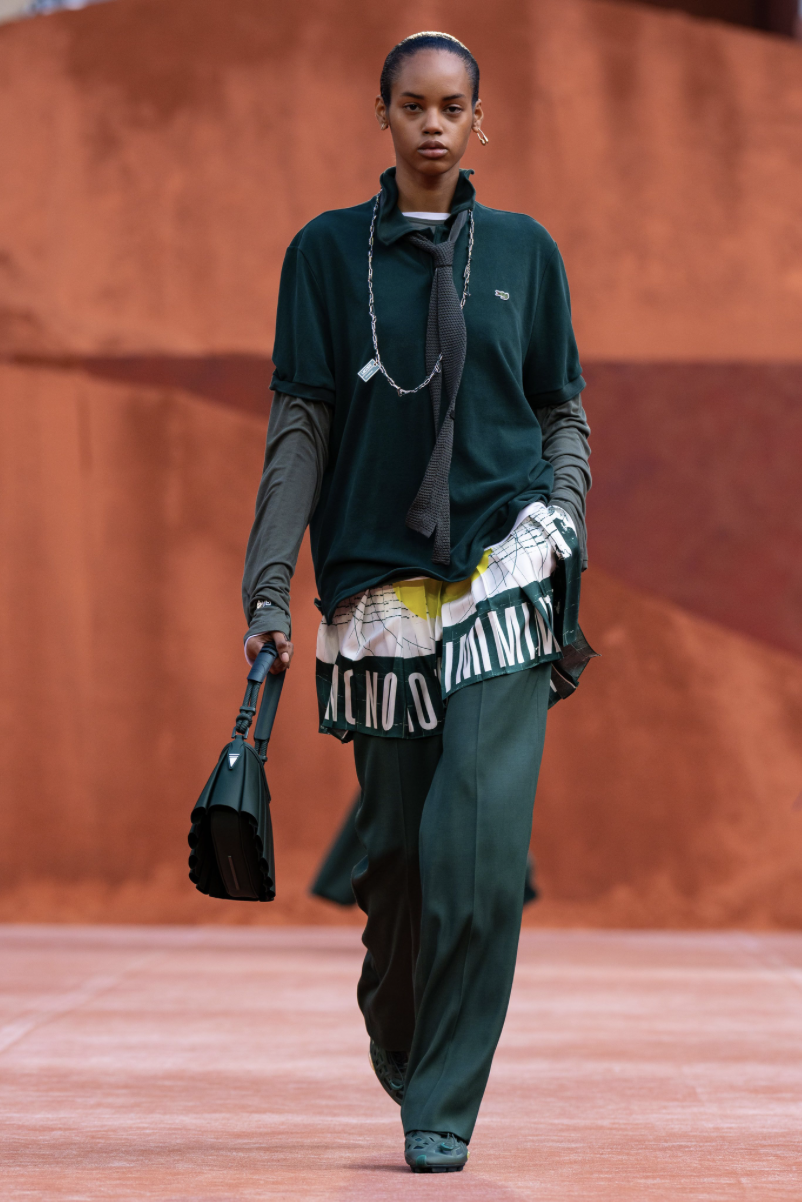
What made the collection particularly interesting was how Kolotouros blurred the lines between performance dressing and everyday personal style without losing the brand’s identity. The iconic Lacoste polo received a contemporary makeover, appearing oversized, layered over technical long sleeves, and styled with loose trousers and asymmetrical skirts. A deep green polo paired with a printed skirt layered over matching trousers was especially compelling, offering a sporty take on the layered dressing we’ve been seeing across the Spring/Summer 2027 runways. Technical fabrics, washed silks, lightweight wool, and softened cotton gave the garments a lived-in quality, while unexpected accessories, including lanyards, sculptural handbags, and the new ACE-T1 caged sneakers, added personality. The accessories were particularly strong, proving that Lacoste understands the growing appetite for fashion that feels functional without sacrificing style. There was also something clever about staging the show on the very surface that inspired it, with the clay serving as both a backdrop and a reminder that fashion, much like tennis, is better when you’re willing to break a few rules. Kolotouros isn’t attempting to erase Lacoste’s history. She’s making it relevant to a generation that wants to wear its sportswear to brunch, the office, and wherever the night takes them. And judging by this collection, the crocodile still has plenty of bite.