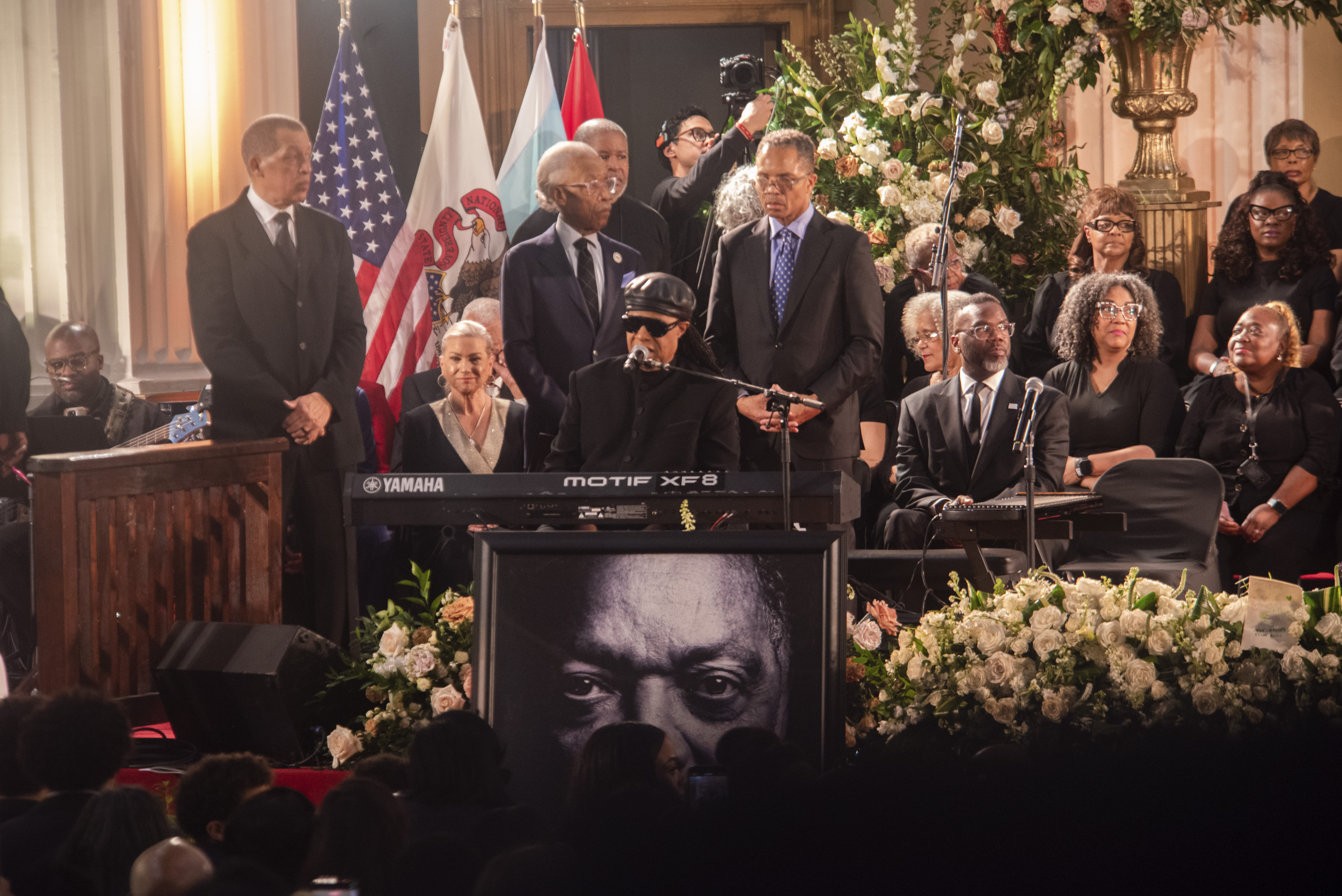
The late Rev. Jesse L. Jackson’s massive Operation PUSH National Headquarters was a building full of love, power, and jubilant expression on March 7. From lifelong Chicago residents to other Black people from across the diaspora, people traveled far and wide to say their farewell to the late Rev. Jackson.
Between those long lines were people who appreciated Jackson’s work from afar and those impacted by it. There were even those who marched with Jesse as recently as 2016 after the police killing of LaQuan McDonald in Chicago.
Sarita Townsend, a Chicago native who attended the funeral, recalls seeing Jackson’s 1984 and 1988 presidential campaigns as a child in California. Since living in the Bronzeville neighborhood, she would frequently visit the Operation Push office. She even saw how strong a presence he was in politics while working in Washington, D.C.
“We came to Push more often than you would think. You would come in and check in to see how things are going and everything else. I worked in D.C., and he’s just as much of a force there as well,” Townsend said.
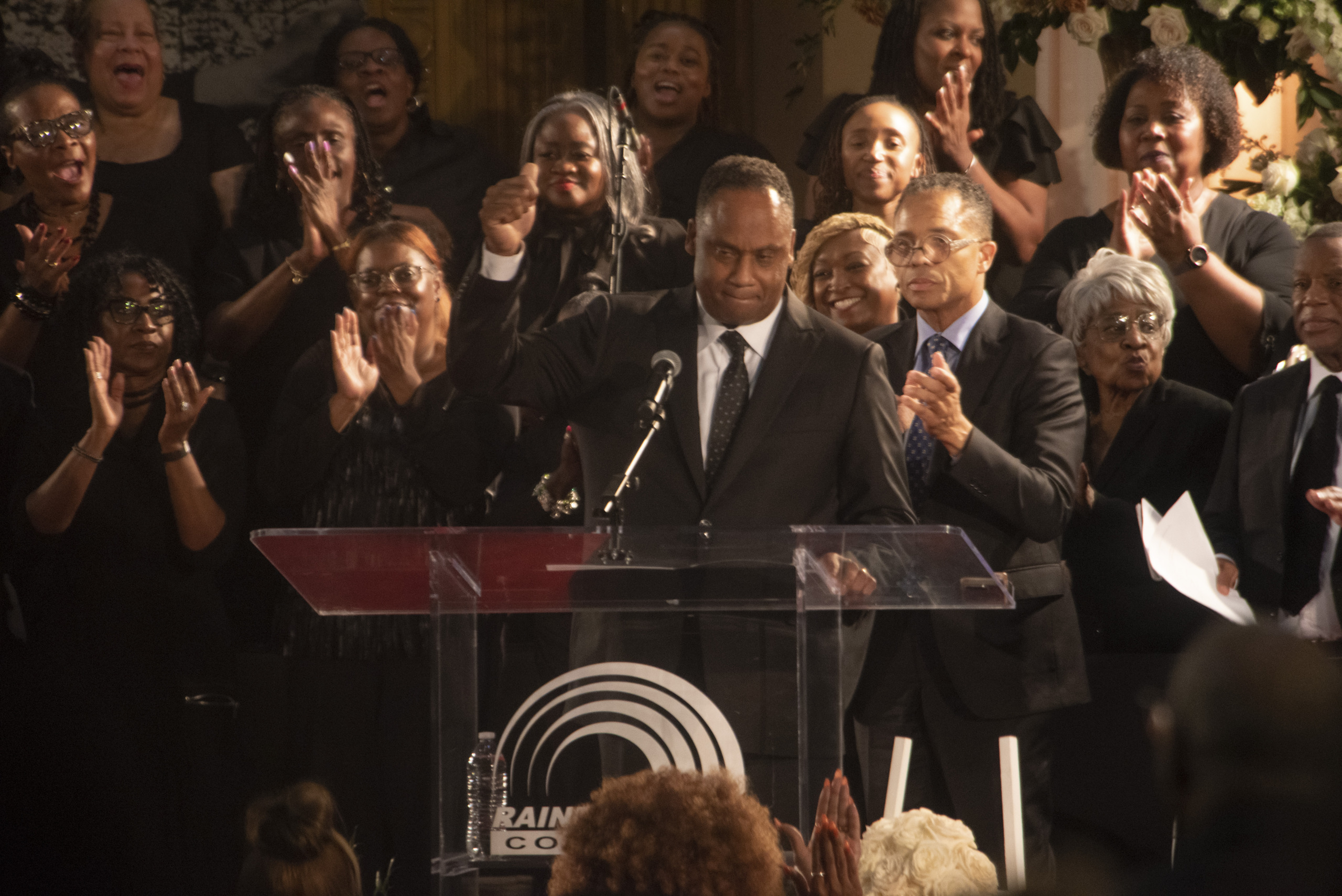
Continuing from the public service left off that Friday, Jesse’s Saturday Homegoing was as politically charged as his own life. “I’m not a fan of the current president of the United States of America. But he did get one thing right when my father passed. He said the Rev. Jesse Louis Jackson was indeed a force of nature. Brother and sisters, had we not seen him in his own eyes, future generations would scarcely believe that such a man truly existed in the simplicity of flesh and blood,” said Congressman Jackson.
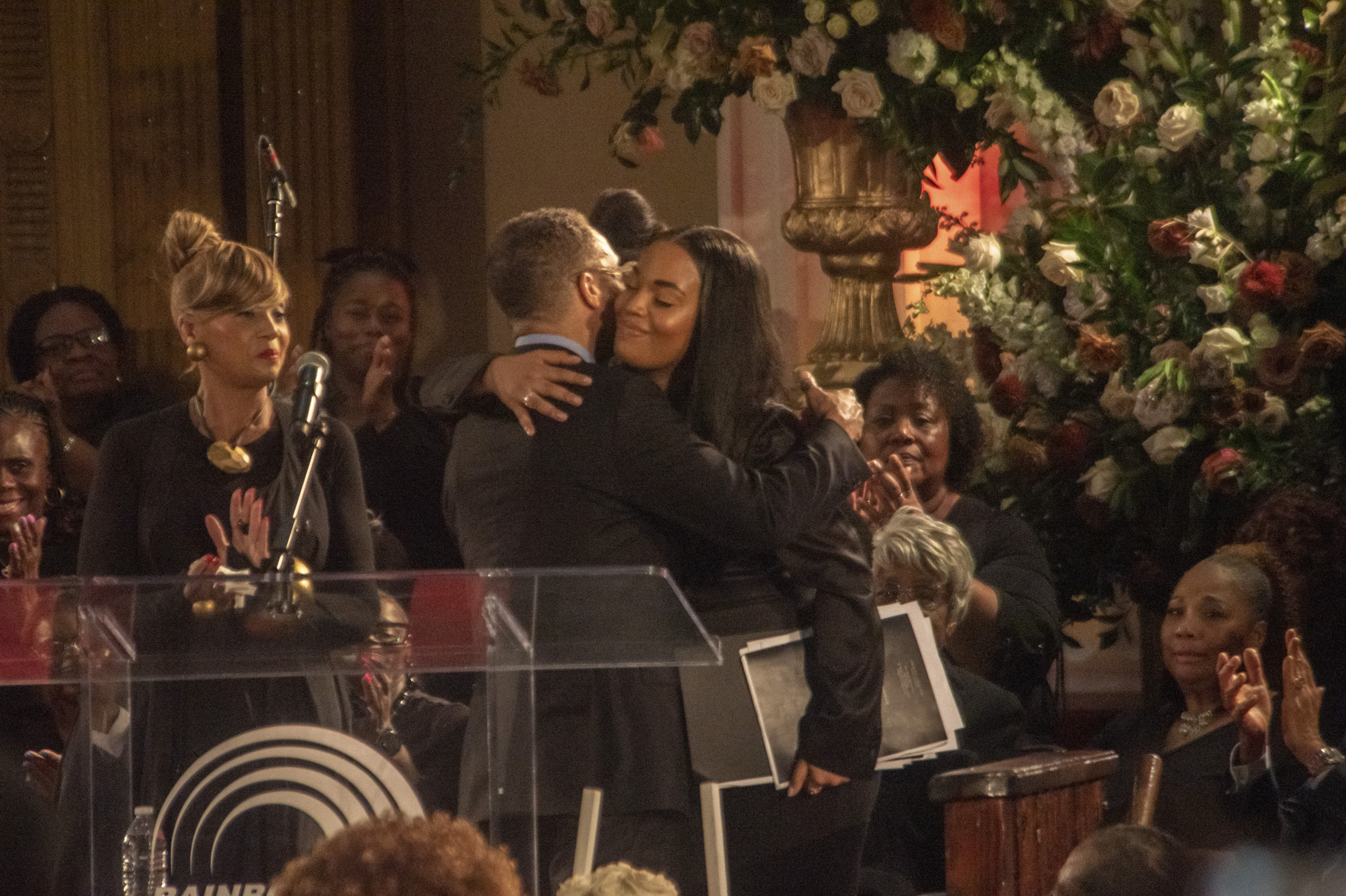
Jesse Jackson’s immediate family, his wife Jacqueline Jackson, and his children Jesse Jackson Jr., Jonathan Jackson, Jaqueline Jackson II, Yusef Jackson, Santita Jackson, and Ashley Jackson set the tone throughout his funeral. Each of them shared their own stories about their relationship with their mighty father.
Jesse Jackson Jr., who is currently running for election to the U.S. House of Representatives, told stories of his conversations with his dad while he was incarcerated. Jaqueline Jackson II shared with everyone her stories of how the family took care of the ailing patriarch amid his long battle with progressive supranuclear palsy.
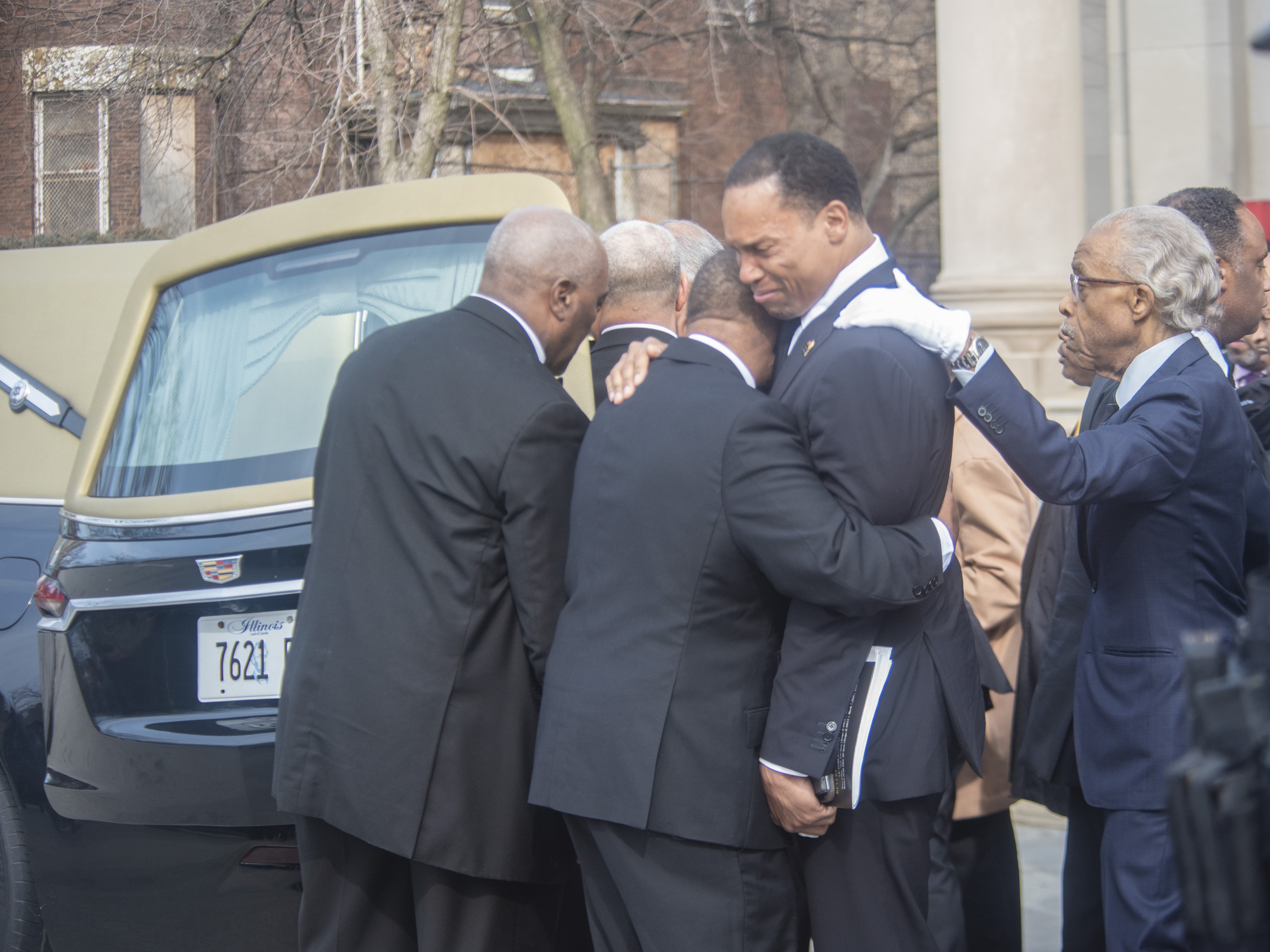
Many dignitaries and celebrities were among the well-wishers in attendance. From old friends like the Chicago-bred Mr. T to spiritual successors like Rep. Justin J. Pearson and Rev. William Barber were in the house to give their final farewell. Rev. Al Sharpton was also in tow with the family, comforting his sons and daughters until they brought his casket inside the Cadillac hearse.
Among many things, the service was a tribute to the selflessness that many of Jackson’s friends, family, and colleagues have attested to for decades. Chicago-based Rev. Reginald W. Sharpe of the historic Fellowship Missionary Baptist Church recalled how he helped the church secure three loans to help fund the church’s construction after facing dire repercussions for having Dr. Martin Luther King speak there when it was frowned upon by the City of Chicago.
Comedian/Actor Chris Tucker was a welcome surprise to the audience, bringing joy to the sorrow-filled family. He recalled winding up on a plane with Jackson after meeting him, traveling across the world to two separate funerals.
Rev. William J. Barber II, who traveled 12 hours to attend the funeral, fondly remembers Jackson as a mentor. Many aspects of his anti-poverty work and calls for nonviolent direct action stem from the influence of Jackson and his predecessor, the late Dr. Martin Luther King Jr’s “Poor People’s Campaign. He and Jackson Sr. were arrested together in 2021 in Washington, D.C., during a protest for voting rights. He was arrested again with his son, Congressman Johnathan Jackson, in 2025 for voting rights as well.
“Last time I got arrested was with Rev. Barber. I didn’t have his phone number, but I got his social security in Washington, D.C., fighting for the right to vote,” Reverend Johnson Jackson recalled during his expression for his late father.
The service reminded him of a quote Jackson once said about how poverty, healthcare, and living wages should be a unifying factor despite racial differences. “What I thought about today is how Jesse said, ‘If a Black person can’t make enough money to pay their light bill, a white person the same, and an indigenous person the same, asian person the same, a Latino person the same, we’re all Black in the dark. So we need to unite and fight for the light. The light of justice, the light of living wages, the light of healthcare. That way of profoundly taking something complex and putting policy change that we do in the suites in the language for the streets is one of his greatest legacies,” he said.
Barber says he was able to balance being “unashamedly Black” while being caring and loving enough to bring in other ethnicities into his Rainbow Coalition. To him, that legacy can’t be forgotten. “We can’t forget that legacy. We would do an injustice to Jesse if we just reduced him to just a black leader. Jesse wanted to bring the midwestern farmer together with the poor folk from the delta, people from the slums, Latinos, people on the reservations, wherever. He knew that’s where the power lies,” said Barber.
Rev. Jesse Jackson’s global impact was on full display during the Homegoing. As the Honorable Felix Antoine Tshisekedi Tshilombo, President of the Democratic Republic of Congo, spoke, Meyi Heritieer was one of the few who traveled from the country who held their flags up in homage. Jesse’s humanitarian work in African countries, such as Soweto, Congo, and South Africa, inspired Africans across the continent.
“Jesse Jackson is a real model for Africa. He gives us the courage to stand and fight for our freedom. That’s why we know about him. From East, North, South, he was with us from the beginning of the apartheid fighting until today, we are free. That’s why we are here to celebrate this legacy, and we still continue his legacy,” he said.
The endearing icon Stevie Wonder was one of Jackson’s closest friends. His spirit-warming, politically charged musical number felt particularly poignant as songs like “As”, which he performed, sounded as timely as they did in 1976.
Despite his death, Jesse Jackson Sr.’s optimism and hope were still brimming from his family and within the crowd. “We used to say, ‘ Run, Jesse Run.’. Well, I heard something the other day, Ma. When the gates of heaven opened up, I heard,’ Run Jesse run. And then I looked down, and all I could see was ‘Rise Jesse Rise’. And then I heard heaven say ‘Rise Jesse ‘Rise,” roared Congressman Jackson.
And even in Jackson’s death, Townsend says that his messages of keeping hope alive and “I Am Somebody” have become more relevant. Particularly, at a time when White supremacy and constant attacks on the very civil and economic rights that Jesse fought for have grown more flagrant under the Trump administration.
“Just in the last few years, the idea of keeping hope alive, I am somebody, those things have become more relevant as time goes by, not less. All of that, all of his campaigns, the poor people’s campaign is very important now, more so than ever,” Townsend said.