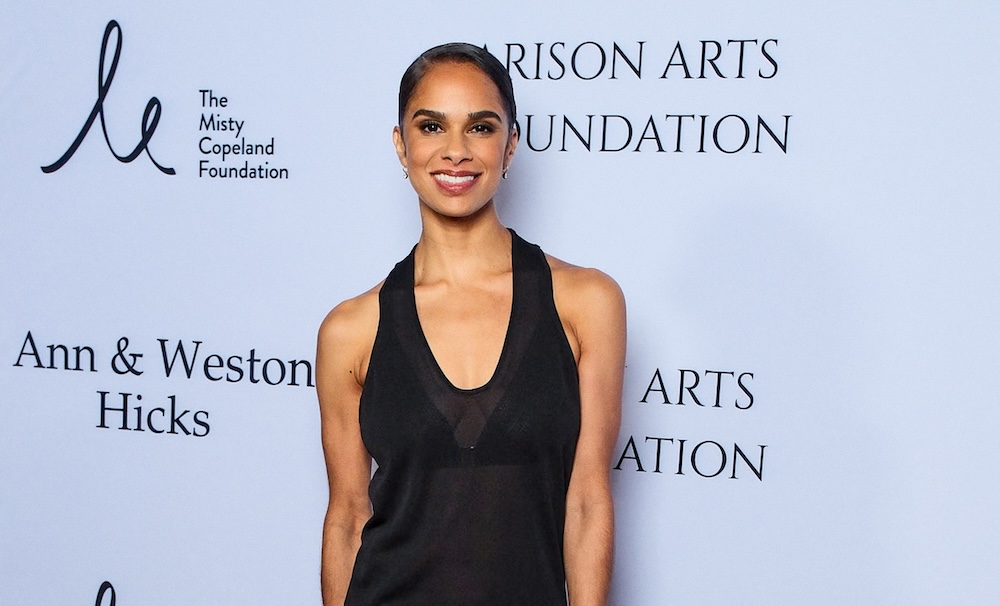
“There is no dance without dance education.” That’s the quote Misty Copeland declared at the first annual Spring Benefit for the Misty Copeland Foundation, held at The Pool in New York City.
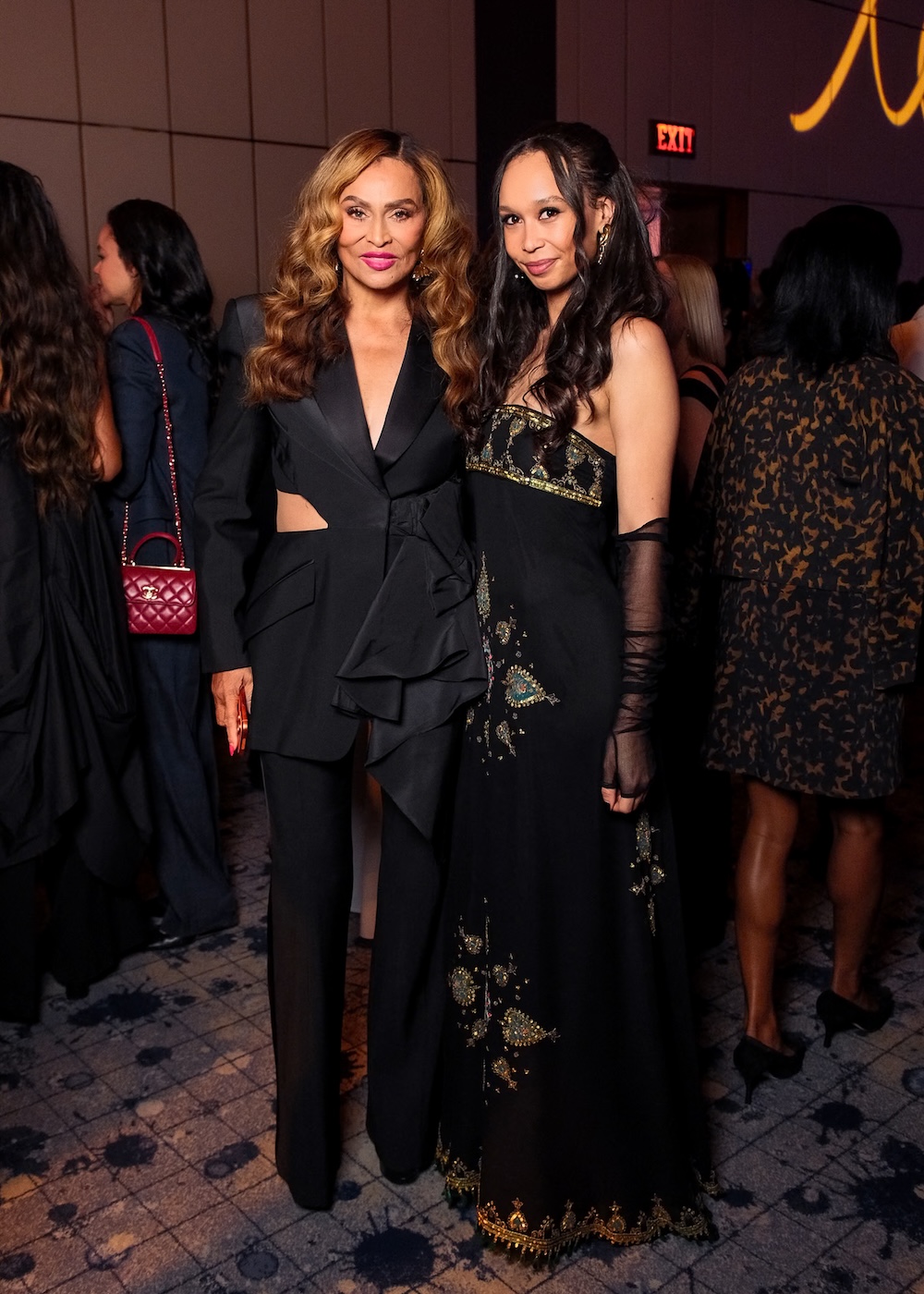
The room was luminous and well-appointed, with other dance legends like Debbie Allen and fellow special guests Tina Knowles, Deborah Cox, Robin Roberts and many others who were there to witness Copeland’s declaration to the night, a doctrine that resists the romanticism of performance and insists on the infrastructure of instruction.
The benefit arrived in the afterglow of Copeland’s farewell from the stage, a moment that could have easily calcified into legacy. Instead, it has been reoriented toward continuity. What does it mean, the foundation seems to ask, to move from being the exception to building the system? The answer lives in its three flagship programs: Be BOLD, Be BOLD Next Steps, and Be BOLDER — which together read as a philosophy of access stretched across a lifetime.
Inside the room, that philosophy was rendered tactile. Teaching artists and musicians performed as evidence of the ecosystem the foundation sustains. A short documentary traced the quiet rigor of a day in the life of a Be BOLD student: the repetition, the discipline, the fragile yet growing confidence of a child learning that their body can be both an instrument and an archive. It is here, in these early encounters, that the quote reveals its full weight. There is no dance without the conditions that make a dancer possible.
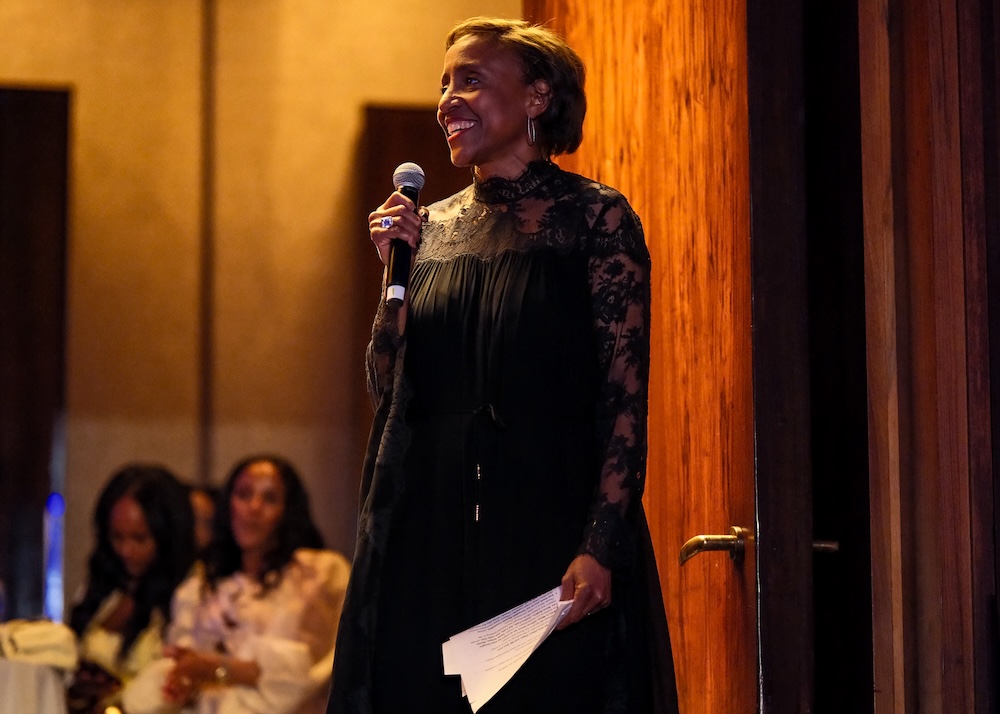
Executive Director Caryn Campbell, stewarding a deliberately lean team, spoke of expansion with both ambition and restraint. The foundation now operates across dozens of sites, employing teaching artists who are trained not simply to replicate ballet, but to reimagine it—“so that it wasn’t traditional ballet,” as she explained, but something responsive to the communities it enters.
Their reach extends from early childhood classrooms to formal pipelines, where Be BOLD Next Steps students—some as young as eight—train at institutions such as Dance Theatre of Harlem and the Ailey School, with their tuition, apparel, and transportation fully covered.
Within the Foundation, teaching in the Be BOLD program emerges as a reciprocal act of transformation, one that not only shapes students but reconstitutes the artists guiding them, as teaching artist Regina Ferguson reflected, “Teaching for BE BOLD has given me an opportunity to evolve as a creative… I have truly blossomed and transformed as a person. Our students, staff, admin, musicians, and teaching artists are truly some of the most inspiring people I know,” positioning pedagogy itself as a site where community, creativity, and personal becoming converge.
And then there is Be BOLDER, perhaps the program that most elegantly disrupts expectations: a ballet-based movement initiative for adults over 50 in Harlem and the Bronx, born of the isolation of the pandemic and a recognition that artistry does not belong exclusively to the young. Movement, in this context, becomes both medicine and memory, a way to restore balance, yes, but also to rebuild community where it has frayed.
If the benefit functioned as a celebration, it was one tempered by clarity. Campbell describes the evening as part of a broader campaign to raise one million dollars in support of these programs, an effort to expand not just funding, but the foundation’s circle of belief.
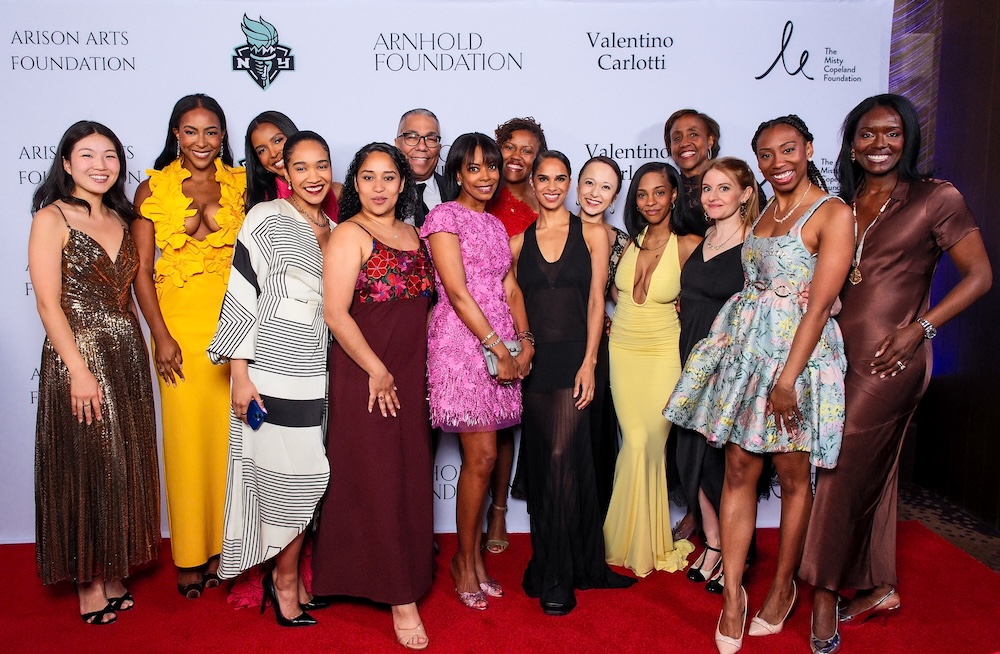
The room reflected that widening: an intergenerational, cross-disciplinary coalition of supporters who understand that culture is not sustained by applause alone. A benefit committee and group of co-chairs, anchored by a cohort of young women including young leaders Justice Faith, Nia Faith, Julie Kim, Rechelle Dennis, Sophia Dennis, and Maya McHenry, has emerged as both engine and ethos of the evening, translating admiration into action as they spearhead fundraising and shape the architecture of a benefit designed to sustain the future of dance.
“It’s a privilege to support in any way I can,” said Valentino Carlotti, a member of the Board of Directors. “She’s special, her vision is special, and more than that, she delivers.” The sentiment, while personal, echoed a broader truth about Copeland’s transition from icon to institution-builder. Delivery here is measured not by performance but by pathways.
For Isolde Brielmaier, the stakes are both intimate and expansive: movement is so important, it’s good for the spirit and good for the body, but also imparts a sense of freedom. What Copeland is doing, she noted, is extending that freedom outward into communities that have long been positioned as audiences rather than participants. It is a quiet but radical redistribution of who gets to belong inside the language of dance.
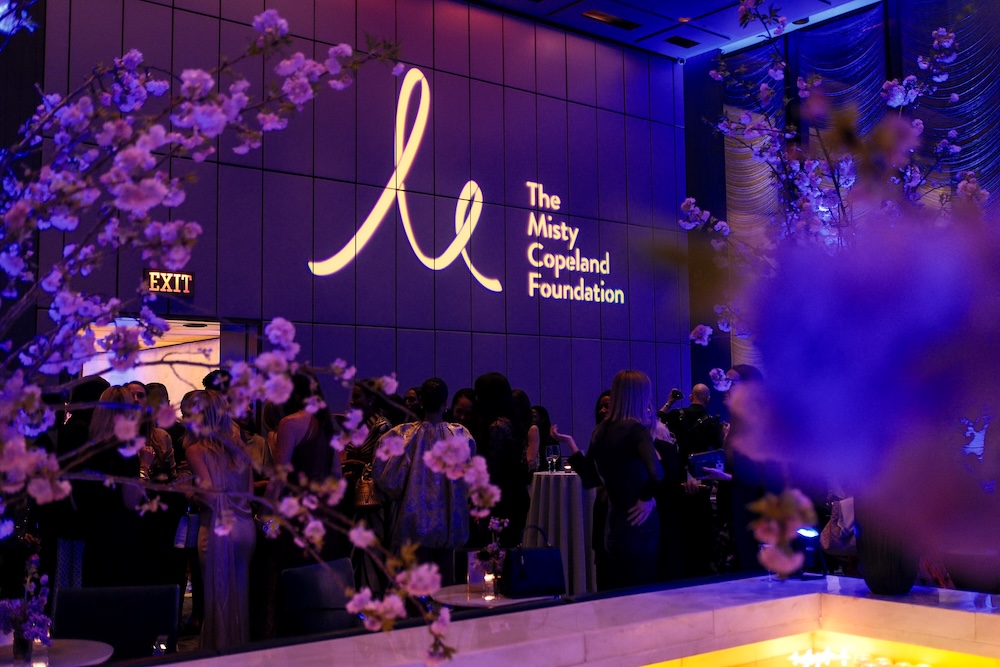
By the time the DJ set began, the thesis of the evening had already settled into the room. Dance, in its most visible form, is often mistaken for transcendence. But what the Misty Copeland Foundation insists upon is something more grounded, more demanding: that transcendence is built. It requires teachers, transportation, and tuition. It begins long before the spotlight, and, if done correctly, continues long after it fades.
There is no dance without dance education. And at The Pool, that truth was not just spoken — it was funded, expanded, and set, quietly but unmistakably, into motion.