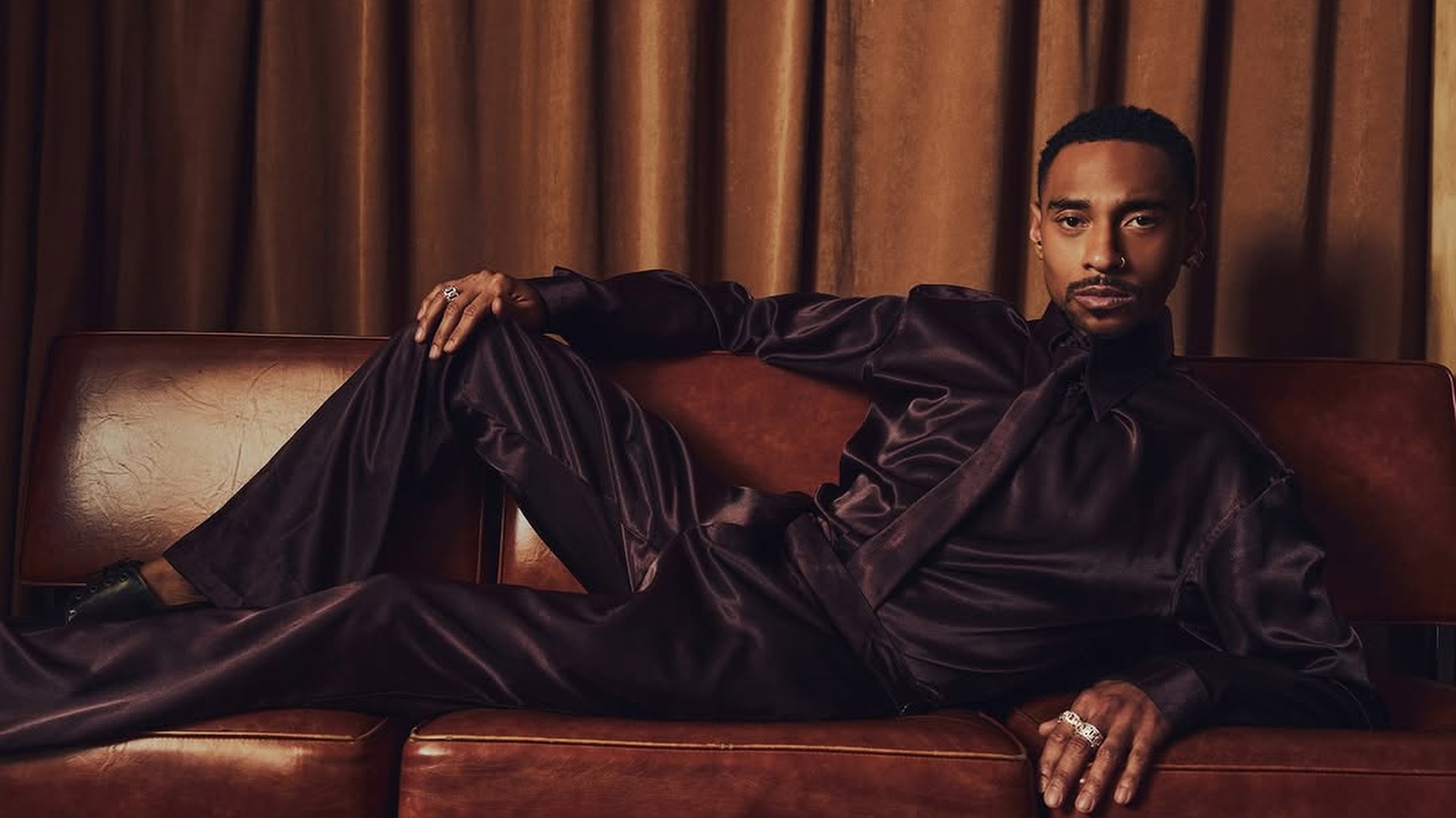
R&B’s resurgence has been a main character in the zeitgeist of internet discourse, and today, we’re talking about what’s definitely a rite of passage for artists: the sultry lean-back pose. Recently, the timeline sparked a discussion after Chris Brown dropped the cover art for his project BROWN. The internet then noticed the similarities between his and singer Durand Bernarr’s album BERNARR.
As the discourse began, R&B connoisseurs took a trip down memory lane for a digital history lesson on the classic lean-back pose that many musical pioneers before them have sported as a symbol of good music.
The lean back pose has become a defining feature on R&B album covers over the years, think of Lionel Richie’s “You Are,” single cover, Luther Vandross‘ Give Me The Reason, and of course Michael Jackson’s Thriller. The artists continue to embody a sense of confidence and smoothness that clearly resonates. This relaxed posture, often characterized by a reclined position, serves as a visual metaphor for the themes of love, heartache, and self-assurance that reign in R&B.
The roots of this signature pose can be traced to the cultural movements throughout the years, when R&B artists began carving out their identities in the music industry. Iconic figures like Teddy Pendergrass and Aretha Franklin made the lean back pose famous with their groundbreaking album covers.
The lean-back pose encapsulates a relaxed cool that speaks to the intimate yet confident nature of R&B. This posture allows them to convey vulnerability mixed with confidence, illustrating the emotional complexity that R&B is known for. It invites listeners into a space of intimacy and authenticity, reflecting the emotions fans will feel throughout the song or project.
As the digital era blossomed, social media platforms like Instagram, people are chatting and taking a trip down memory lane about these sacred recipes in R&B. Album cover art became an extension of an artist’s identity, and the lean back style effortlessly blends comfort with charisma. It allowed these artists to create a signature look that fans would associate with their music.
The imagery thus becomes more than just artistic. By drawing from cultural roots and adapting to contemporary aesthetics, this pose remains a timeless expression of the genre’s essence, continually inviting new generations of listeners to fully engage with the art of R&B music.
The lean-back pose has always been a quintessential symbol of R&B. As we’ve explored, this signature posture is not merely a casual stance; it embodies the duality of vulnerability and confidence in the music.
As artists continue to innovate and define their identities, the lean back pose serves as a timeless reminder of the genre’s roots. It’s filled with nostalgia while seamlessly adapting to modern aesthetics, thereby maintaining its relevance in the digital era. The resurgence of interest in R&B has reignited appreciation for these visual symbols, connecting new audiences with the genre’s emotional depth.
Ultimately, the ongoing discussion around this iconic posture affirms its status as an integral part of the R&B narrative, ensuring that both the past and the present coexist harmoniously in shaping the genre’s future.