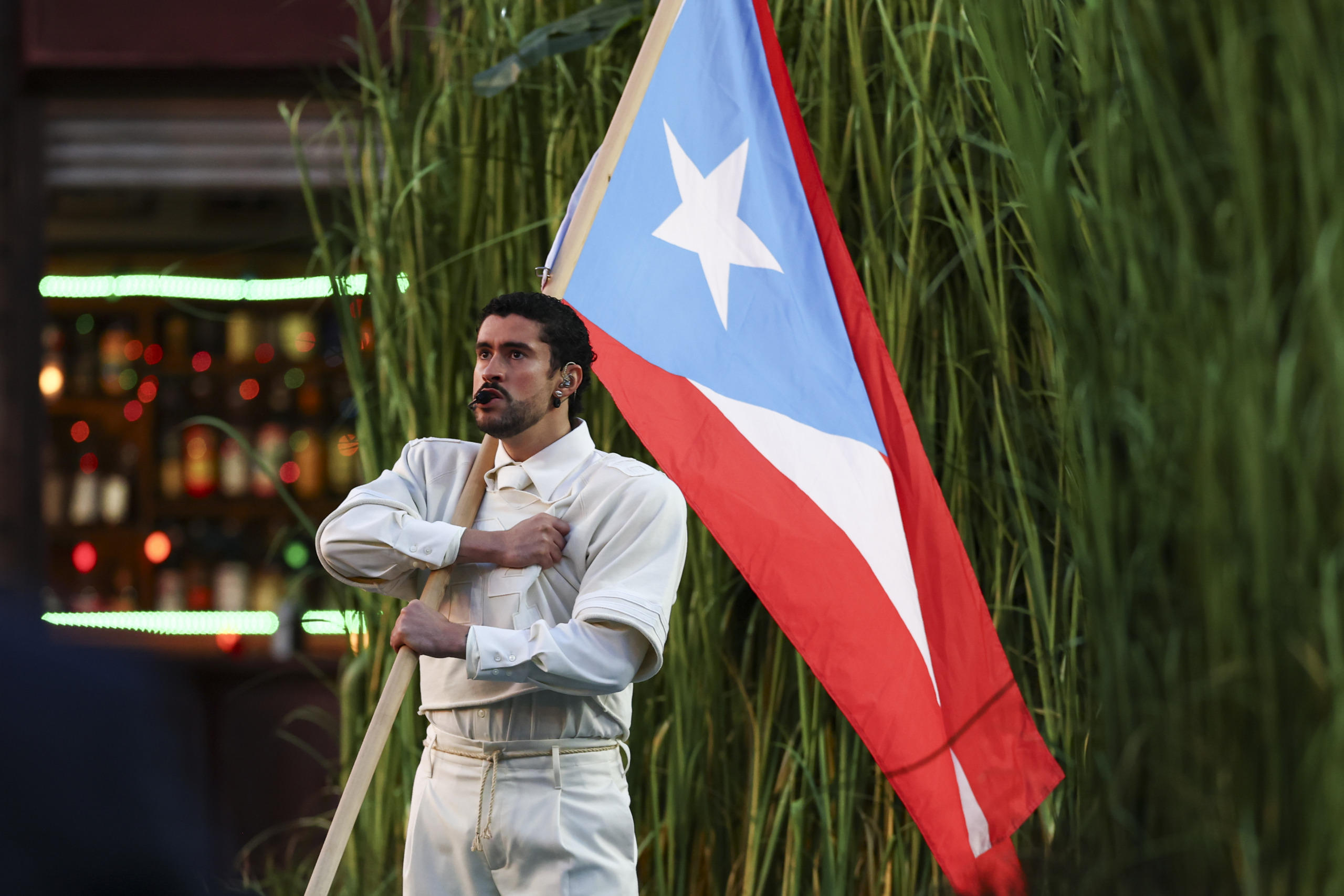
Before the lights cut on and the bass rattled living rooms across the country, something bigger was already in motion. When Bad Bunny took the stage at the Super Bowl halftime show, it wasn’t immediately clear what kind of moment we were about to witness — only that it felt intentional. The Puerto Rican superstar, known for bending genres and breaking borders, arrived at America’s biggest sporting event with something to say, even if he didn’t say it right away.
By the time the first beat hit, the message was unmistakable: this was culture on full display, legacy unfolding in real time — proof that the Super Bowl stage can hold more than spectacle; it can hold truth. That truth has been years in the making. Bad Bunny’s rise reflects a generational shift in how superstardom is built, rooted not in industry formulas but in community and connection. Long before sold-out stadiums and GRAMMY stages, Benito Antonio Martínez Ocasio carved his own lane from the ground up, using SoundCloud as a launchpad while working at a grocery store in Puerto Rico; those raw, unfiltered uploads traveled far beyond the island, with his breakout track “Diles” eventually surpassing one billion streams — a reminder that early fan belief, not gatekeepers, is often the clearest signal of who’s built to last.
Here are some of the biggest moments and cultural Easter eggs that made Bad Bunny’s Super Bowl performance one for the history books:
A Love Letter Disguised As A Block Party
Bad Bunny opened with “Tití Me Preguntó” — which translates to “Auntie Asked Me” — and instead of kicking things off with just fireworks and flash, he transformed the field into La Marqueta (“The Market”), a vibrant, working-class neighborhood pulsing with life. Barbers trimmed fades, food vendors served flavor, jewelers shined under stadium lights. It was a visual ode to Puerto Rican entrepreneurs and immigrant communities who quietly shape America’s cultural backbone. Not nostalgia — recognition.
When The Crowd Became The Co-Stars
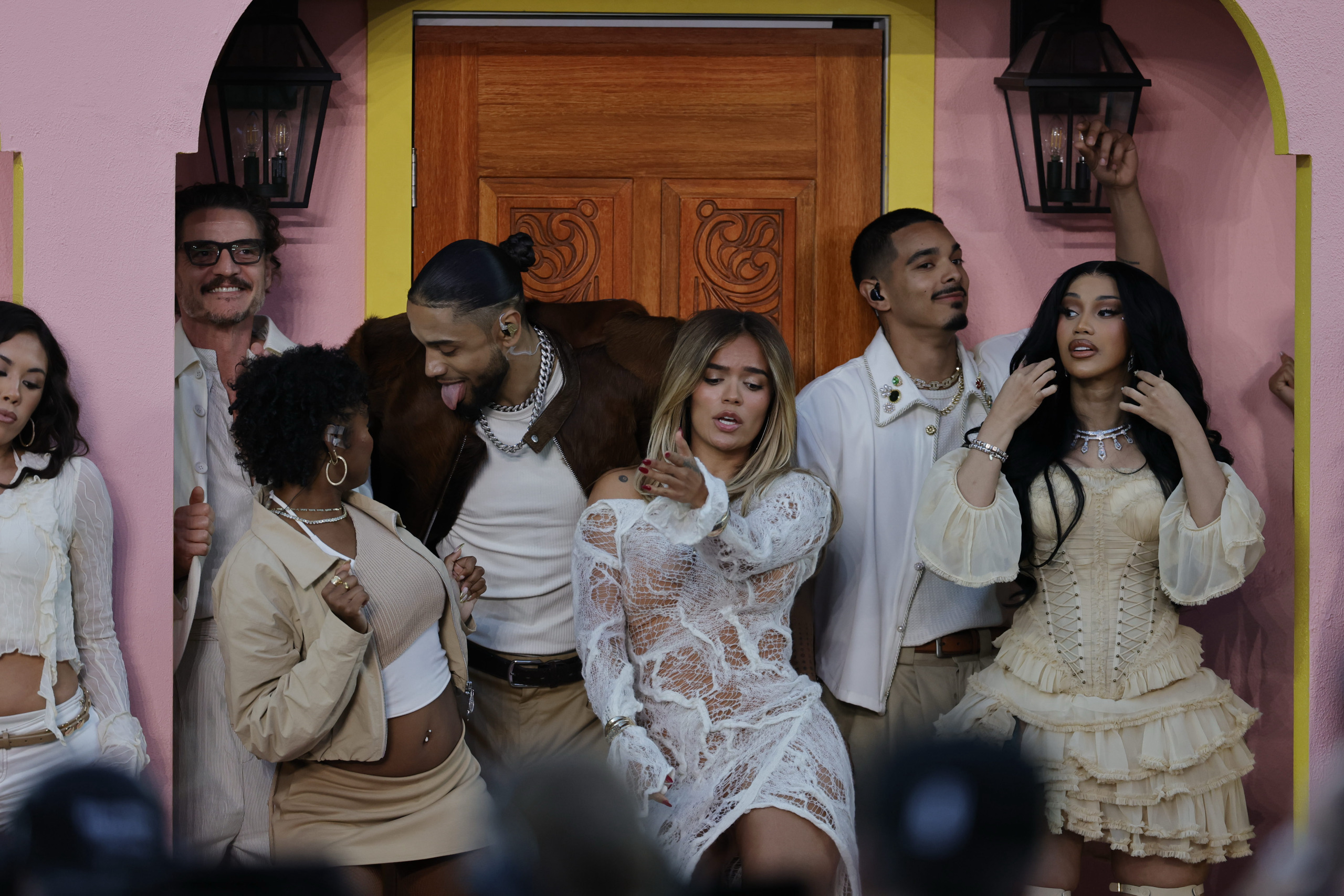
During Bad Bunny’s performance, the camera panned and suddenly the line between performer and audience disappeared. Cardi B danced without pretense. Pedro Pascal smiled like a proud cousin. Karol G, Jessica Alba, and Alix Earle moved freely in the moment. It felt less like celebrity spotting and more like a cultural cookout — everybody welcome, everybody seen.
When He Gave The Crowd And Himself A Pep Talk
As dozens of violinists rose from the sugarcane fields, filling the stage with the soaring sounds of “Monaco” and transforming the arena into pure cinematic magic, Bad Bunny paused. Facing the camera, he spoke in Spanish, giving both himself and everyone watching a moment of truth, a reminder that belief in yourself is the first step toward everything.
“Mi nombre es Benito Antonio Martínez Ocasio, y si hoy estoy aquí en el Super Bowl 60, es porque nunca, nunca dejé de creer en mí. Tú también deberías de creer en ti. Vales más de lo que piensas. Confía en mí.”
Translation: “My name is Benito Antonio Martínez Ocasio, and if I’m standing here today at Super Bowl 60, it’s because I never, never stopped believing in myself. You should believe in yourself too. You’re worth more than you think. Trust me.”
Passing The Dream Forward
Bad Bunny brought one of his GRAMMY Awards to the #SuperBowl and gave it to a kid during the halftime show
pic.twitter.com/Rw1OGrP7u3
— Kurrco (@Kurrco) February 9, 2026
One of the night’s most emotional beats came when Bad Bunny appeared to hand a GRAMMY Award to a young boy watching from his living room. While sources clarified the child was an actor, fans couldn’t help but connect the imagery to broader conversations around immigrant children and visibility. Intentional or not, the symbolism resonated. It echoed Benito’s own journey — from a kid in Puerto Rico with big dreams to a global icon — and reminded viewers that greatness often starts in ordinary rooms.
A Ceremony In White
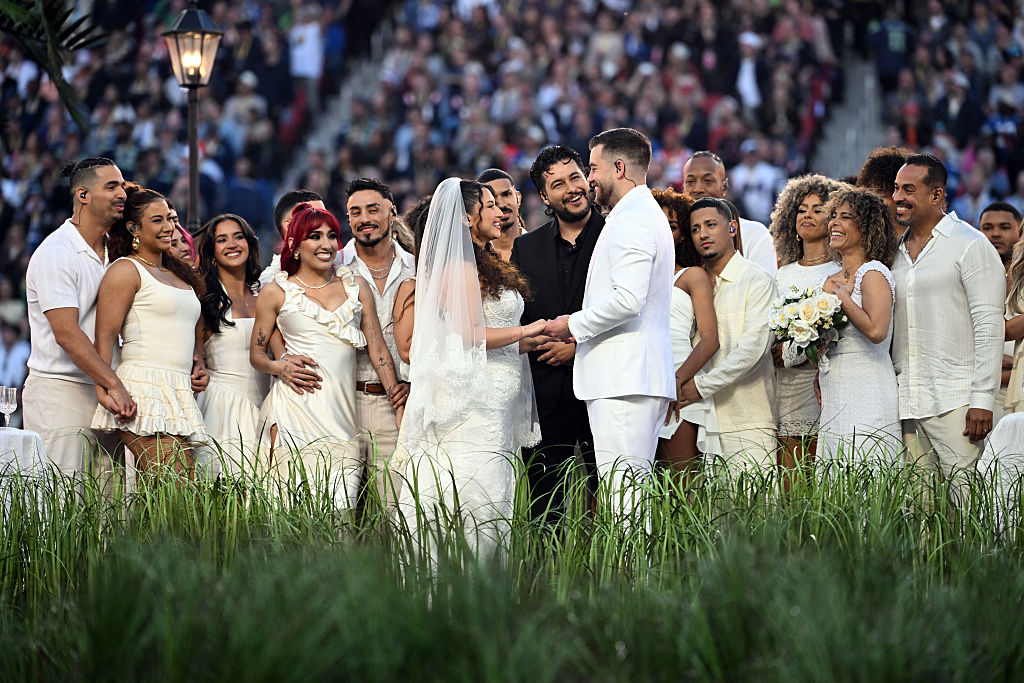
Midway through the performance, the stage shifted into an all-white “wedding” sequence that felt ceremonial rather than theatrical. It was a visual metaphor for unity, love, and cultural convergence — a quiet pause that set the tone for what came next. In a move no one saw coming, a real-life couple was married on screen during the show. The pair had reportedly once invited Bad Bunny to attend their wedding. Instead, he turned the Super Bowl into their altar — a grand, generous gesture that turned spectacle into intimacy.
Star Power On Stage: Lady Gaga and Ricky Martin Shine
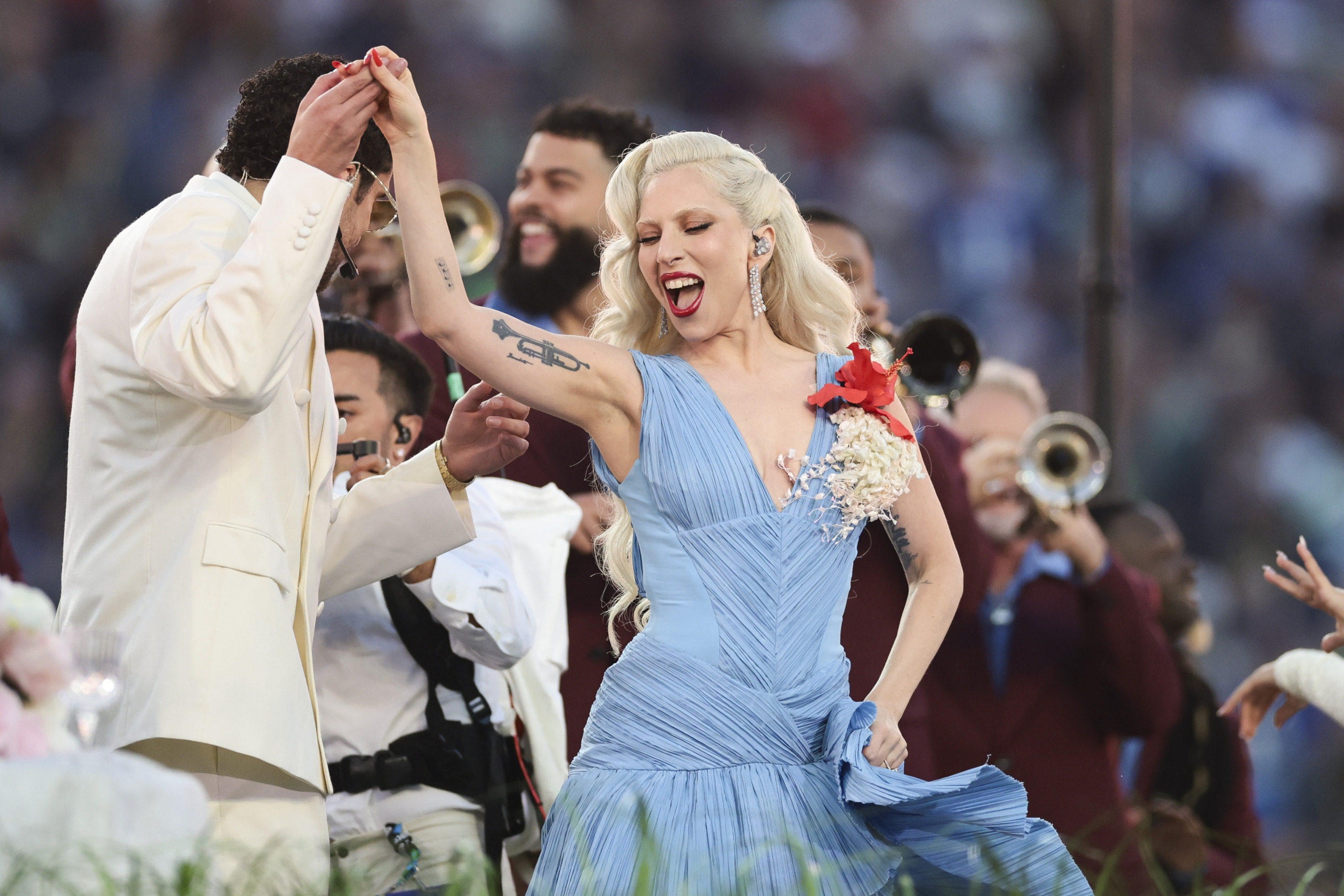
Lady Gaga emerged in a powder-blue gown as Bad Bunny’s “something blue,” delivering a reimagined version of “Die With a Smile.” Reworked with Latin rhythm and soul, the performance bridged worlds — pop and reggaetón, English and Spanish — without losing authenticity on either side.
Ricky Martin lit up the stage with “Lo Que Le Pasó A Hawaii” (“What Happened to Hawaii”), shining a spotlight on the islands’ party-filled history with America while bringing charisma, rhythm, and unapologetic Puerto Rican pride.
Power Lines And Power Moves
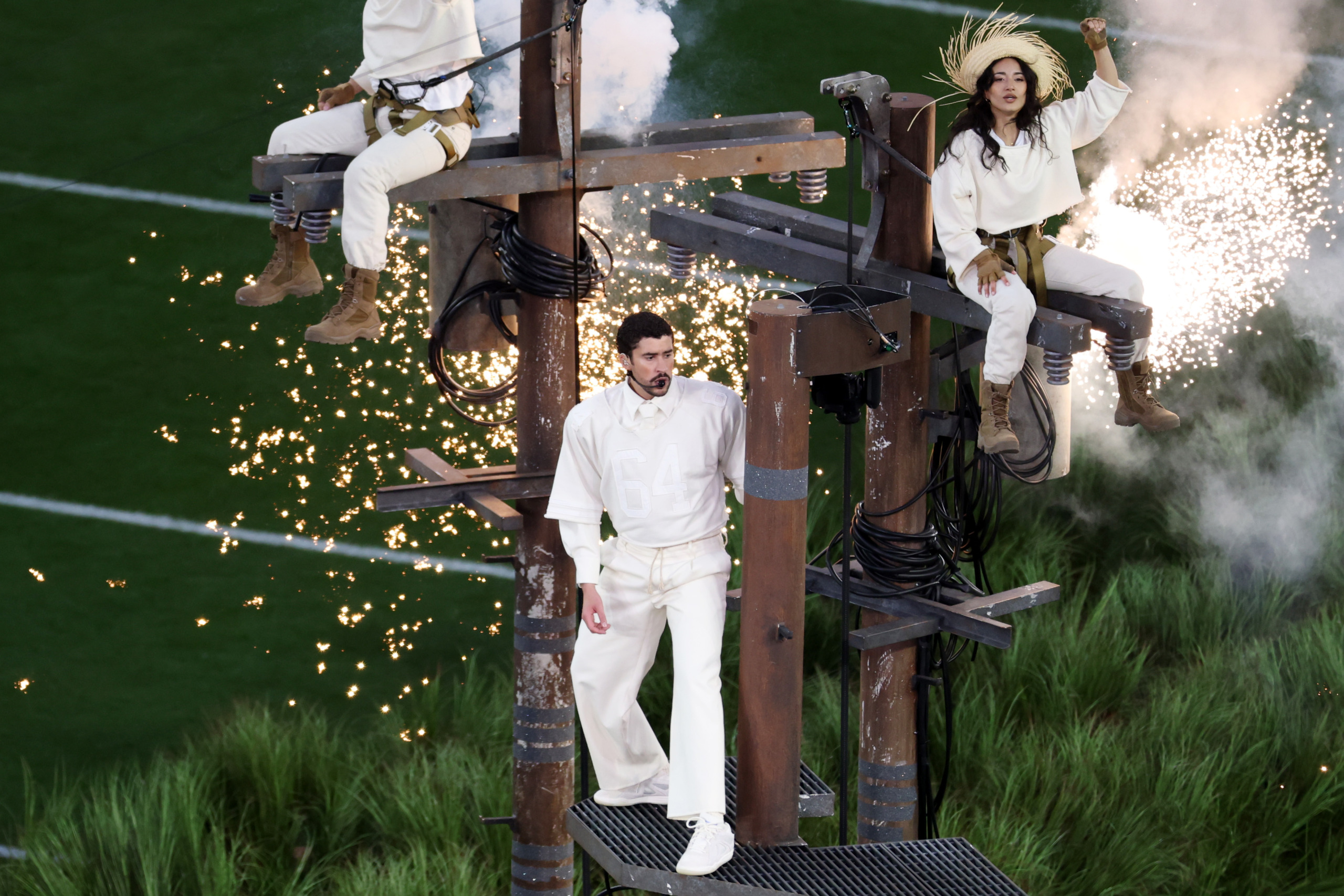
At one point, Bad Bunny stood atop a power pole — an unmistakable reference to Puerto Rico’s ongoing power outages and infrastructure struggles. It was subtle, but sharp. A reminder that even amid celebration, the reality back home remains part of the story.
A Brooklyn Salute
Sharp-eyed viewers caught an appearance by Toñita, owner of Brooklyn’s legendary Caribbean Social Club. Her presence was an Easter egg for those who know — a nod to diasporic spaces that have long nurtured Caribbean culture far from home.
A Final Message That Hit Deeper Than Music
As the final notes faded, Bad Bunny left the world with words that lingered long after the stage went dark: “Lo único más poderoso que el odio es el amor” — “The only thing more powerful than hate is love.” On the biggest stage imaginable, he turned that sentiment into a statement, proving that love, especially when rooted in culture, still has the power to move millions.
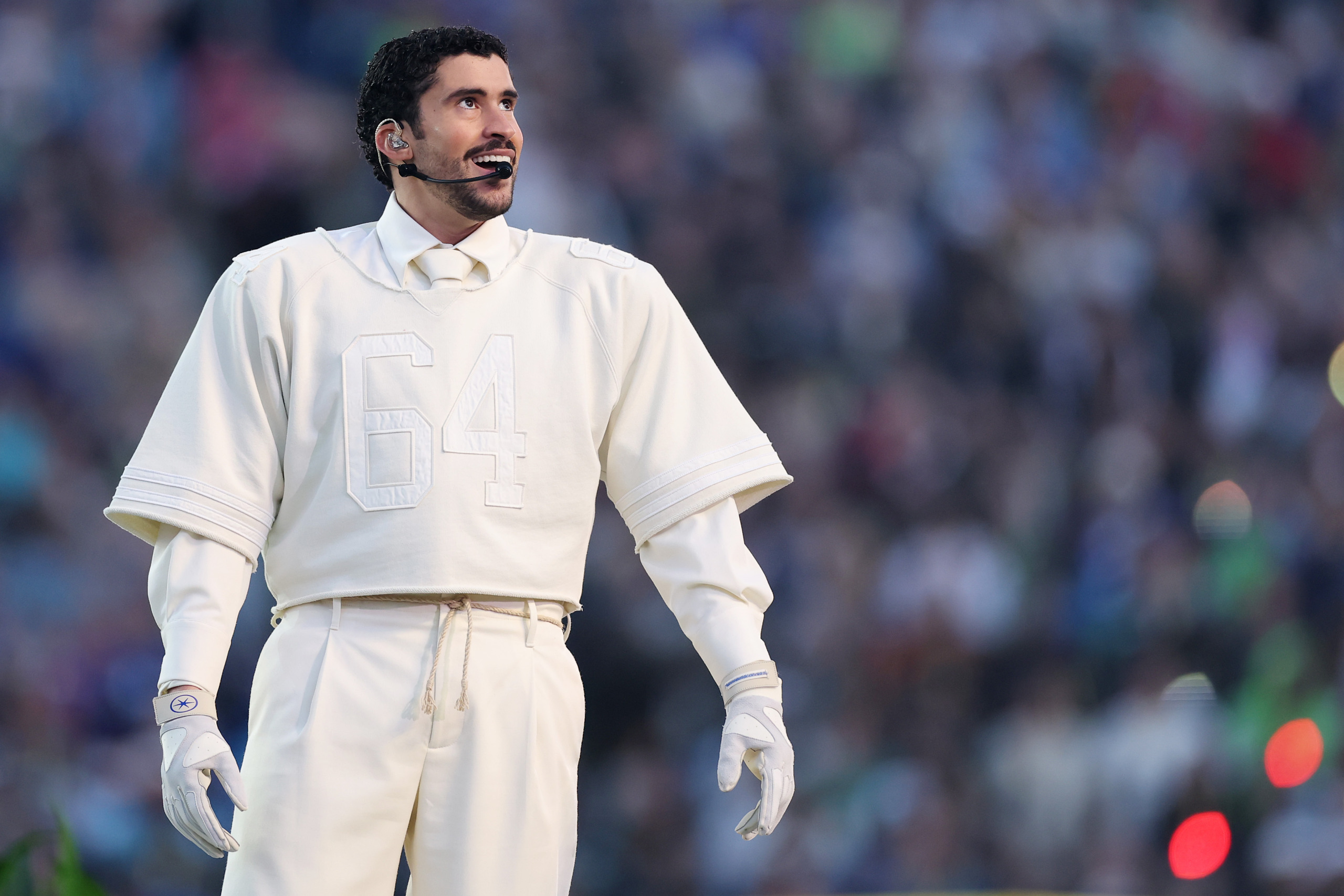
The Super Bowl halftime stage wasn’t a peak; it was a checkpoint. From grocery aisles to global arenas, Bad Bunny didn’t just beat the odds — he built a new playbook, one crowd and one culture-shifting moment at a time.