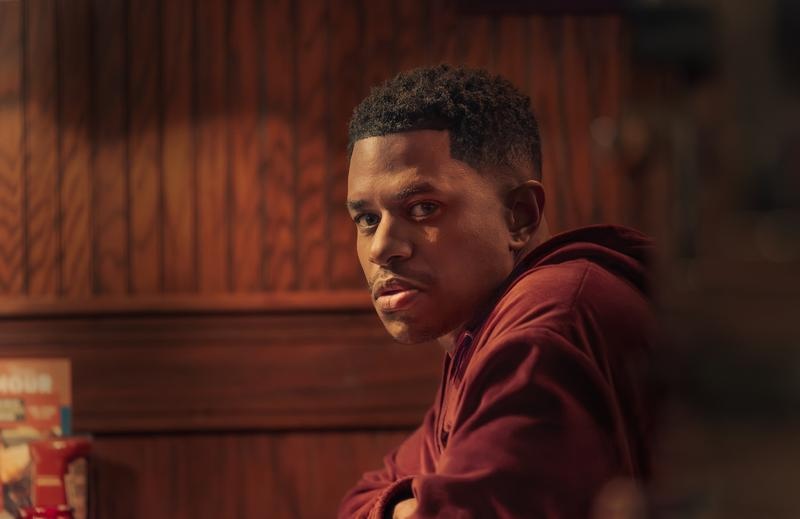
You could scroll past FX’s The Beauty on Hulu, thinking it’s just spectacle, showing a virus that turns ordinary people into an alleged perfected version of themselves. The entire body changes, and the transformations are graphic, excessive, and sometimes grotesque. It plays like satire about filters, injectables, and our obsession with cosmetic shortcuts. But beneath the body horror is a far more intimate question: what happens when beauty becomes currency? The answer isn’t any less confusing.
One of the show’s most unsettling arcs follows Jeremy, a socially isolated man who feels invisible in a culture that equates desirability with worth. After trying surgery and noticing nothing has changed, he gains access to the virus that gives him everything he believes he wants. Beauty becomes a means of access to sex, validation, and visibility, and for a moment, it appears to fix everything. It does not.
Jeremy’s character is rooted in incel culture. Incel, short for involuntary celibate, describes men who believe they cannot form romantic or sexual relationships despite wanting them. Though the term is often reduced to internet rage, the largest academic study of this community, surveying 561 self-identified incels in the United States and the United Kingdom, found high levels of loneliness, poor mental health, and social isolation.
Jeremy Pope leaned into that nuance while preparing for the role. “I was able to do some research and find videos and old Twitter accounts of these men who consider themselves incel, and just try to get into the mind of their psyche of where they are in this life, and what they’re longing for or looking for, needing,” he explained in an interview with EBONY.
What he uncovered was not simply hostility.
“A lot of it was to be seen, was to be loved, just to be valued for what they are and what they’re bringing.”
That research changes the game for what the show gives viewers. It’s deeper than sex, access, and power. It is interrogating invisibility.
Black men who solely search for recognition often exist within a narrow cultural script. The world seems only to pause when strength is praised, vulnerability is policed, and physical presence is elevated above emotional or intellectual depth. When desirability becomes the loudest validation available, identity narrows.
What makes The Beauty culturally resonant is its juxtaposition of male insecurity with the scrutiny of women’s bodies. Women awaken youthful and thin. Men awaken hyper masculine and sculpted. The fantasy exposes an uncomfortable truth that beauty standards may be gendered differently, but both rely on unrealistic expectations rooted in external validation.
Historically, Black women have borne the brunt of comparison to white European ideals. The pressure on Black men often hides behind praise such as athleticism, dominance, and sexual prowess. Yet admiration can slip into reduction, turning men into archetypes rather than individuals with nuance.
Jeremy’s transformation does not quiet his resentment. It makes it loud and dangerous. As Pope reflected, “I think it’s easy to play the good guy, but it asks more of you as a human to understand the motives of someone who is a little bit more nuanced and complex.”
What we see in The Beauty isn’t even stuff heard in the barbershop, but it does force us to keep asking, “How far are you willing to go to achieve perfection and what are you willing to lose, risk, or gain?”
The Beauty may be unhinged television, but incel culture, fetishization, and unsupported beauty standards are painfully real. They say beauty is pain, but Jeremy Pope’s performance makes one thing clear: suffering should not be the cost of being valued.
The Beauty‘s final two episodes air starting February 25 on F/X and streaming on Hulu.