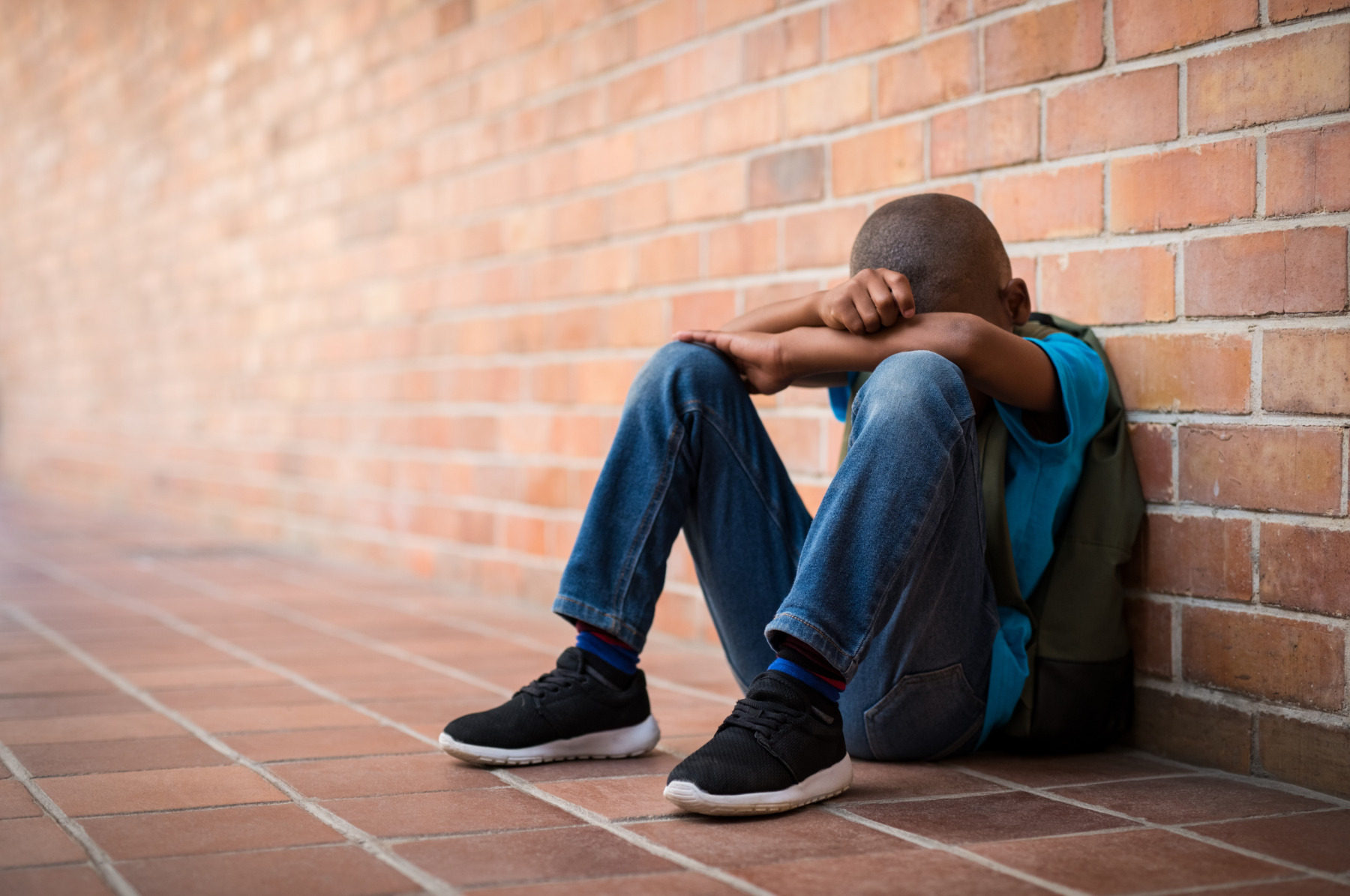
When a video of a mother, Corshawnda Hatter, and her 9-year-old son being beaten by a group of children outside a Chicago elementary school began circulating online, it forced a difficult question into public view: What does bullying look like now and why does it feel more violent, more public and harder to stop than ever before?
As Hatter was walking home from picking up her son and daughter from Orville T. Bright Elementary School, they were viciously attacked by a group of children in the area and recorded. The distressing video showed the mother and son being punched, pushed, and stomped on. “I feel like I failed my kids,” Hatter wrote on social media.
Since the attack went viral, seven of the children were charged with battery. According to the Chicago Police, they were released from custody and referred to counseling services. As soon as the video circulated, outrage grew from local to nationwide. Parents and supporters gathered at the school the next day to rally support for Hatter.
When it comes to bullying in schools, experts argue that bullying in the 2020s has gotten worse than in past generations of students. Former school principal and educational leader Femi Skanes, Ed.D., recalls being a student in her formative years in Chicago when school bullying was merely cracking jokes with each other. However, it was understood that there were boundaries. “In my experience, teachers and staff would let you do it for a second or two, but when things went too far, there was immediate intervention,” she told EBONY.
Still, in the age of social media, things have shifted tremendously. Dynel McKinnley is a Chicago mother who grew up being bullied herself. She recounts a recent incident at a school where her son, who is autistic, attends. Another boy was violently attacking him while the kids were in the classroom, which was posted on TikTok. “The little boy was on top of my son, saying, ‘I’m finna fold him.’ He was trying to beat him up on camera, and it got posted on TikTok,” McKinnley said.
By her account, she told the school about the attack on her son, and they claimed they spoke to the child and their parents. But another incident allegedly occurred, and McKinnley says it was revealed that the parents of the boy who attacked her son were never notified.
According to Skane, 75% of these issues in schools can be solved with the help of committed and caring adults. Compared to the past 20 years, she says, schools need adults trained in conflict resolution, relationship-building and communication skills. “You have to connect before you correct,” she said. “I do think that leveraging willing and committed adults is always a strong practice.”
Eugene Garmon, M.S., LPC, and Assistant Director of Counseling Belonging and Inclusion Initiatives at Arcadia University, says a big part of why bullying culture is trickling down to youth is that parents are becoming increasingly disengaged with their kids. “If there is no third party that’s coming in there, then the parent has to be engaged. And a lot of our parents are disengaged, or they’re scared of their own kids,” said Garmon.
The relationship between kids and adults in our communities has shifted over the past few decades. “Adults are different because now you have so many adults that can have a ‘don’t say nothing to my baby’ mentality,” Skane said. “So, it has perpetuated an environment where it’s not easy for adults to correct young people anymore because it’s taken so personally by other adults. I think that adults still have a space and opportunity to reach young people, it just takes a different level of training.”
One dad, Eddie Everette, agrees that the lines between parents and children are blurring. “I think what it is, we as parents, want to change some of the dynamics of family that we’ve experienced. Some parents might be like, When I was a kid, I didn’t like how neighbors had certain access to chastise me, and that’s not going to be my kids,” Everette told EBONY.
Skanes suggests that the growing prevalence of bullying in school starts with adults themselves as part of a societal bullying problem. Youth bullying is a byproduct of what they are exposed to via adult bullying passed down to the children. “I don’t care how much we try to blame children. Children are [products] of what they see and experience,” she said. “So, when they’re living in environments and going to school in environments where they see adults act inappropriately with one another, then that’s what becomes their norm.”
Another factor that Garmon believes should be considered is the child’s mental health. Many children in school suffer from undiagnosed mental health disorders. Thanks to the lack of resources and ongoing divestment of public schools by the Trump administration, many public schools lack the resources to diagnose them.
“This kid could be showing you this behavior because I don’t have my mom, I don’t have my dad, I get picked on by my oldest siblings, or it could be some developmental issues going on, too. This person could be oppositional-defiant,” Garmon said. “This person could have ADHD. This person could be ADD. And a lot of times, this person could have a frontal disorder. The school may not have the resources to provide the assessment to know what’s going on.”
Overall, as we enter a new year, parents are buckling down for a better conversation surrounding bullying with their kids that helps break the cycle and bring awareness to the need for more community and resources.
“The kids have to be in a space where they know that anything they say to you,” Everette said. Regardless of what you’re going to hear as a parent, sometimes you have to take it on the chin and be like; in order to make my kid feel safe, I have to be able to hear everything that my kid comes at me with.”