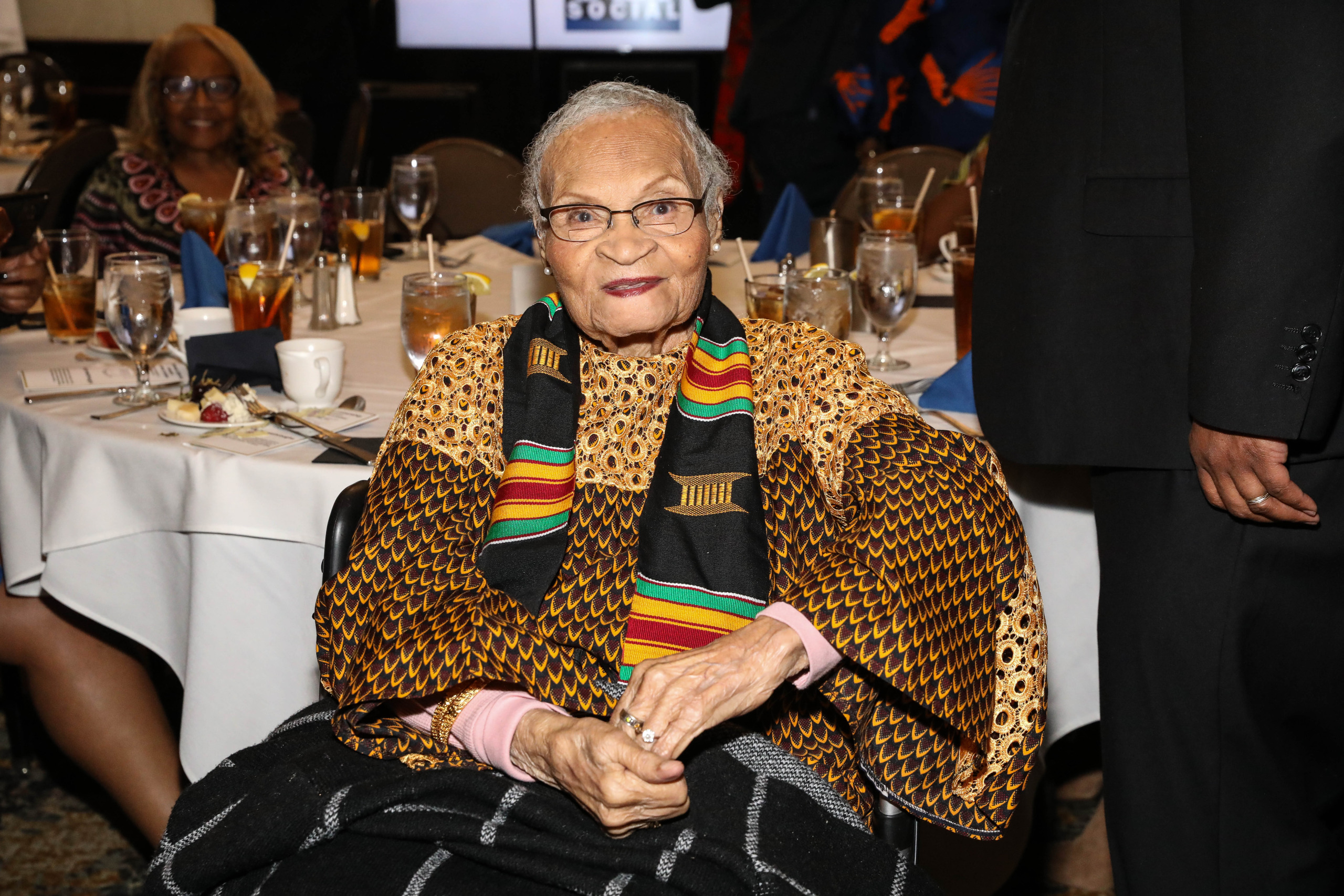
At 111, a divine number often associated with alignment and blessings, Viola Ford Fletcher—known around the world as “Mother Fletcher”—took her final rest. She lived long enough to see the country finally confront the truths she carried for over a century. Last year, EBONY covered the Supreme Court case tied to the Tulsa survivors’ fight for recognition, a reminder of how fiercely “Mother Fletcher” pursued justice.
Born in 1914 in Comanche, Oklahoma, Viola Ford Fletcher was the second of eight children raised in a family of sharecroppers. Her world forever changed when white mobs looted and burned Greenwood block by block, destroying thousands of Black-owned homes and businesses, leaving one of the nation’s most prosperous Black communities in complete ruin. She was only seven when her family fled.
During World War II, Fletcher left Oklahoma and moved to California, where she worked in the shipyards as an assistant welder. She laid steel plates for warships with steady hands and a discipline long before the world knew her story. She married Robert Fletcher in 1932 and raised three children—Robert Jr., James and Debra. Despite having only a fourth-grade education, she ensured her children completed school. Fletcher was a devout churchgoer and deeply active in her Tulsa community, often speaking at youth events and community panels well past her 100th birthday.
Her story, long quieted, reached the nation when she was 107. She gave her testimony before Congress with conviction, recounting the fear that never left. For decades, Fletcher slept upright with the lights on, trying to quiet the unsettling memories that lived behind her eyes.
Fletcher traveled to Ghana in August 2021, fulfilling a lifelong dream with her brother, Hughes “Uncle Red” Van Ellis, and was welcomed with open arms. They were granted citizenship, gifted land in Accra and honored with royal titles such as “Queen Mother.”
At 109, Fletcher published her memoir—Don’t Let Them Bury My Story—a record of survival and truth co-written with her grandson, Ike Howard. Fletcher remained engaged in her remaining years, receiving messages of gratitude from around the world.
Mother Fletcher’s story shows us we can endure challenges and remain deeply connected to our humanity. Her legacy reflected grace, patience and faith. Now she rests in the mansion prepared for her, far beyond the memories of tragedy, becoming a guiding light and an example of inspiration.