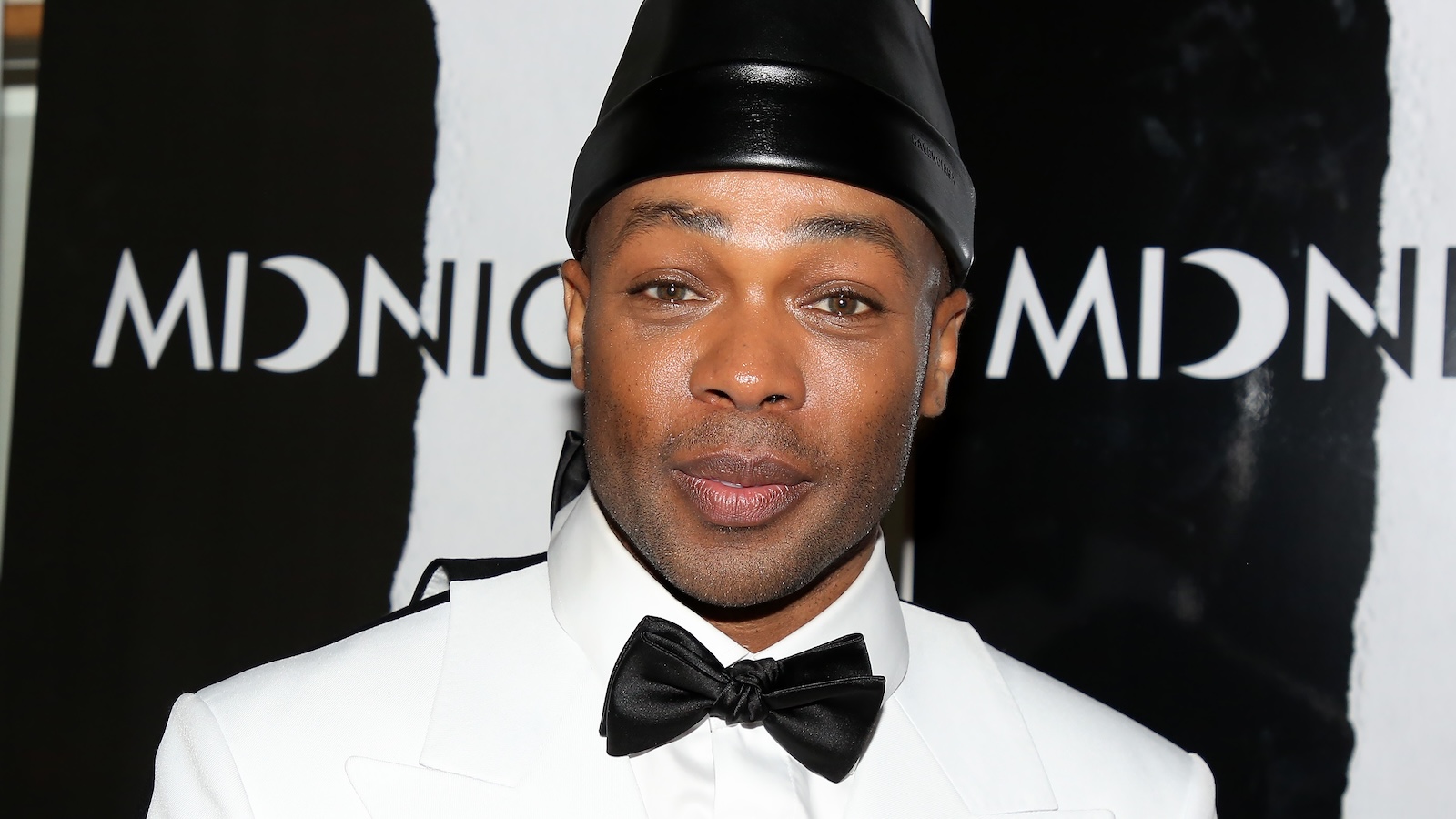
Todrick Hall has never shied away from controversy. But his latest project, Midnight, an off-Broadway musical he wrote, directed, choreographed, and stars in, has sparked backlash that won’t go away with a simple social media apology.
Hall hasn’t reached the apology stage yet.
The show, currently running at the Daryl Roth Theatre in New York through January 3, is set in the pre-Civil War South. Hall plays Rail, an enslaved Black man who develops a secret forbidden romance with Richard, a wealthy white neighbor. In Act 2, a magical plot device flips the racial hierarchy for one day. Black people become the owners. White people are enslaved. At midnight, everyone returns to their original roles, with the vague hope that the experience will make white people treat Black people better going forward.
The internet, and Black people specifically, did not receive this well. Critics called it historically revisionist, trauma dressed up in gospel, blues, and pop for a paying audience. It became a full cultural flashpoint when Sydney Sweeney, Pink, and Lea Michele were photographed backstage with Hall. The optics were hard to miss: the most visible celebrity supporters of a musical about slavery were white women, several of whom had their own unresolved public controversies, some mired in racial undertones.
The backlash split largely along racial lines online. Entertainment lawyer Kristin Hopkins called it “three hours of Black trauma” in a TikTok, citing the lynching-style imagery and a jarring death scene in the opening minutes.
Cultural commentator Blakely Thornton posted the celebrity backstage photos with the caption “Nightmare blunt rotation.” Critics questioned why Hall would center an enslaved man’s love story around his white enslaver, with many calling the imagery gratuitous rather than illuminating.
Some defenders pushed back, arguing that outside voices were telling Black people how to feel about Black art, so there are defenders But it doesn’t answer the underlying question. And of course, Hall pushed back.
His defense centered on a childhood memory: his grandmother Ethel made him and his cousins pick cotton one day a year so they would understand where they came from. She wasn’t enslaved, but as a girl she picked cotton for 25 cents a week. He called Midnight beautiful, said no one person speaks for all Black people, and reported receiving death threats over the criticism.
Nobody is questioning whether Black artists should tell stories about slavery. It has been examined bluntly on stage by other contemporary playwrights, most notably Slave Play by Jeremy O. Harris and Ain’t No Mo’ by Jordan E. Cooper. The question is whether Hall thought carefully enough about how to build it.
No named consultants, historians, or cultural advisors appear anywhere in the production credits. Worth noting: the show was co-produced by Scooter Braun and former Disney CEO Bob Chapek—two white men with significant public controversies of their own. For a show built entirely around one of the most painful chapters in American history, that is telling.
His defense, while personal and clearly meaningful to Hall, doesn’t close that gap. A family tradition designed to build awareness on stage isn’t the same as the scholarship, research and community that a project like this demands.
The role reversal in Act 2—where Black people whip white people—is being read by many not as a nuanced thought experiment but as the entire point of the piece. The fantasy of flipping the script on white oppressors is understandable as an impulse. But framing it as the mechanism through which healing happens, then returning everyone to their original positions at midnight with a lesson learned, edges toward something uncomfortable: the idea that enslavement was a situation that just needed more empathy on both sides.
And then there’s the question of who is applauding this? Art that makes white audiences feel comfortable engaging with Black trauma, that lets them off the hook rather than confronting them—tends to get a different reception than art that doesn’t.
That became an issue earlier today with a casting call for George Floyd, The Musical. The audition was posted on Playbill, which issued an apology after backlash over the insensitivity of the alleged project. Midnight and this project are unrelated, but they showcase how Black trauma can often be perceived as fodder for other audiences.
Midnight will likely finish its run. But the backlash isn’t a misunderstanding, and it isn’t going away, because the questions at its center — who gets to tell this story, who was consulted, and what exactly we’re supposed to take away — were never answered before the curtain went up.