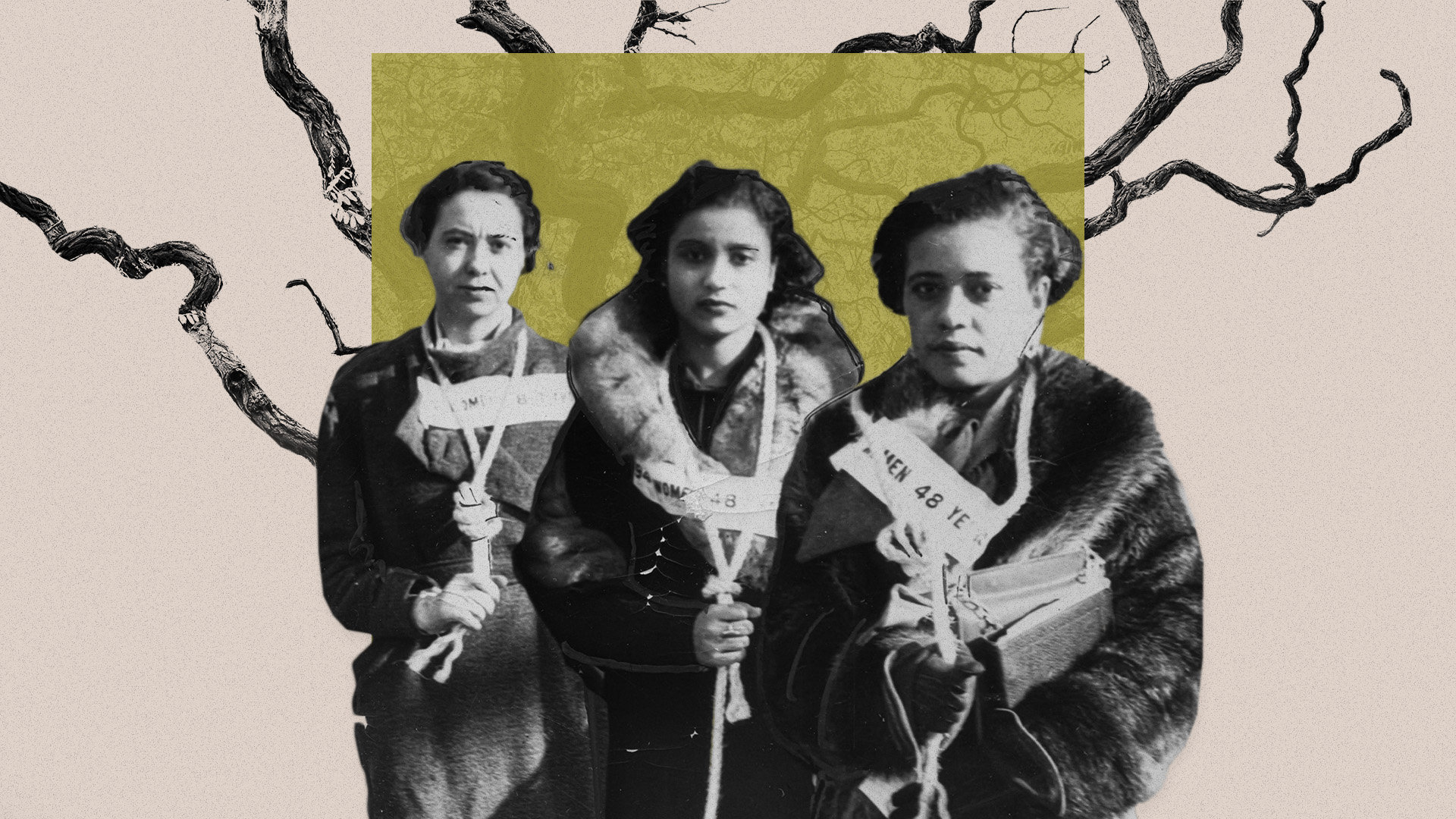
There are moments when Black people are asked to believe something that requires us to disbelieve almost everything history has taught us. And the recurrences of Black people becoming “Strange Fruit” feel like one of them.
Over the past year, Black people have repeatedly been found hanging from trees, in wooded areas, behind vacant homes, on college campuses and in other public spaces. Case after case, authorities have concluded there was no foul play, and these instances are just suicides. Sometimes, that is the case, as some of those determinations have been accompanied by surveillance footage, witness accounts, or other evidence supporting them. And we should be clear: Black people die by suicide. Black people even die by suicide through hanging. Any serious examination of these deaths has to begin with that truth. But it can’t end there.
According to CDC National Vital Statistics data, Black Americans died by suicide through suffocation, which includes hanging, at an age-adjusted rate of 2.0 per 100,000 people in 2020. Among white Americans, the rate was 4.6, more than twice as high. The CDC found Black Americans had lower rates than white Americans across all three leading suicide methods measured, with firearms, not suffocation, as the leading method among Black people. The Suicide Prevention Resource Center similarly reports that overall suicide rates among Black Americans remain below the national rate.
None of that means Black people do not die by suicide through hanging. We do, and we have. But the pervasiveness of what we are witnessing feels almost antithetical to the statistical pattern, particularly when considered alongside the geography, the locations, and the sociopolitical climate in which these deaths are occurring. The frequency has become so high that the repetition itself has become culturally conspicuous.
These deaths may be ruled suicides, but they look like lynchings.
That sentence does not establish how anyone died, nor is it intended to. It names the tension we seem almost afraid to confront. A Black person dying by suicide is a tragedy. A Black person found hanging from a tree invokes something beyond the individual tragedy because the image itself possesses a history. Black people did not assign the rope and tree their meaning. America did.
The Tree Has Never Been Just a Tree
When Billie Holiday sang Strange Fruit, she gave sound to an image this nation has never earned the right to forget: “blood on the leaves and blood at the root.” The song eventually confronts us with “Black bodies swinging in the Southern breeze,” transforming landscape into testimony.
According to Tuskegee University’s historical records, 4,743 people were lynched between 1882 and 1968, including 3,446 Black people. Ida B. Wells understood that lynching depended not only upon violence but upon controlling the story told about that violence. Her A Red Record, preserved by the U.S. Capitol Visitor Center, challenged narratives used to rationalize racial terror, excuse perpetrators, and make Black victims somehow responsible for what had been done to them.
Fast forward today, Black families are traumatized by something way too familiar, and we are expected to move on as if this is business as usual. They want us to remember the tree. We are apparently not supposed to recognize it.
When History Starts Looking Familiar
Kyle Bassinga was 21 and a student at Georgia State University when he entered a wooded section of Fair Oaks Park in Cobb County, Georgia, in February 2026. Two days later, he was found hanging from a tree. Police cited surveillance footage, phone records, and witness statements indicating no one entered the woods with him, and investigators reported finding no evidence of foul play, according to the Davis Vanguard. His death was ruled a suicide. Then there are the others.
Reporting by TheGrio has examined a series of cases, including Jerard “Jay” Jackson in Michigan, a youth coach in Alabama, and Tasia Fortune, a 29-year-old mother of four found hanging from a tree behind a vacant home in Jackson, Mississippi. Before them was Demartravion “Trey” Reed, the 21-year-old Delta State University student found hanging near recreation courts on campus in September 2025. His death was ruled a suicide, according to the Chicago Crusader.
Civil-rights organization JULIAN has documented more than 70 suspected modern-day lynchings across seven Southern states since 2000 through an investigation titled A Crimson Record, deliberately invoking Wells’ work.
When statistical patterns tell us one thing while the accumulation, geography and circumstances of these deaths present something so culturally specific, curiosity is not conspiracy. Suspicion is not proof, but neither is it pathology.
Who Gets to Name What Is Real?
This is where the conversation moves beyond individual investigations and into the work of cultural liberation.
As founder and Principal Consultant at the Culture Liberation Lab, much of my work interrogates the relationship between culture and power: who gets to name reality, whose knowledge is considered legitimate, whose memory is treated as evidence, and whose interpretation is dismissed as emotion. Institutions exercise power not simply through the decisions they make, but through determining which ways of knowing deserve credibility.
Black communities encounter these deaths carrying generations of knowledge about lynching, medical exploitation, policing, coroners, courts and investigations that failed to protect Black life. Institutions arrive carrying reports, titles and official determinations. We are then expected to believe institutional authority should automatically outweigh cultural memory.
That is why the case of Nolan Wells belongs in this conversation even though he was not found hanging. Wells, 18, disappeared from Mississippi’s Horn Island on July 4 and was found along the shoreline two days later. Authorities initially suggested drowning and said no foul play was suspected. His family commissioned an independent autopsy that returned an undetermined cause and manner of death pending investigation, according to CNN and NBC News.
Different circumstances, but a familiar institutional tension: why does certainty sometimes seem to arrive before Black families believe certainty has been earned?
What If Lynching Learned to Evolve?
Perhaps the question haunting all of this is whether our understanding of a modern-day lynching has become too dependent upon the historical image of one.
We know the photographs, the mob, the rope, the tree, and the white spectators standing beneath murdered Black bodies, sometimes posing for photographs that became souvenirs of racial terror. And this is the ingrained image America has given us for a lynching. But power does not remain static simply because history books do.
Systems evolve, and violence adapts. Racial terror does not have to preserve its nineteenth-century aesthetics to preserve its logic. A modern-day lynching, if one occurred, would not necessarily announce itself as one, which is precisely why the quality and independence of the investigation matters.
The question is not whether every suspicious Black death should be declared a lynching. The pressing question of the day is whether our systems are capable of recognizing racial violence when it does not perfectly reenact the past.
Because if racial terror must look exactly like the photographs in our museums before we are willing to recognize it, then we have not learned history. We have merely memorized its costumes.
We Have Earned the Right to Ask
I refuse the false choice between conspiracy and compliance. I do not know that every Black person found hanging from a tree was lynched, and the evidence available does not permit me to make that claim. But I also won’t accept the proposition that asking the question is somehow irresponsible, irrational, or conspiratorial.
Because at my core, I remain deeply unconvinced that Black people are simply choosing trees as the places where they end their lives.
So while I remain open to evidence, to complexity, and even to different conclusions in individual cases, my soul cannot find ease in treating these deaths as ordinary. Given what the tree has meant in Black American history, lynching must remain among the most serious possibilities we are willing to investigate when determining what happened in these cases.
Knowing what lynching looks like does not mean we know how that person died. It means we know enough to demand that the people responsible for finding out do not stop asking questions too soon.
Perhaps that is the question America should be wrestling with now. Not whether racial terror could return looking exactly as it did before, but whether we would recognize it if it had learned from history while the rest of us remained committed to looking for the old disguise.