Surrounded by the Broadway cast of Liberation and founding members of The Meteor, a feminist outlet that centers the lives of women, girls, and nonbinary people, cultural critic Rebecca Carroll asked: “Why is it so hard for us to get it right, specifically with Black women and white women in this movement?”
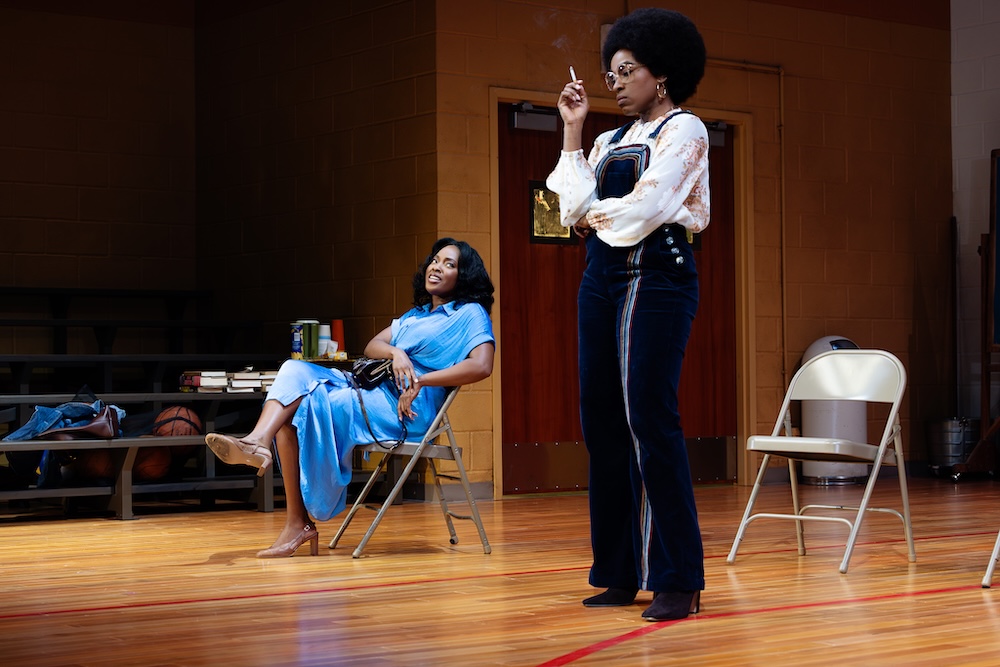
The question is centered on Liberation, Bess Wohl’s Outer Critics Circle Award-winning memory play, which delves into her mother’s 1970 consciousness-raising group in an Ohio gymnasium. Seven women of different backgrounds wrestle with identity, revolutionary ideals, freedom, family, and love.
This conversation isn’t a fairy tale about solving racial tensions in one fell swoop, any more than Liberation is a play about pinning down feminism’s ultimate definition. Both are about wrestling with tensions as they expand. But one of the things that makes it resonate is how Wohl partnered with Tony Award-winning director Whitney White and actresses Kristolyn Lloyd and Kayla Davion to ensure Black women’s stories weren’t reduced to caricatures or diversity tokens in the expansive product.
The cost of this historically fraught relationship reveals itself in Lloyd’s observations about limited opportunities, as well as in the constant demand that Black women shapeshift. As Celeste, the highly educated caretaker revolutionary with a secret in Liberation, Lloyd shines on stage as an example of a Black woman caught between multiple worlds, trying to make sense of it in mixed company. Davion, who boldly plays Joanne—a housewife, mother, and quietly revolutionary force—admits she was nervous about attending the talkback, just as, on some nights, she’s nervous about going onstage, uncertain how her character will be received, even by her own people. But she also feels honored.
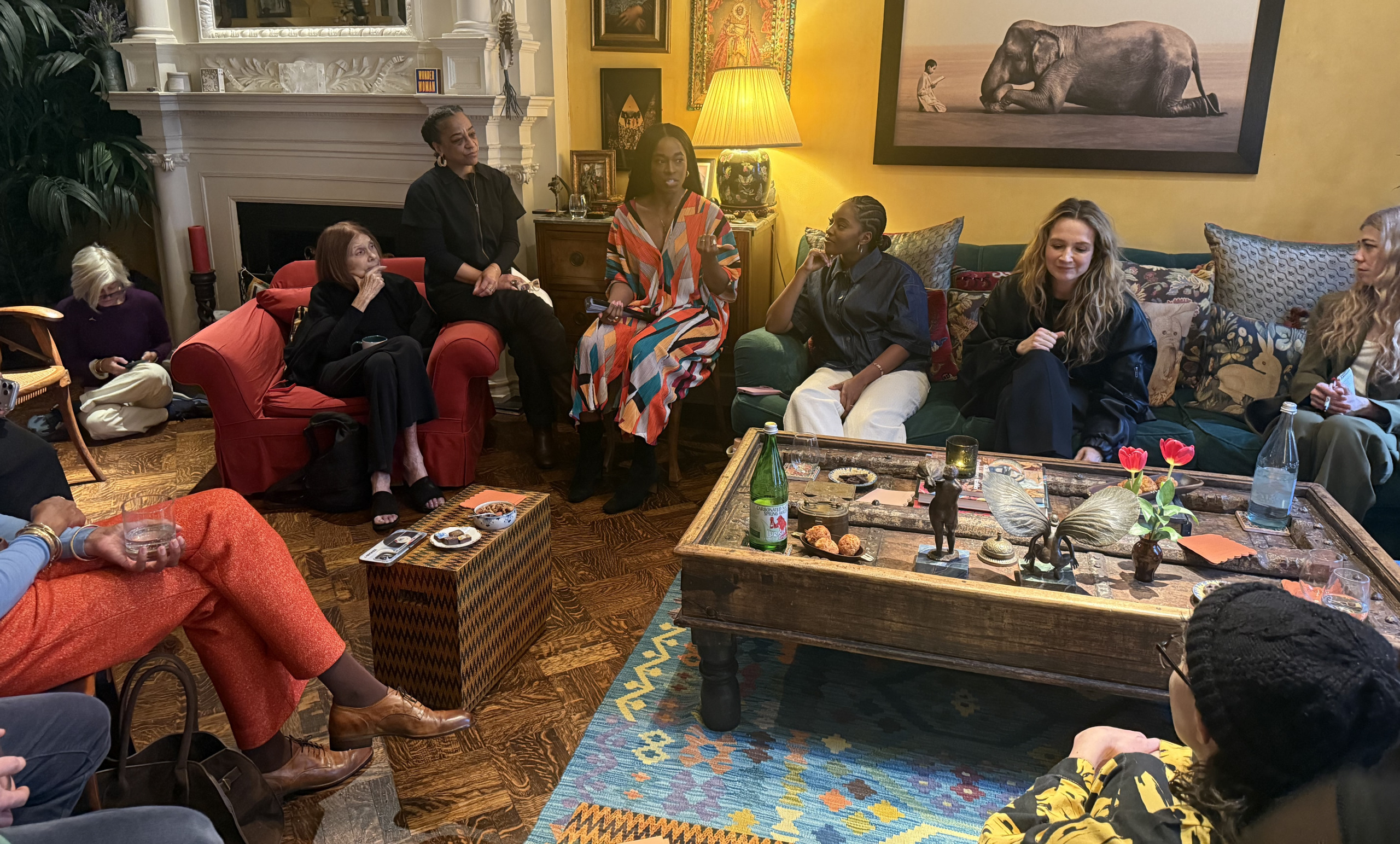
“I truly believe this is the season for other voices to be heard, specifically brown bodies,” she says. “To be in a show that is predominantly white and have this moment where they’re like, ‘Actually, we wanna hear from y’all’…it feels like a revolution of itself.”
The tensions some white women step into or out of at their discretion are the ones Black women reckon with daily. As Lloyd notes: “We’ve been challenged with making big, risky choices since we were in elementary school.”
Wohl, who is white, didn’t shy away from her own uncertainty. She embedded her questions directly into the play—the narrator grapples with whose story to tell, what she has the right to recreate, and where identity’s limits lie. “All of that frustration or sense of missing it or failing at it is sort of baked into the drama,” she said.
“I think part of what’s so beautiful about theater is that it’s collaborative,” Wohl leaned in and explained from her seat on an antique sofa. “It didn’t have to be just me making this alone because I could never, ever have done it. Everyone’s voice was important.”
That insistence extended beyond vulnerability into levity as a deliberate choice. Wohl is clear-eyed about its necessity. “I did think a lot about how joy, and fun and humor can power a movement,” she said. “They can empower actual social change.”
Enter Whitney White, the Tony-nominated director of the hit Jaja’s African Hair Braiding and 2025 EBONY Power 100 awardee, who joined the project early to help shape it into the resonant, full-bodied work audiences can’t stop discussing. She encouraged Lloyd down a path of vulnerability despite her resistance rooted in personal trauma. She yelled “Lean in!” when Davion hesitated to show softness.
That belief made its way into the rehearsal room, where chemistry and laughter were treated as essential, not ornamental. Lloyd recalls how White guarded the play’s humor just as fiercely as its emotional truth. “Whitney was so great about that in the beginning,” Lloyd said, smiling. “Sometimes she would just scream, ‘I want my laugh.’ She would really highlight it as, ‘Guys, this part is funny. Lean into it. It’s okay to get a little crazy.’” For Lloyd, that permission mattered. “You read the script, you come in like, let’s fight—for what?” she says. “But the joy is what keeps people open to eventually cracking when those moments come.”
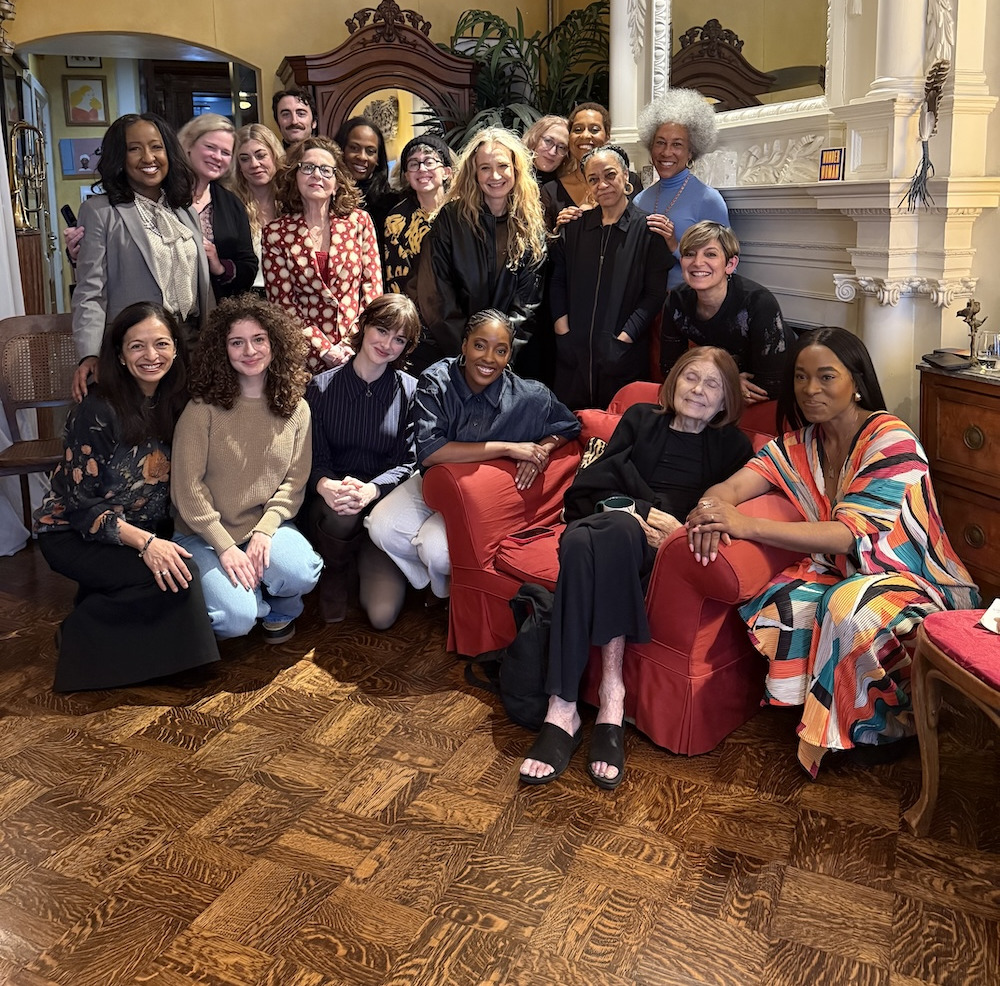
Lloyd admitted she, too, arrived at the talkback with nerves. “I was like, what is this gonna devolve into?” But it became exactly what it should be — proof that the practice works. “When you show up and stay open, being ready for community,” she reflected, “actually, there’s a blossom from that. You get good fruit.”
The entire cast showed up to witness Lloyd and Davion share their perspectives at the talkback, a quiet testament to their collective willingness to do the inner work.
So while Carroll’s question remains urgent, Liberation offers a blueprint: Make Black women part of creation, not just execution. See them as equals. Trust their expertise. Make space for their full humanity: vulnerability, joy, complexity, all of it.
The question isn’t whether we can get it right. It’s whether we’re willing to do the work.
Liberation plays through February 1 at The James Earl Jones Theatre in New York City.