
Long before Keisha Edwards became one of the people working to strengthen Guyana’s fashion industry, she was trying to figure out how to build a career in it herself. Fashion ran in her family through generations of tailors and dressmakers, so creating items for her closet came natural.
“I just used to make stuff for myself because I wanted to look stylish and funky. And I felt that clothes were either too expensive or not my style,” said Edwards.
She studied sociology at the University of Guyana but when a job did not follow, the craft she had been nurturing became another possibility.
“I said there’s a skill that I have that I’m really good at. Maybe I should nurture it and make a sustainable business out of it,” Edwards recalled. “And it’s been 20 years.”
Today, Edwards is using her knowledge of fashion to demonstrate just how important the industry can be to Guyana’s continued growth, serving as festival and designer director of ORIGINS: The Guyana Fashion Festival. The three-day event connects Guyanese and diaspora designers with opportunities tied to economic development and cultural tourism.
“While we have designers having their successes in silos, there’s a lot of designers that don’t have that visibility,” she said.
Now in its second year, ORIGINS is designed to give those individual efforts a larger foundation. This year’s festival in Georgetown celebrated Guyana’s 60 years of independence under the theme, “A Diamond Legacy: Fashioning 60 Years,” pairing runway presentations with workshops and industry discussions.

“The fashion industry isn’t only just about fashion and design. It’s about production. It’s about policy. It’s about makeup artists. It’s about photographers, all these different things,” said Edwards. “It [ORIGINS] provides a larger platform for visibility to enter into new markets and also to meet new customers.”
That visibility is increasingly being viewed as an economic opportunity.
“This initiative demonstrates the Government of Guyana’s commitment to advancing the Orange Economy as a pillar of national development,” said Hon. Susan Rodrigues, Guyana’s Minister of Tourism, Industry and Commerce. “We are investing in the platforms, networks and market access that allow our designers and creatives to grow enterprises, compete internationally and contribute to a more diversified economy.”

The push comes during an extraordinary period of growth. The International Monetary Fund reported that Guyana’s real Gross Domestic Product (GDP) grew by more than 19% in 2025, while its non-oil economy grew by about 14%.
ORIGINS is also gathering data on what designers need to grow. Edwards said about 120 people applied to participate in the festival, with roughly 22 Guyana-based designers selected. Applications included questions such as whether their businesses were registered.
“I think having data is really important because data informs the type of policies that need to be put in place and the type of aid and support that people will need,” Edwards explained.
Designers also received a production grant to help develop their collections, another step organizers say is intended to create support around an industry that has often relied on designers financing and building their businesses on their own.

“ORIGINS is built with real infrastructure behind it, not just a runway event,” said Kamrul Baksh, director of the Guyana Tourism Authority. “That’s what makes it something the industry can keep building on year after year.”
That infrastructure extends beyond what audiences see during the three-day festival. ORIGINS also offered hands-on training in areas including fashion entrepreneurship, costume design, branding and garment making.
“It’s important for designers, and even people interested in fashion, to understand that it is not just this beauty thing. It’s not entertainment. It’s not a hobby. It’s a real profession that can provide for you, create job opportunities,” added Edwards.
But the potential economic impact does not stop with designers.
Guyana has long drawn international travelers for its rainforests, wildlife and adventure experiences, but Baksh says ORIGINS creates another reason to visit by placing fashion alongside food, heritage and other parts of the country’s cultural identity.

“That mix of runway, marketplace, workshop and industry conversation is what makes ORIGINS a cultural tourism experience rather than a local fashion show,” Baksh said. “It gives the local community, international visitors and the Guyanese diaspora something real to engage with, which is exactly what makes it worth traveling for.”
The runway also reflected the country’s cultural influences.
“Guyana’s fashion identity is shaped by our Indigenous heritage, as well as the influences of our Indian, African, Chinese, Portuguese and European communities,” he said. “Our diversity, along with our natural environment, comes through clearly in the work of our designers and creatives.”
Those influences shaped ORIGINS’ themed presentations. During Ancestral Threads, Edwards recalled how one Indigenous designer incorporated leaf leather and Indigenous symbolism into a contemporary collection, while another honored Afro spirituality.
“I think that a platform like ORIGINS being open to people’s storytelling, that’s a beautiful thing,” she said.
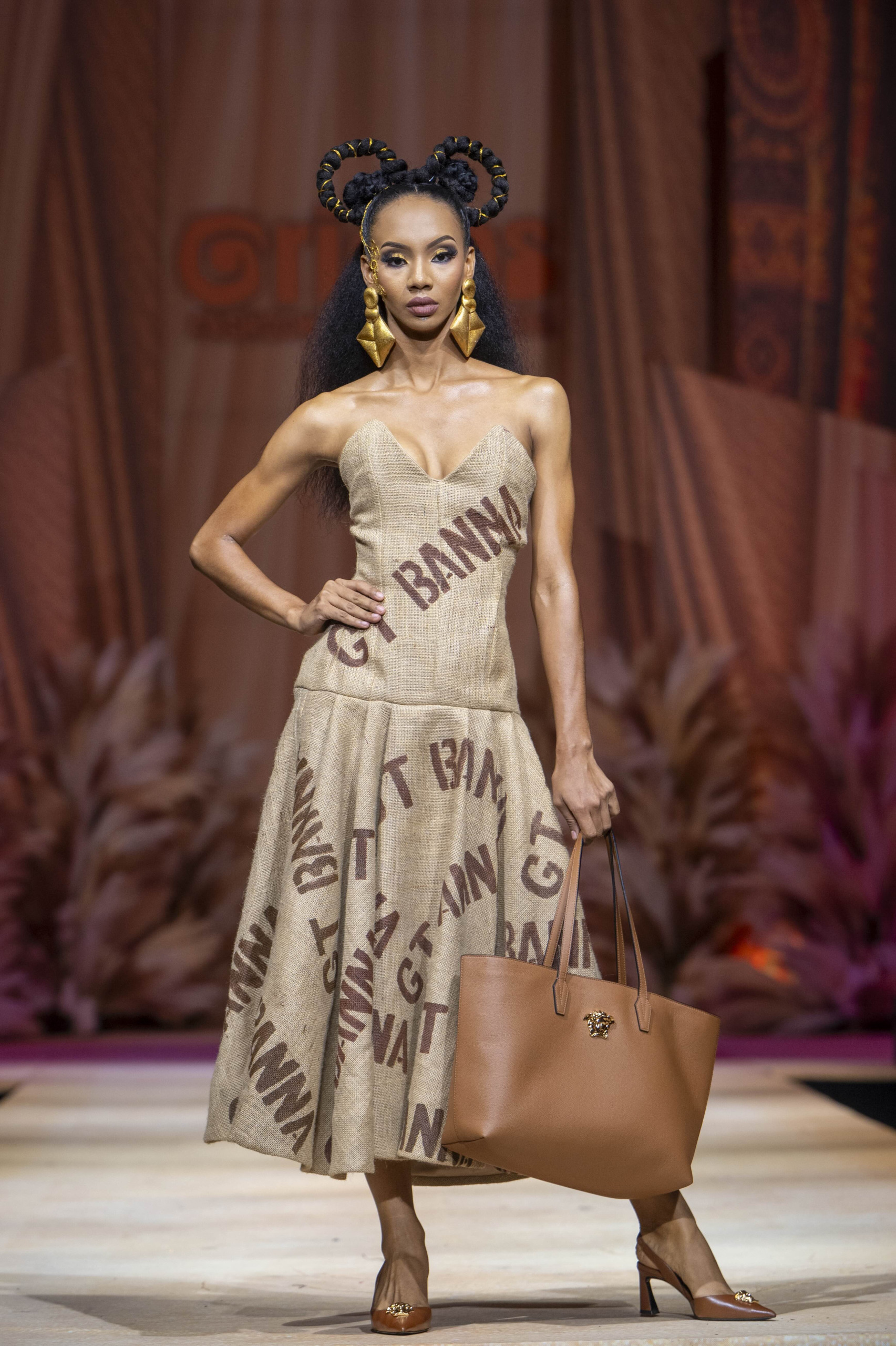
Edwards carried that philosophy into her own collection, GT Banna, featuring elevated causal pieces inspired by her parents and their love for their culture.
“There’s this term ‘banna’ that basically means like boy or male. But growing up for me, in my household, everybody was called a banna,” Edwards explained. It’s a term that connects us as Guyanese people.”

She made a conscious decision to use a jute, a material traditionally used to hold items like rice, flour and sugar, to create finished garments.
“I wanted to honor the things that came before us but still highlight and honor that past in such a modern way,” Edwards shared.
And amid Guyana’s rapid development, Baksh said protecting those cultural expressions carries stakes of its own.
“If we don’t invest deliberately in our cultural industries, we risk losing the traditions, craftsmanship and identity that set Guyana apart, along with the livelihoods of the artists, musicians, designers and artisans who keep that identity alive,” he noted. “That’s why ORIGINS isn’t just an event for us, it’s one part of an ecosystem we’re building around the creative industries, alongside training, market access and platforms for designers and artisans to actually build careers here.”
For Edwards, preserving that creative legacy also means making sure the next generation of designers have the support they need.
“What I want to see is more fashion programs that are available within Guyana that can help people to improve their skills,” Edwards said. “And I think that ORIGINS is on the path to creating those opportunities.”