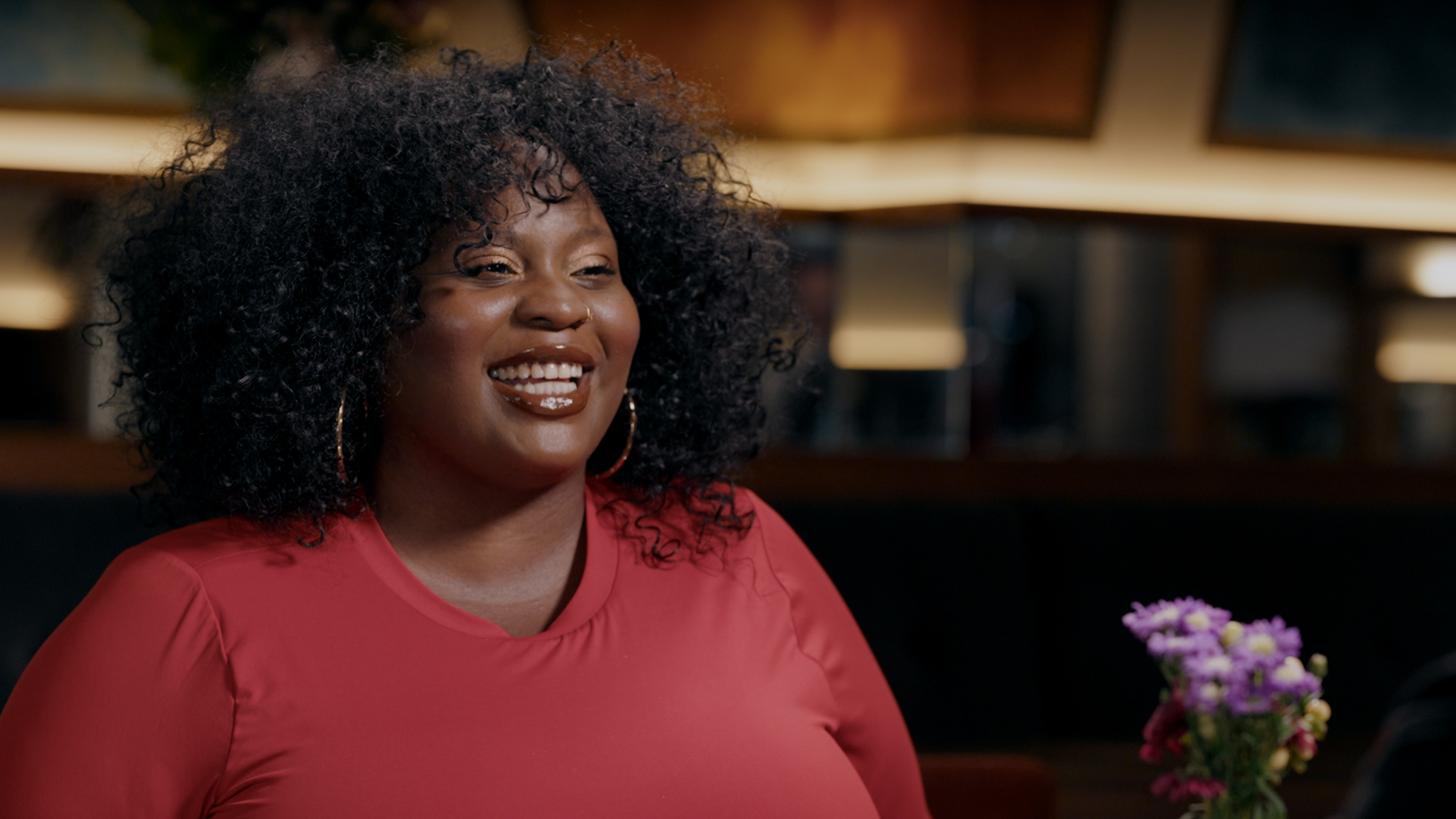
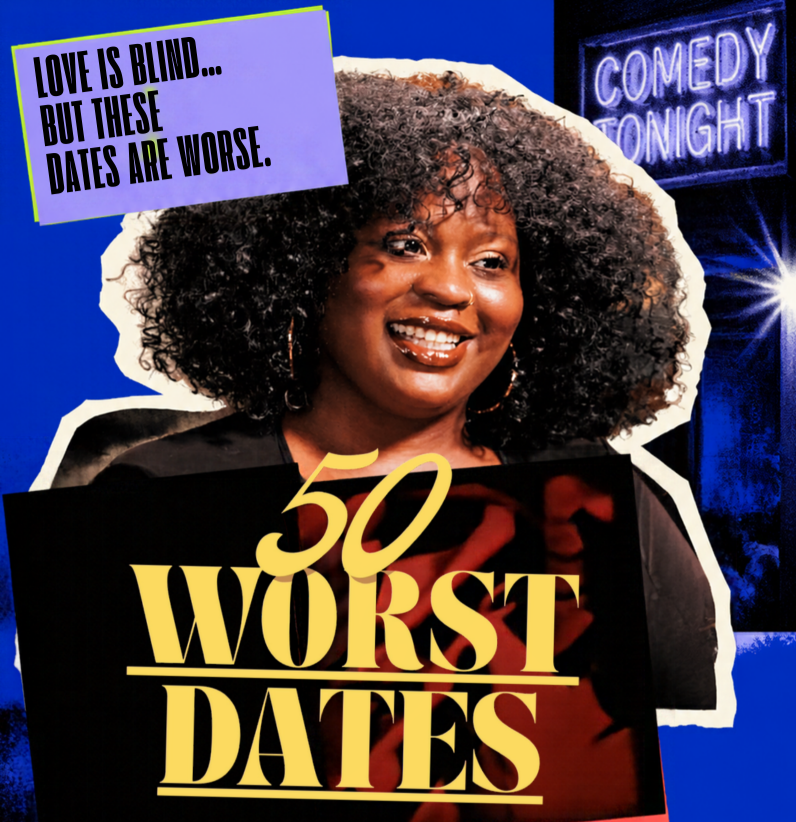
The dating landscape for single Black women in today’s times are — interesting to say the least. Women regularly congregate in real life and on the internet to talk about their dating escapades, finding communal reassurance that they’re not alone in their experiences. Usually, we hear the perspectives of the women enduring each rendezvous but rarely are we given a front row seat to the disasters we’re told about. Comedian and actress TaTa Sherise is changing that with her increasingly popular internet series 50 Worst Dates.
What started as a way to blow off creative steam and build out an idea without the traditional backing of the industry has turned into a well-watched series by hundreds of thousands and growing. Through the comedic mind of Sherise, accompanied by her rotating suitors no date is the same. In fact, 50 Worst Dates is largely improved by Sherise and her date of choice making for an organic display of humor and welcomed ridiculousness. EBONY sat down with the creator to learn more about the process of making the cultural sensation and how Sherise is adjusting to the influx of interest in what she along with her team created.
EBONY: What inspired the idea of 50 Worst Dates?
Outside of the obvious dating trauma, I’m 35, so I’ve made terrible decisions in men in my twenties. I’ve experienced bad dates, and those stories have always lived with me. And then my girlfriends and friends were telling me their dating horror stories. I always felt like this needs to be put out there, but I didn’t have the resources.
In 2019 I shot a skit on my iPhone where I played both the man and the woman at a dinner table. It went viral, and I thought, ‘I could see this as a show,’ but I didn’t have the resources.
Fast forward to [2025], I met my director and producer, who had all this equipment and wanted to collab. We did his ideas for a while, but it wasn’t hitting for me. I told him I wanted to come up with something I could release every week at the same time, to build an audience.
I’d also been auditioning for two years for projects I thought would change my life, killing my self-tapes and not hearing anything back. As an artist, that weighs on you. So I told myself, if they’re not going to give me what I want, I’m gonna create it myself.
I reached out to the comedy club I always work at, and they said I could shoot there. It was all hands on deck, people collabing. People always want to network up, but sometimes you gotta network across. I dropped it on Valentine’s Day with no expectations and no goals. I just wanted to have fun. Sitting across from my fellow comics brought me back to my roots.
What message or greater picture did you want to relay about the dating landscape for Black women?
The deeper I get into the show, the more I realize the importance of it. At first it was about putting my talent out there. But I read the comments, people saying ‘oh my god, I went on a date like this,’ and I’m like, this is something special. I’m creating a conversation. Even though we’re silly as hell and we exaggerate a lot, it is very, very real. I think it’s opening up a relief for Black women, women period, to laugh at these experiences and know you’re not alone.
Have you anticipated your next steps or direction for once you make it to 50 episodes of the series?
I have two more film sessions. That brings us to 50. We shoot anywhere from 6 to 8 dates in one session, so they’re all piled up. We’ll jump back into filming at the top of January, we won’t actually reach 50 dates until February.
Beyond that, how I think of it is, Issa Rae had Awkward Black Girl on YouTube, all self-produced, and that led to Insecure. That’s the vibe I’m going for.
People are falling in love with me as a character, TaTa. They’re asking where she’s from and what she does for a living, so I can build a universe. We’re going to write a pilot. I just started monetizing on YouTube, and those funds are being reinvested into the pilot and the show.
Beyond the comedic goal, how are the dates depictive of what some Black women feel the need to try when their standard type isn’t working out?
As Black women, we’ve been holding it down with Black men since the beginning of time. No matter what they’ve put us through, we go get another one, and we never abandon them. I think that limited our options.
Walking around being myself, I’ve started to notice men who aren’t Black looking at me. Black women walk in the room and turn heads. It’s our energy, our thickness, our wide range of complexions. We’ve shut the door on opportunities to explore and get to know men outside our own, and I think this series opens people’s minds a little bit.
Creatively, the range of dates also made sense because I’m in the comedy world, and that’s who exists there. I also wanted to draw an audience from each person.
How have people responded to the series, beyond the surface-level enjoyment?
People say this belongs on Netflix. They keep calling it brilliant. I don’t know if it’s the concept of it being lightly scripted and mostly improv, or the repetition of the setup: same place, somebody walks in, we have the dialogue, and if it doesn’t work out, they get up and leave. People enjoy that. They want to know what’s next, who’s next, what else we can think of. They’re on a little journey with me. I’m a character to them now, and they say ‘TaTa, we hope you really fall in love!’ Some people think it’s real.
Personally, I’m finally starting to accept that I created something that is not out there on the entire planet. There are plenty of sit-down, back-and-forth banter shows, but I’m building the scene on camera, with improv and dating. People watch each episode and say ‘I could see a full season of this’ or ‘I could see a spin-off of these two.’ Nobody has done this, and that feels crazy.