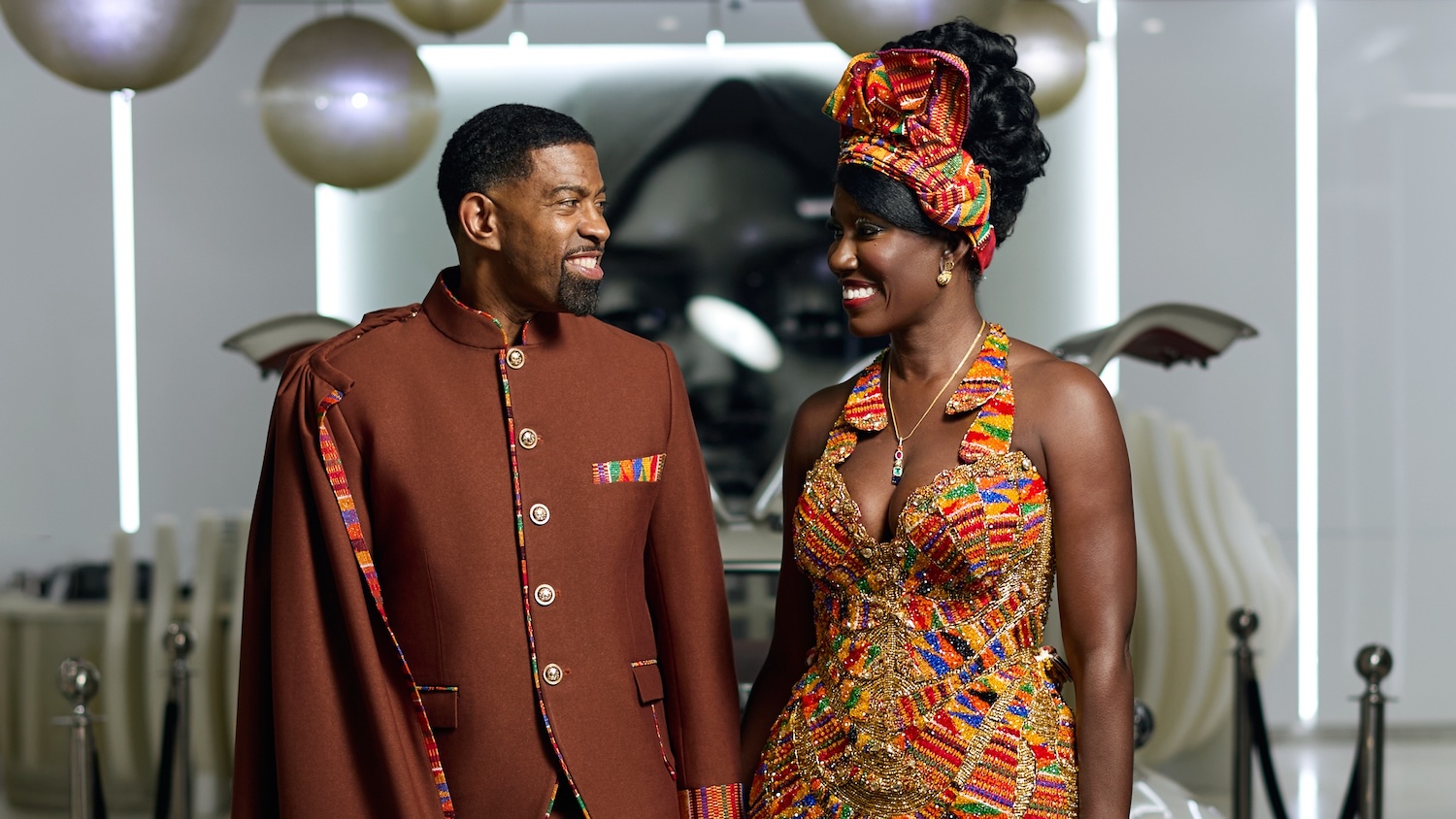
Black love shined bright on August 21, when Bozoma Saint John-Watson married her love, Keely Watson, in a glorious wedding ceremony in Accra, Ghana, steeped in African tradition. The couple, who began dating in 2024 and announced their engagement a year ago, are still reveling in that magical experience. But it was only their first ceremony. In November, they’ll celebrate all over again with a second wedding in Los Angeles.
Even with two ceremonies marking their union, the newlyweds know the real celebration comes after they’ve exchanged “I dos.” It’s in the everyday actions that reinforce their love for one another. The couple sat down with EBONY to talk about the significance of Black love across cultures and continents, balancing strength and softness in their relationship, how they continue to choose each other every day and one fun new concept they think every bride and groom should consider before making it down the aisle.
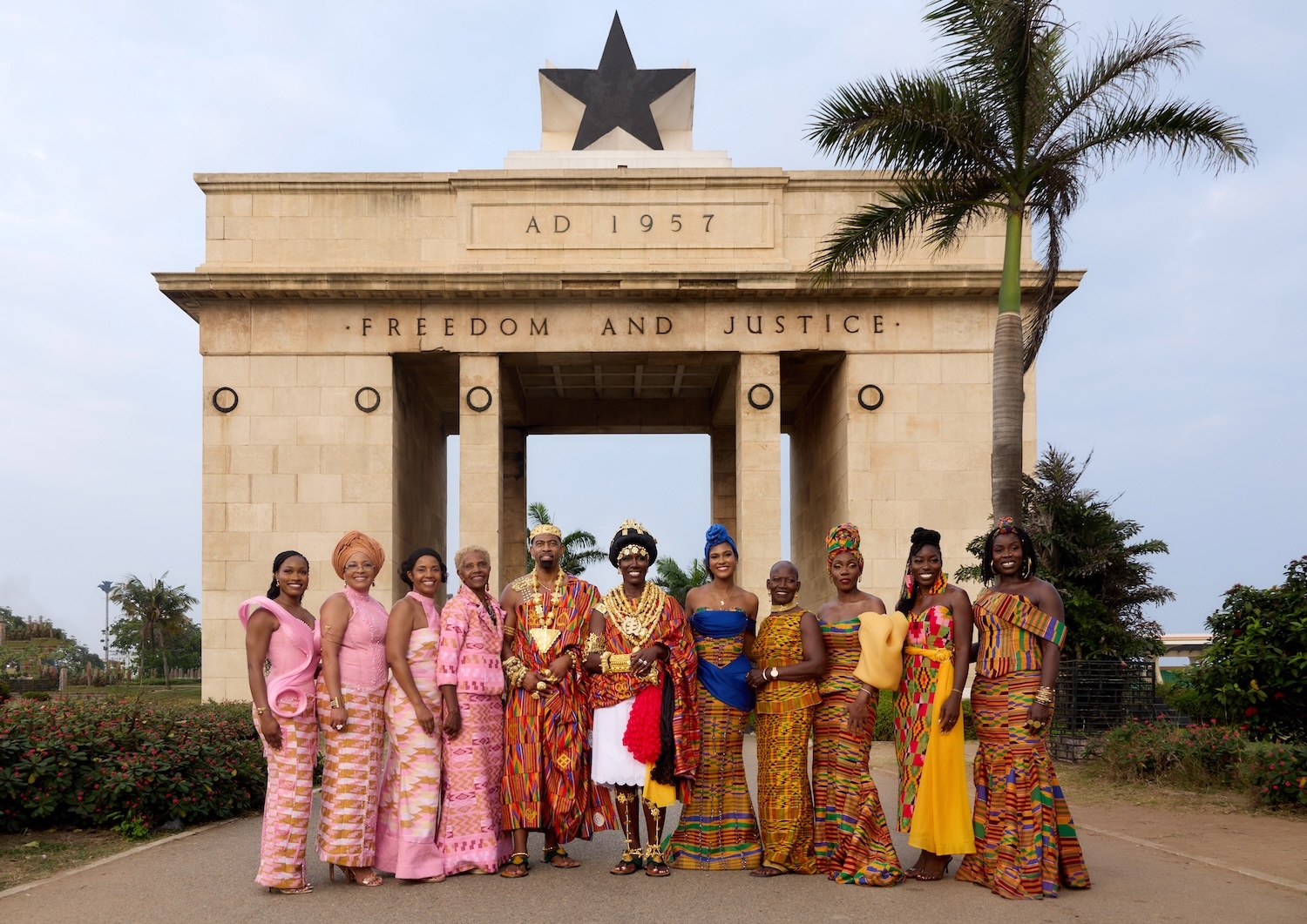
EBONY: Congratulations on your wedding in Ghana, which was steeped in African traditions. Why was that so important for both of you?
Bozoma Saint John-Watson: Ghana is very, very important to me, and now important to Keely. Over the last decade, I’ve worked closely with the former president of the Republic of Ghana, Nana Akufo-Addo, on the Year of Return and then Beyond the Return, an effort to connect Africa and its diaspora.
The fact that Keely was born and raised in Los Angeles, and he became a citizen of Ghana a year after we started dating, he really took the full leap of connecting with his roots in Ghana. It meant that we wanted to make sure that we were bringing the full glory and luxury and history of Ghanaian culture to life as our first wedding. We could show the world that the European version of marriage isn’t the only way to do it, and it’s not even the most magnificent way to do it.
Keely Watson: A lot of my groomsmen commented that this was a dream for them because never would they have ever guessed, and even myself growing up, that I would be having a traditional Ghanaian ceremony to my queen. I took this very seriously because I wanted to honor all of the generations who were going to be in the room, and so for my guys, I gathered us up and said, “We have to make Ghanaian men and the Ghanaian citizens proud… We’re not going to do any U.S.-type movement or dancing, nothing like that.” It was very important that I honored my woman and the country, and I also held my own honor for how we would be viewed from our wedding day forward.
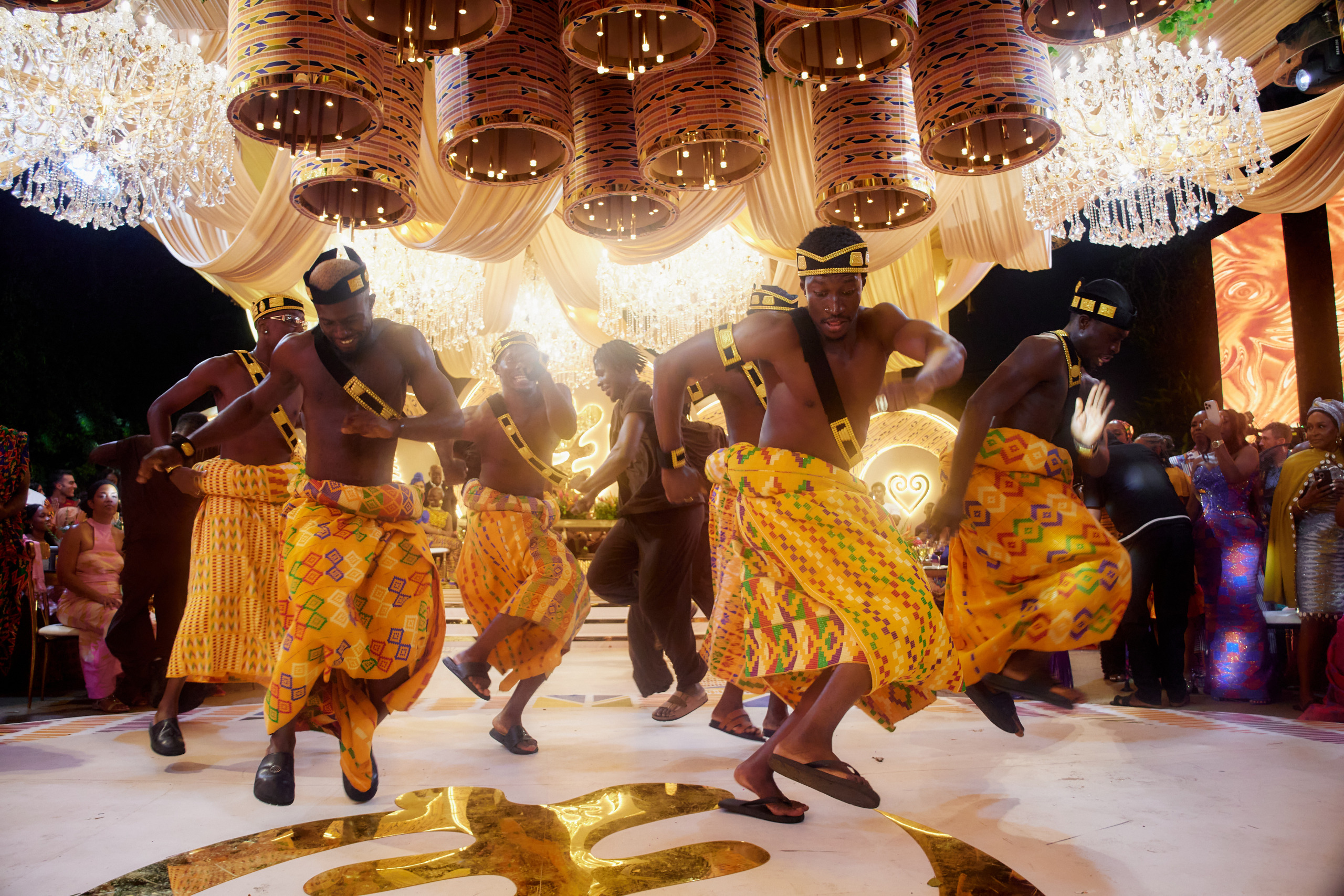
Beyond the ceremony itself, why was it important to show the world this expression of Black love?
Bozoma: I think it’s really important that we showcase all types of Black love, recognize differences and hold to the same degree of sacredness and excitement and respect that we have about other cultures as we do our own. I don’t think that there’s a lack of images of Black love; I just think that we need more diversity.
Keely, Bozoma is a woman who is powerful and successful in her own right. How do you make space for both of you to lead in the relationship?
Keely: I grew up with three sisters, and they’re highly successful, so I’m not intimidated. I really think that there’s a way in which men can still be considered alpha when having a woman who’s so prominent and a leader herself; there’s a fine balance. We’re both able to lead. And when one of us needs to step in, we can. I think that’s really critical. Our love is healthy love because we’re guardians of each other’s hearts; we say that all the time.
Bozoma, there’s a lot of talk about the “strong Black woman,” but that label can also become heavy. How does this relationship give you room to be soft?
Bozoma: It’s such an important question, because we know what it is. We talk about strong Black women, and that used to feel like a compliment, and then it was, we’re not allowed to be soft, right? Somehow our femininity doesn’t need to be protected. We can just take care of ourselves, so leave us to whatever traumas may hurt us. But I completely disavow that thought. We should be vulnerable, we should be soft, we should have soft places to land.
Being a successful Black woman, I think it is difficult to find a partner who will allow you to be both things: both strong and ambitious and commanding, and all of the adjectives you want to use for someone who has found their success in male-dominated and often white spaces, but still be able to come home and be vulnerable and soft and have somebody else be strong for you. I certainly find that in Keely because of how he grew up and because of the man he is. He is successful in his own right, and so there’s no need for us to compete.
But he also recognizes the need to protect me and my daughter. In fact, he said those words during our ceremony and had the room in tears, allowing us to feel completely safe and at home in the home we create together.
The wedding is the celebration, but marriage comes next. How do you plan to keep doing the work now that the ceremony is over?
Bozoma: The idea of marriage is that you really do have to put in the work every day. There is no resting on your laurels. It is a marathon, and you have to pace yourself and make sure what you do today will take care of any frustrations or challenges you face tomorrow.
One of the things I love most about our relationship, especially in our courtship, was that because we live in two different cities—he’s based in San Diego, and I’m based in LA—we leave voice notes and video messages constantly throughout the day. There’s not a time when you don’t find us communicating. For us, communication is one of those strong pillars. Many people enter a marriage without knowing how to talk to each other. The wedding is just the beginning. We are committed to continuing to learn about each other, to read each other, to evolve and to support each other. I think that’s the best way to start this marriage.
Keely: I really think it starts with who you are as an individual, continuing to show up for the ones you love, the ones you care about, and continuing to make an effort, the same effort it took to win over someone’s heart.
What I’m going to keep doing is continue dating my woman. I’m going to continue to make an effort to look good. I’m going to continue to get dressed. I’m going to continue to show her how much I love her daughter, and then step up to the plate when she needs something.
I’m always checking in with my woman. I watch her. I’ve learned to study her. I don’t ever get comfortable to the point where I feel like, “Ah, I got this.” I’m going to keep working at our marriage every day. We’re going to keep speaking affirmations to one another. We’re going to speak life into one another and into our marriage. We’re going to consistently water our marriage, and we’re going to keep our leaves green and our roots deep.
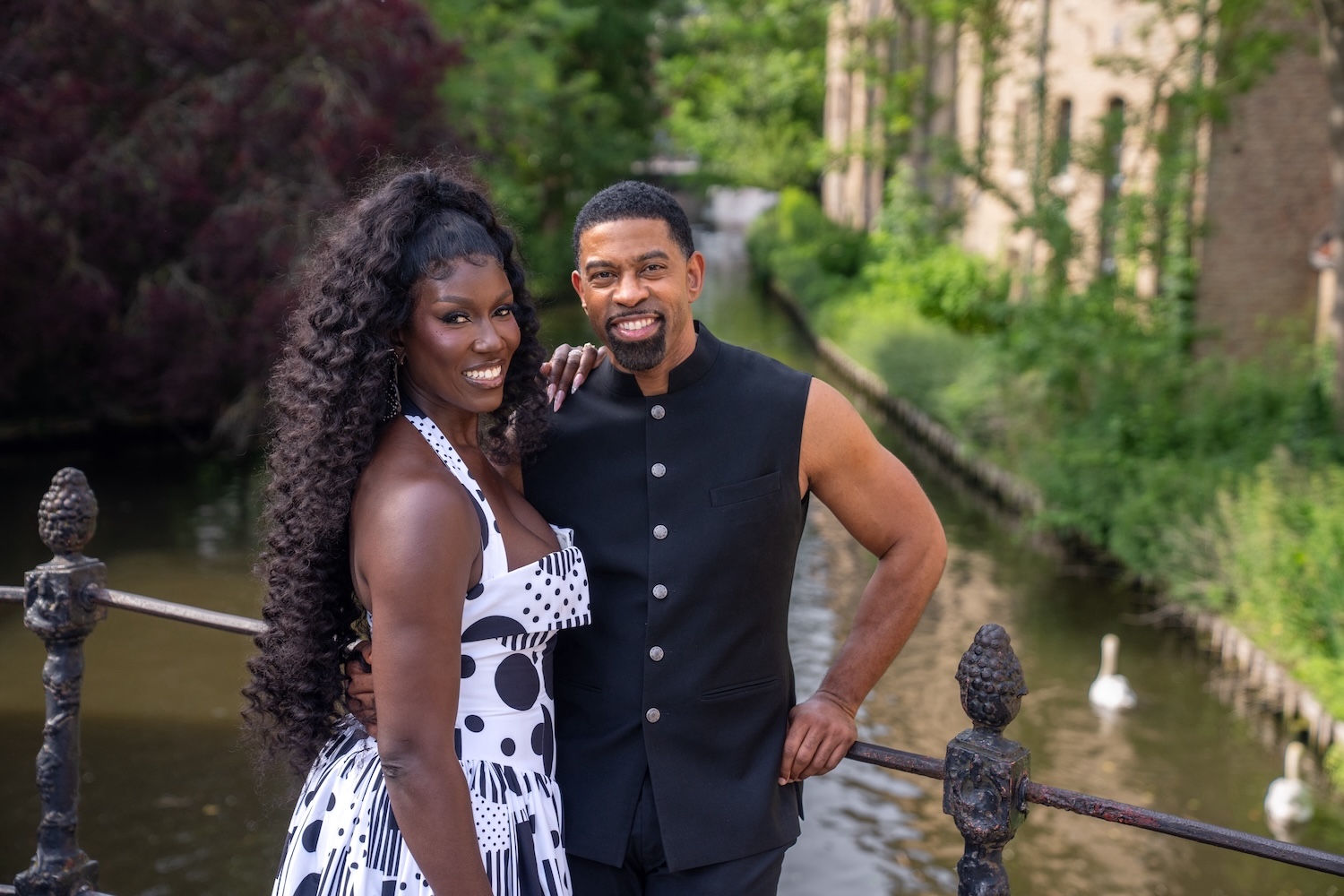
Speaking of those daily efforts, you actually had a “fiancé-moon.” Why was it important to stop and appreciate that period before becoming husband and wife?
Keely: It’s a new concept my lady, my genius marketer, came up with, right? Why should we have to wait until after the wedding? After all the planning and being tired, we decided to do what’s called a fiancé-moon, which let us take a break beforehand, have more conversations, unplug for a second and spend time with one another.
Bozoma: We went to Brussels for our fiancé-moon. You don’t really get a chance, as Keely was saying, to really stop and appreciate the fiancé period too much. I think it’s all full of planning and a little bit of stress, and you’re sort of marching towards the wedding day. But it’s a really sacred time. There was one moment when Keely and I were rushing, getting things done, and he said to me, “You know, you don’t get to be a groom often. This is not the time to rush through things.” And it really struck me because it’s true. This is a very sacred time.
For us, it was important to stop and have that connected time while we were committed, but not yet married. It really let us enjoy that period, and we have some great memories from it.