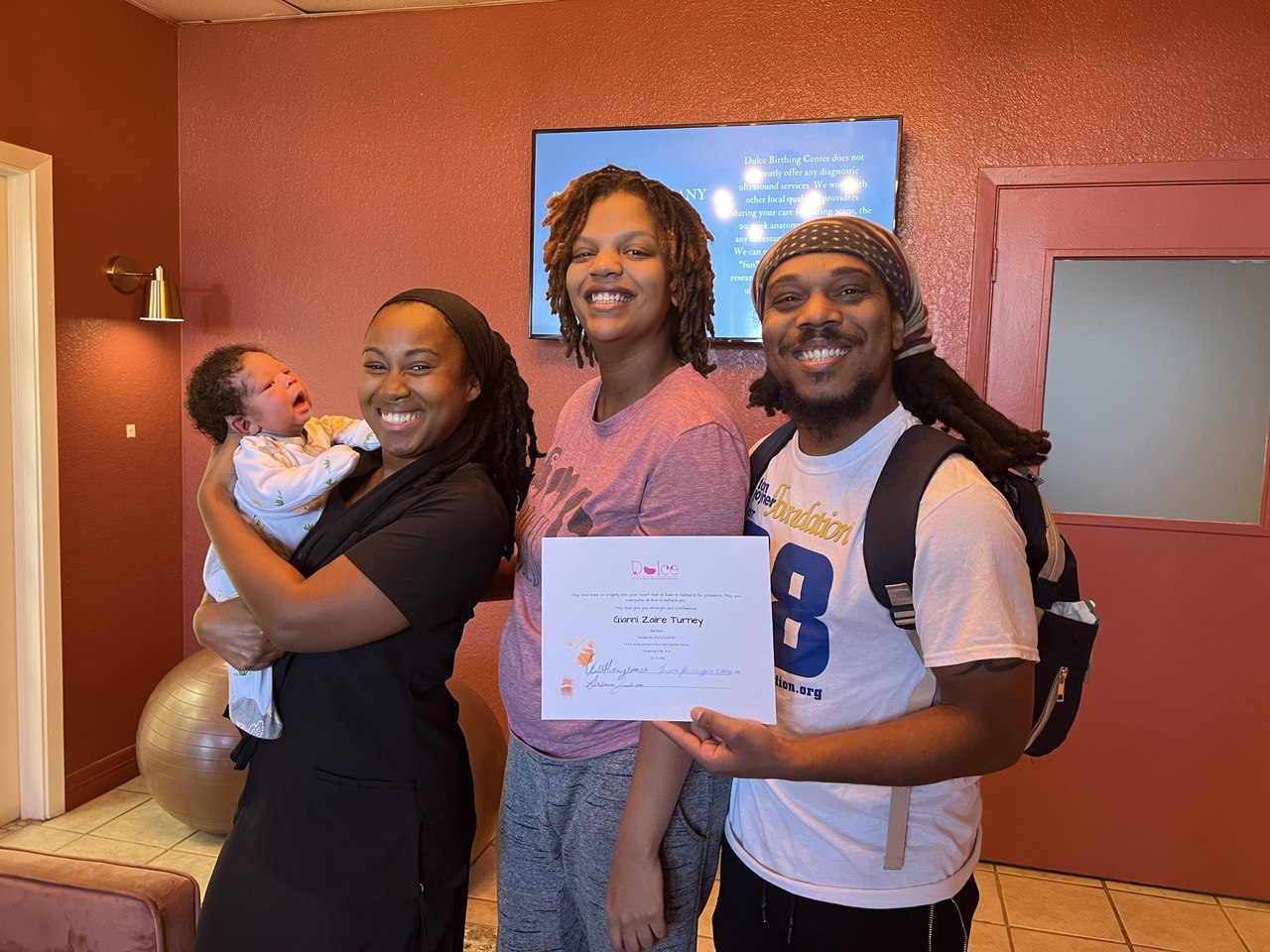
Bringing a child into the world is one of the most sacred experiences in life. The process in which a woman ushers life from her womb requires a dedicated, thoughtful approach that doula, Susanna ‘Susie The Doula’ Israel has prioritized within her practice. Through culturally responsive care and genuine connection to the specialty of birth work she has cemented herself in a field that Israel considers to be her destiny. EBONY sat down to speak with Israel for Black Business Month to explore her work, how she approaches the birth process, and why she felt called to this field. She expressed herself candidly, sharing details of her experience within traditional medical settings as a doula to the Black maternal mortality rate, and she feels we move forward as a people.
EBONY: What inspired you to become a doula?
Susie The Doula: It’s my bread and butter; I actually didn’t even anticipate this route. I was a realtor and a data analyst at an affordable housing nonprofit in the city of Houston. I thought I was going to go into development [then] I was listening to a radio show where two older women who were guests were talking about their childbirth experience, and they started talking about colostrum. I was like, ‘what the heck is a colostrum?’ It led to me learning about the golden milk that comes out of mothers, and I was never taught about that. So then, I started researching childbirth, because I actually didn’t know how childbirth [actually] happened. While doing research, I saw the horrendous maternal mortality rate, specifically for black and brown women in the U.S. I started watching different documentaries like Aftershock, learning about the obstructive violence that was happening. I needed to do something; I needed to help. So, I took a doula training, got certified, and started doing non-clinical work as a doula.
What did your educational path to becoming a doula look like?
There are a lot of doula training and certification programs out there. I did training with a Black midwife in Texas. I think I needed a trainer who was also a Black woman, so I could better understand how to help Black women. When I did her training, I was able to go over the foundations of birth and postpartum care, and I was able to start attending births. Doula training is a little bit more fast track opposed to midwifery because midwifery is clinical and it’s extensive.
Getting to the core of it, what’s the biggest difference between being a doula and a midwife?
As a doula, we’re essentially doing everything non-clinically. We can give education, we can advocate, and we can help provide the comfort measures for birth, like help give some spouse education for the [partners] trying to figure out what’s going on. And then of course, postpartum care. As a midwife you’re a provider. I will be certified to be able to actually take on patients with my National Provider Identification (NPI). I can do blood draws and cervical exams.
What role do you fulfill in your client’s experience from pregnancy throughout the postpartum experience? Has your work enhanced the lives of the mothers you work with?
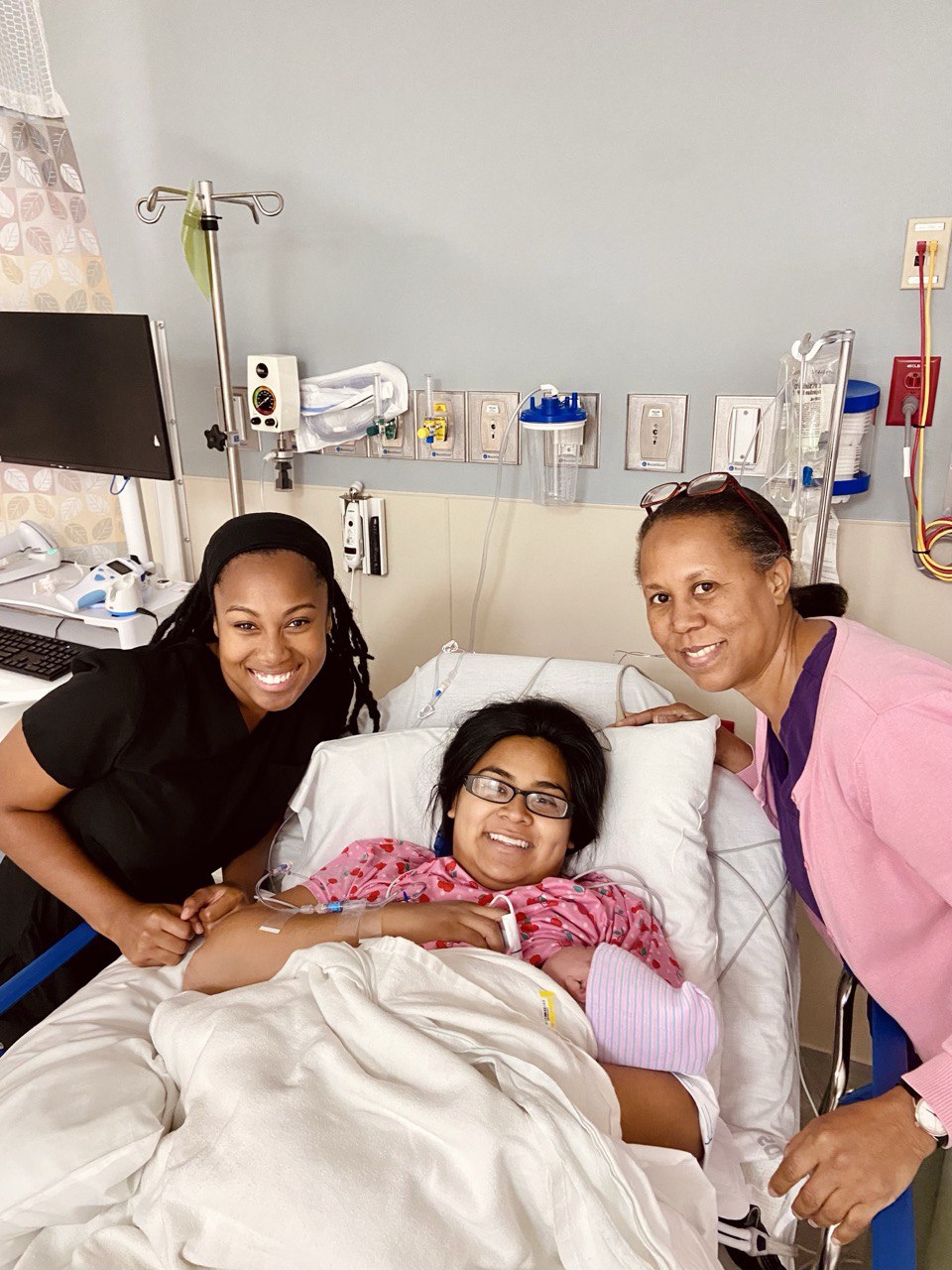
I handhold a lot of people. A lot of people are afraid of the system and have had traumatic experiences. Families have [full] access to me; we do my weekly check-ins and help with medical terminology that their providers may use that they’re not familiar with. I give them evidence-based information on delayed cord clamping, newborn care, etc. Every doula has a different mechanism, but I’m doing nutrition journals to see what they’re eating, helping them with exercise regimens, different stretches to help get their hips open, and birth planning. There are so many moms I work with that are amazed at how much information they’re not given by providers in hospitals.
Your business is built around caring for others. What does that mean to you?
I have always been given different synonyms for my personal spirit of how people view me as being joyful, positive, optimistic, a nurturer. Have you ever been so in tune with something you’ve done before that it’s almost seamless? It’s like your everyday personality. Like your everyday character. That’s how birth work is for me. It fits so much with my personality. It fits so much with my natural abilities. It fits so much with the way my brain computes life. It’s like this profession was built for me. That’s how it feels.
Black maternal health is among one of the most alarming health disparities in this country. Have you encountered any challenges around the work you do as a doula?
Yes. It can be a little difficult, especially depending on the setting. I say that because I have assisted as an advocate in the space of a doula in hospitals, home births, and birth centers. Each setting, care team, and provider dictates the experience and how much effort we, as the family’s team, need to put in to make sure not only are we not offending their provider by the patient’s advocacy and autonomy, but working strategically to make even their providers feel involved. There’s a lot of times where patients have specific autonomy, but the providers will fight them. And so that’s where it becomes almost like chess, working strategically to make sure the families are at ease and can get what they want within the means of the hospital guidelines. Birth center settings have been a little bit better. I have had some centers where they haven’t had any women of color on the team. People will make our pain feel diminished because we’re people of color. I feel like oftentimes when the mothers are getting to that point of suffering, it’s not taken as seriously. I’m trying to gather my words because it makes me want to cry every time. I’ve never had a situation where the hospital has just handled it. Some hospitals I’ve been to are actually very patient-centered. However, there’s not a lot. The biggest thing for advocacy is really training up the family on what their patient rights are.
What does culturally competent care look like to you?
I think it’s understanding the past and present to understand how to serve better in the future. I think a lot of people like to negate slavery when it comes to how the medical system was founded. In order to have culturally competent care, we have to have more providers that not only look like us, but can understand and listen for integrative care. Like, you know, they’re here to do a job for us, not the other way around. It takes compassion, it takes education, and consideration, and actual care.
Why is it important for Black families to have access to Black birth workers?
Being able to recognize and be comfortable with somebody that looks like you, makes it feel like home. Being able to have somebody that’s competent, that still looks like us, even a bonus, because like we say, not everybody that’s skinfolk is kinfolk. Black mothers and families deserve to have an experience that is both safe and accessible. Having access to Black birth workers is just one part of hope for a larger system we’re fighting to dismantle. Having that familiarity and cultural understanding is something everyone should have access to.