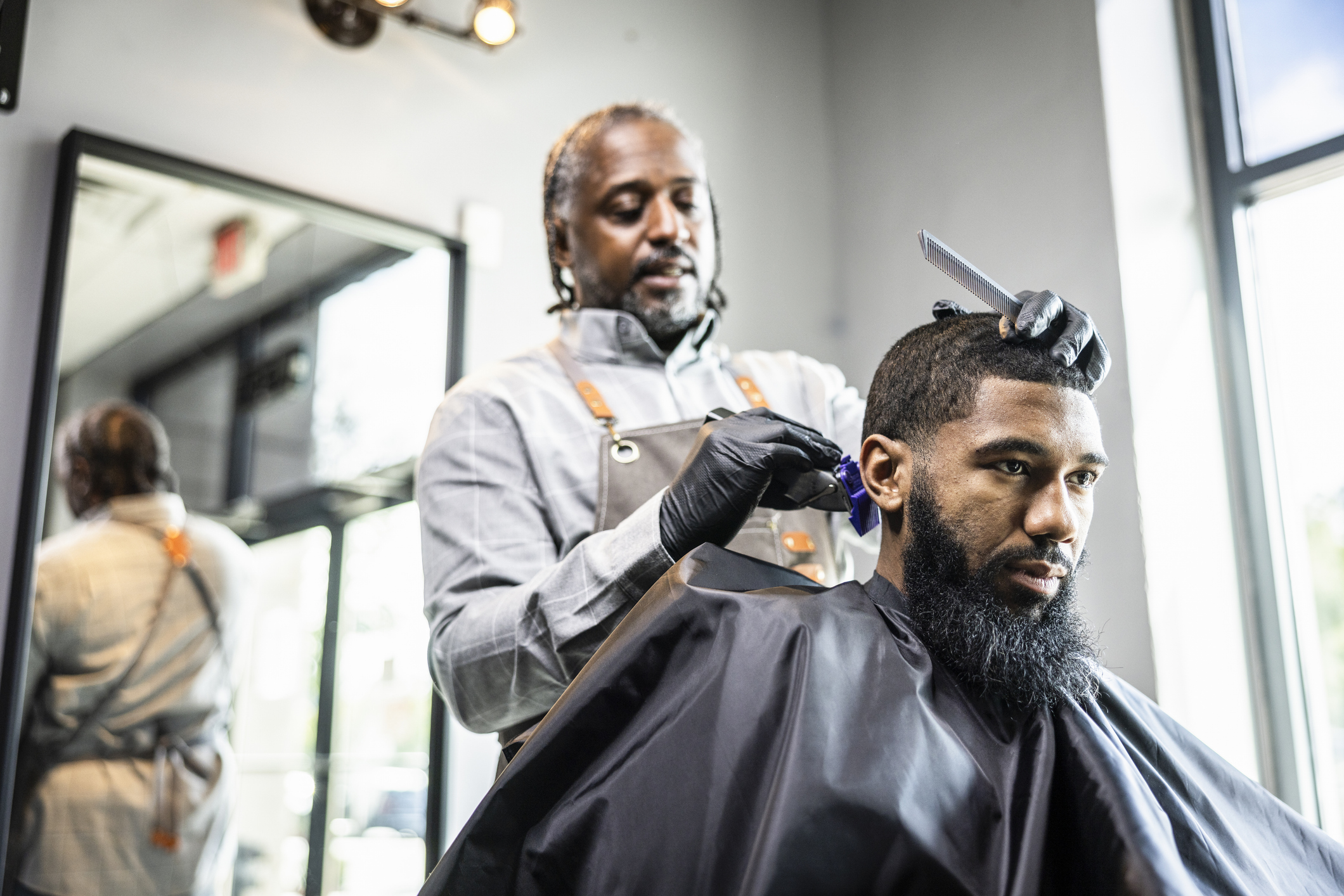
There was a time when a lineup was just maintenance. A quick stop at the barbershop before church, before school, before somebody’s auntie’s cookout where reputations were quietly assessed over potato salad. But somewhere between the fade and the front office, grooming for Black men stopped being upkeep and started becoming language.
A crisp line is no longer just a look. It’s a statement. It’s intention. It’s discipline made visible before you even open your mouth.
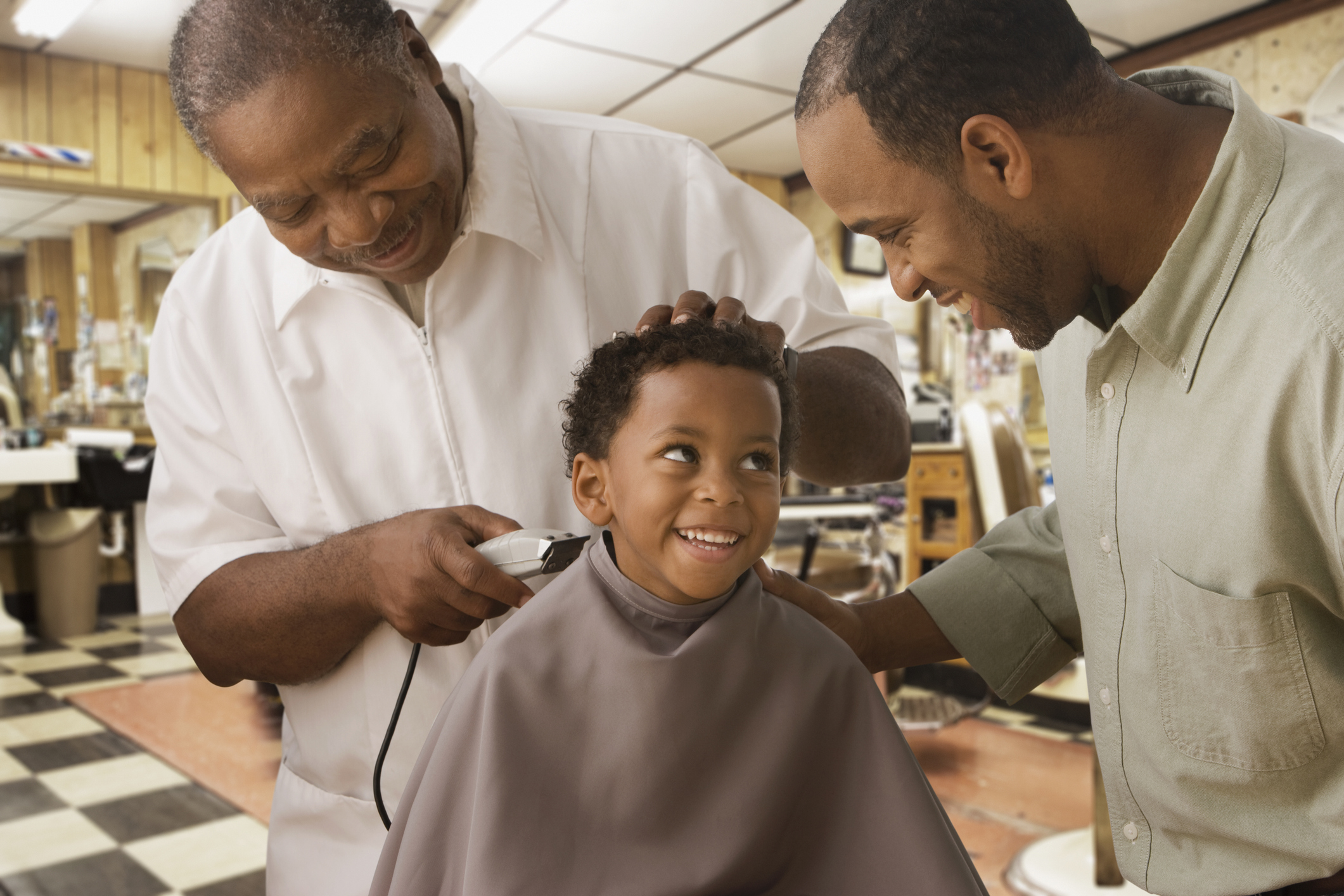
The barbershop has always been our first boardroom. Before there were LinkedIn headshots, there were swivel chairs, mirrors, and that unspoken agreement that how you present yourself is how the world will receive you. You learned early that a clean taper could shift how teachers treated you, how girls looked at you, how elders spoke to you. It wasn’t vanity. It was strategy. And now, that same strategy has scaled all the way up.
Look at LeBron James, whose hairline has become a cultural subplot over the years, oscillating between jokes and quiet admiration for its resilience. Or Drake, whose beard and lineup stay so precise it feels less like grooming and more like architectural design. Even Michael B. Jordan, who moves through Hollywood with a grooming regimen so dialed in that it reads as part of his brand equity. These men aren’t just getting haircuts. They’re curating presence.
Because presence, in 2026, is currency.
But before the needles, before the passport stamps, before the group chat starts asking “who’s your doctor?”, there’s been a quieter shift happening in plain sight: Black men have entered the dermatologist’s office.
And not on some emergency “something’s wrong” timing. On routine.
Appointments are booked for hyperpigmentation that’s been lingering since high school. For acne that never quite got the memo to leave after puberty. For acne scars that sit like receipts from a past version of yourself. There’s a new level of literacy here. Men who once used bar soap for everything now have cleansers, exfoliants, serums, SPF lined up like a starting five. Chemical peels are no longer mysterious. Facials aren’t coded as feminine. They’re maintenance. They’re correction. They’re investment.
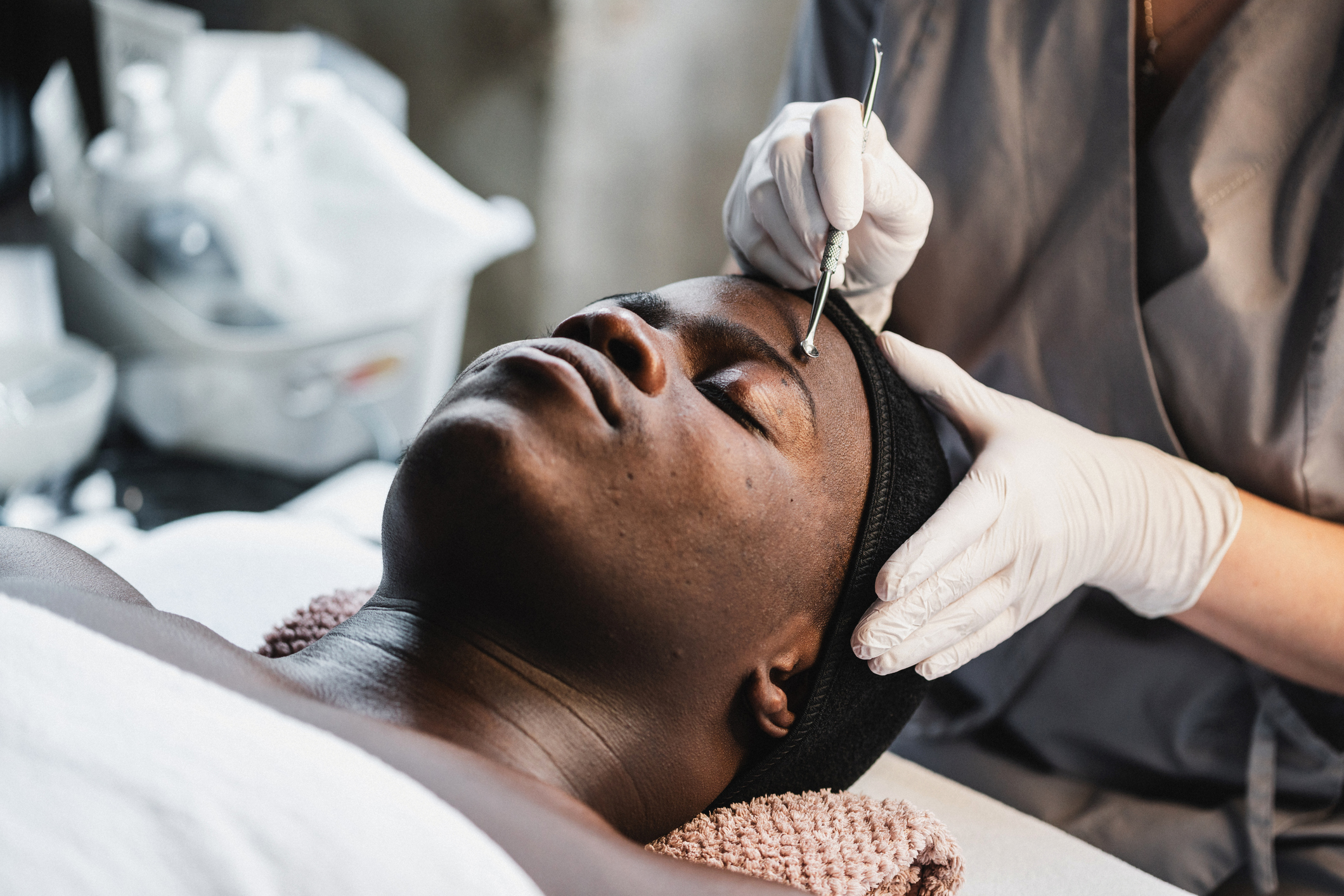
You’ll hear it casually now. “My esthetician said…” in the same tone someone might say “my barber said…” That parallel matters.
Because skin has become the new lineup.
A clean hairline might get you in the door, but clear, even skin keeps you in the conversation. It signals care, discipline, attention to detail. And for Black men, specifically, addressing hyperpigmentation isn’t just cosmetic. It’s corrective. It’s undoing years of misinformation, lack of access, and products that were never formulated with us in mind. So when a man finds a routine that works, it’s not just glow. It’s relief.
And let’s be honest. The first time a facial hits right, it changes you.
You walk out looking like you drink water, mind your business, and have a 401(k).
Then, naturally, comes the escalation.
“Brotox” has entered the chat, and no one is really whispering about it anymore. Black men are booking appointments, smoothing foreheads, softening frown lines, and calling it what it is: upkeep for the face the same way a lineup is upkeep for the hair. It’s less “I’m trying to look different” and more “I’m trying to look like myself on my best day, every day.”
And then there’s Turkey. Not the holiday meal. The destination.
Flights to Istanbul have become the new rite of passage for men not quite ready to let go of their hairlines. Hair transplants, once a punchline, are now a passport stamp. You’ll see a man disappear for a week and come back with a fresh perspective and a newly reinforced hairline, talking about “just needed a reset.” The group chat knows. The group chat always knows.
But here’s the thing: beneath the humor is something deeper. A refusal to accept inevitability. A pushback against the idea that Black men should just “let it go” when it comes to aging, grooming, or presentation. For generations, we were told to be low-maintenance, to not care too much, to let the world define what masculinity looks like for us. Now, that definition is being rewritten in real time.
And it’s not just about hair.
Skin care routines have entered the daily rhythm in a real way. The same man who knows his barber’s off-day schedule also knows which sunscreen won’t leave a purple cast, which serum actually fades dark spots, which moisturizer won’t break him out before a big meeting. The knowledge gap is closing, and with it, a whole new standard is being set.
What’s fascinating is how this evolution mirrors larger cultural shifts. Think about the precision of style during the Harlem Renaissance. The tailored suits, the polished shoes, the intentional presentation of self as both resistance and refinement. Or the 90s, when celebrities like Usher, Morris Chestnut and LL Cool J made grooming part of the aspirational lifestyle, pairing fresh cuts with luxury aesthetics. Today’s lineup culture is a direct descendant of that lineage, just with better lighting and higher stakes.
Because now, the audience isn’t just the block. It’s the timeline. It’s the algorithm. It’s the hiring manager who Googles you before your interview even starts.
A clean lineup photographs well. It travels. It scales.
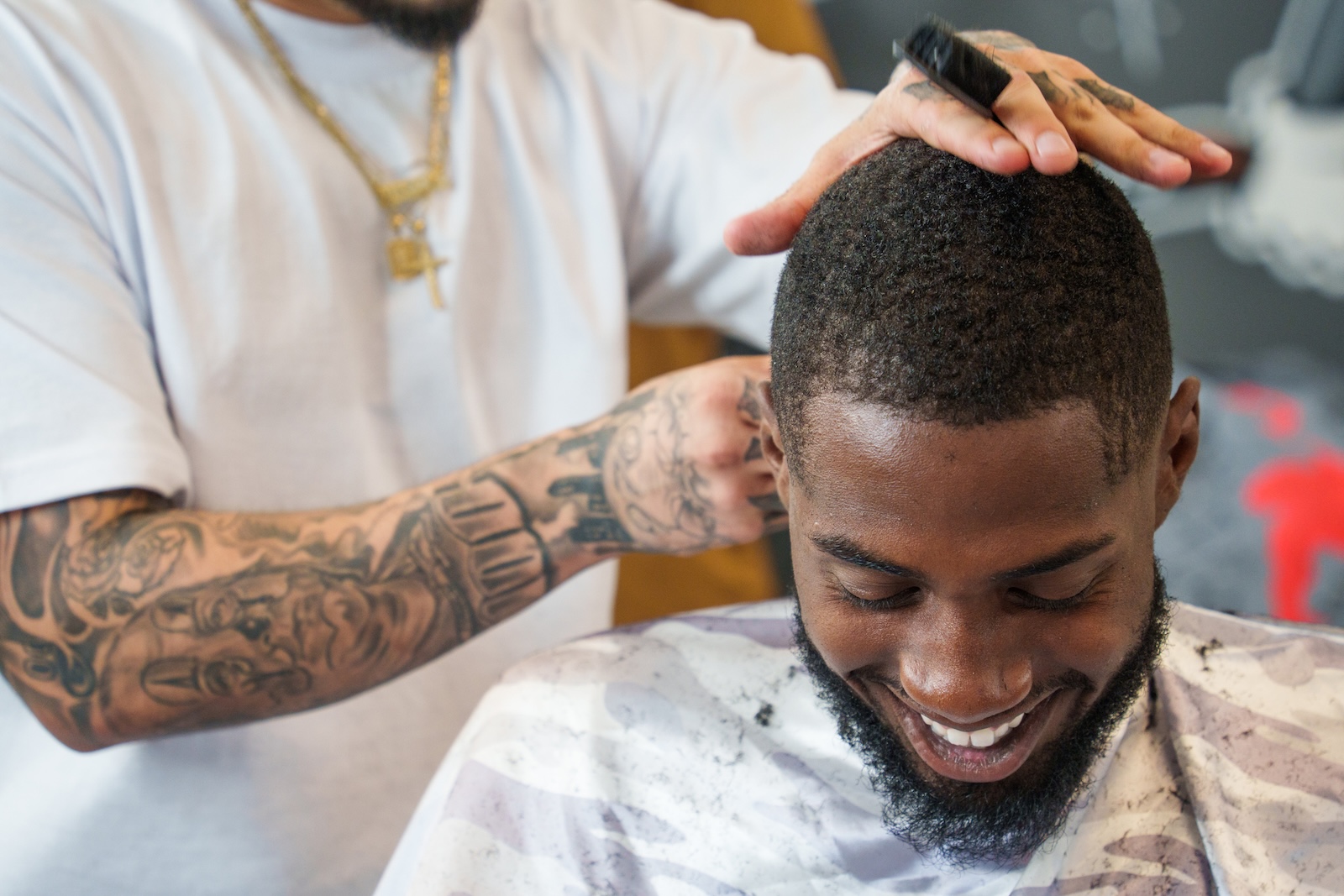
And yet, even as grooming becomes more polished, the barbershop remains the heartbeat. It’s still where conversations happen unfiltered. Where debates about whether to go bald or book that Turkey trip unfold in real time. Where a man can sit, look in the mirror and decide how he wants to show up in the world.
Line-up culture, at its core, is about control in a world that doesn’t always offer it freely. It’s about choosing how sharp you want to be seen, how intentional you want to feel, how present you want to appear. Whether that’s through a weekly fade, a dermatologist-backed skincare routine, a facial that resets your whole face, or a quiet flight overseas that brings your hairline back like it never left.
And if that sounds like a lot of effort, it is.