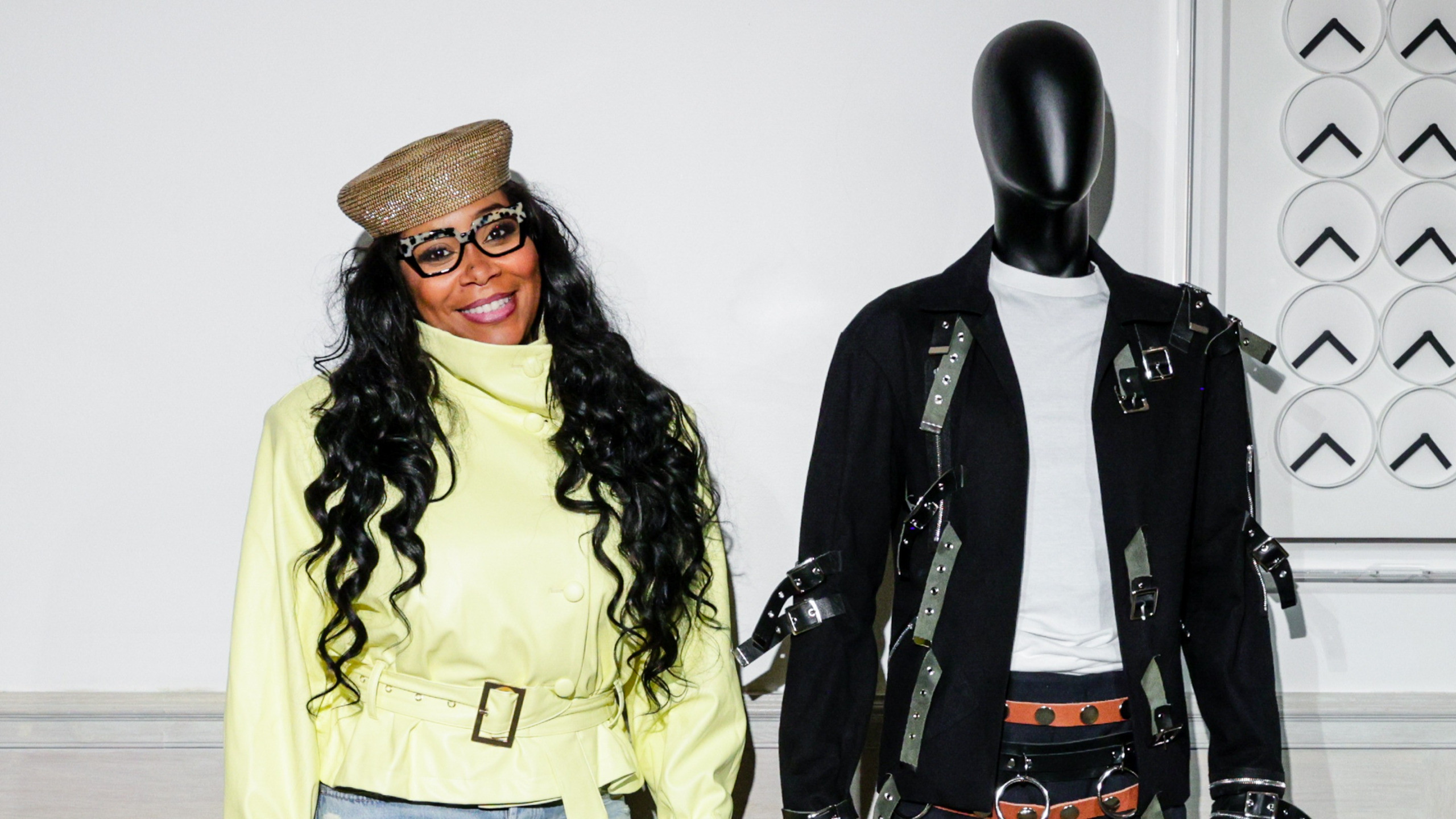
There’s a difference between dressing a character and dressing a legacy.
For Marci Rodger, the costume designer behind Michael, that difference wasn’t theoretical. It was stitched into every seam, every rhinestone, every bead that refused to be mistaken for a sequin. Because when the subject is Michael Jackson, accuracy isn’t aesthetic. It’s obligation. Rodgers spoke to an intimate group of fashion insiders at an advanced screening of Michael in partnership with the Black in Fashion Council and Lionsgate. Moderated by Asia Ware of The Cut.
And Rodger understood the assignment in a way that felt less like hiring and more like destiny.
“Do you really want to know the answer?” she says of landing the role. “It was God. And that’s the only answer.”
That kind of certainty carries weight. The kind that shows up in the work.
From Jet Magazine to the Big Screen
Before there were fittings, there was research. Not the kind you Google and call it a day, but the kind you inherit.
Rodger’s foundation started in her parents’ house, flipping through old issues of Jet and EBONY, watching archived footage on YouTube, absorbing Michael Jackson the way many Black households did, not as a distant icon but as part of the cultural furniture.
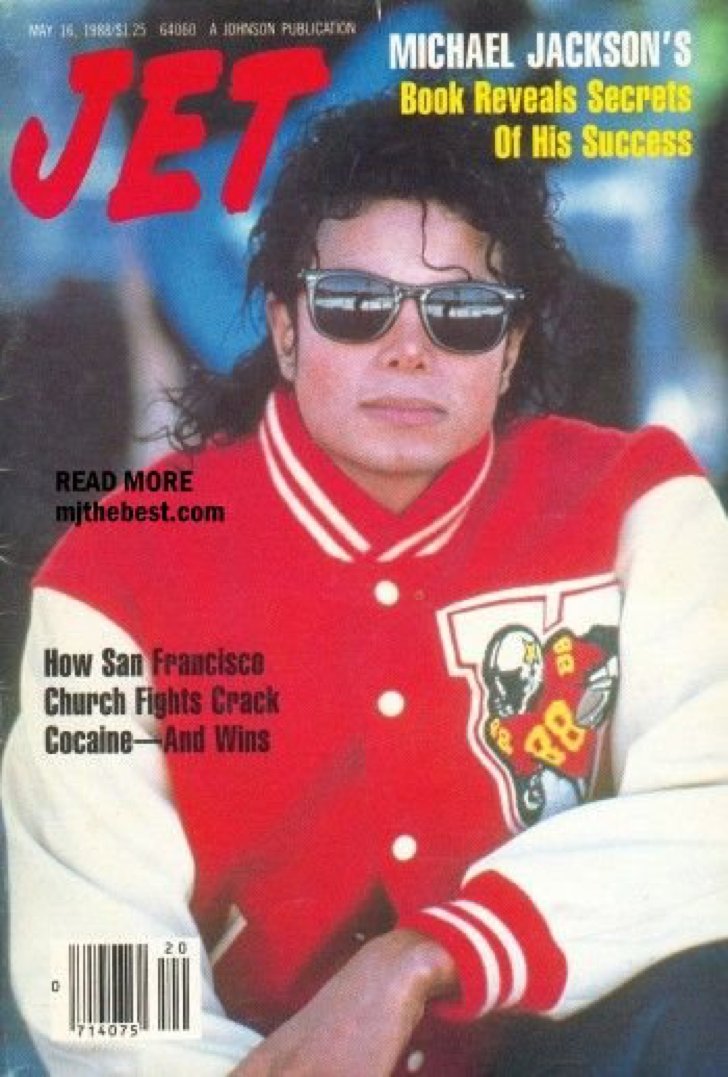

But nostalgia alone doesn’t build a wardrobe that holds up under scrutiny. So she went further. She studied garments in person. Examined construction. Questioned what she thought she knew.
Case in point: the GRAMMY jacket.
What the internet told you was sequins, Rodger clocked as beads. Tiny, precise, unforgiving beads that required sourcing at a level most people wouldn’t even think to attempt. That wasn’t extra. That was the job.
“I’m very proud of myself when it came to the devil in the details,” she says, and it doesn’t read as ego. It reads as standard.
The Jackson Five Was the Blueprint
Ask her favorite era, and she won’t give you a singular look. She gives you a philosophy.
“All of them,” she says. And she means it.
Still, she circles back to the Jackson Five. Not out of nostalgia, but because that’s where the story starts. That’s the foundation. That Midwest energy. That early discipline. That first glimpse of what greatness could look like before it had a name.
It’s also where Rodger found herself in the work. A kid from the Midwest translating another kid from the Midwest, both shaped by environment before the world stepped in.
From there, the film moves through different “beats” of Michael’s life, and Rodger tracks each one with precision. No improvisation, no reinterpretation for the sake of ego. Just fidelity to what was.
When You Can’t Replicate, You Respect
Of course, not everything could be recreated exactly.
The Pepsi commercial jacket, for instance, lives behind the walls of intellectual property. Ownership matters, legally and culturally. So Rodger did what great designers do when the door is closed. She got as close as possible without crossing the line.
“I definitely wanted to replicate it,” she says. “But that was beyond my control.”
That tension between authenticity and limitation is where lesser work falls apart. Here, it forced a different kind of creativity. One rooted in respect, not reinvention.
Clothes as Method Acting
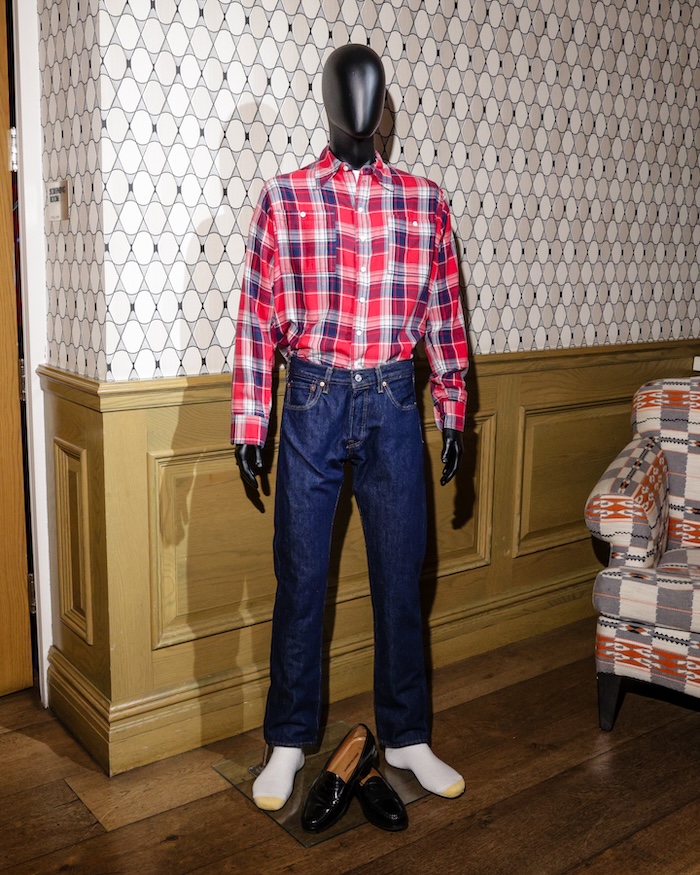
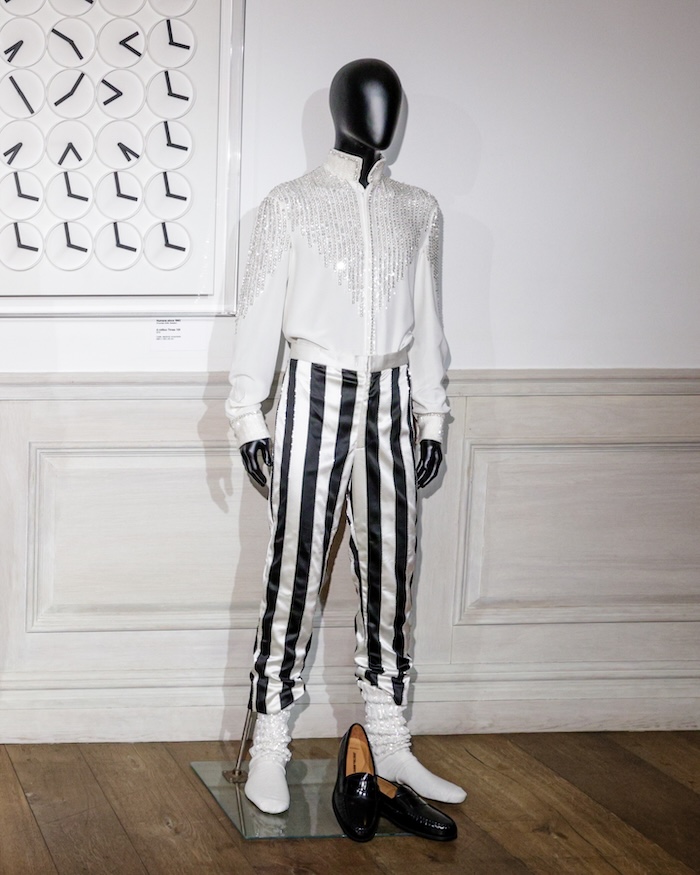
If the clothes looked lived in, it’s because they were.
Jafar Jackson didn’t just wear the costumes when cameras were rolling. He needed them in rehearsal. Needed the weight of the jacket, the restriction, the layering. Needed the physical cues that turn movement into memory.
Rodger adapted in real time. Adjusting shoes because his feet were taking damage. Reworking garments so they could move with him, not against him.
Because here’s the thing about Michael Jackson. The clothes weren’t decoration. They were part of the performance.
And when it clicked, Rodger felt it.
“That wasn’t Jafar,” she says. “That was Michael.”
Accuracy Is a Love Language

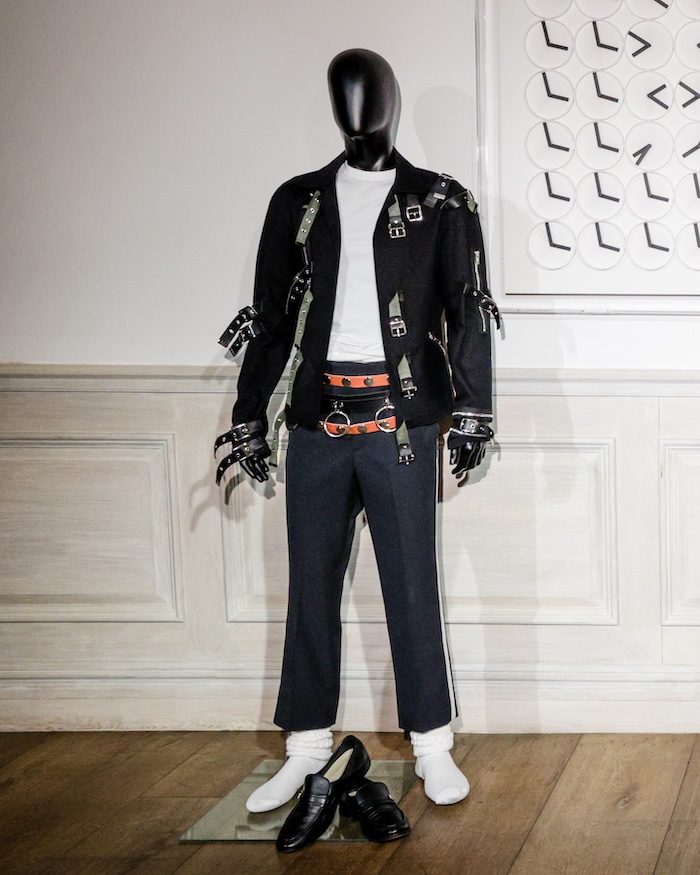
The pressure of dressing Michael Jackson isn’t just about the man. It’s about the people who remember him.
The fans who will pause, rewind, zoom in, and dissect every frame. The band members who see themselves reflected in the background. The family members who were actually there.
Rodger kept all of them in mind.
“It’s not just Michael that had to look right,” she explains. “His entire world had to feel accurate.”
That meant hundreds of background actors dressed with the same level of intention as the lead. Screenshots layered over screenshots. A desktop full of references. A team operating like historians with sewing machines.
And when a real-life band member walked up and said, “I just saw myself,” that was the confirmation. Not applause. Recognition.
Manifestation, But Make It Work Ethic
Rodger’s entry into costume design reads like a story you’d side-eye if it wasn’t backed by this level of output.
Howard University. A declaration with no blueprint. A study abroad stint at Central Saint Martins. A random walk into a costume design department. A full ride offer that followed.
“I manifested it,” she says.
But manifestation, in this case, wasn’t passive. It was paired with obsession. With a willingness to learn the difference between a bead and a sequin and then rebuild an entire jacket around that distinction.
Legacy Isn’t Loud. It’s Precise.
At a certain point, the conversation shifts from Michael’s legacy to Rodger’s own.
And she doesn’t lean into grandeur. She leans into responsibility.
“My legacy is to be accurate,” she says. “To honor the greats who shaped our culture.”
It’s a quiet statement, but it lands heavy. Because in an industry that often rewards interpretation over integrity, Rodger is choosing documentation. Preservation. Truth.
And maybe that’s the real takeaway from Michael. Not just that greatness can be recreated, but that it requires someone willing to study it, respect it, and get every single detail right.
Even the ones most people would miss.