Who killed Tupac Shakur? For almost 30 years, that question has gone unanswered, making it arguably one of the biggest unsolved mysteries in music history.
On August 31, a Las Vegas jury finally closed that chapter.
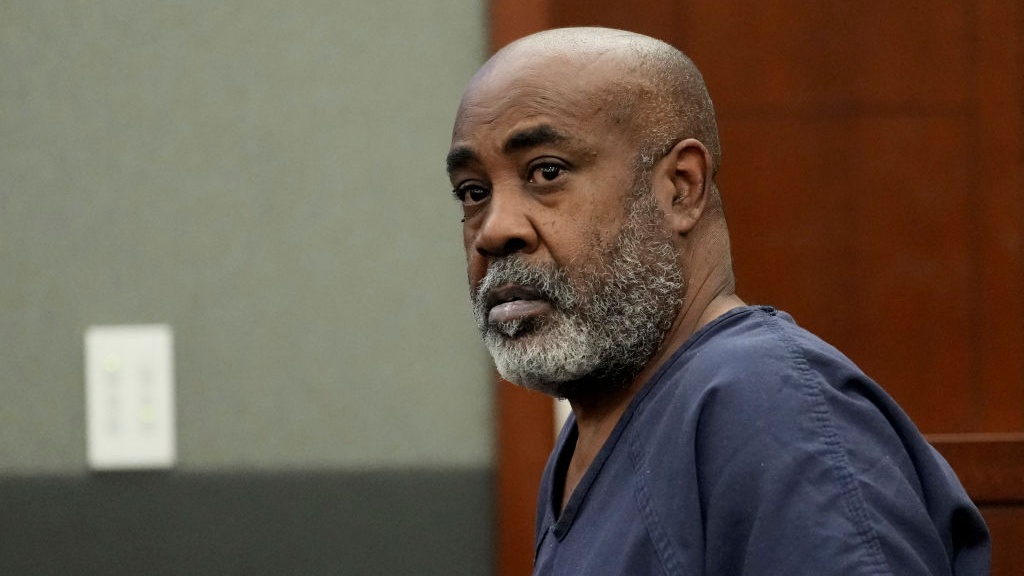
Duane “Keffe D” Davis is going to prison for the murder of Tupac Shakur, nearly thirty years after the rapper died in a Las Vegas hospital room. A Clark County jury convicted the 63-year-old former Compton gang leader of first-degree murder with use of a deadly weapon in Shakur’s 1996 killing, and fans and his family alike across the globe can finally feel as though justice has prevailed.
Jurors deliberated for less than three hours after a trial that stretched almost two weeks, and prosecutors say Davis now faces up to life in prison when he’s sentenced in October. While prosecutors never accused him of pulling the trigger, under Nevada law, a person who helps orchestrate a killing can be convicted of it. Davis fit that role as the man who called for the shooting and put a gun in the hands of the people who carried it out.
Why did this case spark this sudden resurgence from police in finding justice? And why now? That mostly comes down to Davis’ own actions (and not very “critical thinking” actions, if we’re being honest). Not only is he the last living person known to have been in the white Cadillac that pulled alongside Shakur’s car that night, but he also talked about it for close to two decades. In the words of Suge Knight, he’s been “all in the videos,” giving police interviews and sitting for documentaries and podcast appearances.
In 2019, Davis put out a memoir, Compton Street Legend, where he laid out his own role in the killing, which, for someone who would later try to claim any type of innocence, was probably not the best move. As a result, prosecutors leaned heavily on that book at trial, and it pushed Las Vegas police to reopen the case and bring charges in 2023.
Chief Deputy District Attorney Binu Palal told jurors in closing arguments that Davis spent years trying to have it both ways: cashing in on interviews and book sales while assuming no one would ever come after him legally for what he admitted to. Shakur’s family sat through the verdict visibly relieved. Tupac’s sister, Sekyiwa “Set” Shakur, cried quietly as the room took it in, and people hugged outside the courthouse afterward, with some even raising a fist. The verdict came less than two weeks before the anniversary of Shakur’s death on September 13, a date that’s become something like an unofficial day of remembrance in hip-hop.
Davis’ attorney, Michael Sanft, argued at trial that prosecutors never had physical evidence linking his client to the scene and that the original investigation had been compromised. Part of the problem for the defense is that everyone else who was allegedly in that car has died, including the man prosecutors say fired the shots and the man who allegedly handed over the gun. Davis was the only one left standing in a courtroom to answer for any of it.
Thirty years is a long time to wait for a verdict in a case this big. But the point is, the time has finally come. For many people who grew up on Shakur’s music, this was the first time this case ever felt closed.