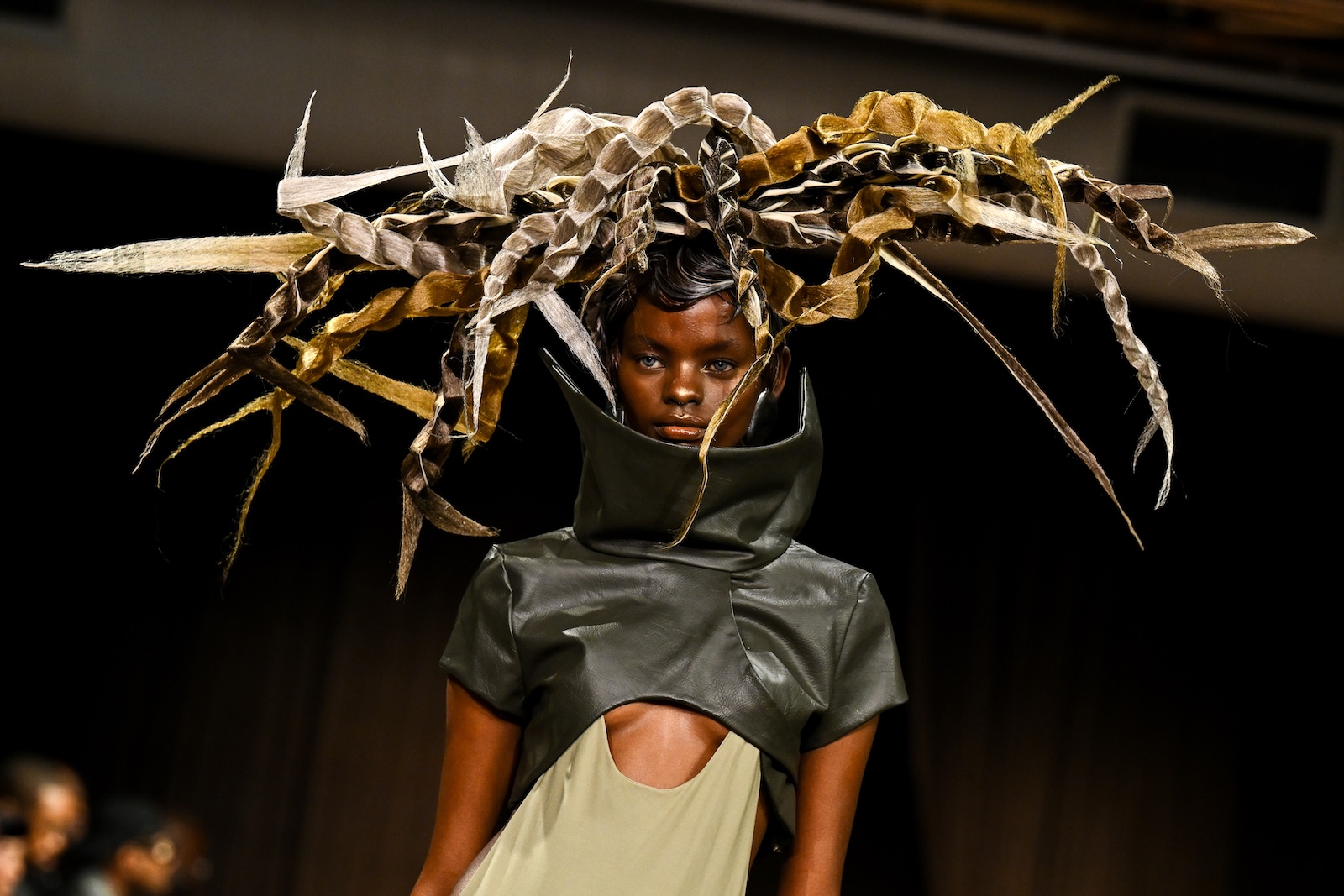
On a Friday night in New York City, Black Hair Reimagined felt like a family reunion paired with a hair/fashion show. Guests kept saying “we’re back for year 2!” Not in the nostalgic sense, but in the way a room full of people who understood they were there to celebrate the shared love for hair, fashion and community. What Jawara Wauchope and Jarrod Lacks have built with Echelon Noir is less about spectacle and more about restoration, a recalibration of how Black hair is seen, studied, and ultimately respected, especially as policy begins to catch up with culture through efforts like New York legislation co-authored by Michaelle Solages requiring cosmetology schools to properly teach textured hair.
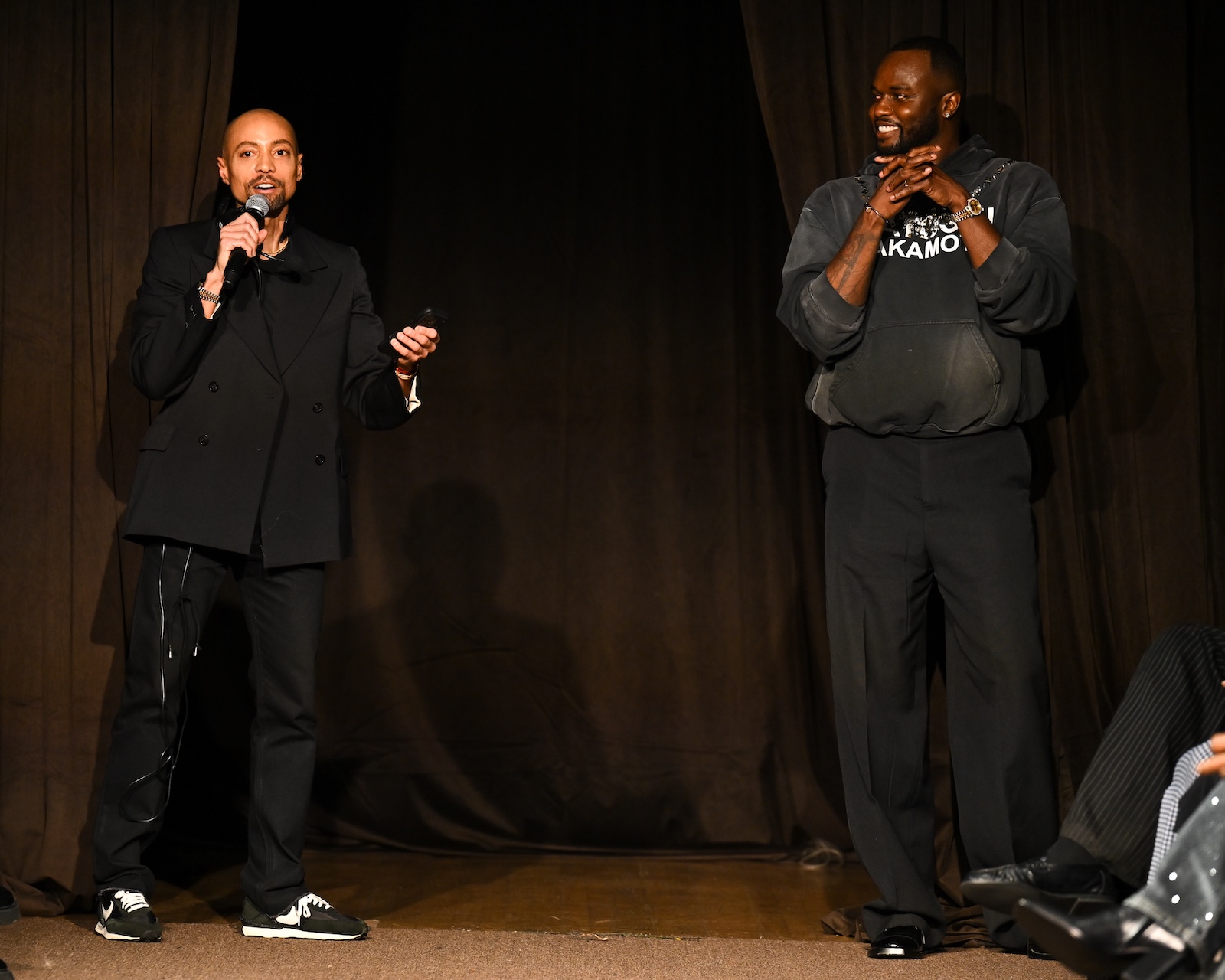
Backstage at The Altman Building, the energy moved like memory. Stylists, braiders, barbers and artists weren’t just creating looks, they were building language. The kind that doesn’t always need translation if you’ve ever sat between someone’s knees getting your hair done or watched a shape-up transform a face into a statement. This is where editorial meets inheritance.
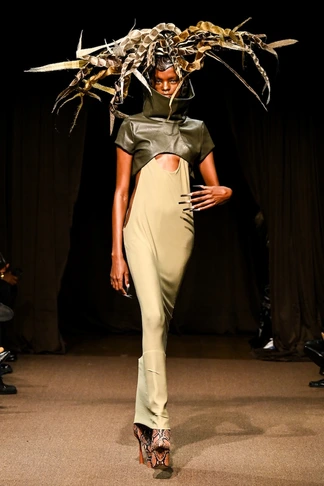
Jawara set the tone early, grounding the show in something bigger than trend cycles. “The inspiration came from Black hair and its relationship to spirituality and religion,” he said, referencing a deep dive into tribal histories and divine symbolism. “I wanted to create what I believe is the embodiment of god-like humans on earth, which is Black women.” His sculptural spikes and exaggerated forms didn’t read as fantasy for fantasy’s sake. They felt like protection, like mythology with a fresh blowout. “These are powerful hairstyles that I imagine gods would wear if they were walking among us today.”
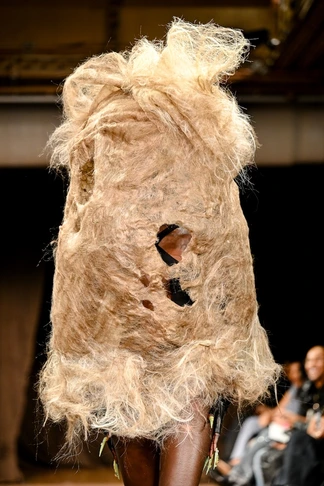
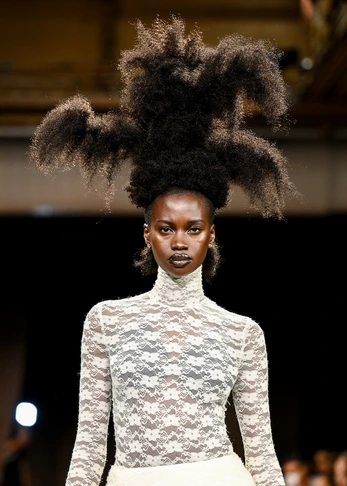
That tension between the ancestral and the now carried across the room. Vernon François approached hair like a living organism, something that breathes, shifts, and responds. “I’m obsessed with nature,” he said. “Watching trees come to life, fall asleep, and wake up again.” For him, the work is less about styling and more about translation. “Your hair is a part of your experience. You are not your hair. Afro hair is the most versatile fabric we have on our skin.” It’s a perspective that reframes the entire conversation, moving hair out of the category of maintenance and into something closer to philosophy. “This isn’t my job, this is my life’s mission.”
And then there’s the fashion, because hair doesn’t exist in isolation, not here. Solange Franklin, who worked alongside Vernon, framed it best: “Hair and fashion are intrinsically intertwined. They’re always in conversation, constantly evolving.” Sometimes that conversation is smooth, sometimes it’s loud, but it always resolves. “Taking it outside of regular clothes and regular hair is where the fantasy happens.”
If Jawara and Vernon are building worlds, the supporting cast is making sure they stand up in real life. Pekela Riley, founder of True and Pure Texture, who has acted as a mentor to many hairstylists over the years, understands the infrastructure required to make these moments possible. “In order to tell a texture tale, you need diverse textures,” she said, pointing to the extensions and materials that helped bring each look to life. But her focus doesn’t stop backstage. “How can you style anybody’s hair without knowing how to style 70% of the world’s hair? It’s absolutely criminal that textured hair was ever an oversight,” she said, a reality now being addressed in places like New York where legislation co-authored by Michaelle Solages mandates proper textured hair education in cosmetology schools. Her words land as both critique and call to action, especially as the industry continues to play catch-up.
There’s also something unmistakably communal about this space. Not competitive, not transactional. More like a relay. “It feels amazing to see it all come full circle,” Riley added. “What’s happening in Black hair and artistry right now is a spiral upward.”
That upward motion showed up in the references, too. Joshua Meekins and stylist Matthew Henson leaned into the ’90s, not as a costume, but as a blueprint. “What I loved most about the ’90s was the freedom,” Meekins said. “Everybody was bold enough to do whatever they wanted.” Henson echoed the sentiment, pulling from Nas, DMX, and Busta Rhymes to build out the visual language. “The ’90s felt like a time of progress and optimism in the community.”
But the real takeaway wasn’t nostalgia. It was permission. “Hair is a way to help people tell their story,” Meekins said. “There’s no set process. It’s all about expression.”
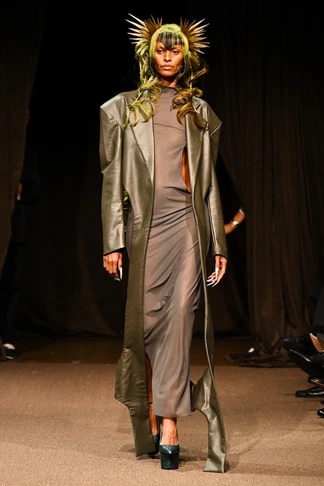

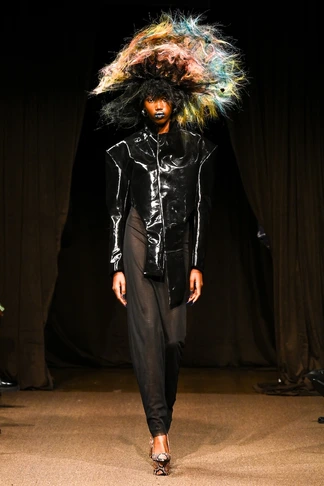


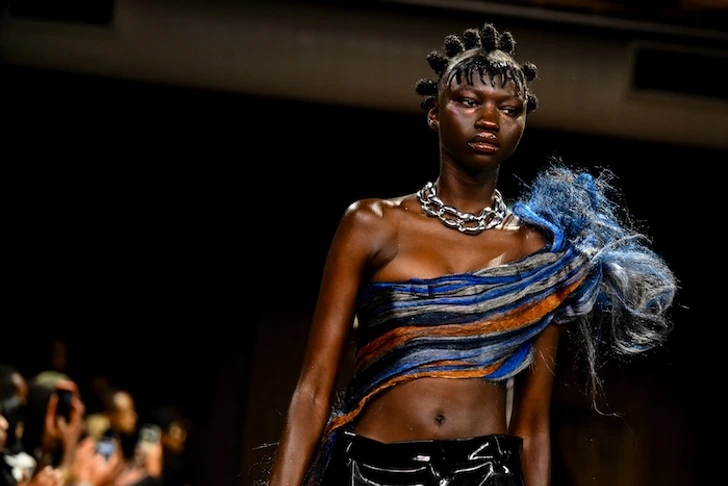


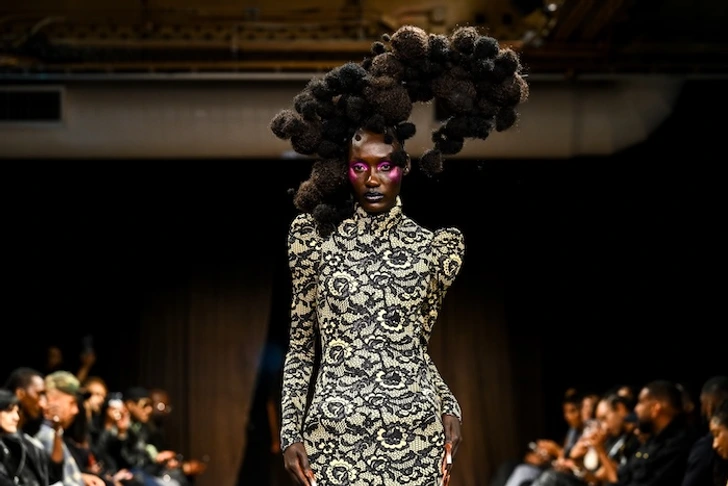

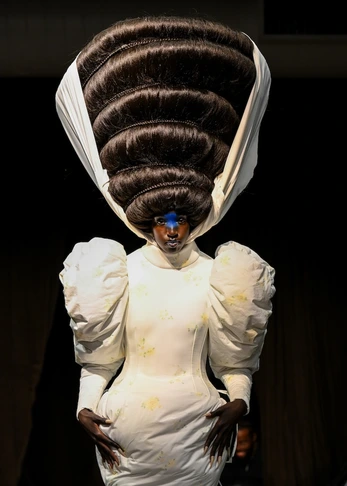
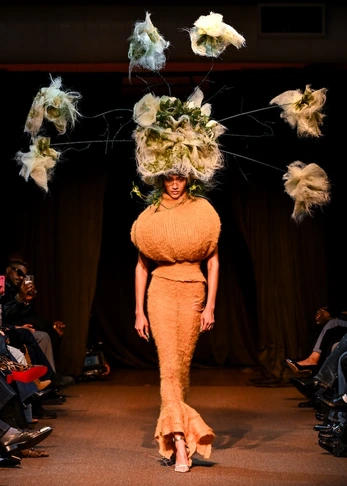
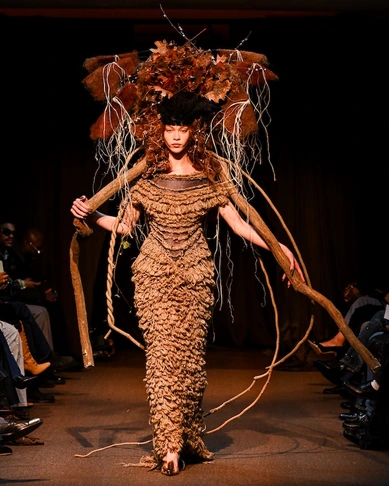


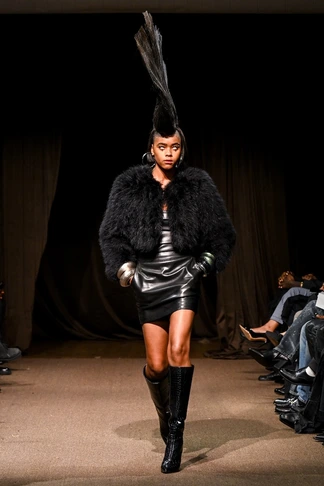
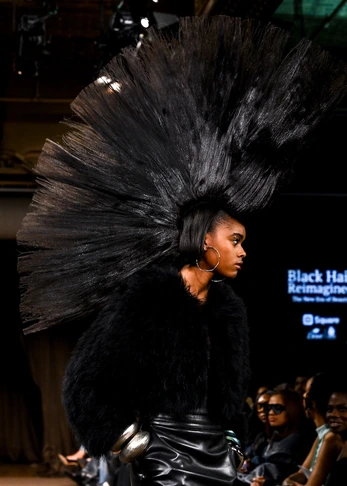


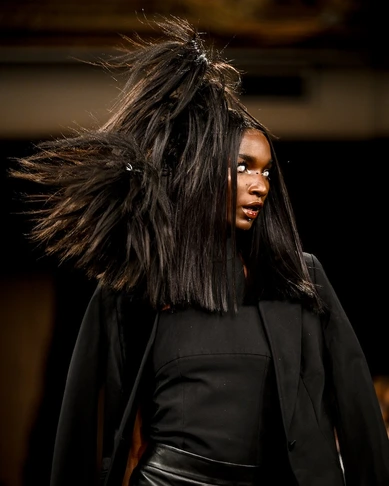

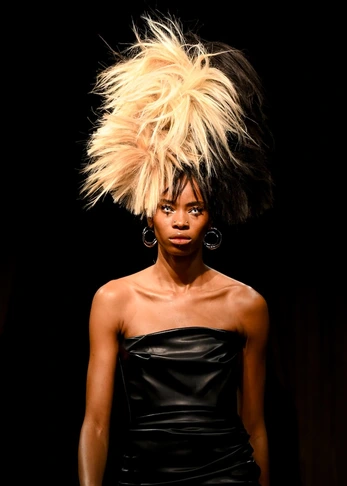


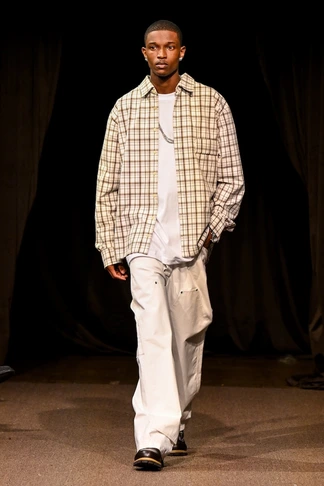


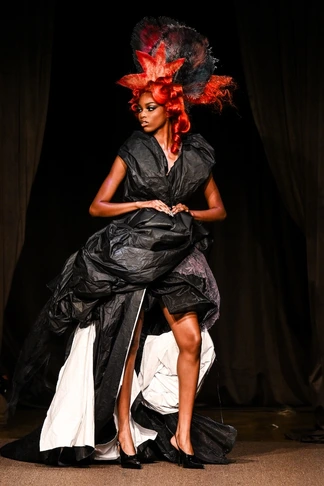
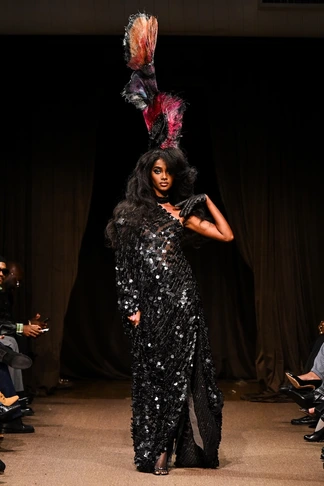
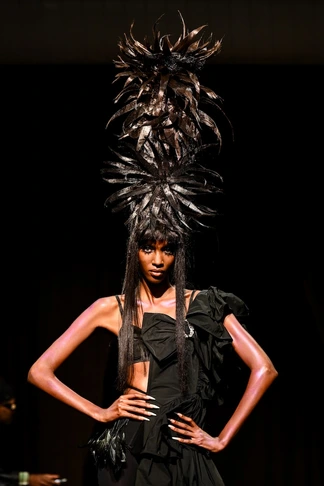


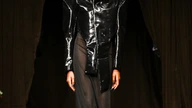
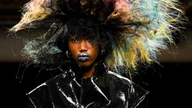

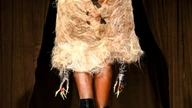


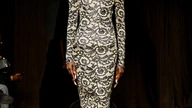
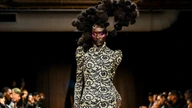


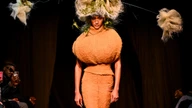




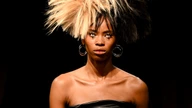


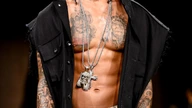
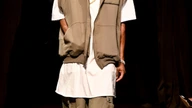





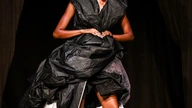

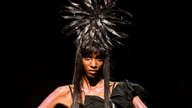

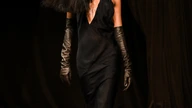
Elsewhere, Fesa Nu was working in a different register, one rooted in tradition but pushing toward texture and experimentation. “The inspiration was culture, where our African heritage comes from,” she said. “Braids are where it all started.” Her braided crowns and same-day constructions carried the kind of urgency that only comes from working under pressure. “The prep was chaos. It was a lot of takedowns and redos. But it all came together.”
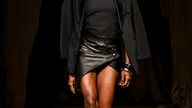
Edward Bowleg took that fantasy straight to the club. “It’s Banji club kid meets rock,” he said. “She’s sexy, she’s tough, she’s raising hell.” It’s a reminder that Black hair doesn’t just belong in galleries or on runways. It lives in nightlife, in movement, in sweat.
What Black Hair Reimagined does best is refuse to flatten any of this into a single narrative. It honors the salon, the barbershop, the runway, and the classroom all at once. With partners like Dove continuing to push legislation like the CROWN Act and platforms like Square investing in the business side of beauty, the ecosystem is starting to look more complete.
Still, the show makes one thing clear. This isn’t about waiting for the industry to catch up. It’s about building something so undeniable that it has no choice.
Because if there’s one thing that echoed through every look, every quote, every last-minute adjustment backstage, it’s this: Black hair has never needed permission. It just needed the right room.