When love begins, it presents itself as a designer garment tailored for you. It is what makes finding comfort in newness so enticing. But nothing as intricate as love and matters of the heart exist without tribulations. As the dust of novelty settles, love evolves to demand commitment in various forms, often requiring adjustments to ensure survival. In a social landscape where hashtags like #CouplesGoals still prevail, we rarely tell the average absentminded scroller that love is the ultimate prize of completion, let alone the dedication it requires.
As someone who’s been in a monogamous partnership for seven years, I realized within year two that love alone isn’t enough to sustain a long-term relationship. Maintaining the romantic spark, amongst other things, means getting acquainted with adjusting. Although the work of sustaining the spark varies from one relationship to the next, at the core of any romantic spark is desire. Desire only survives with intentional, unceasing work — and it’s not always gratifying. EBONY sat down with three couples to discuss the ins and outs of what sustainability has looked like for them.
Lorenzo and Nikkita
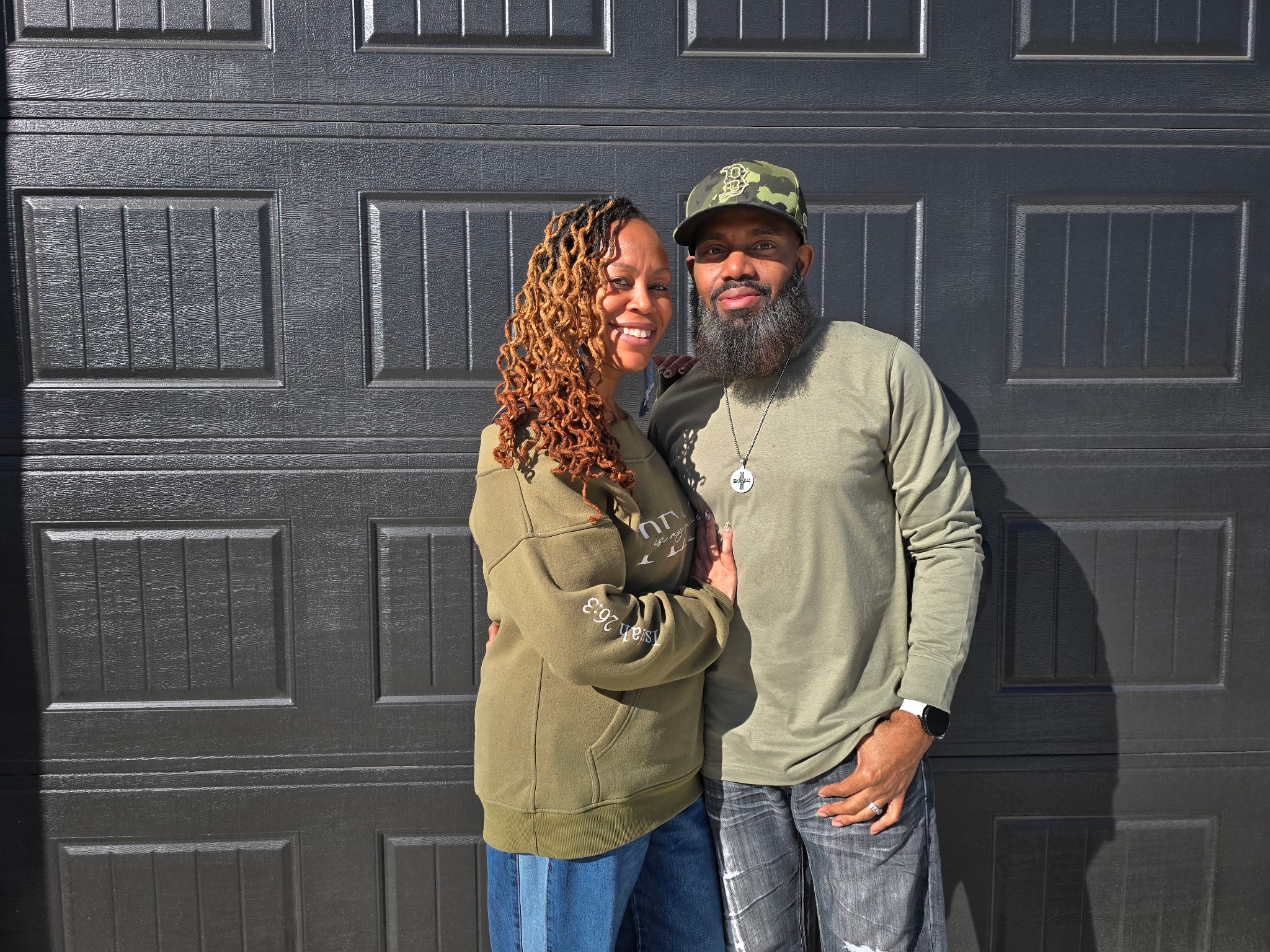
Together for 32 years and married for 26, Nikkita and Lorenzo’s love has been shaped by distance, duty, and repeated transitions, from military deployments to relocations that pulled them far from family. Those early years taught them to depend fully on one another, building a partnership rooted in faith and intentional prioritization rather than constant closeness. Today, they extend that same honesty to others through their podcast Dating and Loving Us, where they candidly explore the realities of marriage and family beyond the highlight reel.
EBONY: When did it become clear that in order to stay together, you’d have to work for it?
Lorenzo: Maybe five years. It was the understanding that we would have to be intentional to make things work that hit me. Everybody has [an idea] of how marriage should go, but you have another individual bringing their own ideals to consider. Realizing that let me know, ‘okay, compromise is going to have to be a priority,’ and being intentional with being able to compromise. Around that ten-year mark is when it was like, ‘What are we doing?’ We were trying to be married, yet we didn’t want to give up all of ourselves over to marriage. I didn’t want to lose my own identity. When we renewed our vows, is when we said, ‘If we’re going to do this, let’s really do it.’
Nikkita: I would agree. In those beginning years, I had to learn. The marriages that we were around, we saw things and thought, ‘Is that what I’m supposed to do?’ Sometimes, what we saw growing up was not what a marriage was supposed to be. So, what do we want and how do we want this marriage to be for our family? And it was at that ten-year mark that we had made some not great decisions in our marriage. I’m stubborn. I had to learn to get over it and move me aside. We were [either] going to do this, or we were going to divorce. We [decided] we were all in.
EBONY: How have you maintained your relationship through tough times and how have you worked together to ensure that both individuals and the union are being properly taken care of?
Nikkita: We’ve experienced a lot of major life changes. Deployments, moving [away] to Northern Virginia, then to Idaho. Moving to Idaho was a beast. So many things happened. We lost friends. I lost my sister while Lorenzo was deployed. I needed him more than I could have imagined, and he was right beside me. We definitely know each other to the point that he knows when I’m getting silent, when I’m irritated, and when to say ‘calm down.’ We can read each other’s body language at this point. Check-ins are [also] important.
Lorenzo: We’ve been together since 14 and 15-years-old, and the fact that we grew up together, the relationships she has, I have by default because we’ve been together so long. [Being deployed to] Idaho showed us where our marriage was and where it should be. I can attribute that growth to our pastors who poured into us. We learned and got to understand the meaning of marriage within the Bible. [Understanding] this is what you committed to when you said I do.
Chann and Montrel
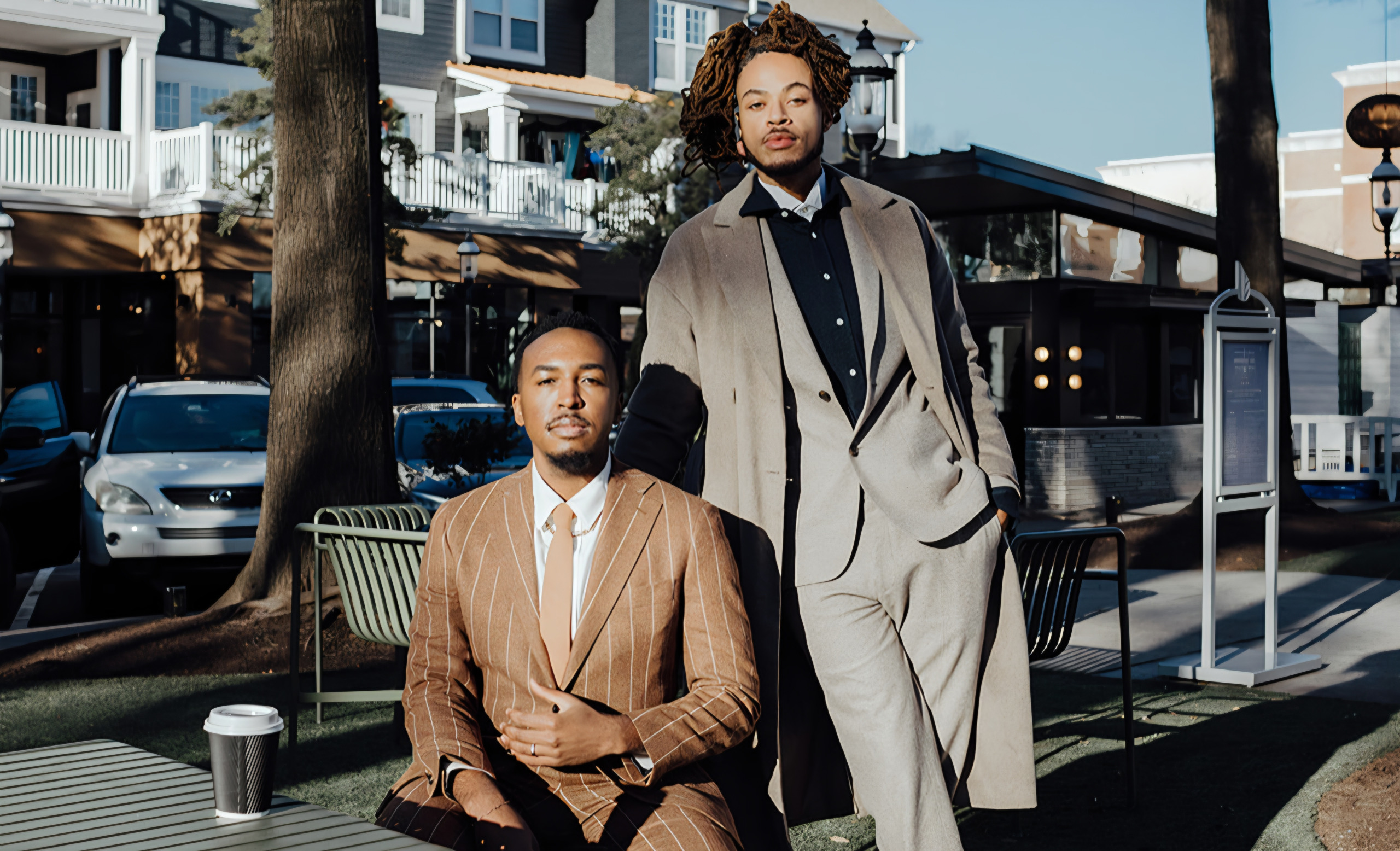
Eight years together and four years into marriage, Chann and Montrel approach love as an ongoing practice rather than a performance. As gay Black men and business partners behind Charlotte’s experiential gathering space, How Sanguine, they ground their connection in being seen, mutual service, shared ritual, and community care. Their intimacy is less about spectacle and more about presence—offering the representation they once lacked and now intentionally create.
EBONY: When did marriage get real for you?
Chann: I feel like marriage has gotten real over the last year, because we’ve been doing some very real stuff together. We started a business together. So not only are we married, but we also see a different side of each other because now we are in business together. We’re navigating a lot of firsts. I just transitioned into my thirties. We’re literally becoming. We went from young men to men. I have to see my husband, even when it’s getting real. This past year has been a lot of prioritization of my husband.
Montrel: For me, it was after I said ‘I do.’ Year one was me exploring. Well, what does this look like now that I’m married, and I have these friendships I was cultivating? Partially, you’re in a relationship with your friends, but this takes priority now. And then, years, you know, I’m also learning on a deeper level contractually when all this shit was coming up from the government about the state of our marriage. What does that mean if I’m bedside and he has to make the decisions for me?
I think specifically last year, what came into play for me was the growing pains of being still individual people. So what does that look like, honing in on each other’s growth patterns while still falling and re-loving each other? While still simultaneously recognizing that the root, for which we even got married, has a different purpose now, and how do we re-fall in love with that version of us, constantly growing into ourselves?
EBONY: What’s some advice you’d give a couple who are struggling to re-engage in their relationship?
Montrel: The advice I would certainly give to anybody with any facet of love that you go through is to stop giving a f-ck about the next person and what they’re projecting onto what a relationship looks like. Because what safety is to you may not look like safety to me. And when y’all have that covenant with one another, y’all are truly the passageway to decide what that looks like for you.
People put way too much on things like ‘Oh it’s Valentine’s Day, I should have gotten one hundred roses.’ But really, reciprocity looks different for different people.
Chann: The advice I would give to people is that you have to kill the ego. It’s not all about being right all the time. I feel like, as somebody who has a huge ego, ego death has been a big thing for me, and learning that it’s not about being right, it’s about ‘Does your partner feel safe and secure here?’ Sometimes we lose that whenever we want to win. I had to learn that compromising is a thing.
Misty and Nikkia
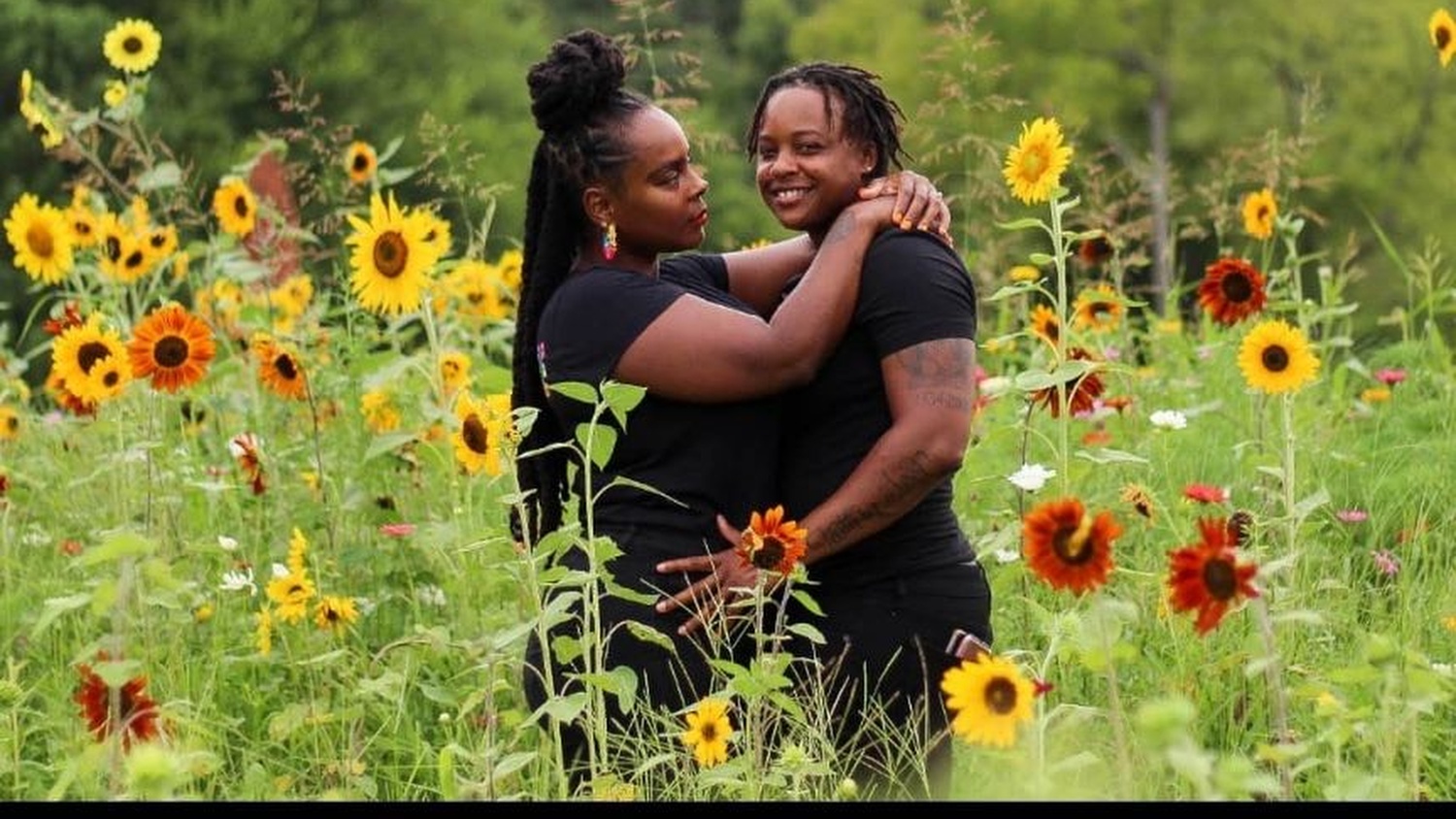
Seven years together and four years into marriage, Misty and Nikkia understand love as something that must be tended to, especially in the midst of demanding careers. Between Misty’s schedule as a firefighter and Nikkia’s life as an entrepreneur running her spa the Glo Gallery, they choose intentional quality time, often through travel, as a way to reconnect and recalibrate. Their relationship reflects a quiet commitment to presence over intensity, proving that intimacy can be built in the pauses between obligations.
EBONY: Has there been a time when either of you has felt disconnected or like your needs weren’t being met? How have you navigated that?
Nikkia: Yes. I think being in a relationship, it periodically happens. There are moments where you’re really good and also moments where you’re not so good. We’ve navigated that uncomfortability by taking it as a cue to pay more attention to each other, be more intentional by spending time together and talking, and really listening to each other.
Misty: Also, yes. I think in the midst of it all when going into marriage, there wasn’t an expectation that marriage would not be work. We both have a lot going on constantly, with work and life. Our solution has been based on continuously working on [our relationship].
EBONY: How do you navigate strain without losing each other—practically, emotionally, and as partners with separate needs?
Nikkia: Definitely individual therapy and also couples counseling. Also, communication. I’m a true fan of over communication. If I feel like I can clarify until you have no more questions, then I feel like I’ve done my job.
Misty: One of our things is consistent check-ins and dates to prioritize our relationship. We’ve been falling short of that lately, but we make up for it where we can. We try to spend quality time as much as we can to stay in tune with the other’s needs. We do everything we can.