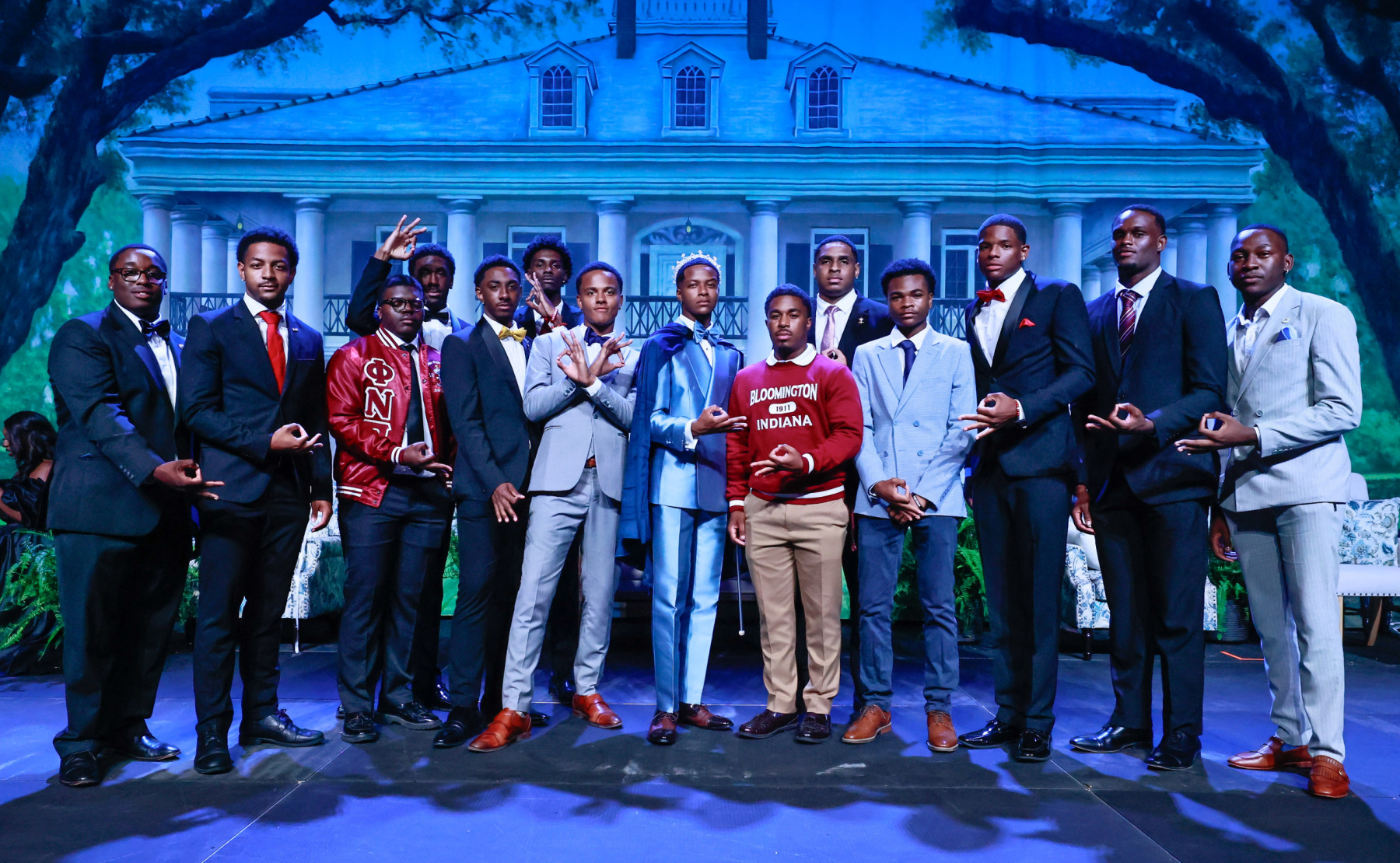
Every few years, a new list emerges claiming to identify the colleges that best prepare students for “long-term career success.” These rankings are presented as neutral, data-driven, and authoritative. Still, when you look closely at who is consistently included and who is routinely left out, the question is no longer whether these lists are incomplete. The question is whether they are measuring success at all.
LinkedIn’s 2025 list of the “50 Best Colleges for Long-Term Career Success” positions itself as an outcomes-based ranking built on job placement, network strength, internships, entrepreneurship, and advancement into senior leadership roles. On paper, that sounds reasonable. In practice, it creates a narrow definition of success that privileges speed, proximity, and corporate visibility over impact, durability, and transformation. That framework becomes especially fragile when held up against historically Black colleges and universities.
If HBCUs Didn’t Work, the Evidence Wouldn’t Exist
If long-term success were not an outcome of HBCUs, then the modern American landscape would be unrecognizable. Entire professions would look different. Cultural movements would lack architects. Scientific breakthroughs would have missing names. Political power would open fewer doors and change fewer rooms.
Consider the documented influence of HBCU alumni across medicine, law, education, politics, entertainment, science, and faith leadership. HBCUs have educated individuals who went on to lead major media enterprises, shape national political leadership, contribute to foundational scientific advancements, expand literary scholarship, and redefine cultural production at a global scale. Alumni such as Oprah Winfrey, Martin Luther King Jr., Spike Lee, Katherine Johnson, Alice Walker, Chadwick Boseman, and Kamala Harris represent measurable outcomes of institutions that have consistently produced leaders operating at the highest levels of impact within their respective fields.
Long-Term Success Shows Up Over Time, Not Overnight
According to the UNCF’s “HBCU Effect” report, HBCUs consistently generate long-term economic mobility, particularly for first-generation and low-income students. HBCU graduates earn significantly more than high school graduates just 3 years after graduation and, within 6 years, surpass their family income levels, demonstrating measurable intergenerational mobility. Even more telling, first-generation HBCU graduates reach income parity with non-first-generation peers over time, a result many predominantly white institutions fail to produce.
Long-term success by any serious definition does not simply register in systems designed to reward early velocity over sustained impact.
Law, STEM and The Cost of Ignoring Context
Research published in “The Journal of Blacks in Higher Education” shows that HBCUs have historically produced a disproportionate share of Black judges and attorneys relative to their size, even when accounting for the limited number of HBCU law schools and persistent financial barriers faced by their graduates. Income metrics alone obscure this reality, notably when leadership, institutional influence, and professional longevity are excluded from evaluation.
In STEM and medicine, the pattern holds. A peer-reviewed study published in the “National Library of Medicine“ documents that HBCUs remain among the most effective institutions for producing Black professionals in STEMM fields, despite operating with fewer resources, smaller endowments, and higher teaching loads. The research highlights not only graduation rates but also mentorship models, faculty engagement, student persistence, and long-term professional outcomes.
When Success Is Defined Narrowly, Excellence Becomes Invisible
So why does this excellence disappear in rankings? Because rankings like LinkedIn’s research do not simply measure outcomes, they are, no matter how they refute it, filled with bias that encodes values.
LinkedIn prioritizes rapid job placement, elite network density, early entrepreneurship, and corporate advancement. These indicators favor institutions with massive endowments, entrenched corporate pipelines, and inherited access to power. They disadvantage schools whose graduates pursue medicine, law, education, public service, ministry, and community-anchored leadership, fields where success compounds over decades, not quarters.
The Thurgood Marshall College Fund has been explicit about this structural imbalance. Its white paper details how HBCUs, despite producing critical talent across industries, remain underfunded, undervalued, and excluded from the same financial and research ecosystems that propel institutions up ranking ladders.
The Measure Was Never the Problem, but the Definition Was
This is where anti-Blackness enters the chat. When success is only legible if it mirrors elite, white-adjacent pathways, institutions that produce excellence through different routes are treated as peripheral. Impact without proximity becomes invisible, and leadership without inherited access is discounted.
HBCUs do not fail these rankings. These rankings fail to recognize how excellence actually functions in the real world. Until rankings are willing to measure impact alongside access, durability alongside velocity, and leadership alongside network proximity, they will continue to mislabel excellence while mistaking privilege for proof.