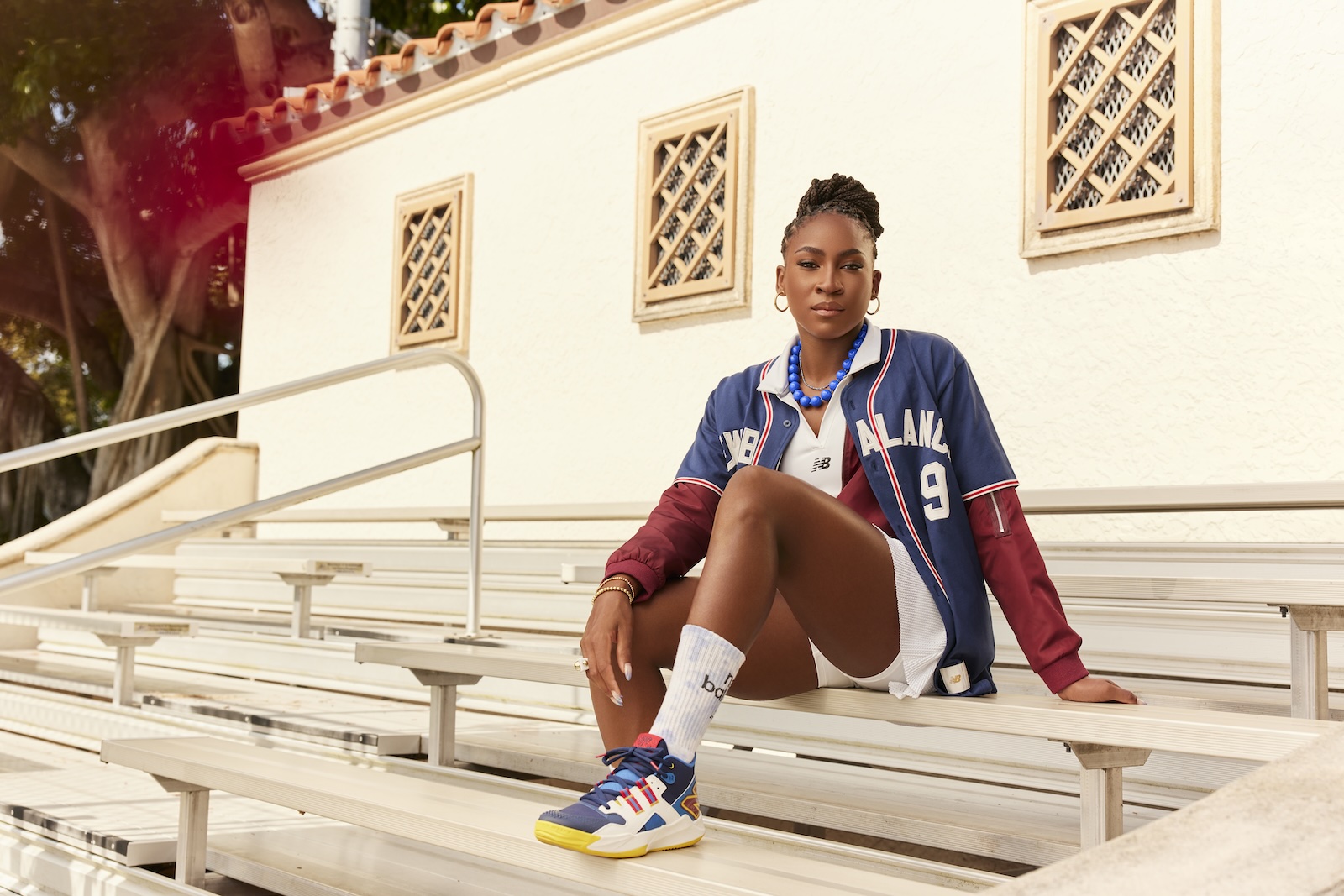
For decades, the signature sneaker conversation has been dominated by men.
From Michael Jordan to LeBron James to Kevin Durant, the architecture of athlete footwear culture was built around men, their stories, and their shoes. Women’s signature lines existed, but rarely with the cultural weight, design investment, or staying power their male counterparts commanded. Then Coco Gauff and New Balance quietly started building something different.
“I’m so grateful for my relationship with New Balance and how much we’ve grown together over the years. Having my own signature shoe is so special,” New Balance athlete Coco Gauff exclusively tells EBONY. “It gives me everything I need to perform at the highest level while letting me express my personality and style. Seeing young kids wear my shoe and feel connected to my journey means so much to me, and I hope it reminds them to believe in themselves and keep chasing their dreams!”
Ahead of the 2026 US Open, EBONY caught up with the people behind the line to understand how it’s made and what it means for the future of signature sneakers from women athletes.
Betting on Coco Gauff
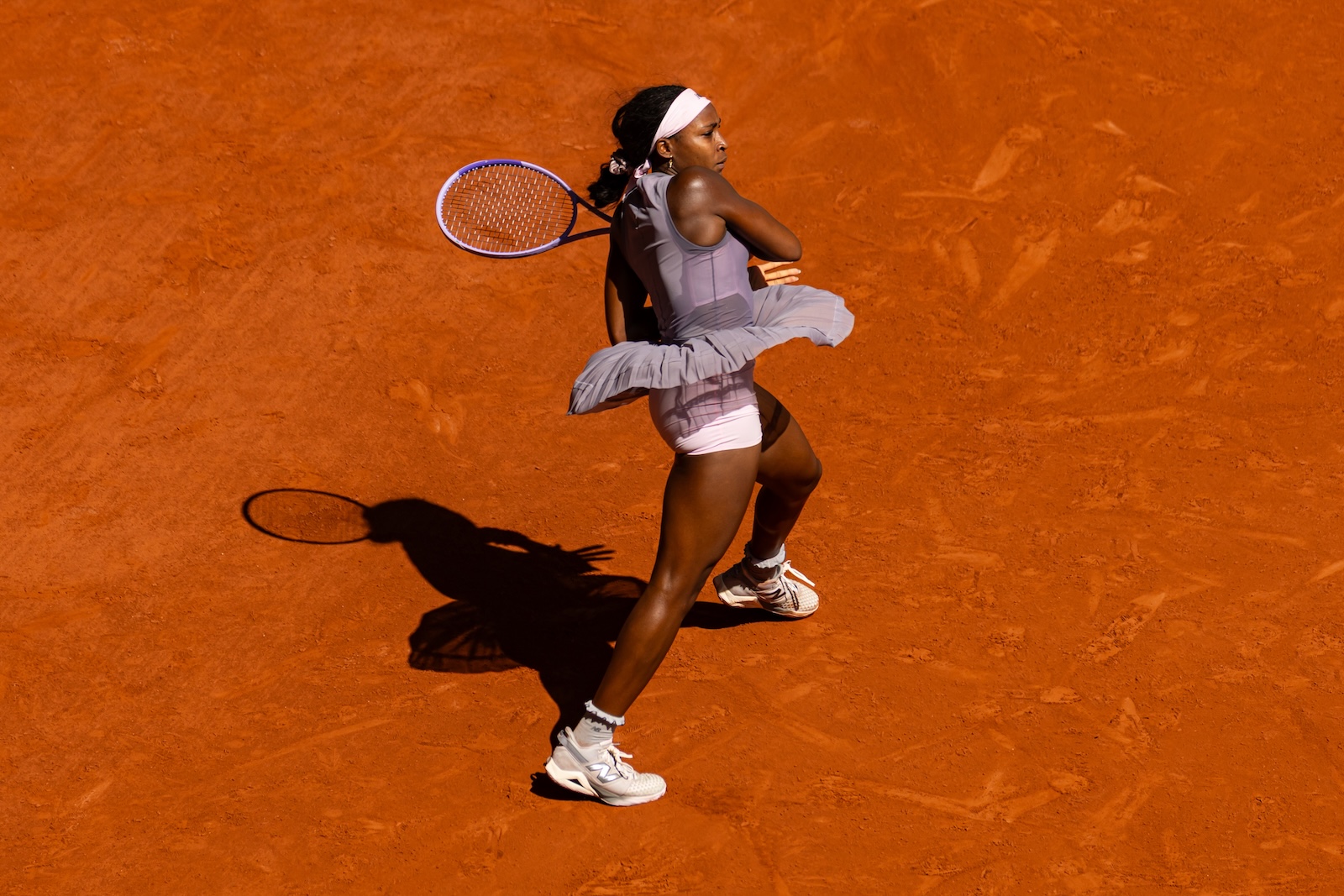
Evan Zeder has been New Balance’s global senior director of sports marketing for tennis, baseball, and golf for over a decade. He signed Coco Gauff to New Balance when she was 14, and he has been building with her and her family ever since. The decision was not impulsive. New Balance operates with a disciplined, intentional sports marketing strategy: fewer athletes, bigger commitments, better alignment. Zeder said New Balance had the budget to sign a top female player, but wasn’t just going to spend it on anyone for the sake of it.
Then Gauff came along.
“It was about signing someone that we felt could build with us, that we could storytell with, and ultimately that we felt could be one of our faces of the brand,” Zeder said.
Gauff’s talent, he noted, was never the question. She made the finals of the US Open Juniors at 13. Anyone in tennis already knew. What mattered to New Balance was who she was as a person and where she was going with her life, both on and off the court.
Before making an offer, Zeder met with Gauff and her family.
“It’s not just about talent,” he said. “It’s about being a reflection of the values of our brand and making sure that they were aligned with how we were building our brand moving forward.”
The alignment was immediate. New Balance committed to telling Gauff’s story, not its own, or, as Zeder put it, to co-author it. That commitment, made when she was a teenager, is the foundation everything else is built on.
Building the CG1
Jodi Klann has been at New Balance for 21 years, starting as an intern and working her way through color, materials, kids’ footwear, and eventually to the team that works directly with signature athletes. She led the design of both the CG1 and the CG2, and the process she describes for each sounds less like product development and more like building a relationship.
“The biggest thing that I learned working with her from those early days for the CG1 was just really listening,” Klann said. “It’s about building that relationship.”
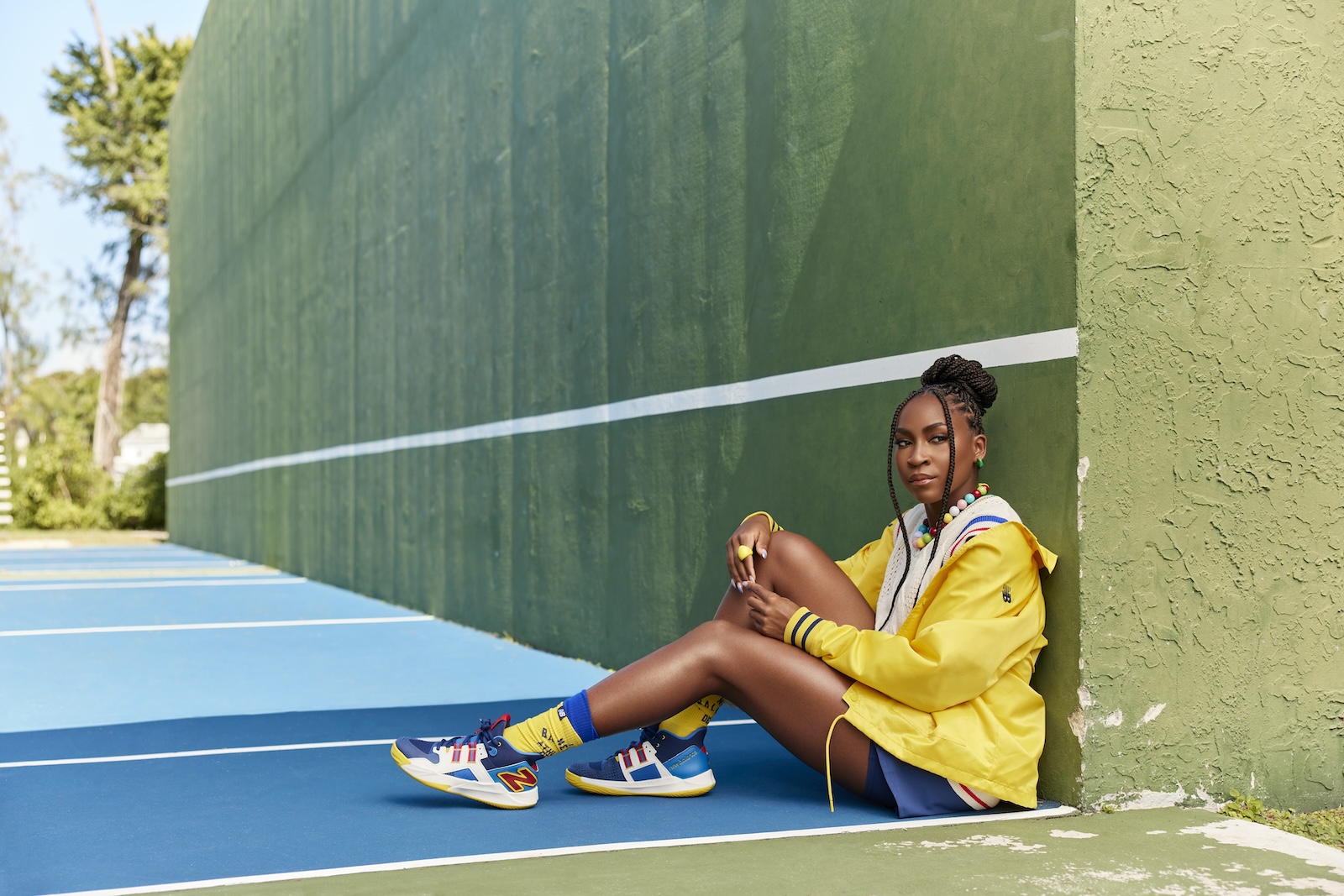
Gauff’s vision meetings were a family affair; she brought her mom, her aunt, her brothers, her best friend. They created a design studio space and got creative together. What emerged from those sessions was a shoe rooted in Gauff’s genuine reference points: 90s hip hop, Aaliyah tear sheets, Miami color vibes, graffiti inserts. And still, performance always came first. Klann worked hand in hand with New Balance’s innovation team to build the structural foundation: the sole and the stability system that could sustain hours of continuous match play. The aesthetic came second, layered on top like a finishing coat.
The defining design decision of the CG1 was its mid-cut silhouette, a choice that was genuinely unusual for modern tennis. Klann explained that most signature tennis shoes tend to be low-cut. Convincing people inside the brand to go in a different direction took work. But it was what Gauff wanted, and the basketball-adjacent silhouette she loved was exactly the kind of differentiator that made the shoe impossible to ignore. Released on August 26, 2022, at $170, the CG1 became one of the first retail tennis shoes to feature a carbon fiber plate. It was a statement.
The mid-cut, Klann said, is still the detail she is most proud of.
The CG2 and the Long Game
The CG2 arrived on August 21, 2024, two years after the CG1, roughly the timeline Klann said the design process requires. Where the CG1 was rooted in 90s sportswear and basketball energy, the CG2 drew from Gauff’s favorite off-court silhouette, the New Balance 550, swapping the basketball on the woven tongue label for a tennis ball. The bold diamond knit mesh on the collar, heel, and tongue and a triangular-patterned Ndure toe cap added a geometric-shaped design, stability, and flexibility, which is a nod to the architecture of her favorite city, Paris. Suede overlays on the saddle helped push the sneaker design beyond the court.
The debut colorway, Power and Grace, combined oxidized blue and firefly, inspired by the Statue of Liberty and the lights of New York City. A trophy detail on the back of the shoe marked Coco’s return to the US Open as the defending champion. The CG2 retailed for $159.99.
Notably, the CG2 was only the ninth signature shoe for a female athlete in tennis, and the third for Team New Balance Women across tennis, running, and softball. Zeder pointed to a moment that captures what the line has come to mean beyond tennis. During a meeting with MLB star Francisco Lindor about his own signature cleat, Lindor told Zeder something that helped solidify Gauff’s impact she’s made with her signature shoe.
“His comment to me was, ‘I want my cleat to stand out on a shelf like Coco’s does in tennis’,” Zeder recalled. For a shoe designed for a young Black woman in a sport that has historically skewed white and wealthy, that kind of crossover recognition means something. Lindor’s words say everything about what Gauff has built outside the tennis world with her partnership with New Balance.
The Del Rey and the Door It Opens
On March 13, 2025, Gauff’s 21st birthday, New Balance launched the Coco Delray—named after Delray Beach, Florida, where Gauff grew up training on the public courts at Pompey Park. At $110, it is the most accessible shoe in the line, designed intentionally for everyday players at all levels, not just competitive ones. The launch campaign featured Gauff and her grandmother, grounding the shoe in community and origin rather than achievement and aspiration.
Klann described the Del Rey as something she designed for the girl who looks up to Gauff but may not be a tennis player at all; someone who wants a piece of the world Gauff has built, styled however she wants.
The three-shoe ecosystem the line now represents—the CG1, the CG2, and the Delray—spans the full spectrum from performance to accessibility.
Beyond the Court and What Comes Next
Tennis is one of the only sports, as Zeder noted, where you can tell a complete head-to-toe story through apparel and footwear. It is played in four of the most fashion-forward cities in the world. The Miu Miu collaboration—which earned the Footwear News Achievement Award for Collaboration of the Year in 2025—is proof that Gauff’s line has transcended the court entirely. What New Balance and Gauff have built proves women’s signature footwear can thrive when a brand commits early and puts storytelling at the forefront.
Klann put it simply when asked what she wants someone to feel the moment they put the shoe on.
“Confident,” she said. “That overall confidence. It’s something that Coco just exudes naturally. Definitely not cocky. Just like that cool, collected, you know, lots of grace.”
For a lot of young girls watching Coco at the US Open this year, it might just be the first signature shoe that was ever really built for them. Especially the young Black girls.