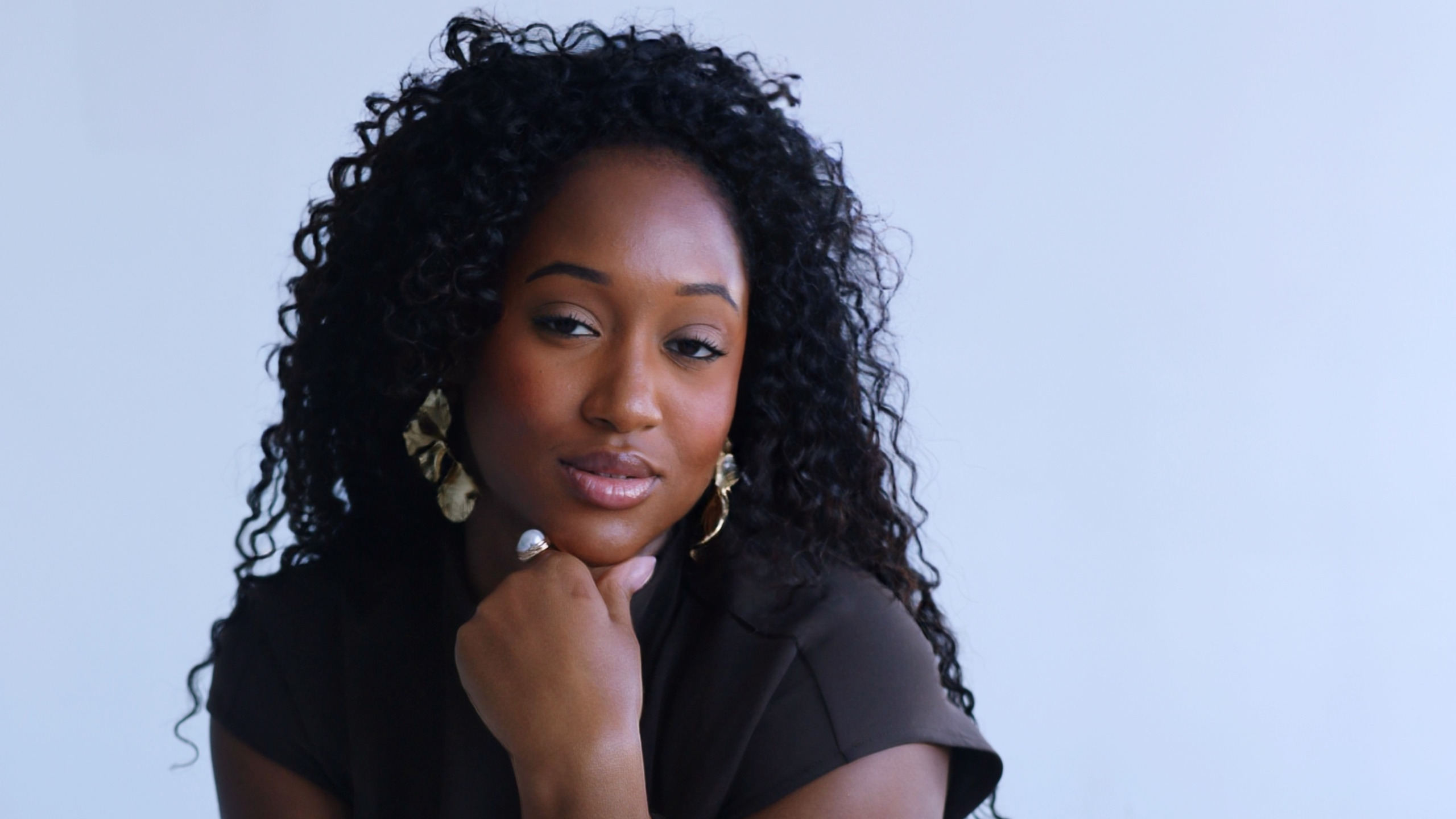
Kia Tatyana was told to “just drink more water” when she told her doctor about her chronic migraines. Daily migraines were in the way of her being able to take care of her newborn son. It wasn’t until a routine eye exam turned into an emergency room visit that she found out that she had idiopathic intracranial hypertension, a condition caused by fluid buildup that could lead to impaired vision and brain injury.
“In the doctor’s office, they just blamed it on postpartum. But we know our bodies,” Tatyana said of the months leading up to her diagnosis. “A lot of times Black women are neglected medically, and they wait until something worse happens. My insurance didn’t want me to go through MRIs and get any additional testing done until I went blind. So you’re gonna wait until my left eye is blind to even get me a test. That’s crazy.”
Tatyana took matters into her own hands and began researching an anti-inflammatory diet. Emphasizing whole ingredients, fiber-rich foods, omega-3s, whole grains and healthy fats, Tatyana said she was able to reduce the inflammation causing her debilitating headaches. As her symptoms reduced, she was able to get her life back.
She’s one of many Black women who have taken control of their health journeys when medical institutions have failed them. Recently, many are documenting their journeys with anti-inflammatory lifestyles to address symptoms related to hormonal imbalances, fibroids, PMOS, formerly known as PCOS, and more. And it goes beyond eating patterns. Getting proper sleep, mitigating stressors and limiting exercise that increases cortisol levels all play a part in reducing inflammation and preventing health conditions like heart disease, hypertension and diabetes.
Dr. Keba Nyemb-Diop, a nutritionist whose work sits at the intersection of nutrition science, metabolic health, digestive health, and culturally relevant care, told EBONY that she sees it as a positive that more Black women are learning about how inflammation affects their bodies. She emphasized that it should be a sustainable lifestyle, however, not an intense diet. “What concerns me is when inflammatory becomes a catch-all explanation for every symptom or turns into an unnecessarily restrictive lifestyle,” she said. “So people start eliminating gluten, dairy, carbs or food important from their culture without really knowing whether these foods are actually causing a problem.”
She said eliminating several things at once can create a “nutrient gap” and be unsustainable long term. Nyemb-Diop also warns against vilifying foods from Black American, Caribbean and African cultures in favor of a Mediterranean or European diet, naming callaloo, collard greens and root vegetables as nutrient-dense staples.
Nyemb-Diop agrees that while an anti-inflammatory lifestyle can be powerful, people should still see their doctor if severe symptoms persist. “An anti-inflammatory lifestyle should complement [medical evaluation] and not replace it,” she said. Black women are taking that to heart, personalizing and documenting their own unique anti-inflammatory journeys.
Check out how these four women’s lives have changed for the better after adopting this lifestyle.
Kia Tatyana, 29, Atlanta, Ga., Anti-inflammatory since October 2025

How life’s changed: Within the first 10 to 12 days, I had dropped seven pounds, and I didn’t have any headaches that entire week. That was the first time I didn’t have headaches in over a year. I had an eye appointment; it just happened to fall on the 30-day mark. The eye doctor says that they don’t see any sign of idiopathic intracranial hypertension.
Go-to meal: For breakfast, I often make banana oat pancakes. I make it with a little oat flour, almond flour, the traditional baking soda and baking powder, and a little cinnamon and nutmeg to jazz it up. And it’s so delicious. I make it with a date caramel sauce or syrup.
What you wish you knew before starting: One thing I would say is to be patient with your body. That’s something I’m still teaching myself now: to be patient with my progress. I think that comes with learning your body and listening to it. It may seem excessive to some, but write down what you’re eating, pay attention to your body’s responses over the next 24 to 48 hours, and follow that. I may say I can’t eat dairy, but somebody else may say nothing happens when they eat dairy. Don’t fall into the trap of comparison just because the anti-inflammatory diet looks trendy right now.
Taquana Cummings, 32, Virginia Beach, Va. Anti-inflammatory since 2025

Why you transitioned: I was diagnosed with PCOS in 2020 and dealing with irregular cycles, weight gain and hyperpigmentation. I just wanted to be comfortable in my own body. I started using a GLP-1, and within three months I lost almost 40 pounds. I knew then a GLP-1 wasn’t going to be long-term for me. That’s when I started to do a deeper dive into an anti-inflammatory lifestyle, which not only focuses on the food component, but also on how you rest, how you sleep, how you move your body, and how you think.
How life’s changed: I have three beautiful daughters and a husband. When I went back and looked through my pictures, I didn’t find any with me in them. If they go back and look through my phone, I never want my daughters to think, “Well, where were you?” That was a turning point for me. I want to be fine now. I want to be fine forever. I want to be healthy for as long as I’m here. I want to show my three daughters that yes, food is good, but food is fuel. And staying up late is fun, but sleep is even better. These are the things I implement and show my daughters, so now when they look at pictures in my phone and see mommy was taking a picture of herself.
What you wish you knew before starting: I wish someone had told me it is okay to add to whatever I’m eating before I subtract. Sometimes when we want to reset, we think that means starting from scratch, but quickly we’ll get burnt out. So before you start, focus on adding more fiber, adding more protein, adding more whole foods. No matter what you’re still eating. That way you have all these things in your bucket, so it’s easier to take things out that are not good for you because you already have things you need inside.
Jihan Henriquez, 33, Brooklyn, NY, Anti-inflammatory since January 2026
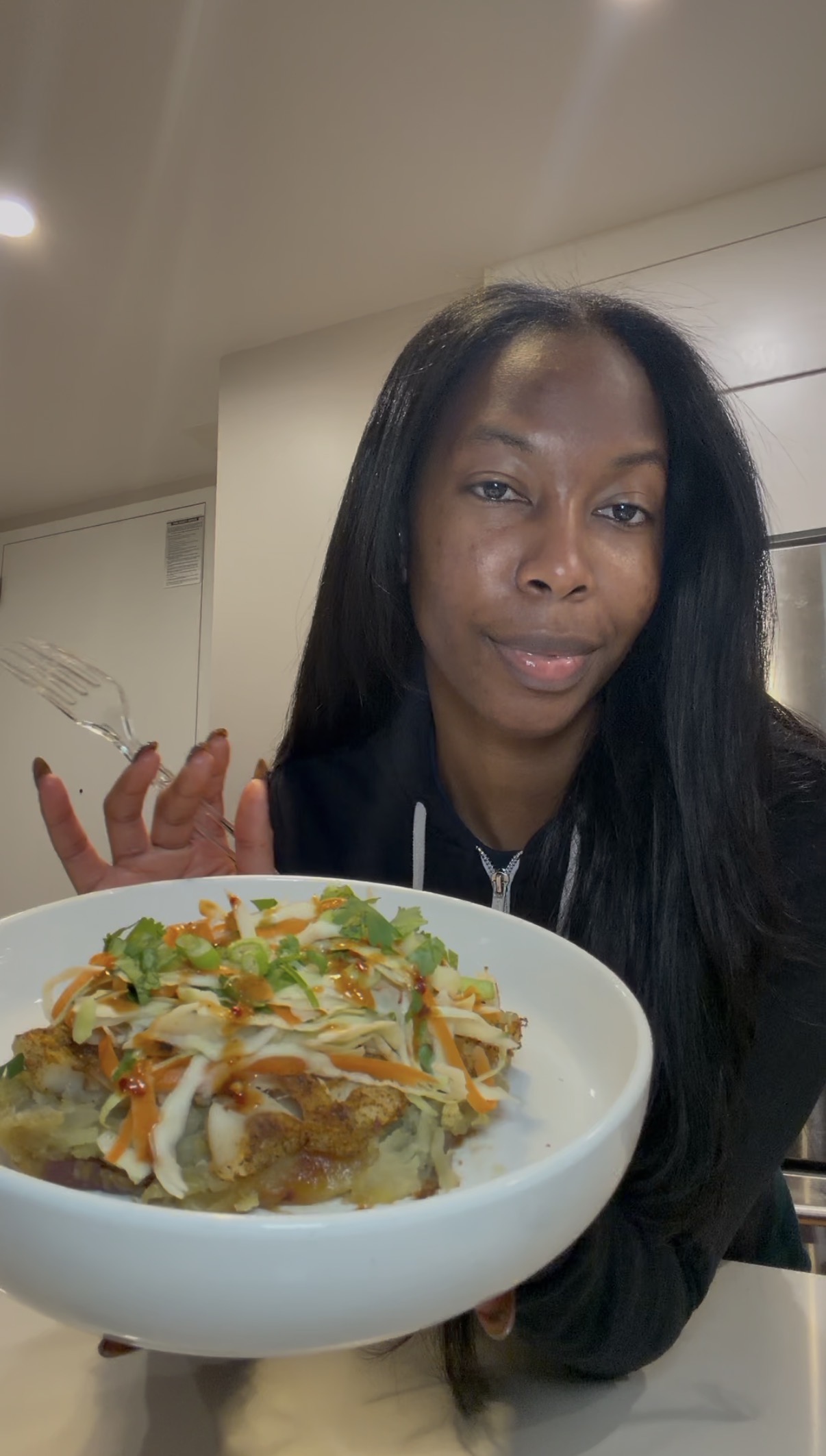
Why you transitioned: I wanted to be more intentional about my health. I could tell my body and stomach just weren’t in alignment, and I could never pinpoint why I would be feeling so fatigued or why I felt heavy after meals. I visited a traditional Chinese medicine practitioner, and I felt better than I have ever felt in my life. I wanted to take things a step further and focus on my eating habits. I did the Daniel fast for the first few weeks of the month of January, and then as soon as I finished, I immediately went into my anti-inflammatory protocols, and the rest is history.
How life’s changed: I’m a lot less bloated. My hormone acne has subsided substantially. I feel so strong mentally because, to be able to go out in public and with friends who are not on this routine, the mental strength to not want to reach over with my fork and take a piece of their bread or food- I cannot believe I’m able to do that.
Underrated takeaway: Going into this, I never wanted to sacrifice or give up our type of food. That’s like I’m cutting off a huge part of me, and it’s just that doesn’t sit well with me. So I will say there are certain Jamaican dishes that I’ve thought in my head that I can kind of make in a less inflammatory kind of state. Instead of deep frying, maybe we try the air fryer or grill. Food is supposed to be fun. Food is supposed to be nutritious. There’s no reason for me to be fighting with myself or with the things that my body naturally craves from a cultural standpoint.
Tori Royelle, 32, Miami, Fla., Anti-inflammatory since January 2026

Why you transitioned: I was dealing with chronic acne after being on birth control for about six years. After a year, it was only progressively getting worse. I went to a functional medicine practitioner and found out I was super nutrient deficient, and I had some gut imbalances. Working with this doctor, I still wasn’t really seeing the results. I started learning a lot about nutrition, an anti-inflammatory lifestyle, gut health, and I learned that inflammation really is the root of so much. It affects your hormones, your gut, your mood, autoimmune conditions, anxiety, depression and skin. It’s literally all connected.
Most unexpected life change: I was so surprised about not having brain fog. I even had less anxiety, migraines and ADHD symptoms, which I was diagnosed with in 2020. I just felt so much more clear-headed. And I think that was the biggest shock for me, learning that a lot of sugar can cause migraines, and like ADHD is connected to histamine and all these things that I just didn’t really know.
Advice for sustainability: I think the most sustainable way to do it is 80/20. I think people think you kind of have to eat the exact same thing every day, and that’s just not true. You can get creative with it. When I’m at home, I eat anti-inflammatory, but then if I go to dinner with friends or I go on vacation, I eat whatever I want. So I’m not doing this like 24/7. It still gives me the leeway to just live my life as I want to and still support my body.