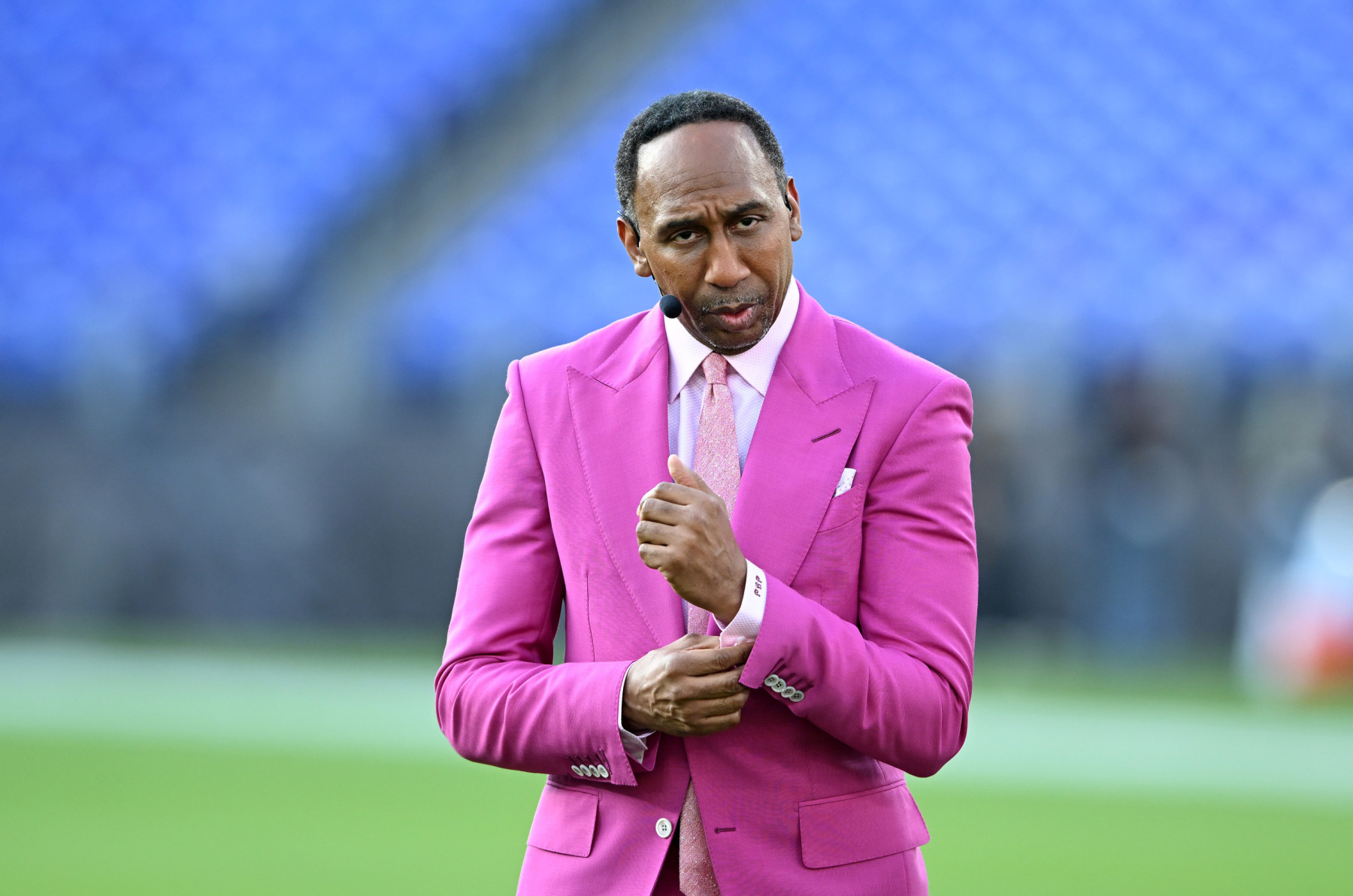
Stephen A. Smith has never pretended to stay in one lane, which makes him an easy target. He talks loud. He talks often. And lately, he’s been talking about things that have nothing to do with box scores, trade deadlines, or who’s the GOAT. It’s these recent tirades that, apparently, are what’s gotten him in the most trouble.
After apologizing just a few months ago for comments directed toward Rep. Jasmine Crockett, his most recent backlash stemmed from political commentary on his SiriusXM show Straight Shooter about the shooting of Renee Good by an ICE agent in Minneapolis. Comments that some critics said leaned more toward law-and-order than empathy.
The reactions didn’t creep in. They sprinted straight to the comment sections, carrying accusations of pandering, seeking white approval, and chasing the bag. Sellout was the word of the weekend.
What stood out wasn’t just the backlash. It was how off-the-shelf it felt. Microwave-ready. Like it had been waiting in the Notes draft patiently for its cue.
Our community has long been quick to decide who gets to speak for us, to us, or about us. If you have white friends, you’ve probably been asked at least once to weigh in on something “Black.” That’s usually when you’re officially appointed the Black ambassador, empowered to say things like, “I’ll bring it up at the next meeting.”
You say this sarcastically, sure, but the question underneath it is real: as platforms grow and audiences expand, does visibility start to feel like authority? At what point for Black people does having a microphone get confused with speaking for the culture?
From barbershops to group chats, the routine hasn’t changed. An athlete says something political. A rapper leans the “wrong” way. A media personality starts sounding a little too comfortable around those in the C-suite, and suddenly, we’re taking attendance. Who’s still with us? Who’s drifted? Who’s in the sunken place?
We savor the spectacle of it, chasing the dopamine hit of a well-timed take—something sharp enough to survive the timeline. Often it’s not even about being right; it’s about being first, or being loud enough to flirt with viral infamy.
To complicate things further, these debates now arrive as clips and headlines, often stripped of context. Urgency over nuance. Reaction over reflection.
This reflex isn’t unique to Stephen A. We’ve seen it play out again and again. When Kanye West went full Kanye on Saturday Night Live and when he wandered into the Oval Office like it was a conceptual art installation.
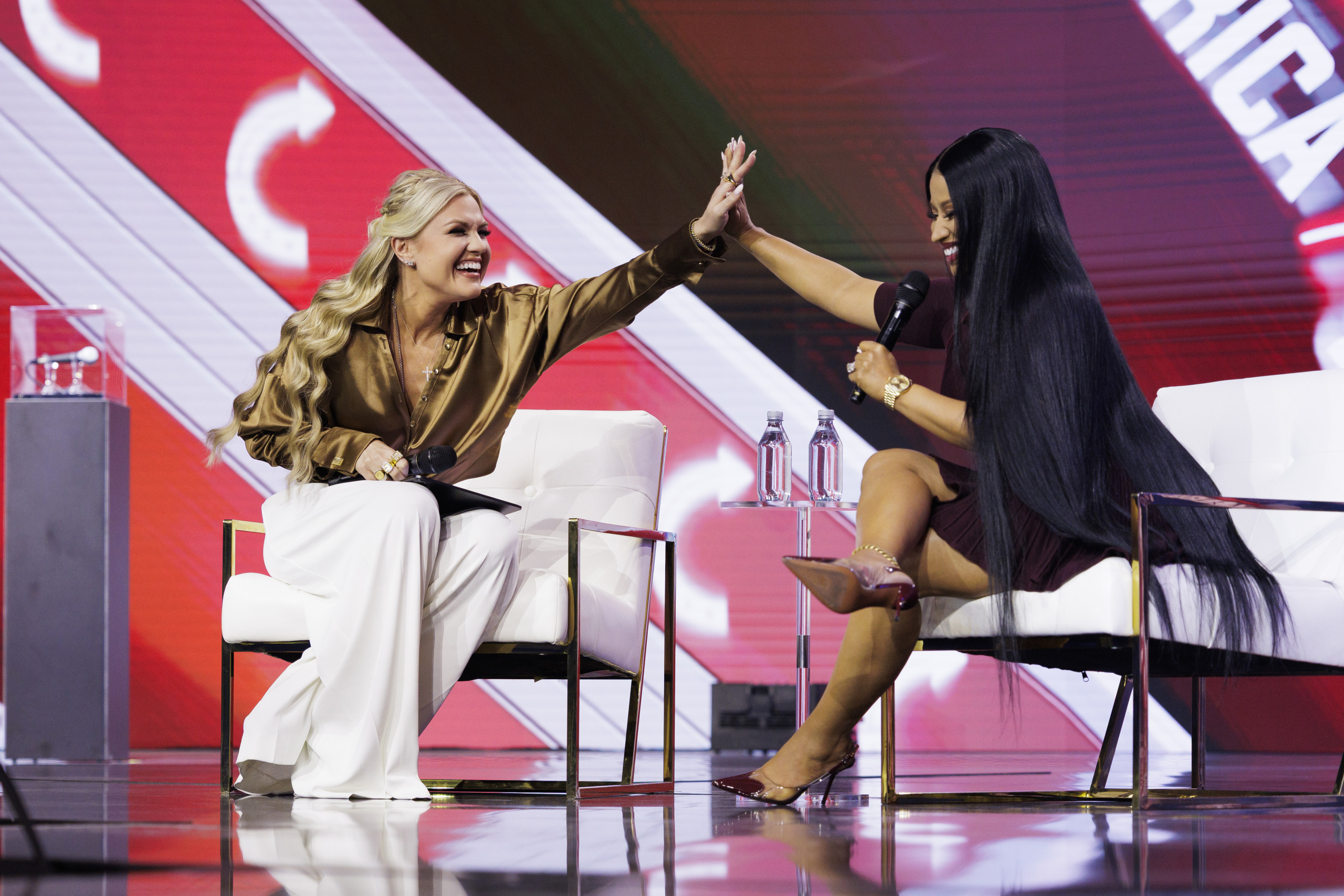
Nicki Minaj got dragged after sharing her conspiracy theories on COVID and her more recent appearance at a Turning Point conference.
Herschel Walker was repurposed as a political puppet during the Georgia Senate race. Though, to be fair, Walker did take us on a delightful and deeply confusing journey through his thoughts on the Twilight series. That part might’ve been worth it.
These moments aren’t interchangeable. Neither are the people behind them. But the reaction to them often is.
Sellout becomes shorthand for a more uncomfortable realization: someone we thought was part of the culture no longer sounds like they’re speaking for it.
And eventually, someone always says the quiet part out loud.
This time, it was Don Lemon, which isn’t exactly surprising. Lemon and Stephen A. aren’t exactly coordinating outfits for a boys’ night out in Miami anytime soon.
On The Don Lemon Show, his YouTube podcast, Lemon accused Smith of “cozying up to white people,” suggesting the posture wasn’t ideological so much as financial. “It’s gotta be for the money,” Lemon said, adding that becoming a Black conservative would be “a great business move.”
Lemon’s critique taps into a familiar anxiety, but it carries its own baggage. In 2013, after George Zimmerman was acquitted in the killing of Trayvon Martin, Lemon—then an anchor on CNN—chastised elements of Black culture, from sagging pants to broken families. The backlash was immediate, with many feeling he’d aired our dirty laundry in front of mixed company.
So what are we really talking about here? Selective memory? Personal grievance? Or the performative nature of modern media doing what it always does, dragging everyone into the discourse blender because the algorithm gods demand fresh blood?
But the Lemon’s assumptions didn’t stay there for long.
Over the span of a single weekend, Stephen A. Smith moved from being labeled a sellout to sitting for a half-hour interview on ABC News’ Full Access with Linsey Davis, followed by casual speculation about whether he might run for president in 2028. The presidency isn’t the point. It’s how someone can be dismissed one moment and recoded as “visionary” the next, depending on who’s watching and where the platform sits.
ABC and ESPN share corporate DNA under Disney, which helps explain the softness of the landing, but the real takeaway isn’t corporate synergy. It’s velocity. How fast the tone can shift if presented right. How quickly moral certainty gives way to curiosity once access enters the frame.
Here’s something most of us inherently know: big media personalities don’t just speak. They’re shaped. Positioned. Incentivized. And for Black voices especially, that shaping often comes with an unspoken expectation: to pacify, to explain, to perform acceptability. That doesn’t excuse bad takes. But it does complicate the fantasy of a pure, untouched media voice.
When Davis asked Stephen A. how much of his personality was real, he said, “It’s all me. But there are extra layers of me because I don’t have to restrict myself. I own my podcast. I own my YouTube channel.”
The real question isn’t necessarily who’s a sellout, but what we’re actually responding to when we say it. We may not be arguing beliefs, but just reacting to that uneasy feeling that someone we trusted to speak with us now sounds like they’re speaking past us… or worse, about us.
And at what point does the instinct for communal protection turn into a softer, more respectable version of shut up and dribble?
None of this is an argument against criticism. Disagreement is necessary. But if every voice is presumed compromised—performing, protecting interests, angling for approval—then whose voice do we actually trust?
Maybe that’s the real discomfort underneath all of this. Not that Stephen A. Smith said something controversial. Not that Don Lemon called him out for it. But our definitions of authenticity haven’t caught up to a world where visibility and status are wrapped up tighter than my headphones whenever it’s time to head to the Y.
No, the real fight isn’t between media personalities with microphones—though a part of me wouldn’t mind seeing Don Lemon and Stephen A. Smith put on boxing gloves and settle this one in the ring—the real discussion is over who draws the line on who gets to speak for us. A line that’s never really been clear. And why Black audiences are always asked to hold the pen.