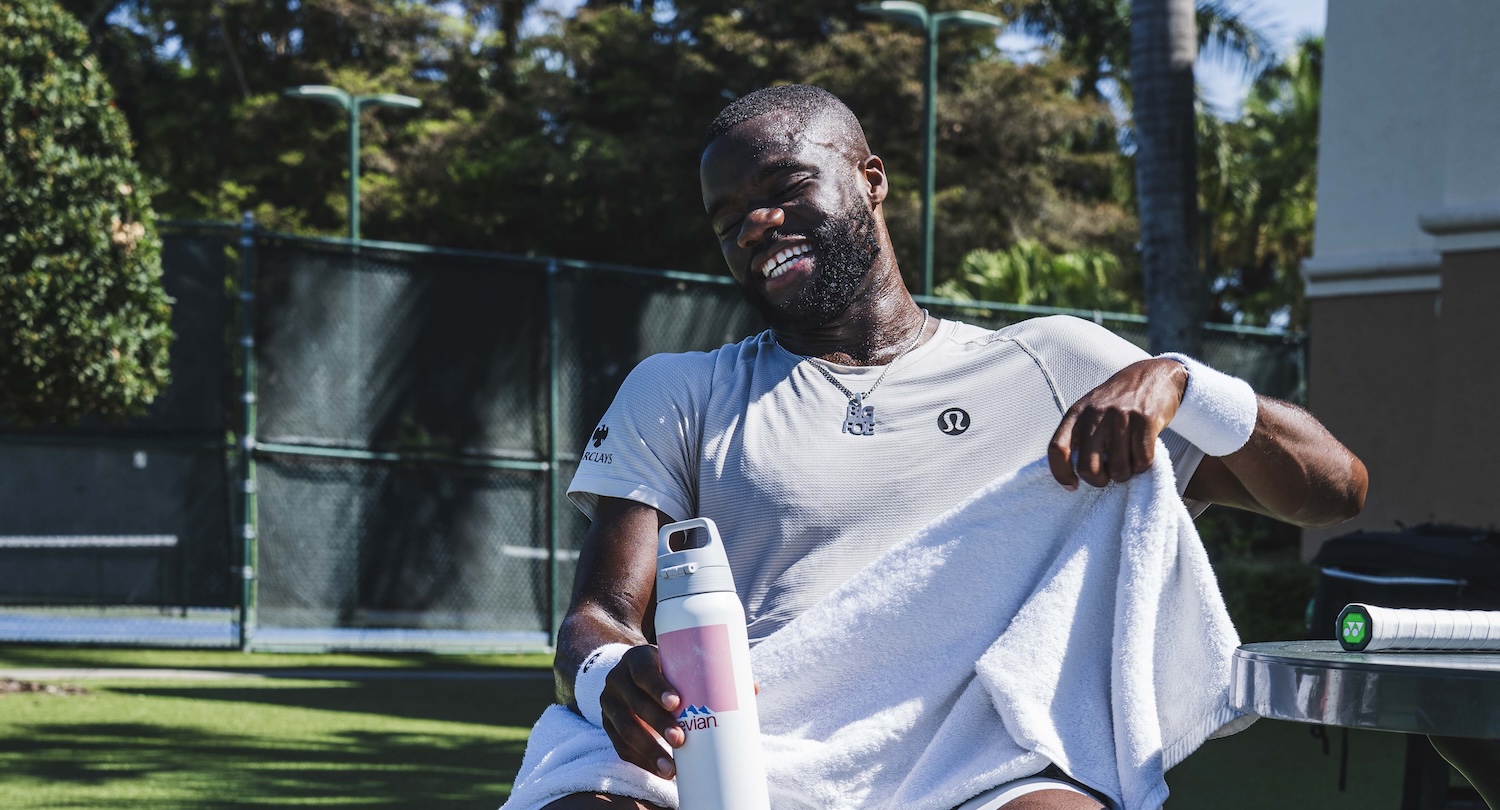
What does it take to still be competing at the top of your game as you prep for the 2026 US Open, kicking off its singles main draw on August 30?
For Frances Tiafoe, a DMV (Washington D.C., Maryland, Virginia) native and quite arguably one of the best to ever pick up a tennis racket, it all starts before he even hits the courts.
Growing up playing at Junior Tennis Champions Center in College Park, Maryland (where his father was the head of maintenance after migrating from Sierra Leone in 1996), he learned early on that tennis keeps moving whether you’re ready or not. Because, quite frankly, when it’s just you and one opponent across the net, what else are you going to do? You show up ready, or you don’t show up at all.
That lesson has followed him into this year’s tournament, where he applies that same discipline to food now, thinking about what he eats the same way he thinks about a match.
“It’s massive,” Tiafoe told EBONY of nutrition’s role in his prep. “That’s been something that’s been really big for me the last few years, especially this year. You eat better, you feel better. You’re more optimal in competing, and playing, and training. Your energy levels are much better.”
He broke it down using a car as the example.
“You’re not gonna put terrible gas in a nice car,” he said. “You’ve gotta treat it right… That’s kind of what you’ve got to think of it as.”
His day-of routine is simple: he eats salmon and rice a few hours before he plays, and then closer to match time, he has a CLIF Bar. This has become part of his ritual (especially now that he has a partnership with the brand) and helps him manage the physical demands of playing at night.
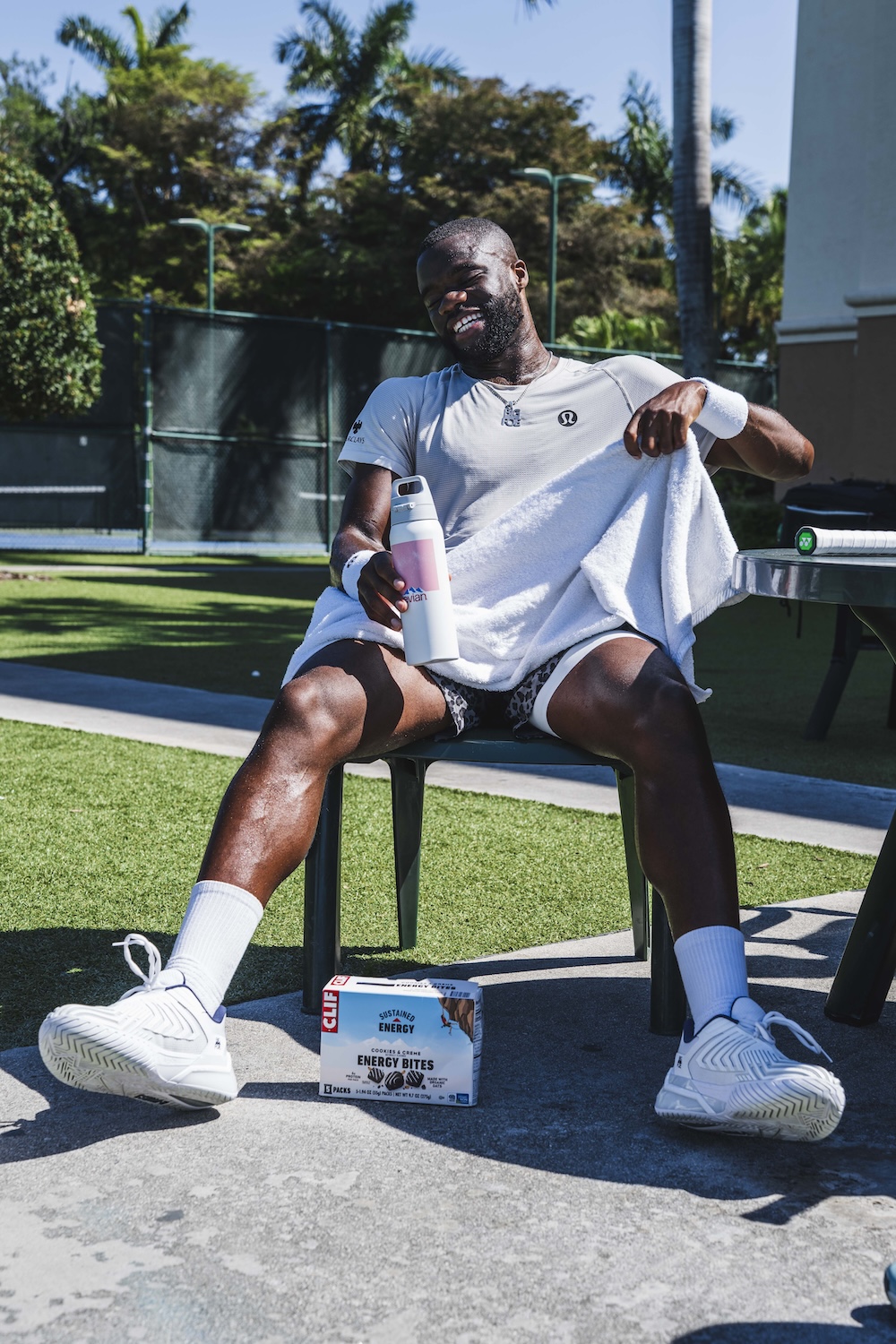
“I get pretty hungry right before I play,” he said. “If I don’t have that right before, I feel like I’m going to be pretty out of it, and not ready to go from the jump. A lot of times I play at night, so if I don’t get that extra boost right before I’m going on, this could be trouble.”
It’s a small routine, and might not seem like it would make much of a difference, but it points to something bigger (especially if you know what it feels like to work out when you’re hangry). Tennis doesn’t give players a “season” in the traditional sense, the way other sports do. There’s no offseason built into the calendar the way there is in football or basketball. So the body has to be maintained match to match, tournament to tournament, and year to year. That’s part of why Tiafoe, now 28, says what he eats has changed as his training has changed.
Not everything about his prep is physical, though. He said the results aren’t really what he looks forward to. What gets him is the energy in the stadium and the people who show up because of him — some who wouldn’t normally set foot at a tennis match.
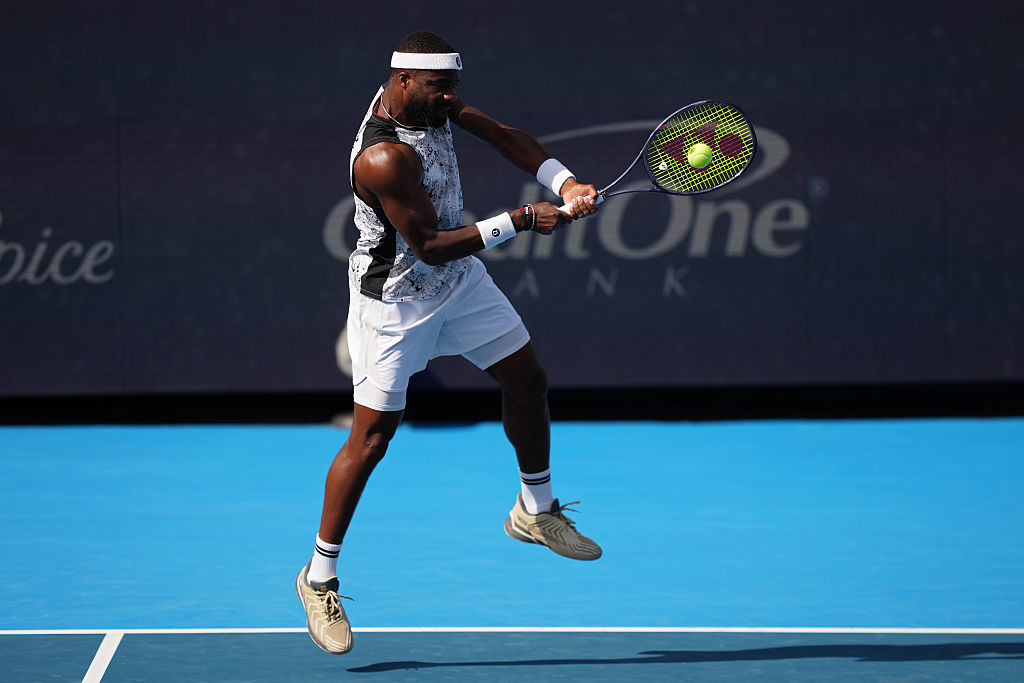
That excitement hasn’t faded over the years, though the pressure he feels has shifted since his first few years on tour. This will be his 12th U.S. Open, and he says that experience is what lets him handle the pressure differently now. It doesn’t disappear, he says; it just changes shape, and knowing that ahead of time makes it easier to manage once he’s out there.
“I don’t like to make moments bigger than what they actually are,” he said. “You don’t chase the moment, you are the moment. Trust the work, trust your abilities, go out there and do what you do.”
That mindset carries over into how he talks about patience, too. He brought up more than once how wanting something too badly can work against you. His mantra comes from Nipsey Hussle: the marathon continues. High or low, win or lose, he says the same thing applies.
Off the court, that shows up in the Frances Tiafoe Fund, which has raised more than a million dollars in three years and built pathways for kids with limited access and resources who want to learn how to play. Now he’s paying it forward to the next generation of Black boys and girls who could be the next Frances Tiafoe, Serena Williams or Coco Gauff.
“I was that kid,” he said. “I probably got a chance to play tennis because rackets and lessons were free. I was given a chance. That’s something I take very seriously and want to continue, not just now, but even when I’m done with the game.”
He says there are five or six kids in the program right now who remind him of himself at that age: wide-eyed, dragging a racket around, and unable to stop playing. When he goes back, he plays and talks to them because he knows what it means to a kid to see someone who made it out and still came back.
Tiafoe also understands what his visibility means beyond his own results. He’s one of the most recognizable Black men in American tennis, and he doesn’t take that lightly. He pointed to Haley Baptiste and Robin Montgomery, the players coming up behind him, as proof that doing well creates room for others to be seen the same way.
That sense of responsibility runs in both directions. He grew up watching Serena and Venus Williams, and he credits them with making his own path possible. That’s the kind of impact he’s thinking about for himself too, further down the line.
“Ten years from now, I want people to say he was real,” he said. “A people’s kid. I gave it everything I had.”