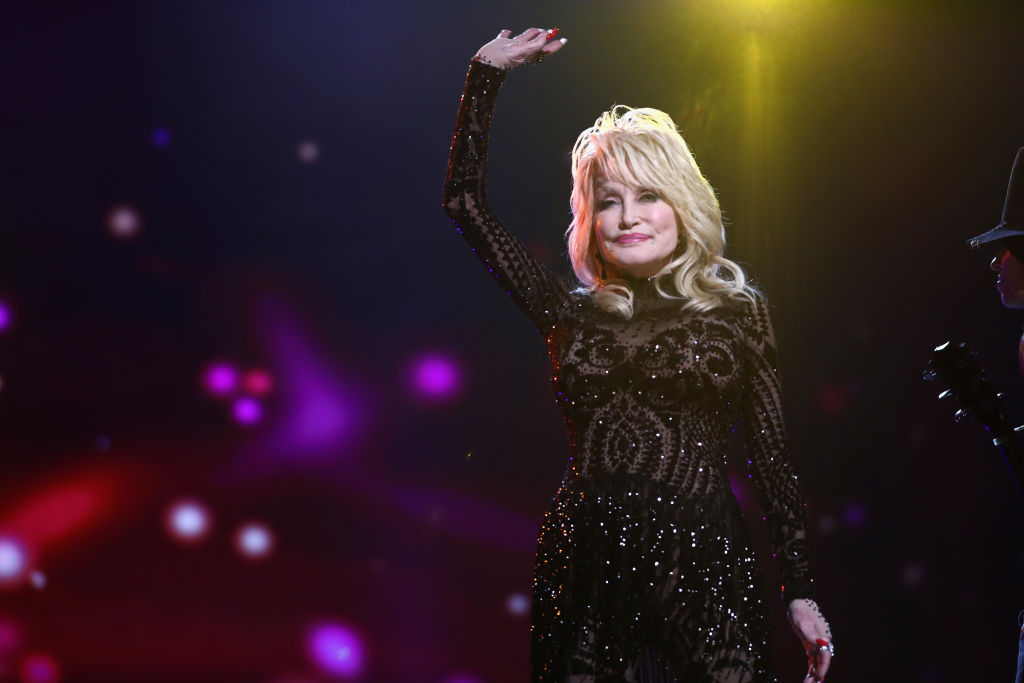
Some artists belong to a genre. Others become part of the culture. Dolly Parton was the latter. When the country music icon died on August 25, 2026, at 80, she left behind a legacy that stretched well beyond country music, touching pop, gospel, soul and, in meaningful ways, music shaped by generations of Black artists.
For generations of listeners, Parton’s songs have carried a particular resonance—from “9 to 5,” with its portrait of working women fighting to be seen and valued, to the artists who found something worth claiming in her songwriting. Her relationship with Black music was never simply a matter of the occasional crossover. Parton deeply admired gospel and soul and maintained meaningful creative relationships with Black artists throughout her life. Mavis Staples, Dionne Warwick and, in a new generation, Beyoncé all became part of that story.
But no chapter looms larger than Whitney Houston’s “I Will Always Love You,” the extraordinary reimagining that transformed a country ballad into one of the most enduring recordings in popular music.
Dolly And Black Music Were Always In Conversation
Parton’s admiration for Black music ran deep. She has spoken about the influence of Black gospel and soul on her music, and that affection shows in the emotional openness of her songwriting and performances.
Her relationship with Staples offers one of the clearest examples. Parton has said she had admired Staples’ voice since she was young and wrote “Why” specifically with Staples in mind. When the two eventually performed together, Parton described the experience as deeply powerful. Parton was not simply reaching toward Black music when it was commercially convenient. She carried her appreciation for Black voices and musical traditions throughout her life.
The same is true of her relationship with Warwick. Their 2023 gospel collaboration, “Peace Like a River,” arrived decades into both women’s extraordinary careers—a reminder that Parton’s musical relationships with Black artists continued well beyond the early chapters of her own success.
Beyoncé Brought Dolly Into A New Country Conversation
That legacy continues today. In 2024, Beyoncé invited Parton into Cowboy Carter, her exploration of country music and its Black roots. Parton appeared on “Dolly P” and contributed to “Tyrant,” while Beyoncé also recorded her own interpretation of Parton’s classic “Jolene.” The collaboration was meaningful beyond the novelty of two generations of music royalty meeting.
Cowboy Carter challenged the idea that country music belongs to one race, one sound or one tradition. Beyoncé’s decision to include Parton—one of country music’s most enduring figures—placed Dolly within a larger conversation about the genre’s history, its Black influences and its future. It was also a beautiful passing of the torch between two women who understood the power of storytelling.
“9 to 5” Spoke To Working Women Everywhere
Then there is “9 to 5.” Released in 1980 alongside the film of the same name, the song became an anthem for working women frustrated by low pay, long hours and being overlooked in professional spaces. For Black women, that message has always carried additional weight.
Black women have long navigated workplaces where they were expected to work harder while receiving less recognition, less pay and fewer opportunities. Parton captured that frustration without losing the humor, rhythm and optimism that made the song so enduring. The song “9 to 5” was a pop-cultural hit, but it was also about labor, dignity and the desire to be valued. Those themes helped it reach far beyond country music.
Whitney Houston And The Song That Became Something Else
Still, no discussion of Dolly Parton’s impact on Black music can begin or end anywhere but here: Whitney Houston’s “I Will Always Love You.”
Parton wrote the song in 1973 as a farewell to Porter Wagoner, her longtime musical partner. Her original recording became a country hit—tender, restrained and rooted in the storytelling tradition that defined her career. Nearly two decades later, Whitney Houston transformed it.
Recorded for The Bodyguard in 1992, Houston’s version began with nothing but her voice before building into one of the most commanding vocal performances in popular music. She brought gospel phrasing, R&B sensibility and an extraordinary emotional depth to Parton’s words. The result was not just a successful cover. It became one of the defining recordings of the 1990s, spending 14 weeks at No. 1 on the Billboard Hot 100 and earning Houston two GRAMMYs, including Record of the Year.
Parton recalled being so moved the first time she heard Houston’s recording that she had to pull her car over. After Houston’s death in 2012, Parton continued to speak with profound admiration about the singer and the way she had transformed the song. Moreover, the extraordinary success of Houston’s recording generated significant royalties for Parton. She later used some of those earnings to purchase an office complex in Nashville’s historically Black 12 South area, describing it as “the house that Whitney built.”
A Legacy That Refused To Stay In One Lane
Parton was not a Black music artist, and honoring her legacy does not require changing that truth. It does, however, require recognizing how much American music has always been shaped by exchange. Country, gospel, blues, soul, R&B and pop have never existed in isolation. Artists have listened to one another, borrowed from one another and found new meaning in familiar songs.
Parton understood the power of that kind of musical conversation. Her songs gave Black artists room to reinterpret them. Her admiration for Black gospel and soul shaped her own musical sensibility. Beyoncé brought her into a new generation’s conversation about country music. And Whitney Houston turned “I Will Always Love You” into something that belongs permanently to the history of Black popular music.
That may be one of the most beautiful ways to remember Parton. Not simply as a country legend, but as a songwriter whose work traveled. She wrote about working women, heartbreak, ambition, poverty, faith and resilience—subjects that have always resonated deeply with Black audiences. She created songs sturdy enough to cross generations, genres and cultural lines.
Dolly Parton wrote the songs. Black artists helped carry them into new worlds. And Whitney Houston gave one of them a life that neither woman could have imagined when Parton first put pen to paper.
That is not just a country music legacy. That is not just a country music legacy. It is an American one, where music has always found a way to transcend the boundaries of color.