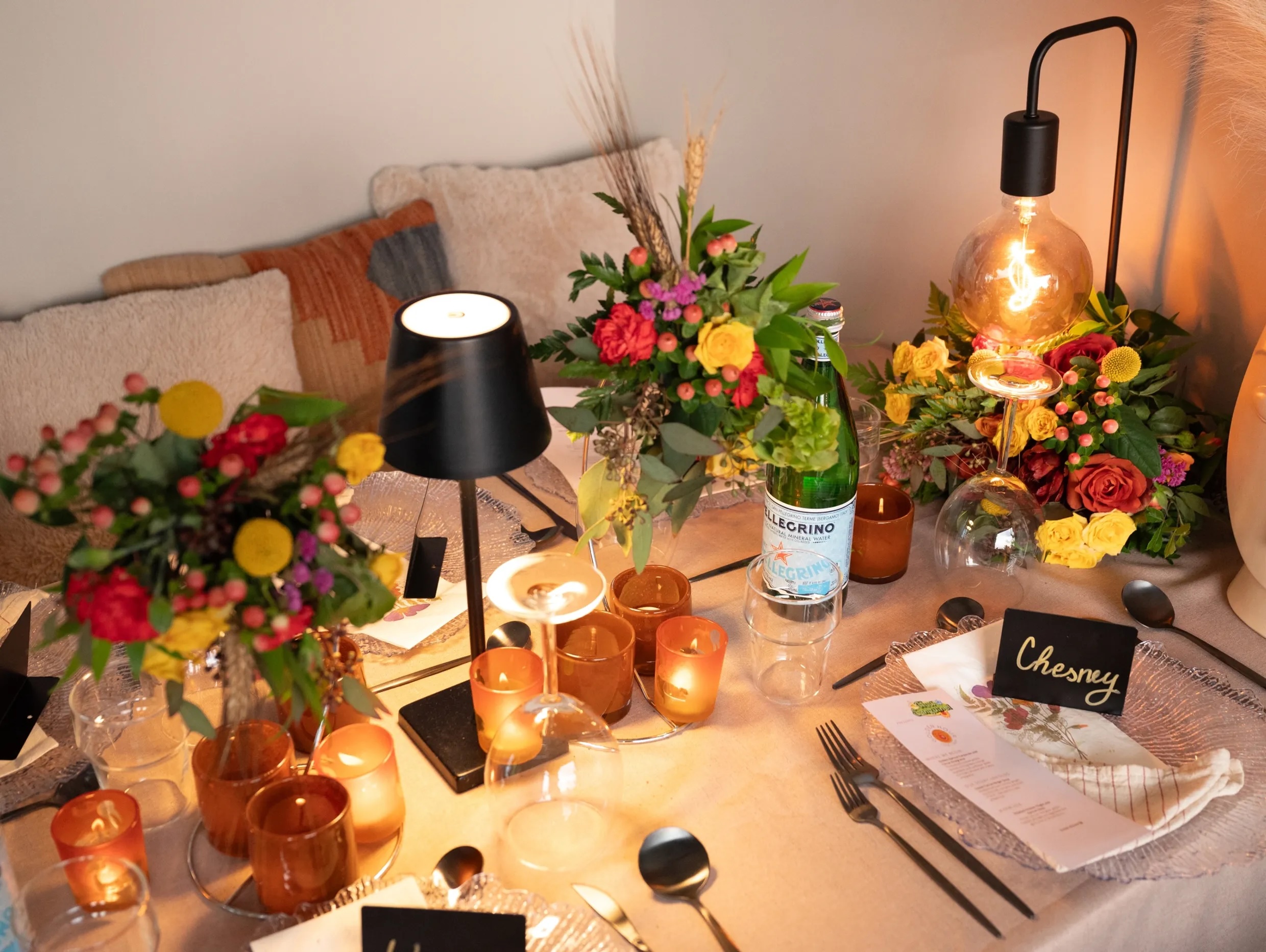
Have you ever noticed that most films centering the Black experience always include scenes of pure fellowship over food? Films like Soul Food, Moonlight, Crooklyn and even The Princess and the Frog, before the kiss, the conflict, the coming-of-age moment, there is almost always a table. Someone is stirring a pot, and someone is being fed. In Black storytelling, food is never merely a background element; it serves as a vital part of the narrative.
For chef Montrel Little—co-owner and culinary force behind How Sanguine, an experiential gathering space in Charlotte, North Carolina— he recognizes the deeply personal and cultural relationship Black people have with food, and how cooking often becomes our first and most enduring expression of love. Little shared how love and romance have always shown up through the act of cooking. Not casually, not performatively, but as ritual and devotion. “I can’t cook if I’m feeling off,” he told EBONY. “I have to be grounded. Fully present. Cooking is internal work before it’s ever external.”
Listening to him, it became clear that for some of us, love doesn’t arrive as fireworks. It arrives as preparation. That understanding, for Little, began with his grandmother, the original architect of what he now recognizes as sacred practice. Every Sunday, without fail, she gathered family and community and fed them. Not just with food, but with intention. She grew it, cleaned it, and prepared it, but before anyone ate, she paused to pray. Only later did he realize what was happening in those moments: she was pouring desire, protection, and hope into the meal itself. “That recipe box she had—it wasn’t just recipes,” he said. “It was alchemy.”
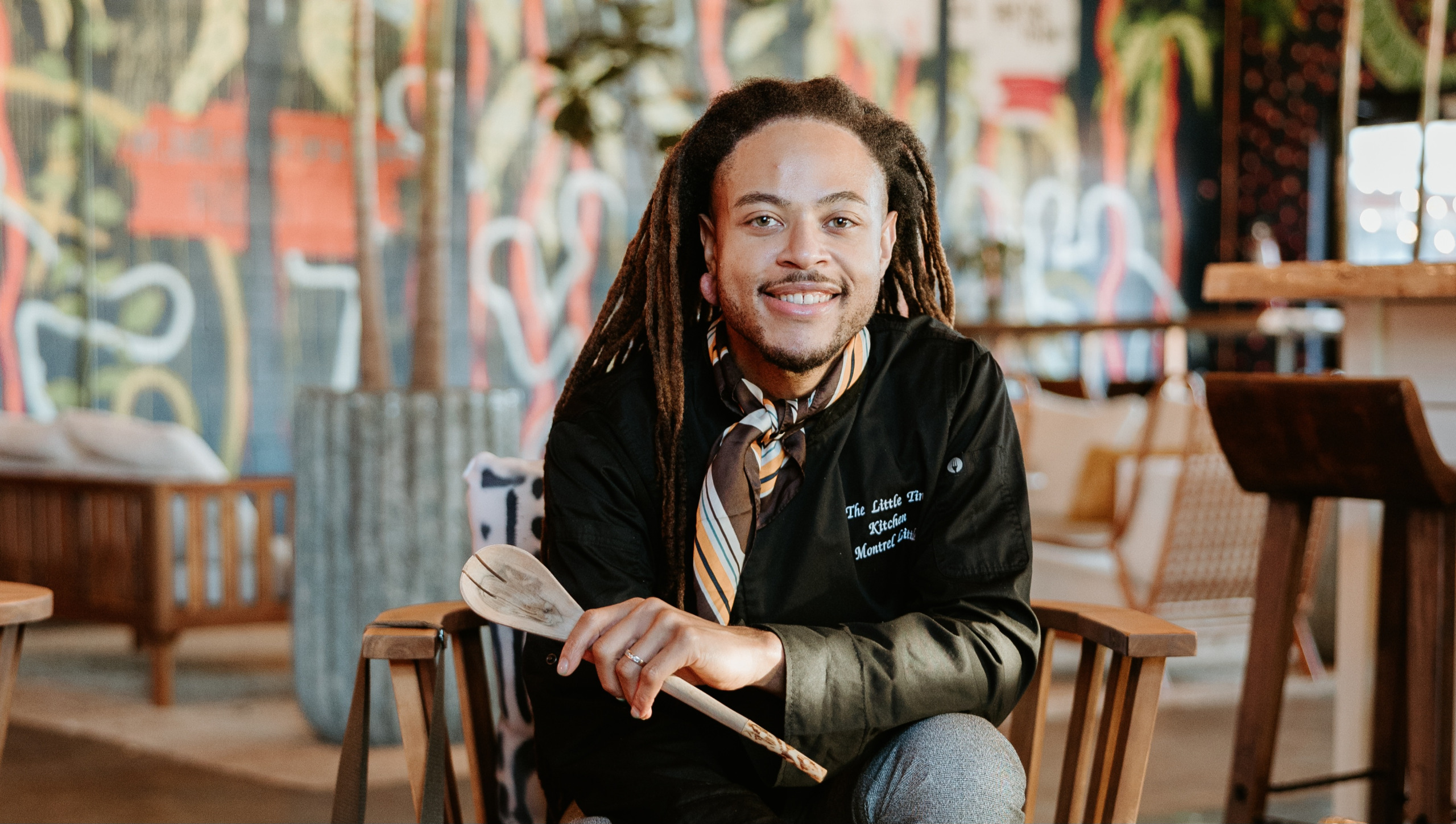
Food, in that way, became a new love language rooted in patience, care, and legacy. One that requires time, refusing to be rushed. That philosophy carried into Montrel’s relationship with his husband, Chann. During COVID, when the world felt uncertain and closeness became fragile, their kitchen became the site of their deepest intimacy. Making the conscious choice to nourish each other when nothing else felt guaranteed. “If you’re the last person I see,” he said, “I at least want to go out with a beautiful dinner.”
This reveals something we don’t talk about enough in a digital dating era obsessed with optics: intimacy is often built in the quiet repetition of care, not in grand gestures. Their dinners, first private then shared, eventually evolved into How Sanguine. What began as feeding one another became feeding the community. Long tables filled with people who might not have otherwise crossed paths. A reminder that slowing down together is radical, and maybe that’s what Black love has always known.
In Black American culture, food has long functioned as proof of commitment. As survival. As reclamation. “Our ancestors carried seeds in their hair. Made beauty from scraps. Created nourishment where there was none promised. So when we feed each other—romantically, familially, communally—we are continuing a lineage of making something out of nothing” he told EBONY.
We see it in holidays that don’t need a reason. In kitchen committees. In the seriousness of who’s trusted with the mac and cheese or the turkey. In the way we measure adulthood by what dish we’re finally allowed to bring. Food teaches patience alongside intention. “If food were the first language of Black love,” he said. “It would teach us to let things simmer.”
Not everything needs to be on high heat. Sometimes love looks like roast beef and cornbread. Like salmon croquettes, renamed with age and pride. Like serving yourself on a real plate, even when no one’s watching, because you believe you deserve to be treated as royalty. Dinner was the date long before dating apps told us what romance should look like. Maybe, in returning to the table in the act of cooking, feeding, and sitting together we remember what love has always been trying to say to us.