The release of The Devil Wears Prada 2 earlier this year made plenty of fashion people feel seen, especially journalists and media professionals. But beyond the entertainment, its portrayal of print media’s decline and Runway magazine’s uncertain future mirrored a reality many working journalists already know: the media industry is changing, and for Black journalists, navigating that instability can come with an additional set of challenges.
The rise and rapid retreat of corporate DEI commitments, financial pressures across publishing and an industry that has historically struggled to retain and elevate Black talent have made one thing increasingly clear: a prestigious title or recognizable masthead can no longer be the only measure of a journalist’s power.
And a growing group of Black editors and writers are recognizing that their expertise, audiences and cultural authority have value beyond the companies that employ them. Instead of waiting for traditional media to determine how much their voices are worth, they’re creating platforms they can actually own.
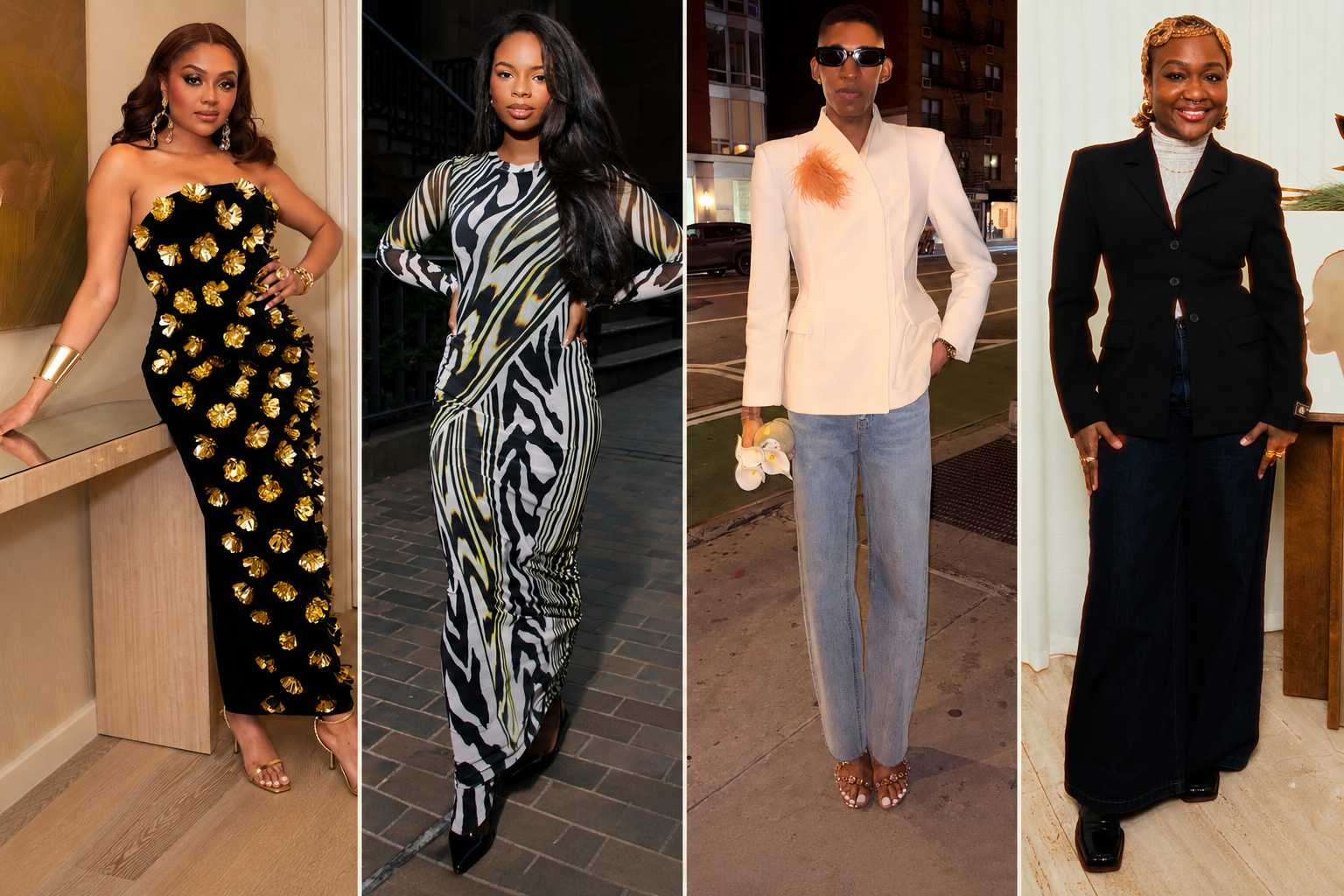
Blake Newby, former beauty and style editor at ESSENCE among other publications, has successfully pivoted into a media multihyphenate, from appearances on Good Morning America and Tamron Hall to hosting the cult-favorite podcast According to Blake. Olivia Hancock shapes Byrdie’s expert coverage as its senior editor while also building The Hue Report, a platform dedicated to sharing the stories of Black beauty founders and creators.
Meanwhile, Stixx Mathews, a beauty writer and expert, brings 11 years of experience across L’Oréal, Glossier and Hypebae to The Boy Beat, a Substack and podcast built around candid conversations that challenge stereotypes surrounding Black men in the beauty industry. And Tatiana Pile, former managing editor at Glossy, launched The Unpolished Edit, a community-centered platform covering beauty and wellness at the intersection of business, society and pop culture.
Together, they represent something bigger than a career pivot. They’re showing what can happen when Black journalists realize the byline was never the extent of their value.
Bylines to Bigger Purpose
The rise of editor-owned platforms isn’t simply a trend. For Hancock, whose love story with journalism began in her younger years, cultivating a space of her own was about giving Black beauty the attention it deserves.
“I wanted to create a space where Black beauty stories weren’t an afterthought, but the entire focus. I wanted The Hue Report to be a hub dedicated entirely to Black beauty storytelling and community because I believe we deserve that space,” she said.
Newby came to a similar realization while watching the volatility of traditional media firsthand.
“I was seeing how disposable the journalists were to these media conglomerates, and I said, I have to prioritize having something that I can call my own, that I own, and that nobody can take from me,” she shared.
Pile always understood the value of her voice. Her Howard education laid the foundation for confidence in her talent as a Black woman, something that became even clearer once she entered New York media.
“What made me really acknowledge it was being in certain rooms where I was one of two or three, and recognizing that being one of the few means your voice just holds so much more weight,” she explained. “In a world where there’s so much amplification of similar thought, having a voice that goes against the grain will forever be important, because that’s what moves the culture forward, and that’s true whether it’s a Black voice, a queer voice, a Latinx voice, or an Asian voice.”
Their platforms allow that authority to exist without being entirely dependent on an employer, title or masthead. That distinction matters in an industry where jobs can disappear overnight, but an audience, point of view and body of work can continue to grow.
For Us, By Us
For Black journalists, ownership has historically been about more than having your name attached to something. It can also mean deciding whose stories get told, who gets hired and where opportunities are distributed.
Newby uses Black editors, videographers and sponsors to create media opportunities for others. Mathews and Pile are similarly focused on building communities for people who have historically been underserved or overlooked by mainstream media.
“I’m creating a space that acknowledges the glamorous side of our work while also showing up for and celebrating the communities I come from—the ones that aren’t always considered fab,” Mathews said.
Hancock’s commitment to showcasing Black beauty year-round is another way of paying that opportunity forward.
“If someone can discover a founder, journalist, or creative through something I built and see a new possibility for themselves, then the work has impact beyond me,” she said.
That may ultimately be the most important part of what these journalists are building. Ownership gives them the ability to create opportunities that extend beyond themselves. A successful platform can become another place for a writer to publish, a founder to be discovered, a creative to be hired or a story ignored elsewhere to finally receive the attention it deserves.
Our Future, Our Way
Building something independently doesn’t mean the process is easy. Pile is leaning on the community she’s cultivating while continuing to grow The Unpolished Edit. Mathews and Newby are becoming even more intentional about the power of their individual voices. As Newby puts it, “nobody will go as hard for your brand as you.” Hancock, meanwhile, is embracing the time it takes to turn an idea into something sustainable.
According to Blake, The Hue Report, The Boy Beat and The Unpolished Edit point toward a future of Black media that isn’t defined solely by who lands a coveted position at the biggest publication. Increasingly, power can also belong to the journalist who owns the platform, controls the relationship with their audience and decides what deserves coverage in the first place.
That doesn’t make traditional media irrelevant. Black journalists should still be hired, promoted, paid equitably and given the resources to lead within major media companies. But a masthead no longer has to represent the ceiling of a career.
For Newby, Hancock, Mathews and Pile, the byline became a foundation rather than a final destination. Their platforms are proof that Black journalists can take the expertise, credibility and cultural fluency they’ve spent years developing and turn it into something that belongs to them, while making space for others along the way.
As Mathews says, “You have to tune out the noise, trust yourself, and remember that a slow build is still a build—and that will always be better than no build at all.”
The future of Black media won’t only be determined by who gets invited to the table. It will also be shaped by who owns the platform, who controls the story and who makes sure the door stays open for whoever comes next.