
As the Milano Cortina 2026 Winter Olympics wrapped, the loudest stories weren’t just about who topped the medal table. They were also about expanding the picture of what winter sports look like now. Across ice and sliding tracks, slopes and powdery banks, Black athletes delivered defining moments that blended history, visibility, and heart-stopping performances.
A reminder that representation at the Winter Games isn’t the side plot every four years. It’s part of the main event.

Elana Meyers Taylor’s Golden Moment
If there was a single scene that captured the essence of persistence at the Games, it was Elana Meyers Taylor, who finally captured the Olympic gold that had eluded her. In women’s monobob, the veteran bobsledder delivered a finish that felt like a culmination, not just a win. The monobob platform continues to be a critical entry point for women in sliding sports, and Meyers Taylor’s victory doubled as proof of what longevity looks like when paired with elite execution.

Team USA’s & Canada’s Overtime Hockey Thriller
The U.S. versus Canada women’s hockey rivalry brought one of the signature endings of the Olympics: a 2–1 overtime comeback that swung the gold medal to Team USA. Laila Edwards, skating in that environment and on that stage, helped make the moment bigger than the final score. While on the other side, Canada’s silver medal and Sarah Nurse’s presence remain part of the Games’ story, too. Inside the tournament sits a larger truth. Women’s hockey is changing.
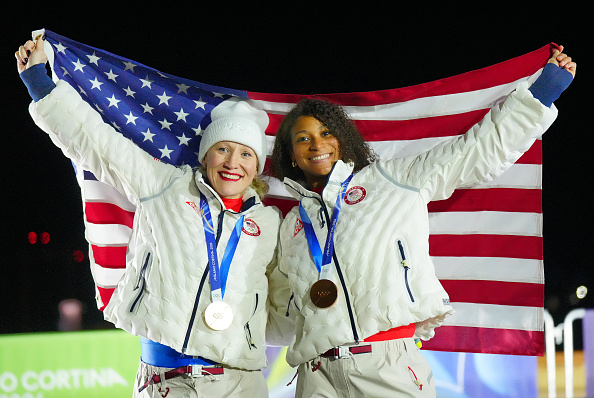
Image: Michael Kappeler/picture alliance via Getty Images
Jasmine Jones Reached the Podium in the Two-Woman Bobsleigh
In bobsleigh, Jasmine Jones helped bring home a bronze medal in the two-woman event, another reminder that the sport’s modern pipeline continues to widen. Sliding sports have long been one of the Winter Games’ clearest lanes for Black athletic excellence, but each podium moment still carries weight because the field is deep and the track punishes the smallest mistake. A bobsleigh medal is never casual. It’s earned, as was Jones’ podium moment
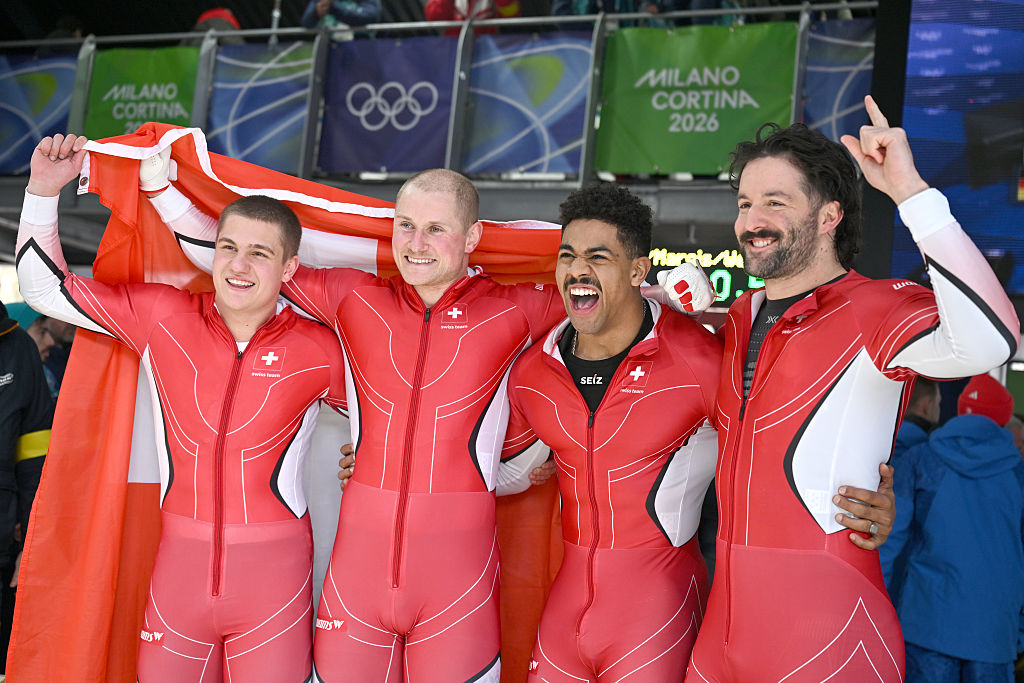
A Bobsleigh Medal Moment with Switzerland’s Amadou David Ndiaye
One of the most important answers to the question of “who showed up on the podium” came in the four-man bobsleigh event. Switzerland’s bronze-winning team included Amadou David Ndiaye, a powerful example of what it looks like when a Black athlete is part of a medal-winning crew in an event often framed through a narrow, traditional European lens. It also underscored something easy to miss if you only scan headlines. The breakthrough is not always a solo star moment, sometimes team medals create space for multiple stories to exist at once.

Haiti’s Stevenson Savart Captured Our Hearts
With each Olympics, some of the memorable moments have nothing to do with the podiums. They’re about the crowd recognizing the spirit of what the Games are supposed to be. Stevenson Savart delivered exactly that as Haiti’s first-ever Olympic cross-country skier. Not only dealing with the adversity surrounding a wardrobe controversy, Savart also carried the energy of an entire Caribbean nation entering one of the Winter Games’ most tradition-heavy sports. In the men’s skiathlon, Savart’s finish was greeted with a roar from the crowd, a bow, and a reminder that history sometimes arrives as something simple: an athlete crossing a line, both seen and celebrated.

Erin Jackson Carried the Flag
Not every moment in life lives up to expectations. Whether that of the fans or your own. Yet despite not reaching the podium that many felt was almost certain, Erin Jackson took on one of the most visible roles any athlete can hold: flag bearer for her country at the opening ceremony. That image matters, especially for the United States, especially during this moment in history. Jackson may not have finished on top of the podium where we expected her to, but the respect from her peers proves that her race has just begun.

Mystique Ro’s Olympic Debut was a Moment of Arrival
Skeleton is a sport that doesn’t leave room for “we’ll figure it out later.” The learning curve is steep, the speeds are high, and the margins of error are unforgiving. That’s why Mystique Ro’s Olympic debut mattered, even without a medal. For many, seeing a Black woman in skeleton isn’t only novel, it’s a signal that access is changing, and that future Olympic fields may look different because athletes like Ro made that possible.
The Bigger Shift: Representation Across Nations
Milano Cortina continued a broader trend of Black athletes representing not only the United States, but also countries across the African diaspora and beyond. Presence doesn’t always promise a medal, but it changes the Games and how our communities are viewed. Whether in the opening ceremony’s parade of nations, in qualification stories, in first-time appearances, or in the quiet reality that somewhere a young child can now see winter sport as something that includes them.
The Winter Olympics still has a long way to go, but this 2026 edition of the Games made it hard to deny that the terrain is widening.