Death is coming. That sentence is not meant to terrify. It is meant to be honest. For Black families, honesty about death has never been optional. It has been necessary. We have always lived close to loss. Not because we invite it, but because history has insisted on it. And so, alongside that closeness, we learned something else just as enduring: how to care for one another when the end approaches.
In recent years, “death doula” has entered the mainstream lexicon. Articles explain it. Panels and physicians debate it. Training programs formalize it. There is value in naming work that has long been invisible. But let’s be clear that death doulas are not new. What is new is the language. What is new is who is being credited. Black families have always known how to sit with the dying. We have always known how to tend to the living while doing so. We have always known that saying goodbye is not a single moment but a process. And it is a process that requires patience, memory, and love.
I know this because I learned it at home.
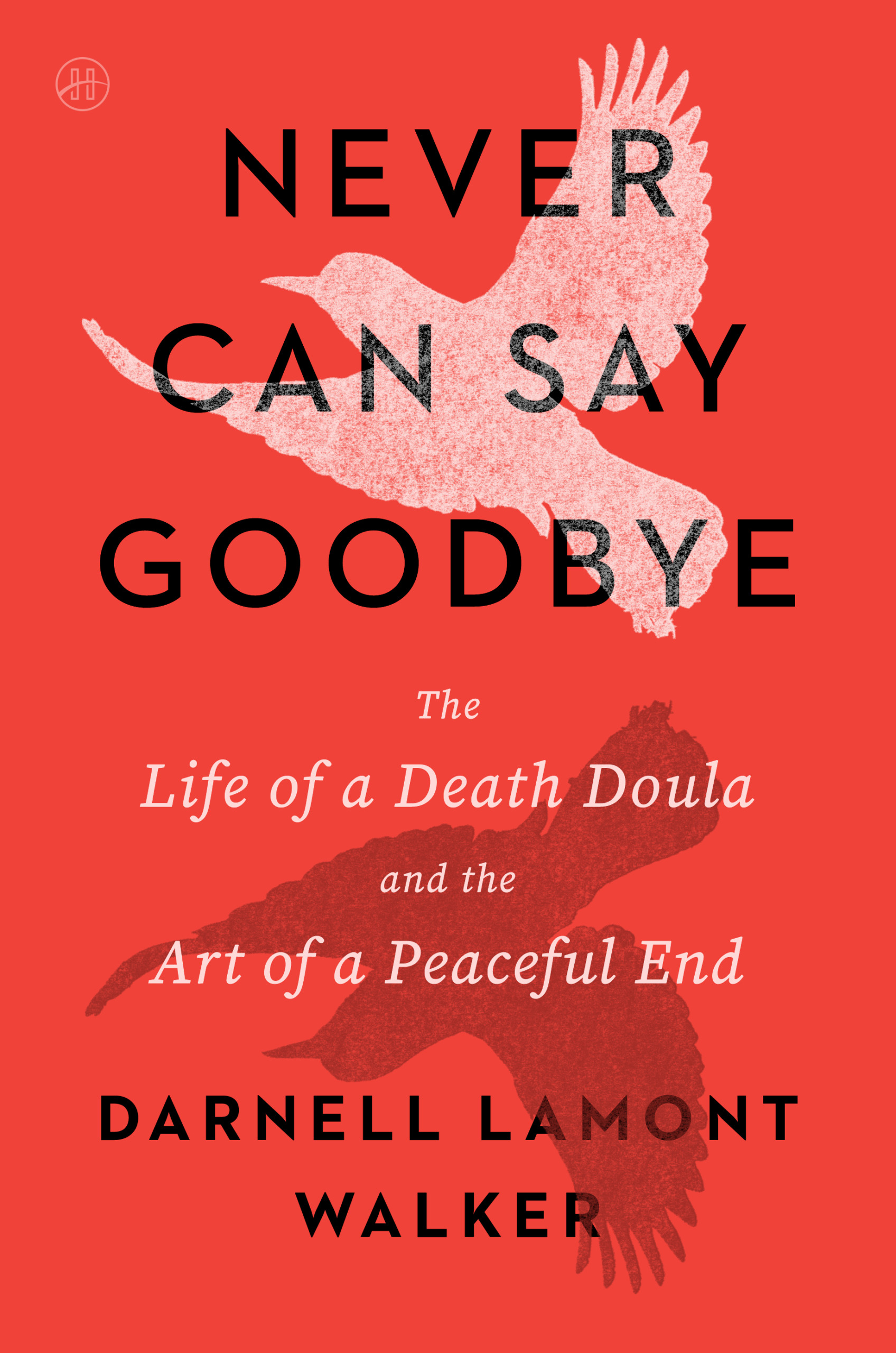
In my book, Never Can Say Goodbye: The Life of a Death Doula and the Art of a Peaceful End, I honor my grandmother, Irene Elizabeth Jones, and my mother, Doreen Marie Wells. They are the two people who showed me that being a death doula is not work. It is love, practiced daily. My grandmother did not have a certificate on the wall and never needed to name where she learned her skills. My mother never used the word “doula” when she came home from the hospice after hours of caring for her first cousin. Yet both of them knew how to stay. How to listen. How to make room for fear without letting it take over the room. They understood that presence is not passive. It is active, deliberate, and often exhausting.
They taught me that care at the end of life is not about heroics. It is about small, steady acts. Washing someone’s face, sitting quietly when there are no more words, knowing when to speak and when not to, making potato salad for 60 people because somehow it soaks up the grief for just a little while. It is about advocating when systems become cold or rushed. It is about remembering who a person has been when their body is beginning to forget.
Black families have been doing this forever. In this country, we did it during slavery, when death came violently and without consent, and we still insisted on mourning rituals, on remembrance, on naming the dead. We did it during Jim Crow, when hospitals were segregated and care was uneven, and we still brought our own tenderness into those rooms. We did it during the AIDS crisis, when so many were abandoned by institutions and even families, and chosen family stepped in to do what love demanded. We do it now, under a political administration that works daily to erase our protections, shrink our access, and render our suffering invisible, even as we continue to show up for one another anyway. We do it now, in a healthcare system that is often indifferent at best and hostile at worst to Black bodies.
This is why it matters to say plainly that death, for us, has never been just an ending. It has been a space of care.
Too often, conversations about death are framed around fear. Fear of pain, fear of loss, fear of the unknown. Those fears are real. They deserve acknowledgment. But fear is not the whole story. Care is. What happens when we center care instead of panic? What happens when we recognize that the final chapter of a life can still be rich with meaning, connection, even tenderness?
When I work as a death doula, people sometimes assume I am doing something extraordinary. I am not. I am doing what I was taught. I am doing what many of us have done without naming it. Sitting at a bedside. Translating medical language into human language. Making sure someone is not alone. Adjusting pillows. Rubbing a back. Holding a cup so someone can sip water. Calling a cousin who needs to come now. Stepping into the hallway so grief can have privacy. Reminding families that they are not failing if they are tired, angry, or overwhelmed. Bearing witness.
A quiet truth we do not say often enough is that many of us have already done this work on levels that may not feel significant to us, but meant everything to the people who allows us to witness them. We have taken phone calls in the middle of the night. We have cooked meals no one had the appetite to eat. We have held hands in hospital rooms and living rooms and nursing homes and cars. We have said, “I’m here,” and stayed long enough to prove it.
This labor is rarely recognized. It is rarely compensated. It is often gendered and expected. But it is sacred. And naming it does not diminish its intimacy. It helps us understand its value.
There is moral clarity required here. A society that avoids death also avoids responsibility. It leaves families unprepared and isolated. It medicalizes dying to the point of erasure, stripping it of culture, ritual, and humanity. Black families have resisted that erasure not because it was easy, but because it was necessary for survival.
When we talk about death doulas today, we must talk about this lineage. We must acknowledge that what is being professionalized now has roots in communities that had no choice but to learn how to care for one another when no one else would. This is not about gatekeeping. It is about truth-telling.
My grandmother and my mother did not teach me how to avoid grief. They taught me how to live alongside it. They showed me that love does not disappear at the edge of death. It concentrates. It becomes sharper, heavier, more deliberate. They showed me that goodbye is not the opposite of love. It is proof of it.
Death is coming. That is not a threat. It is a fact. And so is care. If we are willing to see it, honor it, and learn from the ways Black families have always practiced it, we might finally understand that the end of life does not have to be stripped of dignity. It can be held. It can be witnessed. It can be met with grace.
We have always known this. Now we are simply saying it out loud.