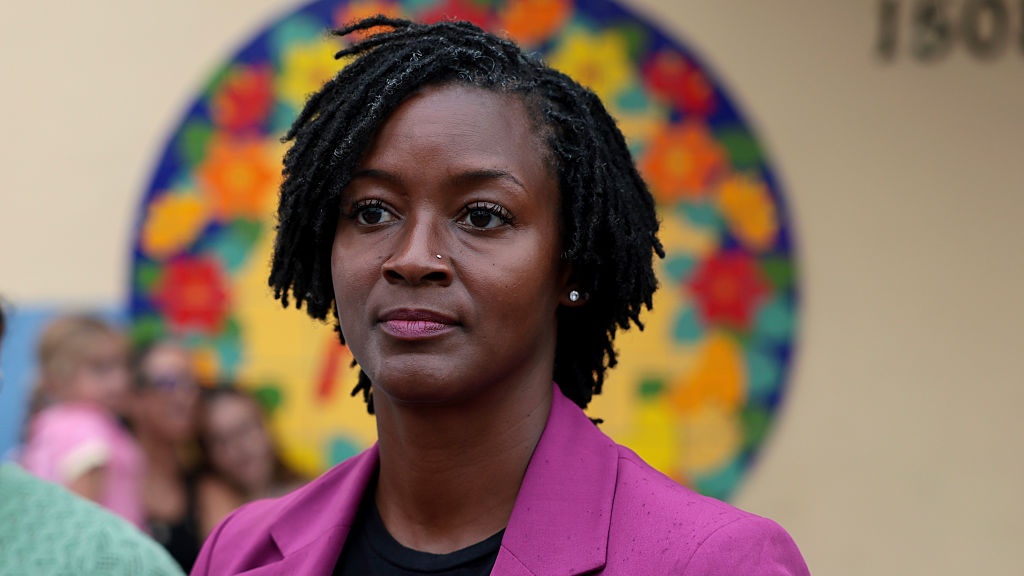
Despite the blue tsunami and historic victories for Black women during the 2026 midterm elections, Angie Nixon’s loss remains heartbreaking. Since her defeat, the former Florida state representative and U.S. senate candidate has continued to share her experiences on the campaign trail. Rather than examining her concerns, some critics argue that Nixon should accept defeat in silence.
It’s not just conservatives expressing this sentiment. Some of the criticism comes from women who likely would have voted for Nixon. However, Black women must remain vocal about our mistreatment and disenfranchisement in order to claim and demand what’s right for ourselves and for the country.
In 2016, former First Lady Michelle Obama popularized the phrase, “When they go low, we go high.” A decade later, Angie Nixon offered her own approach: “When they go low, we get loud,” and gained national attention by embodying the sentiment.
In April 2026, the then-state representative protested on the Florida House floor, chanting “This is a violation of the Constitution” into her signature pink bullhorn while lawmakers voted on new congressional maps. Her defiance resonated with Americans tired of watching elected officials ignore policies often towing the line of being unconstitutional.
Nixon joined U.S. Reps. Jasmine Crockett, LaMonica McIver, Maxine Waters, and other Black women whose public confrontations with political power made them prominent voices in the defense of democracy. They embodied the phrase “speak truth to power.”
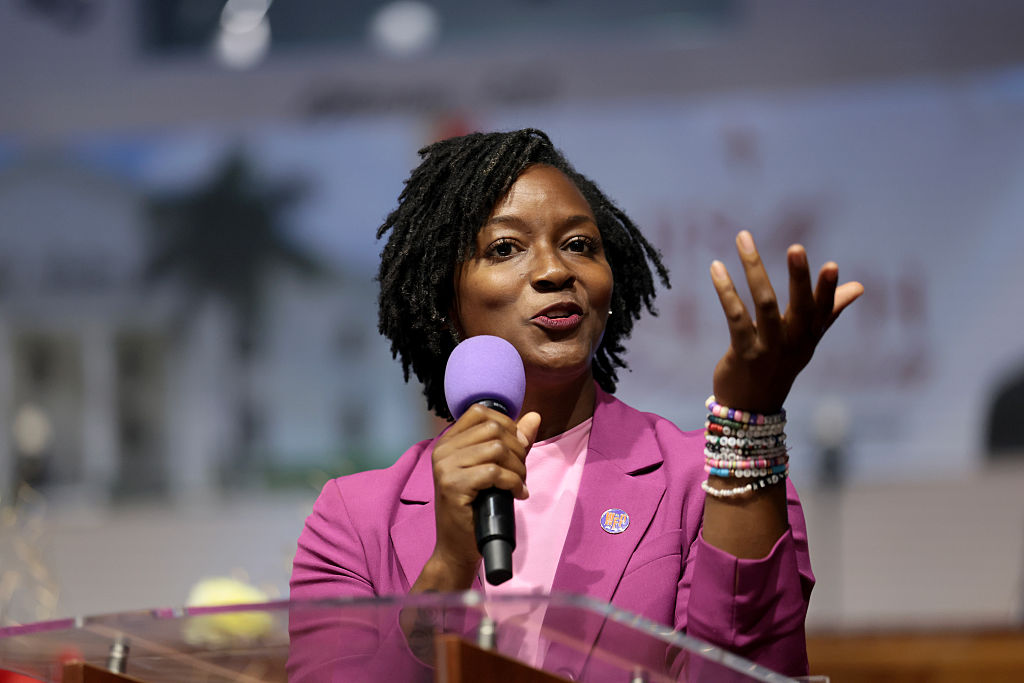
Despite their work to uphold democracy, the national Democratic party has not prioritized investing in their leadership. During the Texas primaries, Jasmine Crockett lost her bid for a primary seat in the U.S. Senate to James Talarico, despite the candidates sharing multiple policy priorities and Crockett’s extensive experience.
Rep. McIver is currently facing federal criminal charges stemming from an oversight visit to an immigration detention facility. There has been no sustained, party-wide effort to raise legal defense funds or coordination in national messaging to elevate her case on the public’s radar.
However, nothing illustrates the tension between Black women’s unappreciated political labor and lack of political power more than Kamala Harris’ Presidential race. When her historic candidacy ended in defeat, Harris also “got loud.” In her book 107 Days, Harris reflected on the extraordinary demands of her abbreviated presidential campaign and time in the White House, both of which were marked by disinvestment.
The gap between praise and power unfolded on a national level for the entire country to witness. Despite women like former Vice President Harris and former Rep. Nixon being acclaimed for their work, that applause didn’t translate into appropriate resources or opportunities.
Upholding this reality validates the belief that Black women can do more with less, so we don’t need as much. Our resilience becomes justification for continued disinvestment.
That creates rage. And rage is precisely what many Black women have spent decades avoiding, largely due to tropes like the “angry Black woman.” Nixon has depicted everything Black women are routinely discouraged from becoming, particularly in professional and political spaces where reputation determines whether we’re welcomed, promoted, or supported.

Getty
This is the crux of the criticism towards Angie Nixon. She rejects respectability politics. She refuses to soften her language, temper her disappointment, and turn legitimate grievances into polite requests.
Angie Nixon lost to Republican Ashley Moody by fewer than three percentage points, receiving nearly four million votes in a state where Democrats have not won a U.S. Senate election since 2012. Still, Nixon has the right to question why national Democratic leadership did not invest into her platform more. She has accepted her defeat, but what she refuses to accept is silence. During the most expensive election cycle in U.S. history, Nixon stated that she received less than six figures in major party donations.
Election after election, Black women have consistently garnered high voter turnout, voting overwhelmingly blue. This deserves more than “believe Black women,” “listen to Black women,” and “This is because of Black women.”
Those phrases are just lip service – and we’re over it.
In her concession speech, Nixon made it clear that her political fight was far from over. Looking toward the next Senate election in 2028, she issued a warning to Moody: “You better get it right because we are coming for you.”
Although Nixon has not formally committed to another campaign, her message was unmistakable. The expectation that Black women must always go high has too often been used to suggest that we remain quiet. But silence has never guaranteed us equity. It’s time to demand what we deserve.
Julienne Louis-Anderson writes about the intersection of Black culture, Black history, and Black politics. She can be found on social media platforms @juliennelouisanderson.